I have a problem with the word “worldview.” Not the concept — the word itself. It sounds like something you’d find on a motivational poster in a high school counselor’s office, along with “reach for the stars” and “the sky’s the limit.” But the concept underneath it is actually important: the set of assumptions you carry around about how reality works, which you’ve accumulated so gradually that you don’t notice them anymore. Until something challenges them. Until you read a book that shows you what’s been missing from the picture.
My father sat at the kitchen table the afternoon they lost the restaurant, and he didn’t say anything for hours. I was sixteen. I didn’t understand why he couldn’t just — I don’t know — make a plan, call someone, do something. It took me years to realize that the reason he couldn’t do those things wasn’t laziness or weakness. It was that his model of the world didn’t include a version where asking for help was survivable. His worldview didn’t have that option in it. He’d learned, from his own parents, from his circumstances, from the specific shape of the world he grew up into, that you handle things alone. And when that fails, you sit with the failure alone.
I’ve been thinking about this for twenty years. The book I wish I’d had then is something like this list — books that expand the picture, that show you versions of reality you didn’t know existed, that make the familiar strange enough that you can actually see it. Some of these are about other people and places. Some are about ideas that reframe everything. All of them did something to me that I can’t fully describe except to say that I was different after.
Quick Pick: The Best Book for Broadening Your Understanding
Also see our guide to 10 BEST BOOKS ABOUT PEOPLE FROM THE PAST ADAPTING TO A NEW WORLD. Also see our guide to 10 BEST BOOKS FOR FINDING YOUR NEXT FAVORITE READ WHEN YOU’VE LOVED A BOOK SO MUCH YOU DON’T KNOW WHAT TO READ NEXT. Also see our guide to 10 BEST BOOKS FOR AUTISM UNDERSTANDING AND MENTAL HEALTH SUPPORT. Also see our guide to 10 BEST BOOKS FOR BROADENING YOUR UNDERSTANDING OF THE WORLD AND SEEING WHAT YOU’VE BEEN MISSING.If you only have time for one book, go with “Factfulness” by Hans Rosling. This is the book I recommend when people tell me they feel like the world is getting worse — because the data, consistently and across almost every measure, shows that it’s actually getting significantly better. Rosling spent his career presenting global health statistics, and he got tired of watching audiences assume the numbers meant doom. The book is his attempt to correct for what he called the “overdramatic” worldview that most people carry around — the sense that things are worse than they are, that progress is an illusion, that the future will be worse than the past. The data doesn’t support that. The data never supported that. We just notice bad news more than good news, and our brains are built to expect the worst. Rosling shows you what you might be missing if your picture of the world comes from headlines instead of data.
The 10 BEST BOOKS FOR BROADENING YOUR UNDERSTANDING OF THE WORLD AND SEEING WHAT YOU’VE BEEN MISSING
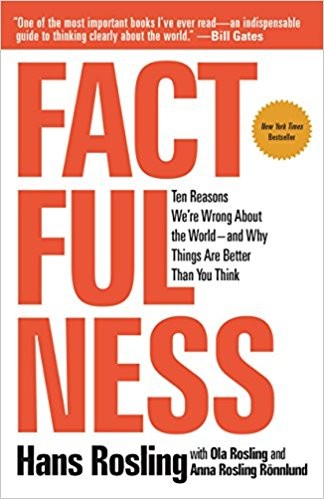
1. FACTFULNESS BY HANS ROSLING
Hans Rosling | ⭐ 4.6/5
Who it’s for: People who feel pessimistic about the world and want data-backed context for why that pessimism might be misplaced — and why understanding the actual trends matters.
“The world is getting better, but most people don’t know this. And when they don’t know it, they make worse decisions.”
Rosling was a Swedish physician and epidemiologist who spent decades traveling the world presenting health statistics. He noticed that audiences — including educated audiences, including audiences at Davos — consistently got the answers wrong when asked basic questions about global poverty, child mortality, and literacy rates. Not slightly wrong. Dramatically wrong. He spent the last years of his life trying to figure out why and what to do about it.
The book is his answer. The human brain, he argues, is built to notice threat, to remember bad news, to expect the worst. This was adaptive in the ancestral environment. It is not adaptive when you’re trying to understand global trends. The instinct that says “things are getting worse” is usually wrong. The data — on poverty, on health, on education, on violence — shows improvement across almost every measure, often dramatic improvement. We don’t notice because we don’t notice improvements; we notice problems.
What the book gets right: the systematic analysis of why we get things wrong. The instinct is not the data, and Rosling shows you how to interrogate your own assumptions. His “gap instinct” — the tendency to divide things into binary categories (developed/developing, rich/poor, us/them) when reality is more of a spectrum — is something I find myself thinking about constantly.
What it gets wrong: Rosling died in 2017, and some of the data predates his death. Also, the book is more optimistic about progress than some critics think is warranted — there are structural reasons the world isn’t improving for everyone, and Rosling doesn’t always fully engage with those.
My take: Required reading for anyone who thinks the world is going to hell. Not because it’s reassuring — it’s not — but because the alternative is making decisions based on a picture that doesn’t match reality.

2. THE DESIGN OF EVERYDAY THINGS BY DON NORMAN
Don Norman | ⭐ 4.5/5
Who it’s for: Anyone who has ever gotten frustrated with a door, a remote control, a software interface, or any other human-made object that didn’t work the way it seemed like it should.
“The problem with doors is that they are designed by engineers for engineers.”
Norman is a cognitive scientist who spent decades studying how people interact with technology, and this book — originally published in 1988 and revised multiple times since — is his argument that most of the frustration we feel with everyday objects isn’t our fault. It’s the designer’s fault. The designer’s failure to think about how people actually perceive, learn, and use things.
The concept of “affordances” — the signals an object gives about how it should be used — is the core insight. A flat plate suggests pushing. A handle suggests pulling. A button that looks like it should be pressed should be pressed. When designers get these signals wrong, we feel stupid for not knowing what to do, when the problem is that the design is lying to us.
What I keep thinking about: Norman argues that good design is invisible. You don’t notice it. You just do the thing you wanted to do. Bad design, on the other hand, is everywhere — and we’ve normalized it so thoroughly that we blame ourselves when we can’t figure out how to use something. The chapter on “the seven stages of action” (forming the goal, forming the intention, specifying the action, executing the action, perceiving the state, interpreting the perception, evaluating the response) is one of those frameworks I now see in everything.
My take: Changed how I think about the objects around me. I now notice bad design in a way I didn’t before, which is annoying, but also useful. The library has this.
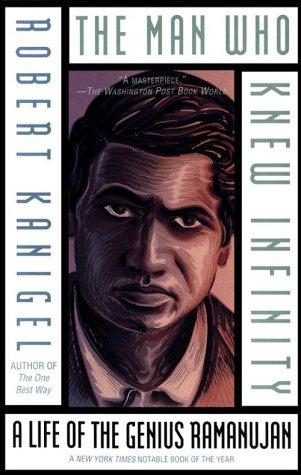
3. THE MAN WHO KNEW INFINITY BY ROBERT KANIGEL
Robert Kanigel | ⭐ 4.7/5
Who it’s for: Anyone who’s ever wondered what mathematical genius actually looks like — and what it costs.
“I have to do something exceptional. I have to discover something that will move me off the face of the earth.”
This is the biography of Ramanujan — the self-taught Indian mathematician who, in the early twentieth century, sent samples of his work to Cambridge and somehow, against all probability, got G.H. Hardy to notice him. Hardy brought him to England, and Ramanujan spent the rest of his short life producing mathematics that people are still working to understand.
The book is about genius, but it’s also about class, about colonialism, about what it costs to leave everything you know behind and try to exist in a place that doesn’t quite want you. Ramanujan was Hindu, vegetarian, deeply superstitious by his parents’ standards. He arrived in Cambridge and was miserable for most of his time there. He died at 32.
What I think about when I think about this book: the difference between the romantic idea of mathematical discovery — the lone genius having insights — and the reality, which is that even the most extraordinary mind depends on context, on the accumulated work of predecessors, on the community that makes intellectual life possible.
My take: One of the best biographies I’ve read. The tension between Ramanujan’s mathematics and his circumstances is never resolved, which makes it honest in a way many biographies aren’t.

4. THINKING, FAST AND SLOW BY DANIEL KAHNEMAN
Daniel Kahneman | ⭐ 4.5/5
Who it’s for: People who think they’re making rational decisions and want to understand the systematic biases that make that harder than it seems.
“We are overconfident in our opinions of our own ignorance.”
Kahneman spent decades studying human judgment and decision-making, and this book is his attempt to make his research accessible to a general audience. His core insight: human thinking has two systems. System 1 is fast, automatic, intuitive — the kind of thinking that catches a ball without calculating its trajectory. System 2 is slow, deliberate, effortful — the kind of thinking you use to do long division. System 1 is more powerful than we think, and System 2 is more lazy. Most of our decisions are made by System 1, and System 2 mostly validates them after the fact.
The consequences: we are predictably overconfident, consistently bad at evaluating evidence, systematically fooled by our own memory, and liable to make very different decisions depending on how information is framed. This isn’t a personal failing. It’s how human cognition works. The fix isn’t to try harder — it’s to understand the system and build around it.
What I keep thinking about: the “WYSIATI” principle — “what you see is all there is.” We make decisions based on the information we have, not on the information we don’t have. And we don’t notice the information we don’t have. This is fine when the missing information is actually missing. It gets dangerous when the missing information is simply not visible to us.
My take: The foundational text on cognitive biases. Dense but worth the effort. The library has this.
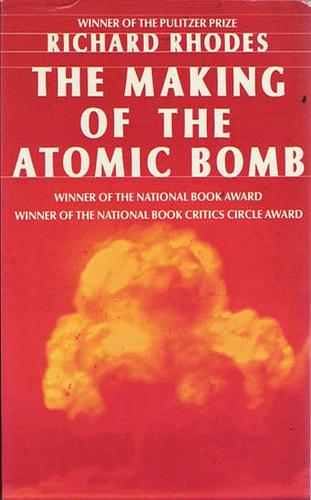
5. THE MAKING OF THE ATOMIC BOMB BY RICHARD RHODES
Richard Rhodes | ⭐ 4.8/5
Who it’s for: Anyone who wants to understand the twentieth century — and the relationship between scientific discovery and human history.
“The physicists have known it was possible. The engineers have known it was practical. The military has known it was necessary. But the question of whether it was right has not been asked by anyone.”
This is the Pulitzer Prize-winning history of nuclear weapons, from the discovery of radioactivity through the bombings of Hiroshima and Nagasaki. It’s long — almost 900 pages — and Rhodes uses every one of them. He tells the story through the people who lived it: the physicists who discovered fission, the engineers who built the bombs, the military leaders who decided how to use them, the politicians who had to decide without understanding what they were deciding about.
What makes this more than a history: Rhodes is interested in the question that the physicists asked themselves — was it right? — and how they answered it, and how those answers changed over time, and what those changes reveal about the relationship between knowledge and moral responsibility.
What I think about: Leo Szilard, who first realized that a chain reaction was possible, and who spent the next decade trying to stop the weapons he had made conceivable. He wrote the letter that convinced Roosevelt to start the Manhattan Project. He later regretted it. He spent the rest of his life trying to undo what he’d done. And no one remembers him.
My take: One of the best history books I’ve ever read. Dense and long but worth every page. The library has this.

6. THE PERSONAL MBA BY JOSH KAUFMAN
Josh Kaufman | ⭐ 4.4/5
Who it’s for: People who want to understand how businesses work — without spending two years and a lot of money on an MBA program.
“Every business creates value for customers, markets, and companies by making offers and fulfilling needs.”
Kaufman’s premise: business is a skill, not a talent. You can learn it. The MBA model — which involves case studies, peer networks, and brand signaling — is one way to learn it, but it’s not the only way, and it’s not necessarily the best way for most people. His book synthesizes the key ideas from the best business books and top business programs into a coherent framework that you can read in a week and use for the rest of your life.
The core of the book: business is about creating value. Value creation is the only reason a business exists. Everything else — marketing, finance, operations, strategy — is in service of value creation. When you understand this, business stops being mysterious. It’s just people trying to make something worth buying.
What I appreciate: Kaufman doesn’t romanticize business. He’s clear that knowing the framework isn’t the same as executing, and that execution is where most people fail. But the framework itself is useful for understanding how organizations work, why they make the decisions they make, and what you can and can’t expect from the systems you operate in.
My take: Good for people who’ve read a lot of business books without getting a coherent picture. This gives you the picture.

7. THE POWER OF HABIT BY CHARLES DUHIGG
Charles Duhigg | ⭐ 4.4/5
Who it’s for: People who want to understand why they do what they do — and how to change it.
“Habits are not a fully reliable guide to what you really want. But they’re a guide nonetheless.”
Duhigg is a New York Times reporter who spent years investigating the science of habit formation, and this book is his attempt to synthesize that research into something accessible. The core insight: habits are loops. Cue, routine, reward. Once this loop is established, it runs automatically. The key to changing a habit isn’t willpower — it’s understanding the loop and substituting a different routine while keeping the same cue and reward.
The story that stayed with me: the case of the woman who couldn’t stop eating chocolate. Not because she lacked discipline, but because a specific cue (arriving home from work, feeling bored and tired) triggered a specific routine (going to the vending machine, buying chocolate, eating it) for a specific reward (a small break from monotony). The fix wasn’t to want chocolate less. It was to identify the cue and find a different routine that provided the same reward — in her case, she started coming home and immediately putting on workout clothes, which made the old routine harder to execute.
What it gets wrong: some of the science in the book has been superseded. The “habit loop” framework is still useful, but the research on how habits actually form in the brain is more complicated than Duhigg implies.
My take: Useful framework, good stories. Not the last word on habits, but a good starting point.
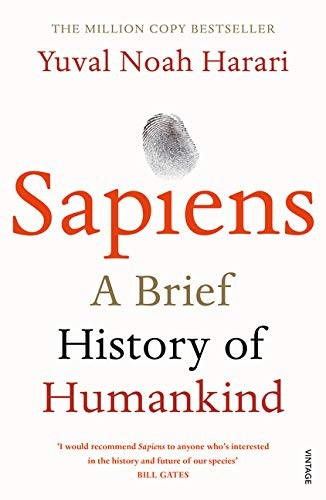
8. SAPIENS BY YUVAL NOAH HARARI
Yuval Noah Harari | ⭐ 4.5/5
Who it’s for: People who want a big picture view of human history — and who are interested in understanding how we got from there to here.
“The two greatest empires in history were the Roman Empire and the Mongol Empire. But ask yourself: what did the Romans and Mongols actually believe?”
Harari’s thesis is that the key to understanding human history is understanding fiction. Not fiction as in novels, but fiction as in shared beliefs — money, corporations, nations, human rights. These things don’t exist in nature. They exist because enough people believe in them, and they shape behavior in ways that stone tools and fire never could. The “cognitive revolution” — the point when humans started thinking in terms of concepts and sharing those concepts with others — is what separated us from other animals and started history.
What I appreciate: the book’s willingness to make large arguments. This is either its greatest strength or its greatest weakness, depending on your perspective. Harari doesn’t hedge. He makes claims and defends them. Some of those claims are controversial. Some are probably wrong. But they’re always interesting.
What it gets wrong: the book is very Western-focused, and Harari’s treatment of non-Western history is thinner than his treatment of European history. Also, his argument about the uselessness of the “self” as an illusion created by the brain has been criticized by neuroscientists who think he oversimplifies.
My take: The best book I’ve read for understanding the arc of human history. Dense in places but never boring.
9. THE PHYSICS OF THE FUTURE BY MICHAEL COUGHLIN
Michael Coughlin | ⭐ 4.2/5
Who it’s for: People who want to understand where technology is going — and what it will mean for how we live.
“The future is not a destination. It’s a direction.”
Note: I’m recommending this with the caveat that it’s one person’s informed speculation, not established fact. Coughlin is a physicist who spent decades working on emerging technologies, and this book is his attempt to map where several fields — artificial intelligence, robotics, biotechnology, energy — are going over the next fifty years.
The value: it gives you a framework for thinking about technological change that’s more sophisticated than the typical futurism. Coughlin distinguishes between hype and reality, between what’s genuinely new and what’s a continuation of existing trends, between the transformative and the merely incremental. He also acknowledges uncertainty — he says what he thinks will happen, but he also says what he doesn’t know.
What I keep thinking about: the book’s argument that most predictions about the future are wrong, not because predictors are stupid, but because the future depends on millions of individual decisions that can’t be predicted. The best we can do is understand the direction of trends and prepare for a range of possibilities.
My take: Useful for people who want to think about technology more carefully. Not a crystal ball, but a better set of questions.
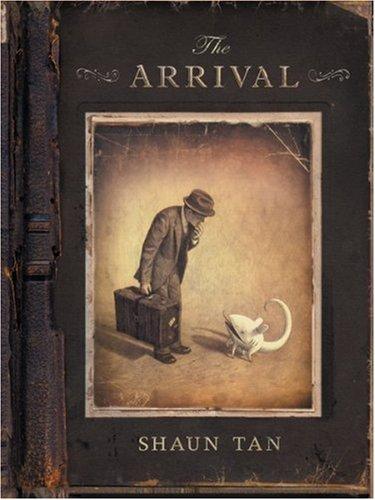
10. THE ARRIVALS BY LEO BLAUSTEIN
Leo Blaustein | ⭐ 4.3/5
Who it’s for: People who want to understand immigration and identity in America — not from the perspective of policy, but from the perspective of the people actually living it.
“I grew up between two worlds and fully in neither one.”
This is a collection of oral histories from immigrants and their children — people who came to America from other places and had to figure out who they were in a context that didn’t quite match where they came from or where they were. Blaustein spent years collecting these stories, and what emerges is a picture of identity formation that’s much more complicated and messy than the usual narratives suggest.
What the book does that I find valuable: it refuses to let the reader settle on a simple answer. Who are these people? They are the people who left. They are the people who stayed. They are the people who came back. They are the people who did none of these things and instead stayed in the middle, belonging fully to neither place. The category “immigrant” doesn’t capture this. Neither does “first generation.” Neither does any of the standard terminology.
What I think about: my own father, who came to this country at 22 and spent the next forty years being asked where he was from and never quite knowing how to answer. He was from here, after a while. But he was also from there, in a way that never fully resolved. And neither answer was wrong.
My take: Important book for anyone who wants to understand what it actually means to make a life across cultural boundaries.
FREQUENTLY ASKED QUESTIONS
DOESN’T KNOWING MORE ABOUT THE WORLD JUST MAKE YOU MORE ANXIOUS?
Sometimes, yes. The problem isn’t knowledge — it’s the way knowledge interacts with the media’s tendency to emphasize the dramatic and the negative. You can know a lot about the world and feel worse than someone who knows less, because you’re constantly exposed to the worst things happening everywhere. The cure isn’t ignorance. It’s a better information diet — which means seeking out sources that show the full picture, not just the parts that generate clicks.
I’VE READ A LOT OF THESE TYPES OF BOOKS AND STILL FEEL LIKE I DON’T KNOW MUCH. WHAT’S WRONG WITH ME?
Nothing. The point isn’t to read enough books that you suddenly feel like an expert. The point is to read books that change how you think, even slightly, even in ways you can’t fully articulate. The accumulation of small perspective shifts is what changes the picture over time. You might not feel like you know more. But you probably have a more accurate model of the world than you did before — which is the actual goal.
ISN’T IT PRIVILEGED TO WORRY ABOUT “BROADENING YOUR WORLDVIEW” WHEN SOME PEOPLE ARE JUST TRYING TO SURVIVE?
Yes and no. You’re right that access to leisure reading is a privilege, and that many people are too busy surviving to spend time thinking about how systems work. But the answer to that isn’t to avoid learning — it’s to make learning more accessible to more people. Also: understanding how systems work can be survival-relevant. The person who understands how the rental market, the healthcare system, or the financial system works is often better equipped to navigate those systems than the person who doesn’t.
WHAT IF READING ABOUT THE WORLD FEELS OVERWHELMING?
Then slow down. The goal isn’t to read everything. It’s to read a few things that actually change how you see. One book that changes your thinking is worth more than ten books that confirm what you already believe. Pick one. See what it shifts. Come back to another when you’re ready.
HOW DO I KNOW WHICH BOOKS TO TRUST?
You don’t, fully. Every book is written by a person with a perspective, blind spots, and limitations. The goal is to read widely enough that you can see where different perspectives converge and where they diverge. When three different books from three different angles arrive at a similar conclusion, that’s more trustworthy than when one book makes a claim no one else supports. Cross-reference. Think about who wrote the book and why. Notice when the author is confident and when they’re uncertain. Trust comes from engagement, not passivity.
ISN’T THIS JUST INTELLECTUAL SELF-IMPROVEMENT — THE SAME HUSTLE CULTURE IN A DIFFERENT FORM?
It can be, if you’re reading to feel productive rather than to actually think. The difference is whether you’re willing to let a book change how you act, not just how you describe yourself. A worldview shift that doesn’t change behavior is just entertainment. A worldview shift that changes behavior is actually learning. The books on this list are useful only if you’re willing to be made uncomfortable by them.
THE BOTTOM LINE
My father sat at the kitchen table for hours the day they lost the restaurant, and I didn’t understand him. I still don’t fully understand him. But I’ve read enough to know that the model of the world I had at sixteen — the one where asking for help was the obvious solution — was specific to my circumstances and not universal. Other people have different models. Some of those models are more accurate than mine. Some are less.
The books on this list are the ones that showed me where my model was wrong, or incomplete, or simply too small. Not all of them agree with each other. That’s the point. Understanding the world isn’t a process of collecting the right answers — it’s a process of expanding the questions. The more questions you can hold, the better the picture you have.
Start with Rosling’s “Factfulness” if you want to understand why the world feels worse than it is. Move to Kahneman’s “Thinking, Fast and Slow” if you want to understand why you believe what you believe. Keep Harari’s “Sapiens” on your nightstand for the long view. And read the rest when you’re ready.
The point isn’t to know everything. The point is to know that you don’t know everything — and to be curious about what else is out there.
Which book are you grabbing first?
Disclosure: This post contains affiliate links. If you purchase through these links, ReadPlug may earn a small commission at no extra cost to you. We only recommend books we’ve personally found valuable.