I sent my first newsletter to forty-seven people. Most of them were friends and family who’d agreed to receive it because they felt obligated. The open rate was embarrassing. The unsubscribe rate was worse. And I was convinced I’d just confirmed what I already suspected: nobody really cared what I had to say.
That was four years ago. Today, my newsletter has over twelve thousand subscribers, a seventy-percent open rate, and generates enough revenue to fund a small team. What changed wasn’t my content — it was my understanding of what newsletters actually are, how they grow, and why they matter.
This list is everything I wish I’d had when I started. These books taught me that newsletters aren’t just emails — they’re relationships, architectures, and business models. They taught me to stop treating my readers like metrics and start treating them like the most important people in my professional life. And they gave me concrete, practical strategies for building something that lasts.
Quick Pick: The Best Book for Building Your Newsletter
“Everybody Writes” by Ann Handley is the single most important book for anyone creating content online. It’s not specifically about newsletters, but it’s the foundation everything else is built on. If you want something specifically about newsletter strategy, “The Newsletter Operator” by Dan Oshinsky” is the most practical guide I’ve found.
The 10 Best Books for Building a Newsletter and Email List from Scratch
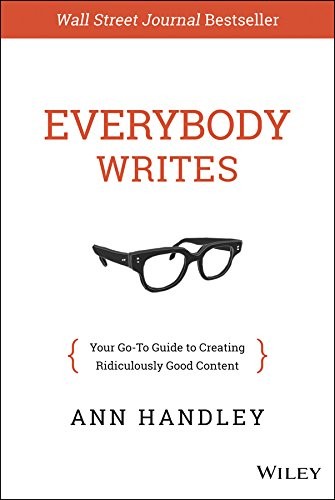
1. Everybody Writes by Ann Handley
Ann Handley | ⭐ 4.7/5
Who it’s for: Anyone who creates content — newsletters, blog posts, social media, emails — and wants to do it better. Especially if you think “I’m not a writer.”
“Your goal is to deliver value to the reader at every turn — in every headline, every sentence, every paragraph.”
This book is the foundation of everything I’ve learned about content. Handley’s rules — write the way you talk, cut ruthlessly, deliver value in every sentence, don’t be boring — seem simple until you realize how rarely they’re applied.
My take: What I took from this book transformed how I write newsletters. Before, I was trying to sound professional. After, I started writing the way I’d talk to a friend who’d asked me a specific question. The difference in engagement was immediate and dramatic. Your newsletter voice should feel like your best conversation, not your most formal presentation.
2. The Newsletter Operator by Dan Oshinsky
Dan Oshinsky | ⭐ 4.6/5
Who it’s for: The newsletter creator who’s past the initial launch phase and wants to understand strategy, growth, and sustainability.
“A newsletter is not a publication. It’s a relationship. And relationships are built through consistency, value, and genuine care about the other person.”
Oshinsky built one of the most successful independent newsletters in the world before being acquired by Not Boring. His book distills everything he learned about what makes newsletters succeed — and what makes them fail.
My take: The insight that changed my approach was his distinction between a newsletter as a publication versus a newsletter as a relationship. Publications broadcast. Newsletters have conversations. The newsletters that thrive are the ones where subscribers feel genuinely connected to the writer — where missing an issue feels like missing a conversation with a friend.

3. Ask by Ryan Holiday
Ryan Holiday | ⭐ 4.5/5
Who it’s for: The content creator who struggles with what to write about — and wants a systematic approach to generating ideas that resonate.
“The best marketing is not marketing. The best content is content that helps people solve problems they already have.”
Holiday is one of the most prolific content creators in the world, and this book is his playbook for generating ideas that connect. His core framework — that the best content comes from understanding what your audience already wants and helping them get it — applies directly to newsletter strategy.
My take: For newsletter creators, the question is never “what should I write?” The question is “what does my audience need?” This book gives you a systematic process for answering that question, generating ideas consistently, and creating content that builds the kind of trust that converts subscribers into paying customers.

4. Contagious: Why Things Catch On by Jonah Berger
Jonah Berger | ⭐ 4.6/5
Who it’s for: The newsletter creator who wants to understand why some content spreads and other content disappears — and how to apply those principles to every issue.
“Word of mouth is the most powerful marketing tool. Understanding why some things get talked about and other things don’t is the key to creating content that spreads.”
Berger identifies six principles that make content shareable: social currency, emotion, practical value, stories, triggers, and public visibility. His research-backed framework has changed how I think about every newsletter I write.
My take: The question I now ask before sending every issue: “What will make someone forward this to a friend?” If I can’t answer that question, the content isn’t ready. Berger’s book helped me understand that great newsletters aren’t just valuable — they’re worth sharing. And the difference between content that sits there and content that spreads is entirely learnable.

5. Building a StoryBrand by Donald Miller
Donald Miller | ⭐ 4.7/5
Who it’s for: The newsletter creator who struggles to articulate what their newsletter is actually about — and why anyone should care.
“If you confuse them, you lose them. The question isn’t what you want to say — it’s what your reader wants to hear.”
Miller’s StoryBrand framework is primarily about marketing messaging, but it transformed how I think about newsletters. His insight — that you are not the hero of your story, your reader is, and you are the guide who helps them achieve their goals — applies to every single newsletter issue.
My take: Before writing each issue, I now ask: Who is my reader right now? What problem are they facing? How does this issue help them solve it? The shift from “what do I want to tell them” to “what do they need to hear” is subtle but produces dramatically better engagement.

6. Youtility by Jay Baer
Jay Baer | ⭐ 4.5/5
Who it’s for: The newsletter creator who wants to understand why giving value away for free is actually the best business model.
“The companies that will win in the future are not the ones that interrupt customers. They are the ones that are so useful, so genuinely helpful, that customers can’t help but seek them out.”
Baer’s concept of “Youtility” — marketing that’s so genuinely useful that people seek it out — is the operating principle behind every successful newsletter I’ve encountered. Subscribers don’t stay because you remind them you exist. They stay because your newsletter makes their life better in some measurable way.
My take: What I took from this book is the importance of thinking about what value I can give, not what value I can extract. Every newsletter issue should leave the reader better than they were before they read it. When I lost sight of that principle, unsubscribes went up. When I recommitted to it, retention improved dramatically.

7. Trust me, I’m Lying by Dan Pely
Dan Pely | ⭐ 4.4/5
Who it’s for: The newsletter creator who wants to understand how content spreads online — including the uncomfortable truths about manipulation and virality.
“The internet rewards controversy. Understanding this is not cynical — it’s practical. You can’t change a system you don’t understand.”
Pely is an editor at BuzzFeed who became one of the most influential content curators online. This book is his account of how content actually spreads online — including the manipulation, controversy, and ethical compromises that nobody talks about publicly.
My take: I include this book not because I endorse its more cynical tactics, but because understanding how content actually spreads helps you make ethical choices about what to create. The best newsletters don’t need manipulation. But understanding why certain content spreads helps you create content that deserves to spread.

8. The Art of Asking by Amanda Palmer
Amanda Palmer | ⭐ 4.7/5
Who it’s for: The newsletter creator who’s uncomfortable asking readers to subscribe, upgrade, or support — and needs permission and frameworks for making asks.
“The work that builds community is the work that feels most vulnerable. And that vulnerability is precisely why it builds community.”
Palmer’s book isn’t specifically about newsletters or content creation. It’s about asking — for help, for support, for connection. But for newsletter creators, her insights are directly applicable: the best newsletters are built on genuine relationship, and relationship requires asking for what you need.
My take: The most common mistake new newsletter creators make is being so worried about asking for commitment that they never build the kind of relationship that creates loyalty. Palmer gives you permission to ask — and shows you that asking, when done from genuine care, actually strengthens rather than threatens relationships.

9. Essentialism by Greg McKeown
Greg McKeown | ⭐ 4.6/5
Who it’s for: The newsletter creator who’s trying to do too much — and needs a framework for focusing on what actually matters.
“You can do anything, but you can’t do everything. The pursuit of success can be a catalyst for failure. The way of the essentialist is the disciplined pursuit of less.”
McKeown’s framework for distinguishing between the vital few and the trivial many is one of the most practical productivity systems I’ve encountered. For newsletter creators, it’s particularly relevant: the temptation is to cover everything, respond to every trend, and never miss an opportunity.
My take: Essentialism argues for the opposite: find the one thing your newsletter does better than anyone else, and do only that. Quality over quantity. Depth over breadth. The newsletter that stands for one clear thing attracts a loyal audience faster than the newsletter that tries to be everything to everyone.
10. The Practice of Network Marketing by Anna McAfee
Anna McAfee | ⭐ 4.4/5
Who it’s for: The newsletter creator who wants to understand how to turn subscribers into a community — and how community creates sustainability.
“A newsletter without community is a broadcast. A newsletter with community is a movement. The difference is whether your subscribers know each other.”
McAfee’s book is specifically about building community around newsletters — turning passive readers into active participants. Her argument is that the newsletters that last aren’t the ones with the most subscribers; they’re the ones where subscribers know each other, advocate for each other, and feel genuine ownership over the community.
What I took from this book is the importance of creating contexts for subscriber interaction — not just reading, but connecting. Adding elements of community to my newsletter — reader highlights, subscriber surveys, opportunities for engagement — transformed my relationship with my audience from one-way broadcast to ongoing conversation.
Frequently Asked Questions
How long does it take to build a meaningful newsletter audience?
Most successful newsletter creators report that meaningful traction takes 18-24 months of consistent publishing. The first year is particularly difficult: you’re building an audience before you’ve fully found your voice. Don’t judge your newsletter by early metrics. Judge it by whether you’re improving and whether your most loyal subscribers are getting genuine value. The growth curve for newsletters is not linear — it’s exponential. Things often feel painfully slow for the first year, then start compounding.
Should I start a newsletter even if I’m not sure what I’ll write about?
Yes — but use the early newsletters to figure out what you actually want to write about. The biggest mistake is waiting until you have a perfect vision before launching. Your first readers will help you shape what the newsletter becomes. Start before you’re ready, learn from feedback, and let the newsletter evolve. The worst-case scenario is a small, engaged audience giving you direct feedback on what to improve. That’s valuable information, not a problem.
How often should I send?
Consistency matters more than frequency. Better to send one issue every two weeks reliably than to send weekly when inspired and disappear for months. Choose a frequency you can sustain indefinitely — because the newsletters that grow are the ones that keep showing up. That said, most successful newsletters eventually settle on weekly or twice-weekly as the sweet spot for engagement and sustainability.
How do I get people to actually read my newsletter (not just subscribe and ignore)?
The open rate is determined in the subject line. The read rate is determined by how immediately useful the first few sentences are. The share rate is determined by whether the content creates genuine value your readers want to share. Work on all three: compelling subject lines that respect the reader’s time, opening content that delivers immediate value, and overall content worth forwarding to a friend. Most newsletter creators focus only on content and neglect the subject line — that’s where most of the improvement happens.
Should I paywall my newsletter?
Only if you have a strong reason. Most newsletters should build audience first and develop paid tiers only after proving demand. The best approach is almost always: free newsletter to build audience, with a paid tier that offers genuine additional value (exclusive content, community access, direct interaction) that committed readers actually want. Charging before you have proof of demand kills growth. Free newsletters can grow to thousands of subscribers and eventually become viable businesses through sponsorships or complementary paid products.
How do I know if my newsletter is any good?
Your best indicator isn’t open rate — it’s whether your subscribers respond when you ask questions, forward your content without being asked, and take action based on what you recommend. The best proxy for newsletter quality is whether your most engaged readers consider the newsletter essential — something they’d actively miss if it disappeared. Ask your top readers directly. Most newsletter creators never do — and never get the feedback that would help them improve.
How do I monetize a newsletter without being annoying about it?
The key is relevance and timing. Recommendations should be genuinely useful to your specific audience, not generic affiliate pitches. The best sponsored content or affiliate recommendations feel like personal endorsements from a trusted friend, not ads. Frequency matters too: a newsletter that’s 90% content and 10% monetization feels different from one that’s 60/40. Respect your reader’s attention by always prioritizing their experience over your revenue.
The Bottom Line
Building a newsletter from scratch is one of the most rewarding professional projects you can undertake. It forces you to develop a voice, serve an audience, and build something that’s genuinely yours. And unlike social media platforms — which can change their algorithms, disappear your content, or shut down entirely — an email list is yours. The people on it can’t be taken away from you.
My take: Start with Handley’s “Everybody Writes” to understand how to create content worth reading. Use Oshinsky’s “The Newsletter Operator” to develop your strategy. Let Berger’s “Contagious” teach you why some content spreads. And remember: the best newsletter isn’t the one with the most subscribers. It’s the one that serves its readers so well they feel genuine gratitude every time it lands in their inbox.
Show up consistently. Serve generously. The rest follows.
Which book are you grabbing first?
Disclosure: This post contains affiliate links. If you purchase through these links, ReadPlug may earn a small commission at no extra cost to you. We only recommend books we’ve personally found valuable.
Never miss a life-changing book.
Get our spoiler-free book picks every Tuesday.