Let me tell you something that took me longer than it should have to say out loud: the reason most people are bad with money is not discipline. It is not laziness. It is information asymmetry. The people who are good with money were, in most cases, simply taught — at a kitchen table, in passing conversation, by watching adults who had already figured out the part that comes after earning. The people who are not good with money were simply never in the room when that conversation happened.
I was not in the room. My father ran a small textile shop in Alexandria and drove for a car service on Sundays. He worked six days a week, never came home before nine, and never complained. Nobody in my family talked about retirement accounts. Nobody had a savings strategy. My mother kept cash in a tin under the kitchen sink because she didn’t fully trust banks — which is rational if you grew up in a country where banks had failed people like her, and which is exactly the kind of context no personal finance book I’d ever read bothered to acknowledge.
I graduated first in my cohort from King’s College London and spent four years in financial consulting. I understood compound interest before most people my age had a credit card. And I still made the classic young adult mistakes: not understanding that “not spending” is not the same as “investing,” and waiting until thirty to have a single conversation about pension brackets, which is statistically too late.
This post is for young adults who weren’t in the room. Starting from zero — no family pension, no “index fund” in your vocabulary, and the gap between where you are and where these books assume you want to be feels less like a journey and more like standing on the wrong side of a wall. These are the books that explain the wall, and how to get over it.
Quick Pick: The Best Book for Building Financial Literacy as a Young Adult
If you only have time for one book, go with “I Will Teach You to Be Rich” by Ramit Sethi. This is the book I wish someone had handed me at twenty-two. It is direct, specific, and it actually accounts for the fact that you might be starting with student debt, a first job that pays less than you need, and zero inherited financial knowledge. Sethi doesn’t moralize about spending. He builds systems. Open a savings account here. Set up automatic transfers on a specific date. Negotiate your salary using this script. This is what “invest in yourself” actually looks like when it’s specific, and not a vibes-based instruction. The book is good. Here’s what it gets wrong: it assumes a certain American context that doesn’t translate perfectly to the UK or other countries, and some of the specific platform recommendations are dated. But the framework is durable, and I’ve recommended it to dozens of people who told me it genuinely changed how they relate to money.
The 10 BEST BOOKS FOR BUILDING FINANCIAL LITERACY AND TAKING CONTROL OF YOUR MONEY
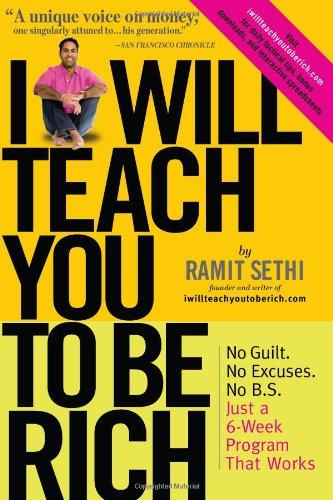
1. I WILL TEACH YOU TO BE RICH BY RAMIT SETHI
RAMIT SETHI | ⭐ 4.5/5
Who it’s for: Young adults in their twenties and early thirties who are working with a moderate income, want a clear system for managing money, and have no interest in extreme frugality or get-rich-quick schemes. If you want a step-by-step plan rather than a philosophy, this is your book.
Get it here: https://www.amazon.com/Will-Teach-You-Be-Rich/dp/1523505746?tag=readplug09-20
“You don’t need a fancy degree to master your finances. You need a system that works while you’re busy living your life.”
His approach is “conscious consumption” — spend lavishly on what you care about, cut ruthlessly on what you don’t. The book covers setting up bank accounts, automating savings, paying off debt, and negotiating salary. If you read one chapter, make it the salary negotiation one. The ROI on that single chapter can exceed the price of the book in your first month at a new job.
My take: I have recommended this book more than any other personal finance title. The structural system is exactly what young adults need — not a philosophy, a working plan. Sethi’s tone can come across as cocky and some US-specific advice doesn’t travel, but the framework is durable.

2. THE PSYCHOLOGY OF MONEY BY MORGAN HOUSEL
MORGAN HOUSEL | ⭐ 4.7/5
Who it’s for: Anyone who understands the mechanics of personal finance but keeps making decisions that undermine their progress. If you know what you should do but somehow never do it, this book explains why — and the answer is almost never about intelligence.
Get it here: https://www.amazon.com/Psychology-Money/dp/0857197681?tag=readplug09-20
“The highest form of wealth is the ability to wake up every morning and say, ‘I can do whatever I want today.'”
Housel argues that financial success is not a science — it is a behavior, shaped by psychology, history, and the specific circumstances of your upbringing. His chapter on “getting wealthy versus staying wealthy” explains why the person who earns more but saves less is worse off than someone who earns less and saves more. Patience, he argues, is the most underrated financial asset. Nobody taught my family this. That is the whole point of recommending it.
My take: If I could put one book on this list and force every young adult to read it, this would be it. Not because it gives you a budget — it doesn’t — but because it gives you a framework for every financial decision you’ll make for the rest of your life.

3. THE TOTAL MONEY MAKEOVER BY DAVE RAMSEY
DAVE RAMSEY | ⭐ 4.4/5
Who it’s for: Young adults who are dealing with significant consumer debt — credit cards, car loans, anything beyond student loans — and need a debt-payoff framework that is aggressive, practical, and doesn’t require them to understand the nuance of refinancing. If you are in debt and feeling stuck, this book will give you a plan.
Get it here: https://www.amazon.com/Total-Money-Makeover-classic-financial/dp/1595555277?tag=readplug09-20
“You must gain control over your money or the lack of it will forever gain control over you.”
His system is built on the “debt snowball” method: list debts smallest to largest, pay minimums on everything, throw every spare dollar at the smallest until it’s gone, then roll that payment into the next. Momentum matters — getting a small win builds the psychological capital to keep going. His critique of consumer debt culture is sharp and funny.
My take: Use the debt snowball if you need it. But take the investment advice with skepticism. The Baby Steps framework is solid for debt elimination; it is less solid for long-term wealth building.

4. THE SIMPLE PATH TO WEALTH BY JL COLLINS
JL COLLINS | ⭐ 4.6/5
Who it’s for: Young adults who are ready to start investing and want the clearest, most honest explanation of index fund investing available. If you have paid off high-interest debt and want to know what to do with the money you are saving, this is the book.
Get it here: https://www.amazon.com/Simple-Path-Wealth-financial-freedom/dp/1944501872?tag=readplug09-20
“The most powerful force in the universe is compound interest.”
Collins’s core argument is simple: low-cost index funds beat most actively managed funds over any meaningful time horizon, and the simplest path to wealth is to invest consistently in a diversified portfolio and do nothing. His explanation of the “Swiss Army Knife” portfolio is the clearest introduction to asset allocation I have ever read. Buy index funds, hold them forever, don’t check them obsessively.
My take: This is the investing book I give to people who have never invested before. If you carry credit card debt, read Ramsey first — Collins assumes that work is done.

5. BROKE MILLENNIAL BY ERIN LOWRY
ERIN LOWRY | ⭐ 4.3/5
Who it’s for: Millennials and Gen Z readers who feel lost in conversations about money, don’t know the vocabulary, and are tired of personal finance books that seem to have been written for people who already understand the basics. This is the beginner’s guide for people who genuinely do not know where to start.
Get it here: https://www.amazon.com/Broke-Millennial-Step-Stopping-Scraping/dp/1525804574?tag=readplug09-20
“Your net worth is not your self-worth.”
Lowry covers the questions people are actually afraid to ask out loud: How do I start investing? What is a 401k? How do I split expenses with a partner who earns more or less than me? What does a credit score actually mean? She answers all of these in plain language, and her chapter on negotiating salary and advocating for yourself at work is particularly strong.
My take: This is the best entry-level personal finance book for young adults. If Sethi’s book feels too advanced, start here. The US-specific tax information requires adjustments for UK readers.

6. YOUR MONEY OR YOUR LIFE BY VICKI ROBIN
VICKI ROBIN | ⭐ 4.4/5
Who it’s for: Young adults who are employed, stable, and starting to question whether the career-spend-more cycle is actually leading anywhere. If you have ever wondered whether the money you earn is actually buying you a life worth living, this book is your starting point.
Get it here: https://www.amazon.com/Your-Money-Life-Transforming-Relationship/dp/0143115766?tag=readplug09-20
“The secret of wealth is simple: spend less than you earn, invest the difference, and repeat.”
Her “Life Energy” framework — calculating how much of your actual life you are trading for your paycheck — is one of those ideas that sounds simple and turns out to be genuinely transformative. She asks you to track every dollar you spend not because budgeting is virtuous, but because money spent is life energy exchanged. The nine-step program she lays out is thorough, and the final chapters on moving toward financial independence are inspiring without being preachy.
My take: This book changed how I thought about spending in my late twenties. The philosophical framework is essential. The investment chapters are dated, and the FIRE movement this book helped inspire has become its own kind of obsession.

7. THE FINANCIAL DIET BY CHELSEA FAGAN
CHELSEA FAGAN | ⭐ 4.2/5
Who it’s for: Young women and anyone who has found most personal finance content alienating or written for a different demographic. Fagan writes about money from the perspective of someone who was never taught it and had to figure it out in real time, which is exactly the reader she is speaking to.
Get it here: https://www.amazon.com/Financial-Diet-Beginners-Managing/dp/1250272383?tag=readplug09-20
“Personal finance is personal. It always has been. And it is not one-size-fits-all.”
Fagan covers the mechanics — budgeting, saving, investing, credit — but she is equally interested in the emotional and social dimensions of money: why you feel guilty spending on things you enjoy, how to have the money conversation with a partner, what to do when your friends earn significantly more than you do. Her chapter on “the comparison trap” is one of the most honest pieces of writing I have encountered on this subject. She does not moralize. She explains the mechanism and lets you decide.
My take: This book is at its best when it is being honest about the social and emotional side of money. The investment chapters are lighter here than in other books, so do not come here for a complete investing education. Come here for the parts other books skip.

8. FINANCIAL FREEDOM BY GRANT SABATIER
GRANT SABATIER | ⭐ 4.3/5
Who it’s for: Young adults who want a comprehensive, actionable roadmap to financial independence and are willing to be aggressive about it. If you are making a median income and want to understand exactly how to convert earning power into long-term wealth, this book gives you the math.
Get it here: https://www.amazon.com/Financial-Freedom-Blueprint-Income-Investor/dp/0141977064?tag=readplug09-20
“The fastest way to wealth is to dramatically increase your income and invest the difference.”
Sabatier became a millionaire at thirty through aggressive earning, strict saving, and smart investing — not through inheritance or luck, but through a deliberate system he breaks down completely. “Financial Freedom” covers earning, saving, investing, and the psychological barriers to building wealth. He includes detailed calculations showing how different income levels and savings rates translate to financial independence timelines — the kind of specificity most books avoid.
My take: This is the book for people who want a complete system rather than a philosophy. Sabatier is honest that his income acceleration advice assumes a certain job market and privileges. Some readers will find the aggressive tone stressful. It is not the right entry point if you are in active financial crisis.

9. THE INDEX CARD BY HELAINE OLEN AND HAROLD POLLACK
HELAINE OLEN AND HAROLD POLLACK | ⭐ 4.3/5
Who it’s for: Readers who are overwhelmed by the volume of financial advice available and want the absolute minimum they need to know to make good decisions. If you want the clearest, most evidence-based summary of what actually works in personal finance, this is your book.
Get it here: https://www.amazon.com/Index-Card-Personal-Finance-Recommendations/dp/1591883752?tag=readplug09-20
“Most of what passes for financial advice is either wrong, overly complicated, or designed to sell you something.”
The original version of this book was literally written on an index card — Pollack summarized his entire financial philosophy in ten points he kept in his wallet. The book expands on those ten points with the evidence behind each recommendation. Here is what the research says works: save 20% of your income, invest in low-cost index funds, maximize tax-advantaged accounts, carry the minimum amount of insurance you need. No philosophy, no personality cult, no product to sell.
My take: This is the book I recommend to people who are skeptical of personal finance books entirely. The evidence is clear and the authors are refreshingly willing to say “we don’t know” when the evidence is inconclusive. Compressed advice can feel reductive when you are living through the messiness of financial life.

10. RICH DAD POOR DAD BY ROBERT KIYOSAKI
ROBERT KIYOSAKI | ⭐ 4.1/5
Who it’s for: Young adults who are early in their financial education and want to understand the mindset differences between people who build wealth and people who work their entire lives for money. If you have heard this book’s core argument but haven’t read it yourself, this is the version that spawned a thousand conversations.
Get it here: https://www.amazon.com/Rich-Dad-Poor-Teach-Middle/dp/1615230056?tag=readplug09-20
“The poor and the middle class work for money. The rich have money work for them.”
The core argument — that your relationship to assets, liabilities, and cash flow is more important than your income level — is genuinely important and worth understanding. Kiyosaki is at his best when explaining why the middle class stays middle class despite increasing incomes: because they accumulate liabilities — bigger houses, fancier cars — that consume earnings rather than generating more. His explanation of assets versus liabilities is one of the most cited and useful frameworks in all of personal finance.
My take: The book is good. Here is what it gets wrong: Kiyosaki’s investment advice in later chapters — particularly his enthusiasm for real estate in all market conditions — is not qualified by appropriate risk warnings, and his “poor dad” is misrepresented as someone who made poor choices rather than someone who faced structural disadvantages he ignores. Recommend the mindset chapters. Be cautious with the investment chapters.
FREQUENTLY ASKED QUESTIONS
WHY IS FINANCIAL LITERACY IMPORTANT FOR YOUNG ADULTS?
The decisions you make in your twenties and thirties have an outsized impact on your lifetime wealth trajectory because of compound interest. A person who starts investing 200 GBP a month at age 25 will have significantly more at 65 than someone who starts at 35 — even investing the same amount for the same number of years. The years you spend not understanding money are not neutral. Nobody taught my family this. That is the whole point of this post.
I’M EARNING A LOW INCOME — IS IT EVEN WORTH THINKING ABOUT INVESTING?
Yes, and the question itself is a trap. If your employer offers a pension contribution match — free money simply because you contribute — not taking it is equivalent to turning down a salary increase. Even small amounts invested early develop the habits that will serve you when you are earning more. You do not need a lot of money to start. You need to start.
DOES READING ABOUT MONEY FEEL OVERWHELMING — WHERE DO I EVEN BEGIN?
Start with “Broke Millennial” or “I Will Teach You to Be Rich” if you are starting from genuine zero — not knowing what a 401k is, not knowing how credit scores work, not knowing why you keep running out of money despite earning more. Pick one, read it completely, and implement one thing from it. You do not need to understand everything before you begin. You need to begin.
IS “RICH DAD POOR DAD” ACTUALLY WORTH READING IF IT’S SO CONTROVERSIAL?
Yes, with a critical eye. Kiyosaki’s core insight — that assets generate income and liabilities drain it, regardless of your salary — is genuinely valuable and worth understanding. But his later investment advice is not reliably sound, and his “poor dad” is a straw man rather than an honest account of structural barriers. Read it for the mindset. Check the specifics.
WHAT’S THE DIFFERENCE BETWEEN THE FIRE MOVEMENT BOOKS AND TRADITIONAL PERSONAL FINANCE BOOKS?
Traditional personal finance books — Ramsey, Sethi, Olen and Pollack — help you make good decisions with the income you have, reduce debt, and build toward financial security. FIRE movement books — Robin, Sabatier — target financial independence: having enough invested that you no longer need to work for money. If you want to retire early and are willing to be aggressive about saving, read Sabatier and Robin. If you want a stable financial life, read Sethi or Olen. Both are valid.
HOW DO I START INVESTING IF I DON’T HAVE MUCH MONEY?
Open a low-cost index fund account — Hargreaves Lansdown, Interactive Investor, and Vanguard UK make this straightforward — and set up a monthly direct debit for whatever amount you can afford, even just 50 GBP. The specific platform matters less than the habit of investing consistently. JL Collins’s “The Simple Path to Wealth” explains exactly why index funds are the right vehicle for most people. You do not need a large sum. You need consistency and time.
WHAT BOOKS ON THIS LIST WON’T HELP IF I’M IN ACTIVE FINANCIAL CRISIS?
If you are missing debt payments, have no emergency fund, and are using credit cards to cover necessities, none of these books will help you directly. Several could make things worse by leading you toward investing before dealing with high-interest debt. Read Dave Ramsey’s debt snowball method first, or speak to a free financial counselor. These books are for people with stable income who have addressed their most urgent debt. They are not crisis management guides.
THE BOTTOM LINE
Financial literacy is not a character trait. It is a set of specific, learnable skills that were, for most of modern history, deliberately not taught to people who needed them most — not because the knowledge was secret, but because those who had it benefited from those who didn’t. That is the system. Understanding it doesn’t fix it, but it does mean you can stop blaming yourself for not knowing things nobody told you.
The books on this list are not magic. What they will do is give you the specific frameworks and concrete steps that the people who are good with money were using — the ones they learned from their parents before you ever got to have the conversation. Now you can have the conversation on your own terms.
If you take one thing from this list: open a savings account and set up a direct debit for whatever amount is pain-free but consistent. Automate it. Investing regularly, over time, in low-cost index funds, is more powerful than any other single financial habit. I learned this at twenty-nine, not twenty-two — about seven years of compound growth I will never get back.
Start where you are.
So — which book are you grabbing first?
Disclosure: This post contains affiliate links. If you purchase through these links, ReadPlug may earn a small commission at no extra cost to you. We only recommend books we’ve personally found valuable.
Never miss a life-changing book.
Get our spoiler-free book picks every Tuesday.