There’s a moment I come back to sometimes. Three years ago, I lost my job the same week my dad went into the hospital. I remember sitting in my car in the hospital parking garage, engine off, staring at the concrete wall in front of me. I didn’t cry. I didn’t rage. I just sat there, completely empty, wondering how I was supposed to keep going when everything felt like it was falling apart simultaneously.
That season lasted about four months. Four months of uncertainty, fear, and the kind of bone-deep exhaustion that sleep doesn’t fix. What pulled me through wasn’t one big revelation. It was a slow, stubborn decision to keep showing up — and a stack of books that somehow knew exactly what I needed to hear.
I didn’t read those books because I was motivated. I read them because I was desperate. And what I found surprised me: resilience isn’t something you’re born with. It’s not some mystical trait that lucky people inherit. It’s a skill. It’s a muscle. And like any muscle, it gets stronger when you put it through the right kind of stress.
If you’re going through a tough season right now — or if you just want to be better prepared for the next one — these ten books will build that muscle in ways you didn’t think were possible.
Quick Pick: The Book I Recommend First
Option B by Sheryl Sandberg and Adam Grant. This is the book I wish I’d had on day one of my worst year. It combines Sandberg’s raw, personal story of sudden loss with Grant’s research on resilience and post-traumatic growth. It doesn’t preach. It sits with you in the mess and then gently shows you a way forward.
10 Best Books for Building Mental Resilience in Tough Times

1. Option B: Facing Adversity, Building Resilience, and Finding Joy
Authors: Sheryl Sandberg and Adam Grant Rating: ⭐⭐⭐⭐⭐ (4.7/5) Who it’s for: Anyone dealing with sudden loss, grief, or a life-altering setback
“This book didn’t just help me cope. It helped me understand that coping isn’t the ceiling — it’s the floor.” — Goodreads reviewer
My take: When Sheryl Sandberg’s husband died suddenly at 47, her world shattered. This book is her account of putting the pieces back together — with the help of psychologist Adam Grant, who provides the research backbone for what resilience actually looks like in practice.
The concept that hit me hardest was the “three Ps” that trap people in grief, borrowed from psychologist Martin Seligman: personalization (believing it’s your fault), pervasiveness (believing it affects everything), and permanence (believing it will last forever). Recognizing these traps doesn’t make the pain disappear, but it stops you from drowning in it.
What makes this book different from typical self-help is that Sandberg doesn’t pretend she figured it all out. She shares the ugly parts — the panic attacks, the parenting guilt, the moments she couldn’t get out of bed. That honesty creates space for the reader to feel their own mess without shame. Grant’s contributions about resilience and post-traumatic growth show that it’s possible to emerge from suffering not just intact, but stronger.
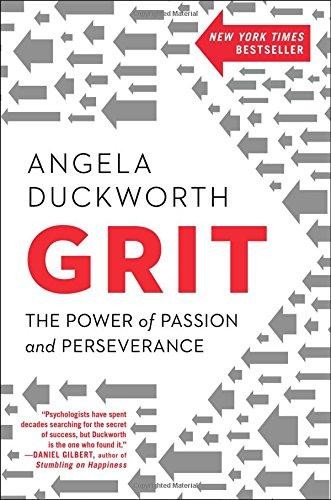
2. Grit: The Power of Passion and Perseverance
Author: Angela Duckworth Rating: ⭐⭐⭐⭐⭐ (4.6/5) Who it’s for: Anyone who thinks they’re not “talented enough” to push through hard times
“After reading Grit, I stopped apologizing for not being the smartest person in the room. I started owning my stubbornness.” — Amazon reviewer
My take: Angela Duckworth is a psychologist at the University of Pennsylvania, and her research on grit has changed how we think about success. Her core finding? Talent is overrated. What predicts success better than IQ, better than natural ability, is a combination of passion and perseverance over the long haul.
This matters for resilience because grit reframes struggle. When you’re going through a tough time, it’s tempting to think, “I’m not cut out for this.” Duckworth’s research shows that the people who make it through aren’t the ones who never struggle. They’re the ones who keep going when things get hard, specifically because they care deeply about what they’re working toward.
The book is full of stories — from West Point cadets to spelling bee champions to CEO’s — that illustrate how grit develops over time. Duckworth also dismantles the myth that grit means white-knuckling your way through pain. Real grit includes knowing when to pivot, when to rest, and when to ask for help.
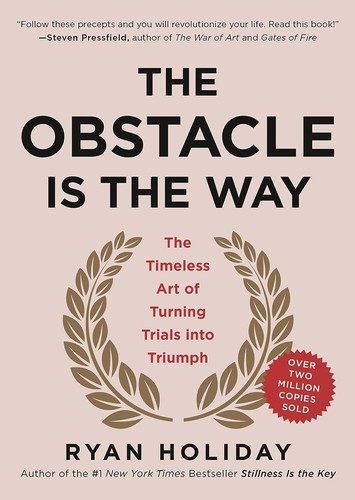
3. The Obstacle Is the Way: The Timeless Art of Turning Trials into Triumph
Author: Ryan Holiday Rating: ⭐⭐⭐⭐⭐ (4.6/5) Who it’s for: People who want a practical philosophy for reframing challenges as opportunities
“I read this during the hardest year of my career. It didn’t fix my problems, but it completely changed how I saw them.” — Goodreads reviewer
My take: Ryan Holiday draws on ancient Stoic philosophy — particularly Marcus Aurelius, Epictetus, and Seneca — to build a framework for turning obstacles into advantages. The central idea comes from Marcus Aurelius: “The impediment to action advances action. What stands in the way becomes the way.”
The book is organized around three disciplines: perception (how you see the problem), action (how you respond to it), and will (how you endure over time). Each section is packed with historical examples — from Ulysses S. Grant to Amelia Earhart to Steve Jobs — showing how people turned their worst moments into defining ones.
What I appreciate about Holiday’s approach is that it’s not toxic positivity. He doesn’t say, “Everything happens for a reason.” He says, “This is happening. Now what are you going to do about it?” That shift — from victimhood to agency — is the foundation of mental resilience.
I keep a copy of this book on my nightstand. When I wake up at 3 a.m. worrying about something, I flip to a random chapter. It’s like having a wise friend who doesn’t sugarcoat things but genuinely believes you can handle whatever’s coming.

4. Resilient: How to Grow an Unshakable Core of Calm, Strength, and Happiness
Author: Rick Hanson Rating: ⭐⭐⭐⭐⭐ (4.5/5) Who it’s for: Anyone who wants neuroscience-backed techniques for building inner steadiness
“Hanson doesn’t just tell you to be resilient. He shows you how your brain actually builds resilience — one experience at a time.” — Amazon reviewer
My take: Rick Hanson is a neuropsychologist, and this book takes a completely different approach from the others on this list. Instead of stories and frameworks, he starts with your brain. Literally. He explains how your brain is wired to be more responsive to negative experiences than positive ones (a survival mechanism called the “negativity bias”), and how you can intentionally rewire it.
The book introduces 12 inner strengths — including compassion, grit, gratitude, and equanimity — and provides specific, practical exercises for building each one. These aren’t fluffy affirmations. They’re grounded in neuroscience. For example, Hanson explains how to use “HEAL” (Have a positive experience, Enrich it, Absorb it, Link it to a negative) to literally change your neural pathways over time.
What makes this book particularly useful for tough times is that it meets you where you are. You don’t need to feel optimistic or motivated to start. The exercises are small, concrete, and designed to work even when you’re running on empty. It’s resilience-building for real people in real crisis — not for people who have the luxury of a calm morning routine and a meditation cushion.
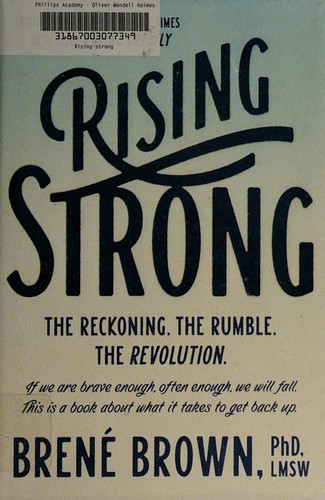
5. Rising Strong: How the Ability to Reset Transforms the Way We Live, Love, Parent, and Lead
Author: Brené Brown Rating: ⭐⭐⭐⭐⭐ (4.6/5) Who it’s for: Anyone who needs permission to fall apart and then put themselves back together
“Brené Brown taught me that falling isn’t failure. Staying down is.” — Goodreads reviewer
My take: This is the third book in Brené Brown’s trilogy (after Daring Greatly and The Gifts of Imperfection), and it might be her most important. While the first two books focus on vulnerability and courage, Rising Strong focuses on what happens after you fall. Because you will fall. We all do.
Brown introduces a three-phase process: the Reckoning (walking into your story), the Rumble (owning your truth), and the Revolution (changing how you live and lead). The Rumble is where the real work happens — it’s that uncomfortable middle space where you confront the stories you’ve been telling yourself about why things went wrong.
What sets this book apart is Brown’s emphasis on “shitty first drafts” — the unfiltered, ugly narratives we tell ourselves after a setback. She teaches you to write them out, examine them, and then rewrite them with more honesty and compassion. It sounds simple, but it’s remarkably powerful. I used this technique after a business failure, and it helped me see that the story I was telling myself (“I’m a fraud who got lucky”) was far from the truth.

6. Can’t Hurt Me: Master Your Mind and Defy the Odds
Author: David Goggins Rating: ⭐⭐⭐⭐⭐ (4.8/5) Who it’s for: People who respond to tough love and want to push past their perceived limits
“Goggins doesn’t coddle you. He grabs you by the shoulders and says, ‘You have no idea what you’re capable of.’ And he’s right.” — Amazon reviewer
My take: David Goggins grew up with abuse, poverty, and racism. He was 300 pounds and working a dead-end job at a pest control company. Today, he’s a retired Navy SEAL, ultramarathon runner, and world record holder for pull-ups. This book tells that story in raw, unfiltered detail.
Fair warning: this book is not for everyone. Goggins is intense. His approach is extreme. He doesn’t talk about self-care or work-life balance. He talks about the “40 percent rule” — the idea that when your mind tells you you’re done, you’ve actually only tapped into about 40 percent of your capacity. He calls his method “callusing the mind,” deliberately exposing yourself to discomfort to build mental armor.
But here’s why I included it on a resilience list: sometimes, when you’re going through a hard time, you don’t need gentle. You need someone to remind you that you’re tougher than you think. Goggins does that louder than anyone. His “accountability mirror” technique — where you write your goals on sticky notes and confront yourself every morning — is blunt, almost brutal, and incredibly effective for people who are tired of making excuses.

7. The Mountain Is You: Transforming Self-Sabotage into Self-Mastery
Author: Brianna Wiest Rating: ⭐⭐⭐⭐⭐ (4.6/5) Who it’s for: Anyone whose biggest obstacle during tough times is themselves
“This book exposed patterns I didn’t even know I had. It’s like therapy in paperback form.” — Goodreads reviewer
My take: Brianna Wiest’s book tackles a truth that most resilience books skip over: sometimes the thing making your tough time harder is you. Your avoidance. Your self-sabotage. Your habit of catastrophizing. Your tendency to push away the people trying to help.
The central metaphor — that you are the mountain standing in your own path — is deceptively simple. But Wiest unpacks it with surprising depth. She explores how unresolved trauma creates patterns that sabotage us during crisis, how our fear of success can be stronger than our fear of failure, and how the stories we tell ourselves about “not being good enough” become self-fulfilling prophecies.
What I love about this book is that it doesn’t just identify the problem. Each chapter ends with reflection prompts and actionable steps for breaking specific self-sabotaging patterns. It’s the kind of book you need a highlighter and a journal for. I found myself underlining entire pages and writing in the margins — something I almost never do.

8. Man’s Search for Meaning
Author: Viktor E. Frankl Rating: ⭐⭐⭐⭐⭐ (4.7/5) Who it’s for: Anyone looking for the deepest possible foundation for resilience — the search for meaning
“If you read only one book on resilience for the rest of your life, make it this one.” — Amazon reviewer
My take: Viktor Frankl was an Austrian psychiatrist who survived the Nazi concentration camps, including Auschwitz. This book — part memoir, part psychological treatise — is his account of how he found meaning in the most horrific conditions imaginable, and how that meaning became the foundation of his survival.
Frankl’s central insight is that we cannot always control what happens to us, but we can always control how we respond. He observed that the prisoners who survived weren’t necessarily the strongest or healthiest. They were the ones who maintained a sense of purpose — whether it was the hope of reuniting with loved ones, the desire to finish a book, or simply the decision to bear their suffering with dignity.
This isn’t a self-help book in the modern sense. There are no morning routines or productivity hacks. What it offers instead is a perspective shift so profound that it changes how you see every challenge you’ll ever face. After reading this, the phrase “I can’t handle this” starts to feel less true. Not because your problems aren’t real, but because you realize that meaning can be found even in the darkest places.
I return to this book every few years, and it hits differently every time. When I was 25, it was philosophy. When I was 35, it was survival manual.
9. The Resilience Factor: 7 Keys to Finding Your Inner Strength and Overcoming Life’s Hurdles
Authors: Karen Reivich and Andrew Shatté Rating: ⭐⭐⭐⭐⭐ (4.5/5) Who it’s for: People who want a structured, evidence-based approach to building resilience
“This book gave me a vocabulary for things I’d been feeling but couldn’t articulate. The seven keys framework is something I use daily now.” — Goodreads reviewer
My take: Karen Reivich and Andrew Shatté are researchers at the University of Pennsylvania’s Positive Psychology Center, and this book is the distillation of years of empirical research on what makes some people more resilient than others.
The seven keys they identify are: emotion regulation, impulse control, optimism, causal analysis, empathy, self-efficacy, and reaching out. Each key gets its own chapter with self-assessments, real-world examples, and concrete exercises for improvement.
What I found most useful was their approach to “explanatory style” — how you explain bad events to yourself. Pessimists tend to see setbacks as permanent, pervasive, and personal. Optimists see them as temporary, specific, and external. The book shows you how to catch your explanatory style in real time and consciously shift it.
This is probably the most “textbook” book on the list, and I mean that as a compliment. If you’re the kind of person who wants to understand the mechanics of resilience — not just feel inspired by it — this is your book.

10. 13 Things Mentally Strong People Don’t Do
Author: Amy Morin Rating: ⭐⭐⭐⭐⭐ (4.5/5) Who it’s for: Anyone who wants a clear, actionable framework for building mental strength starting today
“I expected a list of platitudes. Instead, I got a mirror. This book showed me exactly what I was doing to undermine my own resilience.” — Amazon reviewer
My take: Amy Morin is a psychotherapist who wrote a viral blog post after her husband died suddenly. The post, titled “13 Things Mentally Strong People Don’t Do,” became one of the most-read articles in Forbes history. This book expands on that post with research, personal stories, and practical strategies.
What makes this book unique is its approach: instead of telling you what to do, Morin tells you what to stop doing. Stop wasting time feeling sorry for yourself. Stop giving away your power. Stop dwelling on the past. Stop making the same mistakes. Each chapter takes one destructive habit, explains why we do it, and offers a replacement behavior.
The approach works because building resilience isn’t just about adding good habits. It’s about removing the ones that drain your mental energy. When I was going through my rough patch, I was guilty of at least six of the thirteen things on Morin’s list. Recognizing them was uncomfortable. Changing them was transformative.
Morin’s newer book, The Mental Strength Playbook (coming in 2026), extends this work with 50 workplace-specific tools for managing stress and building emotional resilience on the job. If you’ve already read the original and want more, keep an eye out for it.
Frequently Asked Questions
What exactly is mental resilience?
Mental resilience is your ability to adapt to adversity, trauma, tragedy, or significant sources of stress. It’s not about avoiding difficulty or suppressing emotions. It’s about how you respond when life gets hard — whether you can bend without breaking, process pain without being consumed by it, and eventually find your footing again. The books on this list all approach resilience from slightly different angles, but they share one core belief: resilience can be learned and strengthened over time.
I’m going through a crisis right now. Which book should I start with?
If you’re in acute pain, start with Option B by Sheryl Sandberg and Adam Grant. It meets you in the grief without rushing you through it. If your crisis is more about feeling overwhelmed and stuck, try The Mountain Is You by Brianna Wiest — it helps you identify the ways you might be unconsciously making things harder on yourself. And if you just need a gut-level kick to keep going, David Goggins’ Can’t Hurt Me will grab you by the collar and refuse to let you quit.
Are these books only for people in crisis, or can anyone benefit?
Anyone can benefit. You don’t need to be in the middle of a catastrophe to build mental resilience. In fact, the best time to build it is before you need it — like strengthening a foundation before the storm arrives. Books like Grit, Resilient, and The Resilience Factor are particularly useful for people who want to develop proactive resilience habits rather than waiting for a crisis to force the issue.
How is mental resilience different from just “being tough”?
Being tough often means suppressing emotions and pushing through pain at all costs. Mental resilience is different — it involves acknowledging your emotions, processing them, and then choosing how to respond. Rick Hanson’s Resilient explains this beautifully through neuroscience: resilience isn’t about being hard. It’s about being flexible. A rigid branch snaps in the wind. A flexible one bends and survives.
Can reading books really help build resilience, or do I need therapy?
Both can help, and they’re not mutually exclusive. Books like The Resilience Factor are actually based on cognitive behavioral therapy principles, so they offer a form of self-guided therapy. That said, if you’re dealing with trauma, clinical depression, or severe anxiety, please seek professional help. These books are excellent supplements to therapy — many therapists actually assign them as between-session homework — but they’re not replacements for professional support when you need it.
How long does it take to build mental resilience?
There’s no single timeline, but research suggests that consistent practice of resilience-building habits can produce noticeable changes within 8 to 12 weeks. The key word is “consistent.” Reading a book once won’t transform you. But if you pick one or two exercises from these books and practice them daily — even for just five minutes — you’ll start to notice shifts in how you respond to stress. Amy Morin’s framework and Rick Hanson’s neuroscience-based exercises are particularly designed for daily practice.
Which book is best for building resilience at work specifically?
13 Things Mentally Strong People Don’t Do by Amy Morin is the most workplace-appropriate of the bunch, and her upcoming The Mental Strength Playbook is specifically designed for professional challenges. Grit by Angela Duckworth also has strong workplace applications, especially if you’re dealing with career setbacks, long projects that test your patience, or competitive environments that make you doubt yourself.
Is Stoic philosophy actually useful for modern resilience?
Absolutely, and The Obstacle Is the Way by Ryan Holiday makes the case better than any academic text. Stoicism isn’t about suppressing emotions or being cold. It’s about focusing on what you can control and releasing your grip on what you can’t. That principle is as relevant in a 2026 office as it was in ancient Rome. Marcus Aurelius wrote his Meditations while managing a pandemic, wars, and personal loss. His wisdom translates.
I’m not a reader. Are there audiobook versions of these?
Yes, all ten of these books are available as audiobooks, and many of them are excellent in that format. David Goggins narrates Can’t Hurt Me himself, and it hits completely differently when you hear his voice. Brené Brown’s Rising Strong and Sheryl Sandberg’s Option B are also powerful as audiobooks because of the personal nature of the storytelling. If you commute or exercise, these are perfect for that time.
Can these books help with resilience in relationships, not just individually?
Several of them can. Rising Strong by Brené Brown explicitly addresses how resilience works in relationships — how couples recover from fights, how parents model resilience for their children, and how leaders create resilient teams. Option B also explores how community and connection are essential components of resilience. Resilience isn’t a solo sport. These books will help you build it in partnership with the people around you.
Final Thoughts
Here’s what I know after three years of rebuilding from the worst season of my life: resilience isn’t about being unbreakable. It’s about knowing you’ll break sometimes and having the tools to put yourself back together.
You don’t need to read all ten of these books. Start with the one that speaks to wherever you are right now. If you’re in pain, start with Option B. If you need to understand your brain better, start with Resilient. If you just need someone to tell you to stop making excuses, David Goggins is waiting.
What matters is that you start. That you decide, even on the worst days, to invest in the version of yourself that can handle whatever comes next.
Because tough times don’t last. But tough people do — not because they were born that way, but because they chose to build themselves, one page at a time.
Which book are you grabbing first?
Disclosure: This article contains Amazon affiliate links. If you purchase through these links, we may earn a small commission at no extra cost to you. We only recommend books we’ve genuinely read and believe in.
Never miss a life-changing book.
Join 10,000+ readers getting our data-driven picks every Tuesday.