For the first decade of my career in finance, I operated under a dangerous misconception: that reading bestselling business books was the fastest path to real business acumen. I devoured every New York Times bestseller, every book featured in Forbes’ “must-read” lists, every title that dominated airport bookstore shelves. I highlighted passages, took notes, and felt temporarily inspired after each read.
Yet when it came time to apply these concepts in actual business situations—negotiating contracts, managing teams, making strategic decisions—I found myself repeatedly hitting walls. The elegant frameworks from these bestsellers crumbled when faced with messy human realities, unexpected market shifts, or the simple fact that my team members weren’t behaving like the rational actors in case studies.
The breaking point came during my third year as a financial consultant when a client implementation failed spectacularly despite my team having “followed the book” to the letter. We had implemented the exact agile methodology praised in that month’s business bestseller, only to watch it collapse when faced with legacy systems, resistant stakeholders, and budget constraints that weren’t mentioned in the sanitized success stories.
That experience forced me to confront an uncomfortable truth: most business bestsellers sell hope, not practical skills. They present idealized versions of business that work only in laboratory conditions or for companies with unlimited resources and homogeneous cultures. The gap between what these books promise and what actually works in the real world isn’t just disappointing—it can be actively harmful when leaders mistake theory for competence.
What I needed wasn’t more inspiration—it was practical, tested skills that work when conditions aren’t perfect. I needed books written by practitioners who had actually built businesses, not just theorists who studied them. I needed resources that acknowledged complexity rather than pretending it away with simplistic frameworks.
That search led me to a different category of business literature: the less heralded, often overlooked books that focus on durable skills rather than trending tactics. These aren’t the books you’ll see dominating social media or airport displays, but they’re the ones that deliver lasting value when the hype fades and reality sets in.
Quick Pick: The Best Book for Building Real-World Business Skills
If you only have time for one book, go with “The Personal MBA: Master the Art of Business” by Josh Kaufman. This book distills essential business principles into practical mental models that work in real-world situations, without the fluff and oversimplification of typical business bestsellers. Kaufman focuses on timeless concepts like value creation, marketing, sales, value delivery, and finance—presented as practical tools rather than theoretical frameworks.
The 10 BEST BOOKS FOR BUILDING REAL-WORLD BUSINESS SKILLS BEYOND THE HYPE

1. THE PERSONAL MBA: MASTER THE ART OF BUSINESS BY JOSH KAUFMAN
JOSH KAUFMAN | ⭐ 4.5/5
Who it’s for: Anyone looking to build practical business knowledge without pursuing an expensive MBA, particularly entrepreneurs, managers, and professionals who need to apply business concepts immediately in real-world situations.
Get it here: https://www.amazon.com/Personal-MBA-Master-Art-Business/dp/1591843520?tag=readplug09-20
“Value creation is the process of doing something useful for other people that they’re willing to pay for. It’s the fundamental basis of every business transaction.”
My take: This book represents the antithesis of hyped-up business bestsellers by focusing on timeless, universally applicable business principles rather than trendy methodologies. Kaufman breaks down business into five core processes: value creation, marketing, sales, value delivery, and finance. What makes this exceptionally practical is how each concept is presented as a mental model you can apply immediately—like the “Iron Law of the Market” (your business is limited by the size and quality of the market you serve) or the “Pricing Uncertainty Principle” (you can’t know exactly what price will maximize revenue without testing).
My take: This is the one book I wish I’d read before spending years in finance chasing the latest business fads. It provides a complete, practical foundation that actually works in the messy reality of running businesses, not just in case studies.

2. WORKING BACKWARDS: INSIGHTS, STORIES, AND SECRETS FROM INSIDE AMAZON BY COLIN BRYAR AND BILL CARR
COLIN BRYAR AND BILL CARR | ⭐ 4.6/5
Who it’s for: Entrepreneurs, product managers, and leaders who want to learn practical innovation and product development methods from one of the world’s most successful companies.
Get it here: https://www.amazon.com/Working-Backwards-Insights-Stories-Secrets/dp/0374600117?tag=readplug09-20
“Working backwards is a way of structuring your team and your innovation process to achieve the outcomes you care about most.”
This book provides rare, practical insights into how Amazon actually develops products and makes decisions—not the theoretical frameworks often attributed to the company, but the real, battle-tested processes used daily. Bryar and Carr, both long-time Amazon executives, detail the concrete mechanisms Amazon uses: the working backwards process (starting with the press release), meeting structures that prevent wasted time, and metrics that actually matter.
My take: What sets this apart from typical business bestsellers is its refusal to present Amazon’s success as a simple formula to copy. Instead, it shows the difficult trade-offs, the painful experiments that failed, and the institutional discipline required to maintain customer obsession at scale. The book is particularly valuable for its detailed explanation of how to create and use PR-FAQs (press release and frequently asked questions documents) as a tool for clarifying thinking before building anything.
My take: Unlike most leadership books that offer inspirational stories without actionable methods, this gives you specific processes you can implement tomorrow in your own team or company, regardless of size.

3. THE MAKING OF A MANAGER: WHAT TO DO WHEN EVERYONE LOOKS TO YOU BY JULIE ZHUO
JULIE ZHUO | ⭐ 4.4/5
Who it’s for: New managers, technical professionals transitioning to leadership roles, and anyone who finds themselves managing people without formal training.
Get it here: https://www.amazon.com/Making-Manager-Everyone-Looks-You/dp/0525533826?tag=readplug09-20
“Management is not about the title on your business card. It’s about the impact you have on your team’s output and morale.”
Zhuo’s book stands out in the crowded management literature because it’s written by someone who learned to manage through direct experience at Facebook, not theoretical study. What makes it exceptionally practical is her willingness to share specific mistakes she made and exactly how she corrected them—from giving feedback that backfired to running ineffective meetings.
My take: The book excels at breaking down management into concrete, learnable skills rather than mysterious innate talents. Zhuo provides specific scripts for difficult conversations, frameworks for delivering feedback that actually changes behavior, and practical approaches to common situations like managing former peers or dealing with underperformers. Each concept is grounded in real situations she faced, making the advice immediately applicable.
My take: This is the management book I wish existed when I first became a team lead. Rather than pretending management is about charisma or vision, Zhuo treats it as a set of practical skills that anyone can learn through deliberate practice.

4. TRACTION: GET A GRIP ON YOUR BUSINESS BY GINO WICKMAN
GINO WICKMAN | ⭐ 4.3/5
Who it’s for: Entrepreneurs and business owners who feel their business is controlling them instead of the other way around, particularly those struggling with growth, people, or profitability issues.
Get it here: https://www.amazon.com/Traction-Grip-Your-Business/dp/0985763508?tag=readplug09-20
“Vision without traction is merely hallucination.”
Wickman’s Entrepreneurial Operating System (EOS) stands out because it’s not another lofty leadership theory—it’s a practical, day-to-day operating system used by over 100,000 businesses. What makes it exceptionally valuable is its focus on implementation rather than inspiration. The book provides concrete tools for the six key components of any business: vision, people, data, issues, process, and traction.
My take: Unlike many business bestsellers that promise transformation through vague concepts like “culture” or “leadership,” EOS gives you specific weekly meetings, scorecards, and processes to implement. The traction component alone—teaching you how to set rocks (quarterly priorities), measure them weekly, and solve issues in a structured way—is worth the price of the book for any business owner feeling overwhelmed by day-to-day operations.
My take: This book rescued my own consulting practice from chaos. Rather than another inspirational leadership book, it gives you the equivalent of an operating manual for your business—practical, structured, and immediately applicable.

5. TURN THE SHIP AROUND!: A TRUE STORY OF TURNING FOLLOWERS INTO LEADERS BY L. DAVID MARQUET
L. DAVID MARQUET | ⭐ 4.5/5
Who it’s for: Leaders at all levels who want to build more effective teams by developing leadership capabilities throughout their organization, not just at the top.
Get it here: https://www.amazon.com/Turn-Ship-Around-True-Story/dp/1591846406?tag=readplug09-20
“Leadership is communicating to people their worth and potential so clearly that they are inspired to see it in themselves.”
Marquet’s book stands apart from typical leadership bestsellers because it’s based on his actual experience transforming one of the worst-performing submarines in the U.S. fleet into one of the best by rejecting the traditional leader-follower model. What makes it exceptionally practical is the specific, implementable framework he developed: giving control to create leaders rather than taking control to get followers.
My take: The book provides concrete language shifts that empower teams (changing “request permission to” to “inform intent to”), specific meeting structures that develop decision-making skills at all levels, and practical approaches to building competence and clarity throughout an organization. Unlike theoretical leadership books, Marquet shows exactly how he implemented these changes in the high-stakes, zero-margin-for-error environment of a nuclear submarine.
My take: This book fundamentally changed how I think about leadership. Rather than focusing on developing more followers who depend on the leader, it shows how to create more leaders who can think and act independently—producing better results with less micromanagement.
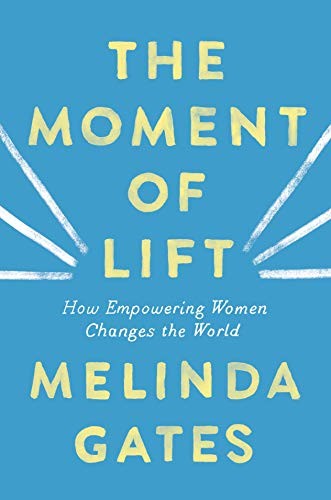
6. THE MOMENT OF LIFT: HOW EMPOWERING WOMEN CHANGES THE WORLD BY MELINDA GATES
MELINDA GATES | ⭐ 4.4/5
Who it’s for: Leaders, managers, and entrepreneurs who want to build more effective teams and organizations by understanding and leveraging diversity, particularly gender diversity.
Get it here: https://www.amazon.com/Moment-Lift-Empowering-Women-Changes/dp/1250299069?tag=readplug09-20
“When we lift up women, we lift up humanity.”
While not a traditional business book, Gates’ work offers exceptionally practical insights for building better businesses through understanding human motivation and social dynamics. What makes it valuable for business leaders is her data-driven approach to showing how gender diversity directly impacts business outcomes—from innovation to profitability.
My take: The book provides concrete examples of how companies that invest in women’s education, healthcare, and economic empowerment see measurable business benefits. Gates shares specific programs that have worked, along with the metrics used to measure their success. Unlike theoretical treatments of diversity, this book focuses on practical interventions with measurable ROI.
My take: This book showed me that building real-world business skills isn’t just about financial models or operational systems—it’s about understanding the human systems that drive business results. Creating inclusive environments isn’t just the right thing to do; it’s a competitive advantage.

7. MEASURE WHAT MATTERS: HOW GOOGLE, BOBO, AND THE WORLD’S MOST INNOVATIVE COMPANIES USE OKRS TO DRIVE EXTRAORDINARY GROWTH BY JOHN DOERR
JOHN DOERR | ⭐ 4.4/5
Who it’s for: Leaders, managers, and team members who want to implement effective goal-setting systems that drive focus, alignment, and measurable results.
Get it here: https://www.amazon.com/Measure-What-Matters-Google-Bono/dp/0743266017?tag=readplug09-20
“Ideas are easy. Execution is everything.”
Doerr’s book on Objectives and Key Results (OKRs) stands out because it’s not just another goal-setting theory—it’s a practical system proven at Google, Intel, and numerous other innovative companies. What makes it exceptionally valuable is the concrete implementation guidance, not just the concept explanation.
My take: The book provides specific examples of how companies like Google set and track OKRs, including the cadence (quarterly), the grading system (0.0 to 1.0), and the importance of setting aggressive goals. Unlike many business books that present frameworks as magical solutions, Doerr honestly discusses common pitfalls like sandbagging objectives or creating too many key results.
My take: This book transformed how I approach goal-setting in my own work. Rather than vague aspirations or annual reviews that get forgotten, OKRs provide a transparent, measurable system that keeps teams focused on what actually matters—with built-in accountability and learning.

8. THE COACHING HABIT: SAY LESS, ASK MORE & CHANGE THE WAY YOU LEAD FOREVER BY MICHAEL BUNGAY STANIER
MICHAEL BUNGAY STANIER | ⭐ 4.3/5
Who it’s for: Managers, leaders, and anyone who wants to develop more effective coaching skills to build stronger teams and develop talent.
Get it here: https://www.amazon.com/Coaching-Habit-Sless-Ask-More/dp/0978440749?tag=readplug09-20
“If you’re giving advice, you’re not coaching.”
Stanier’s book stands out in the leadership literature because it reduces coaching to seven essential questions that anyone can learn and use immediately. What makes it exceptionally practical is its focus on building a daily habit rather than occasional coaching sessions.
My take: The book provides specific scripts for each of the seven questions (like “What’s on your mind?” and “And what else?”), along with guidance on when to use each one. Unlike theoretical leadership books, this focuses on micro-habits that compound over time—changing how you show up in conversations just a few minutes each day.
My take: This book gave me a practical toolkit for improving team performance that doesn’t require hours of training or complex frameworks. Just mastering a few simple questions has dramatically improved the quality of my conversations and the development of my team members.

9. COMPETING AGAINST LUCK: THE STORY OF INNOVATION AND CUSTOMER CHOICE BY CLAYTON M. CHRISTENSEN, TADD HALL, KAREN DILLON, AND DAVID S. DUNCAN
CLAYTON M. CHRISTENSEN ET AL. | ⭐ 4.2/5
Who it’s for: Product managers, entrepreneurs, and business leaders who want to understand why customers really choose products and services—and how to build offerings they can’t resist.
Get it here: https://www.amazon.com/Competing-Against-Luck-Innovation-Customer/dp/0062435612?tag=readplug09-20
“Customers don’t buy products or services; they ‘hire’ them to make progress in specific circumstances.”
Christensen’s Jobs to be Done theory stands out because it’s not another abstract marketing framework—it’s a practical lens for understanding customer behavior that works in real business situations. What makes it exceptionally valuable is its focus on causality rather than correlation in understanding why customers make the choices they do.
My take: The book provides concrete examples of how companies like Intuit, Amazon, and Snickers have applied Jobs to be Done thinking to innovate successfully. Unlike many business books that present customer insights as vague preferences, this gets specific about the progress customers are trying to make in particular situations—the functional, social, and emotional dimensions of their “job.”
My take: This book changed how I think about product development and marketing. Rather than focusing on customer demographics or stated preferences, it teaches you to look for the underlying progress customers are trying to achieve—leading to innovations that actually resonate in the marketplace.

10. THE CORE PROBLEM: A BUSINESS FICTION BOOK ABOUT IDENTIFYING AND SOLVING THE REAL ISSUES IN YOUR COMPANY BY PATRICK LENCIONI
PATRICK LENCIONI | ⭐ 4.3/5
Who it’s for: Leaders, managers, and consultants who want to improve their ability to identify and solve the real problems in organizations—not just the symptoms.
Get it here: https://www.amazon.com/Core-Problem-Business-Fiction-Book/dp/1118009188?tag=readplug09-20
“The health of an organization is reflected in the clarity and agreement around its goals.”
Lencioni’s book stands out because it presents business concepts through a engaging fictional story, making the lessons memorable and applicable. What makes it exceptionally practical is the clear distinction it makes between symptomatic treatment and root cause resolution—a critical skill for effective business leadership.
The book provides practical tools for identifying core problems like thematic goal setting, clarity exercises, and regular team assessments. Unlike many business books that focus on inspirational leadership or trendy frameworks, this gets down to the nuts and bolts of organizational health: clarity, alignment, and execution.
My take: This book reminded me that the most valuable business skill isn’t knowing the latest framework—it’s being able to accurately diagnose what’s actually wrong in a situation. All the execution in the world won’t help if you’re solving the wrong problem.
FREQUENTLY ASKED QUESTIONS
WHY SHOULD I TRUST THESE BOOKS OVER POPULAR BUSINESS BESTSELLERS?
These books were selected because they focus on practical, applicable skills rather than trending theories or inspirational stories. Unlike many business bestsellers that rely on cherry-picked success stories or oversimplified frameworks, each of these books is grounded in real-world experience, provides concrete tools you can implement immediately, and acknowledges the complexity of actual business situations. They represent the knowledge practitioners actually use day-to-day, not just what sounds good in a keynote speech.
I’M NEW TO BUSINESS—WHERE SHOULD I START IF I FEEL OVERWHELMED?
Start with “The Personal MBA” by Josh Kaufman as it provides the most comprehensive foundation of essential business principles in an accessible format. Then, depending on your specific interests, move to “The Making of a Manager” by Julie Zhuo if you’re people-focused, “Traction” by Gino Wickman if you’re struggling with business operations, or “Turn the Ship Around!” by L. David Marquet if you’re interested in leadership approaches. The key is to begin with foundational concepts before specializing.
HOW DO I KNOW IF A BUSINESS BOOK WILL BE PRACTICAL VERSUS JUST INSPIRATIONAL?
Look for books that include specific frameworks, step-by-step processes, or concrete tools rather than just stories and concepts. Practical books will have sections titled “how to,” include worksheets or templates, reference specific chapters with actionable advice, and show you exactly how to apply what you’re learning. They’ll also acknowledge limitations and challenges rather than presenting everything as easy or guaranteed to work.
CAN THESE BOOKS HELP ME IF I’M NOT AN ENTREPRENEUR OR CEO?
Absolutely. While some books like “Traction” are particularly valuable for business owners, others like “The Coaching Habit” and “The Making of a Manager” are incredibly useful for anyone who works with others, regardless of title. Even individual contributors benefit from understanding business fundamentals, goal-setting frameworks (like OKRs), and communication skills. The skills in these books transfer to nearly any professional role where you need to get things done through others.
WHAT IF I DON’T HAVE TIME TO READ 10 FULL BOOKS?
Start with the Quick Pick recommendation—”The Personal MBA”—which gives you a solid business foundation in one book. Then, identify your biggest current challenge (management, goal-setting, team dynamics, etc.) and read just the book that addresses that specific area. Remember that it’s better to deeply understand and apply concepts from one book than to superficially skim several. You can always return to others later as your needs evolve.
HOW DO I APPLY WHAT I LEARN FROM THESE BOOKS WITHOUT FEELING OVERWHELMED?
Choose one concept or tool from each book to implement before moving on. For example, from “The Personal MBA,” focus on understanding your value creation process; from “The Coaching Habit,” practice using just one of the seven questions in your daily conversations; from “Measure What Matters,” try setting one OKR for your team or personal goals. Small, consistent applications compound over time and prevent the paralysis that comes from trying to implement everything at once.
ARE THESE BOOKS RELEVANT FOR SPECIFIC INDUSTRIES LIKE TECH, HEALTHCARE, OR NON-PROFITS?
Yes, while the examples may come from various sectors, the underlying skills are universal. The concepts of value creation, effective management, goal setting, coaching, and problem identification apply whether you’re building software, running a hospital, or managing a charitable organization. In fact, seeing how these principles apply across different contexts often helps you understand them more deeply and adapt them more effectively to your specific situation.
WHAT’S THE BIGGEST MISTAKE PEOPLE MAKE WHEN TRYING TO BUILD REAL-WORLD BUSINESS SKILLS?
The most common mistake is seeking comfort over growth—choosing books that reinforce what you already believe or make you feel good without challenging you to develop new capabilities. Real skill-building requires engaging with ideas that might initially feel uncomfortable or difficult to apply. Another mistake is collecting knowledge without application; business skills atrophy without practice, so focus on implementing what you learn rather than just accumulating more information.
THE BOTTOM LINE
Building real-world business skills isn’t about finding the next big idea or following the latest trend—it’s about developing durable capabilities that work when conditions aren’t perfect, resources are limited, and human factors come into play. The books in this list have earned their place not through hype or marketing, but through proven usefulness in actual business situations.
If you’re looking to build practical business acumen that delivers results, I’d particularly recommend starting with “The Personal MBA” for foundational knowledge, “The Making of a Manager” for people skills, and “Measure What Matters” for goal-setting systems. These three together provide a powerful combination of understanding, interpersonal effectiveness, and execution focus.
My take: Which book are you grabbing first to start building your real-world business skills?
Disclosure: This post contains affiliate links. If you purchase through these links, ReadPlug may earn a small commission at no extra cost to you. We only recommend books we’ve personally found valuable.