The first time someone told me I was “too sensitive,” I was twenty-six.
I remember the exact feeling: a small, cold recognition in my chest, like a door clicking shut somewhere I couldn’t name. I remember thinking, defensively, that I wasn’t too sensitive — I was appropriately sensitive. But I didn’t say that. I said nothing. I just absorbed it, filed it away, added it to the growing collection of evidence that my feelings were the problem.
It took me years to understand that the “too sensitive” framing wasn’t feedback. It was a weapon. And it took me even longer to understand that the person wielding it understood exactly what they were doing.
This is the particular cruelty of narcissistic abuse: you don’t recognize it while you’re in it. You just know you feel wrong all the time. You know that conversations end with you feeling confused and small. You know that your needs — your perfectly reasonable needs — somehow become the crisis, the inconvenience, the thing that needs managing. You know you cry more than you should. You don’t know yet that the crying is your body trying to tell you something the person you love is systematically erasing.
I left that relationship at twenty-nine. I’m thirty-seven now, and I can tell you: the leaving is not the hard part. The hard part is everything that comes after. The hard part is learning to trust your own perceptions again. The hard part is the dreams where you’re trying to explain something obvious and the other person just stares at you, and you wake up uncertain which world is real.
The books on this list are the ones I found in that rebuilding. Some of them I read during the worst of it. Some of them I read years later, when I was ready. All of them helped.
Quick Pick: The Best Book for Building Resilience After Narcissistic Abuse
If you only have time for one book, go with “Psychopath Free” by Jackson MacKenzie. This is the book I wish someone had handed me at twenty-six, before I spent three years doubting my own reality. MacKenzie writes with devastating clarity about narcissistic relationships — how they work, why they leave you feeling erased, and crucially, why none of it was your fault. He doesn’t waste pages on academic distance. He writes like someone who gets it. And that understanding is sometimes the first step toward reclaiming everything the relationship took from you.
The 10 BEST BOOKS FOR BUILDING RESILIENCE AFTER NARCISSISTIC ABUSE AND RECLAIMING YOUR SENSE OF SELF

1. Psychopath Free: Recovering from Emotionally Abusive Relationships with Narcissists, Sociopaths, and Other Toxic People by Jackson MacKenzie
Jackson MacKenzie | ⭐ 4.6/5
Who it’s for: Anyone who has survived a relationship with a narcissistic or emotionally abusive partner and is still trying to make sense of what happened. This is especially useful for people who aren’t sure if what they experienced “counted” as abuse.
“The truth is, you were not too sensitive. You were not crazy. You were not imagining things. What you experienced was real.”
MacKenzie writes with the clarity of someone who has lived this. His chapters on “Cognitive Dissonance” and “The Empty Shell” describe the experience of narcissistic abuse better than anything else I’ve read. He explains why you kept trying harder, why you kept apologizing, why the relationship felt like standing in quicksand — because the goalposts were always moving and you were always failing to hit them.
What I found most valuable: MacKenzie doesn’t pathologize the survivor. He doesn’t spend pages on why you “chose” this or what childhood wounds attracted you. He focuses on what happened and why it wasn’t your fault. That reframe was, for me, the beginning of everything.
My take: This is the starting point. If you’ve come out of a narcissistic relationship questioning your own sanity, this book is the first step toward rebuilding. MacKenzie gives you language for what you experienced, and language is power.

2. Whole Again: Healing Your Heart and Rediscovering Your True Self After Toxic Relationships by Jackson MacKenzie
Jackson MacKenzie | ⭐ 4.5/5
Who it’s for: Survivors who are past the crisis stage and ready to do the deeper work of rebuilding their relationship with themselves. This is the sequel to “Psychopath Free” and focuses on the long game.
“You don’t have to become bitter. You don’t have to become hard. You can come back softer than you were, but stronger too.”
MacKenzie follows up his first book with a guide to the rebuilding phase. He covers the stages of recovery — from initial aftermath through rediscovering your authentic self — with the same clarity and compassion as the first book. The chapters on “Rediscovering Your True Self” and “Rewiring Your Brain” are particularly valuable, offering practical exercises for people who are ready to stop just surviving and start living again.
I found this book most useful about two years after leaving my own relationship. By then, I had processed the initial trauma enough to start asking bigger questions: Who am I now? What do I actually want? MacKenzie doesn’t have all the answers, but he asks the right questions.
My take: The natural follow-up to “Psychopath Free.” Read them in order. The first book helps you understand what happened; this one helps you move forward.
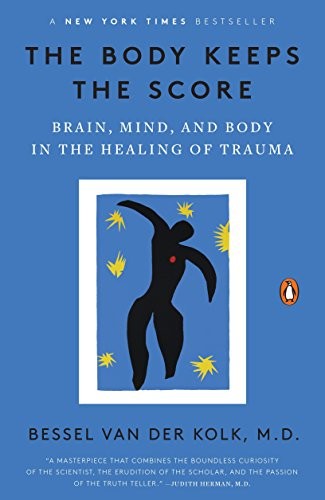
3. The Body Keeps the Score: Brain, Mind, and Body in the Healing of Trauma by Bessel van der Kolk
Bessel van der Kolk | ⭐ 4.7/5
Who it’s for: Anyone whose body has been holding trauma they haven’t fully processed. Van der Kolk’s research explains why talk therapy alone often isn’t enough for deep trauma — and what does work.
“Trauma is not the story of what happened. Trauma is the legacy of what happened in your body.”
I include this book because narcissistic abuse isn’t just psychological — it’s somatic. Your body learns to brace for the next conflict. Your nervous system gets rewired for constant vigilance. Van der Kolk’s research explains why you might feel fine intellectually but still startle at loud voices or freeze when someone raises an eyebrow.
This isn’t a light read. Van der Kolk is a researcher, and the book is rigorous. But for survivors who feel like their body is a stranger to them, this book offers a framework for understanding why and a map toward reconnection.
My take: Essential for understanding the physical dimension of narcissistic abuse trauma. Van der Kolk’s work on yoga, EMDR, and theater as healing modalities was personally transformative. Give yourself time with this one.

4. Attached: The New Science of Adult Attachment and How It Can Help You Find—and Keep— Love by Amir Levine and Rachel Heller
Amir Levine & Rachel Heller | ⭐ 4.5/5
Who it’s for: Survivors of narcissistic relationships who find themselves drawn to the same patterns again and again, or who are ready to start dating again and want to understand their attachment style.
“In trying to preserve our attachment bonds, we often sacrifice other things — our self-respect, our emotional well-being, our sanity.”
Levine and Heller apply attachment theory — well-established in child development research — to adult romantic relationships. For survivors of narcissistic abuse, this book is clarifying in a specific way: it helps you recognize why you were attracted to what you were attracted to, and more importantly, what a secure attachment actually feels like.
I read this after my divorce, on the recommendation of my therapist. The chapter on “anxious attachment” and how it interacts with “dismissive avoidant” patterns explained my marriage in ways I hadn’t considered. Not as a way to blame myself, but as a way to understand the system I was caught in.
My take: Not specifically about narcissistic abuse, but crucial for understanding the relational patterns that keep survivors stuck. If you’re going to date again, read this first.

5. Complex PTSD: From Surviving to Thriving: A Guide and Map for Recovering from Childhood Trauma by Pete Walker
Pete Walker | ⭐ 4.7/5
Who it’s for: Survivors who suspect their narcissistic relationship trauma connects to earlier wounds. Pete Walker specifically addresses complex PTSD — trauma that accumulates over time rather than from a single event.
“I treat my inner critic as I would treat a frightened, potentially dangerous, but previously beloved dog that has been beaten by prior owners.”
Walker’s book is a guide for people whose trauma didn’t start with the adult relationship. If you grew up in a family where your feelings were dismissed, where you learned to adapt to unstable caretakers, this book helps explain why a narcissistic partner felt so familiar — and so hard to leave.
Walker is compassionate but direct. He offers practical tools for managing the “inner critic” that develops in traumatic family systems, and his explanations of the “fawn” and “freeze” responses helped me understand behaviors I had been judging myself for.
My take: This book is for people whose narcissistic relationship wasn’t their first wound. If you suspect your adult trauma connects to childhood experiences, this is the map you need.

6. Stop Caretaking the Borderline or Narcissist: How to End the Drama and Get on with Life by Margalis Fjelstad
Margalis Fjelstad | ⭐ 4.4/5
Who it’s for: People who recognize themselves as “caretakers” in relationships with narcissistic partners. Fjelstad specifically addresses the role we play in maintaining dysfunctional relationship systems.
“The more you do for the borderline or narcissistic partner, the more invalidation and criticism you receive.”
Fjelstad’s book is uncomfortable in the best way. She doesn’t blame survivors — she helps them see the patterns they participated in without understanding why. As a caretaker, you learned that love meant fixing, helping, solving. The narcissistic partner reinforced this by creating constant crises that needed your attention. Fjelstad helps you see the system clearly and start stepping out of it.
I found this book hard to read because it described my marriage so accurately. But hard isn’t the same as bad. This book was an important part of my understanding that I hadn’t just been victimized — I had been participating in a system that was hurting us both.
My take: Important for survivors who want to understand their role in the relationship dynamic without using that understanding as self-blame. Fjelstad strikes a compassionate balance.

7. Boundaries: When to Say Yes, How to Say No to Take Control of Your Life by Dr. Henry Cloud and Dr. John Townsend
Dr. Henry Cloud & Dr. John Townsend | ⭐ 4.6/5
Who it’s for: Survivors who struggle to distinguish their own needs from others’ demands. This is the foundational text on boundary-setting and is essential for rebuilding a sense of self.
“The boundaries we have in our lives define how much control we have over our lives.”
Cloud and Townsend are Christian psychologists, and some readers find that context off-putting. But the core principles are universally applicable, and for survivors of narcissistic abuse, this book is about more than social skills — it’s about learning that you have a right to exist with needs and limits.
I read this book on my therapist’s recommendation during my divorce. It helped me understand that the exhaustion I’d been feeling wasn’t because I wasn’t trying hard enough — it was because I had been giving away everything I had without ever receiving anything back. The boundary work here was foundational to everything that came after.
My take: Essential reading, full stop. Whether or not you connect with the faith-based framing, the psychological principles are sound and the practical guidance is invaluable.

8. Why Does He Do That?: Inside the Minds of Angry and Controlling Men by Lundy Bancroft
Lundy Bancroft | ⭐ 4.6/5
Who it’s for: Survivors who need to understand the “why” of their abusive partner’s behavior. Bancroft worked with abusive men for decades, and his insight into the psychology of abuse is unparalleled.
Get it here: Amazon Link
“Anger is not the primary problem in an abusive man. The primary problem is his set of attitudes that lead him to feel entitled to control his partner.”
Bancroft’s book is unflinching. He does not excuse abusive behavior, and he does not offer false hope that abusers can change without serious, sustained intervention. For survivors, this clarity is both painful and necessary. You need to understand that the behavior was not your fault — and you also need to understand that it was a choice, not a disease.
I found this book difficult to read but ultimately clarifying. It helped me stop making excuses for my ex, which I had been doing without realizing it. “He’s stressed,” I would think. “He had a hard childhood.” Bancroft helped me see that explanations are not the same as justifications, and that understanding why someone hurts you doesn’t obligate you to stay.
My take: Difficult but necessary. Bancroft’s book will not comfort you, but it will help you see clearly. Sometimes clarity is the first step toward healing.
9. The Narcissistic Family: Diagnosis and Treatment by Stephanie Donaldson-Pressman and Robert Pressman
Stephanie Donaldson-Pressman & Robert Pressman | ⭐ 4.3/5
Who it’s for: Survivors who grew up in families where narcissism was present. This book specifically addresses how narcissistic family systems affect children — and how those children carry the wounds into adult relationships.
“Children from narcissistic families learn early that their role is to meet the needs of others, not to have needs of their own.”
If your narcissistic partner reminded you of one of your parents, this book will explain why. The Pressmans describe the family dynamics that create narcissistic personalities and the specific wounds that children in these systems carry. The concept of the “role” — the child who becomes the caretaker, the performer, the mascot — helps explain why you found yourself in the relationship you found yourself in.
I found this book helpful in understanding my own family of origin, which gave me more context for why I was drawn to certain relationship patterns. It’s not a comfortable read, but it’s a useful one.
My take: Most valuable for survivors who recognize narcissistic dynamics in their family of origin as well as their romantic relationships. This book helps explain the full system.

10. Women Who Love Too Much: When You Keep Hoping and He Keeps Breaking Up by Robin Norwood
Robin Norwood | ⭐ 4.3/5
Who it’s for: Women who find themselves repeatedly attracted to unavailable, emotionally destructive, or abusive partners. Norwood’s book was groundbreaking when first published and remains relevant for understanding codependent patterns.
“The goal of recovery is not to become perfect, but to become whole.”
Norwood’s book is older than most on this list — it was first published in the 1980s — and some of its framing shows its age. But the core insights about codependent patterns, about loving too much in ways that diminish rather than sustain, remain valuable. Norwood is particularly good at helping readers see that the pattern of choosing unavailable partners is itself a wound, not a character flaw.
I include this book with a caveat: Norwood’s work has been criticized for blaming women’s choices rather than addressing systemic power imbalances. Read it with that context in mind. The parts about understanding your own patterns are still useful; the parts about what women “should” do are more dated.
My take: A classic that has aged unevenly. Useful for understanding codependent patterns, but supplement with more recent work on attachment and trauma.
FREQUENTLY ASKED QUESTIONS
HOW LONG DOES IT TAKE TO RECOVER FROM NARCISSISTIC ABUSE?
Recovery from narcissistic abuse is not linear, and there’s no fixed timeline. Some survivors feel significant healing within a year; others find that the effects linger for decades. The books on this list are tools — they work best with consistent use over time. Be patient with yourself. Healing is not a destination; it’s a direction.
WILL READING THESE BOOKS MAKE ME FORGIVE MY ABUSER?
No. And that’s not the goal. Recovery from narcissistic abuse is about you — understanding what happened, rebuilding your sense of reality, and learning to trust yourself again. Forgiveness may or may not be part of your journey, but it is never required. Some survivors find peace without forgiving. That’s valid.
I KEEP MISSING MY NARCISSISTIC EX. IS THAT NORMAL?
Yes. This is one of the cruelest aspects of narcissistic abuse: the relationship often felt intoxicating, and your brain remembers the highs even as it forgets the lows. This is called intermittent reinforcement, and it’s a documented psychological phenomenon. Missing your ex doesn’t mean you want them back. It means your brain was conditioned to expect certain responses. The books on this list help you understand and override that conditioning.
SHOULD I GO TO THERAPY AFTER A NARCISSISTIC RELATIONSHIP?
Therapy is strongly recommended, particularly if you’re struggling with complex PTSD symptoms, difficulty trusting your own perceptions, or repeated attraction to the same relationship patterns. The books on this list are valuable, but they cannot replace the personalized support of a skilled therapist. Look for someone who specializes in trauma and abusive relationships.
WHAT IF I DON’T SEE RESULTS FROM THESE BOOKS?
Some of these books will resonate more than others. If one doesn’t connect, try another. The research shows that insight alone doesn’t create change — it’s the consistent application of insight over time. If you’re genuinely not seeing progress after several months, consider working with a therapist who understands narcissistic abuse and trauma.
HOW DO I KNOW IF I WAS ACTUALLY IN A NARCISSISTIC RELATIONSHIP?
If you’re questioning whether what you experienced “counted” as narcissistic abuse, that questioning itself is a sign. Healthy relationships don’t leave you questioning your own reality. If you consistently felt confused, diminished, or like your needs didn’t matter, the relationship was harmful — regardless of whether your partner had a formal diagnosis. Trust your experience.
THE BOTTOM LINE
Building resilience after narcissistic abuse is the hardest thing I’ve ever done. It’s also the most important. The years I spent in that relationship took something from me that I’m still in the process of reclaiming: my certainty that my perceptions are real, my confidence that my needs matter, my sense that I have a right to take up space.
The books on this list helped me reclaim it. They gave me language for what I experienced. They showed me I wasn’t alone. They offered practical tools for managing the aftermath. And they reminded me — again and again — that I was not the problem.
If you’re in the thick of it right now, I want you to know: it gets better. Not because the memories fade, but because you get stronger. You learn to trust yourself again. You learn that the confusion was never your fault. You learn that your sensitivity was never the issue — it was your superpower, and it survived everything.
Start with “Psychopath Free” if you’re still in the fog. Then work your way through the rest. Give yourself time. And remember: you’re not healing alone. Millions of people have survived what you’re surviving. These books are proof.
Which book are you grabbing first? Let me know in the comments — I’m always looking for my next read.
Disclosure: This post contains Amazon affiliate links. If you purchase through these links, ReadPlug earns a small commission at no extra cost to you.
Never miss a life-changing book.
Get our spoiler-free book picks every Tuesday.