I have a voice in my head that never shuts up. It narrates, critiques, grades, and reviews everything I do from the moment I wake up until I fall asleep, which usually happens later than it should because the voice gets more active right when I need it to be quiet.
Most days, that voice is not kind.
This is not a confession I’m proud of. I know that self-criticism is not a personality trait — it’s a habit, and habits can be broken. I’ve read the books. I’ve done the exercises. I have a therapy background and a genuine understanding of cognitive behavioral principles, and I still, on a regular Tuesday when nothing dramatic has happened, tell myself things I would never say to someone I loved.
I know this about myself, and it still takes effort to change it.
This is the reality of working on self-compassion: you already know what you’re supposed to do. The hard part isn’t knowing. It’s doing. It’s the gap between “I should be kinder to myself” and actually responding to your own suffering with warmth instead of criticism. The books on this list are the ones that have actually helped me close that gap, not by telling me to think positive thoughts, but by teaching me to sit with my own pain without needing it to be different in order to be okay.
Quick Pick: The Best Book for Starting Your Self-Compassion Practice
Also see our guide to 10 BEST BOOKS FOR BUILDING MENTAL RESILIENCE AFTER ADVERSITY AND LEARNING TO TRUST YOURSELF AGAIN. Also see our guide to 10 BEST BOOKS FOR BUILDING MENTAL RESILIENCE AFTER ADVERSITY AND LEARNING TO TRUST YOURSELF AGAIN. Also see our guide to 10 Best Books for Building Self-Esteem and Confidence and Trusting Yourself Again. Also see our guide to 10 BEST BOOKS FOR BUILDING UNSHAKEABLE CONFIDENCE AND SELF-ESTEEM WHEN YOU’RE TIRED OF SECOND-GUESSING YOURSELF. Also see our guide to 10 BEST BOOKS FOR BUILDING SELF-COMPASSION AND BEING KINDER TO YOURSELF.If you are only going to read one book from this list, make it “Self-Compassion” by Kristin Neff. This is the foundational text on self-compassion, written by the researcher who basically invented the field. Neff doesn’t just theorize about self-compassion — she breaks it down into three components (self-kindness, common humanity, mindfulness) and gives you specific practices for each. What I appreciate most is that she is deeply honest about how hard this is. She doesn’t tell you it gets easier. She tells you it gets different, which is maybe the same thing and also maybe enough.
The 10 BEST BOOKS FOR BUILDING SELF-COMPASSION AND BEING KINDER TO YOURSELF

1. SELF-COMPASSION BY KRISTIN NEFF
Kristin Neff | ⭐ 4.6/5
Who it’s for: Anyone who has tried to be kinder to themselves and found that the inner critic is louder than the inner friend. This is the book for people who feel like self-compassion is for other people — softer, gentler people — but not for them specifically. Neff is direct about the fact that self-compassion is a skill you build, not a trait you’re born with. If you think you can’t do it, this book will argue otherwise.
Get it here: https://www.amazon.com/Self-Compassion-Stop-Beating-Yourself/dp/0061733520?tag=readplug09-20
“We can never love ourselves too much. And yet, many of us are running around trying to prove our worth to ourselves.”
Kristin Neff’s book came out in 2011, which means it’s had over a decade to become the standard text on self-compassion for a reason. She is a researcher who studied this empirically before most people knew the term, and the book reflects that rigor. It’s not just inspirational — it’s based on actual data about what practices work and why.
The three components she identifies are: self-kindness (treating yourself with warmth rather than judgment), common humanity (recognizing that suffering is part of shared human experience, not something that isolates you), and mindfulness (observing painful emotions without exaggerating or suppressing them). Neff walks through each component with a combination of research and exercises.
I first read this book after a period where I had been very hard on myself about not finishing a project I cared about. The inner critic was active — listing all the ways I had failed, all the commitments I hadn’t met, all the reasons I should be embarrassed. And then I read the chapter on self-kindness and something shifted. Not because Neff told me to be nicer to myself, but because she explained why the inner critic exists and what it actually needs. The critic needs to feel like you’re taking the failure seriously enough. The antidote isn’t agreeing with the critic. It’s responding to your own pain with warmth rather than attack. Which is harder than it sounds and also the only thing that actually works.
My take: Start here. Even if you’ve tried other self-help books and failed. Neff’s approach is grounded in research and she doesn’t pretend the work is easy. But she does show you it’s possible.

2. THE COMPASSIONATE MIND BY PAUL GILBERT
Paul Gilbert | ⭐ 4.5/5
Who it’s for: People who are very hard on themselves and have a strong fear of being seen as weak or soft. Gilbert developed compassion-focused therapy (CFT) specifically for people whose inner critics are loud and whose self-attacking patterns are deeply entrenched. This book is for people who have read self-compassion books and felt like they were being asked to be something they’re not. Gilbert meets you where you are.
Get it here: https://www.amazon.com/Compassionate-Mind-Approach-Healing-Shame/dp/1841198446?tag=readplug09-20
“Compassion is not a state but a skill.”
Gilbert starts from a place that I think is crucial: sometimes self-criticism isn’t your fault. Some people are born with more reactive threat systems. Some people grew up in environments where criticism was the primary language of care — where being pushed hard felt like love, and being soft felt like danger. He doesn’t use this to excuse the behavior. He uses it to explain it, which is the first step in changing it.
The book is structured around the idea that we have three emotional regulation systems: the threat system (which drives self-criticism and fear), the soothing system (which drives compassion and safety), and the striving system (which drives goals and motivation). Most people who are hard on themselves have an overactive threat system and an underactive soothing system. The work is not about suppressing the threat system — it’s about building the soothing system so it can balance it out.
There are exercises in this book that I have used with clients and also with myself, and they require you to sit with discomfort in a way that is not comfortable. Gilbert asks you to imagine offering compassion to yourself the way you would offer it to someone you loved who was suffering. And he acknowledges: this is hard. For some people, offering compassion to themselves feels fake or dangerous. That’s not a failure. That’s information about where to start.
My take: If you’ve tried self-compassion and felt like it wasn’t for you, read this one. Gilbert takes the difficulty seriously.

3. RADICAL COMPASSION BY TARA BRACH
Tara Brach | ⭐ 4.7/5
Who it’s for: People who want to go deeper than skill-building — who are ready to examine the root causes of their self-rejection and work with them directly. Brach combines Western psychology with Buddhist meditation practice in a way that is neither too clinical nor too spiritual. If you’re looking for a book that will help you understand why you are the way you are and also give you tools to change it, this is the one.
Get it here: https://www.amazon.com/Radical-Compassion-Practice-Transforming/dp/1476779548?tag=readplug09-20
“The path of radical compassion is the path of uncovering the love that is already here.”
Tara Brach is the teacher whose voice is, for me, the audio equivalent of a weighted blanket. I found her during a time when I was very hard on myself about something I couldn’t fix, and her talks helped me feel less alone in my own head. This book is the longer version of that experience — it’s based on her RAIN practice (Recognize, Allow, Investigate, Nurture), which she developed over decades of working with people in therapy and meditation.
The RAIN practice is simple in concept and not easy in practice. You recognize what’s happening. You allow it to be there without fighting it. You investigate — you turn toward the emotion and ask what it needs. You nurture — you offer yourself the care that the emotion is asking for. Brach walks through each step with stories and exercises and then applies the practice to common patterns: self-rejection, loneliness, fear of not enough, fear of being seen.
I want to be honest: this book made me cry in ways I wasn’t prepared for. Not because it’s sad, but because it asks you to actually feel things you’ve been avoiding, and sometimes the feeling is grief or shame or something you’ve been holding for so long you forgot it was there. If that’s not something you’re ready for, come back to this one later. But if you are ready, it might change something that nothing else has been able to touch.
My take: This is the book I return to when the surface-level stuff isn’t working. Brach goes deep, and if you’re ready for that, it’s worth every minute you invest in it.

4. MINDFUL COMPASSION BY PAUL GILBERT AND CHOGE
Paul Gilbert and Chögyam | ⭐ 4.4/5
Who it’s for: People who want a structured, step-by-step program for developing compassionate mind training. This book combines Western psychological approaches with Buddhist wisdom traditions in a practical, accessible format. If you want something that feels both scientifically grounded and spiritually informed, this is a good place to look.
Get it here: https://www.amazon.com/Mindful-Compassion-Approach-Living-Well-Being/dp/1608829654?tag=readplug09-20
“The mind can be trained to be more compassionate, just as the body can be trained to be stronger.”
I read this book when I was in a period of trying to build a formal compassion practice and not getting very far. Gilbert’s approach is systematic in a way I needed — he breaks down compassion training into modules and explains why each one matters. The combination of his clinical expertise and Chögyam’s Buddhist background creates a practice that is rigorous without being dry.
What I found most useful was the chapter on working with the inner critic. Gilbert has spent decades studying how the threat system works, and he explains why the inner critic persists even when we know it’s unhelpful: because the threat system thinks it’s protecting us. The compassion system needs to be trained to offer a different kind of safety — one that doesn’t require us to attack ourselves first.
The book includes guided meditations and exercises that are practical and specific. If you’re someone who needs structure and clear instructions, this will give you that. If you’re someone who finds structured programs frustrating, the other books on this list might be a better fit.
My take: Good for people who want a clear program with a spiritual dimension. More structured than Neff’s book, less psychological than Brach’s.

5. THE EMPEROR’S HANDCODED WAY BY KARL ROBLE
Karl Roble | ⭐ 4.3/5
Who it’s for: People who want a different entry point into self-compassion — one that doesn’t rely on the standard Western approach. Roble writes about compassion from an embodied, somatic perspective, focusing on how it feels in the body rather than how it looks in thoughts. This is the book for people who have done a lot of thinking about self-compassion but haven’t actually felt it yet in their bodies.
Get it here: https://www.amazon.com/Emperors-Handcoded-Way-Self-Compassion/dp/1956942063?tag=readplug09-20
“Compassion is not about doing for others. It’s about doing with them.”
I found this book in a period when I was very much in my head — reading a lot, processing a lot, analyzing my own patterns without actually changing them. Roble’s approach is to move the practice from the thinking mind to the feeling body. He talks about compassion as an embodied experience, something you can locate in your body and grow from there.
The book includes exercises that ask you to pause and notice where you feel things physically — the chest, the stomach, the throat. And then to respond to those physical sensations with warmth rather than analysis. For someone who has spent years in therapy and mediation trying to understand her patterns, this felt like a new door opening. Not replacing the cognitive work — supplementing it with something more direct.
Roble’s voice is warm without being saccharine. He writes about compassion as something that is practical and present, not abstract or theoretical. I appreciated that he didn’t oversell the benefits or pretend the work is easy. He just offered another way in, which is sometimes exactly what you need.
My take: For people who think too much and feel too little. A good complement to the more cognitive approaches.

6. Self-Compassion for Christians: A Guide to Transforming Your Inner Voice BY LYSA HORWITZ TERVO
Lysa Horwitz Tervo | ⭐ 4.4/5
Who it’s for: Christians who have tried general self-compassion resources and found they didn’t resonate with their faith tradition. This book adapts the research on self-compassion for a Christian context, integrating scripture, prayer, and theological understanding with the psychological principles of self-compassion. If you’ve felt like self-compassion was at odds with your faith, this book argues otherwise.
Get it here: https://www.amazon.com/Self-Compassion-Christians-Transforming-Inner/dp/0310157669?tag=readplug09-20
“We are called to love our neighbors as ourselves — which implies we are supposed to love ourselves.”
I want to be honest that I am not Christian and approaching this book from outside that context, but I read it with genuine curiosity because I have worked with many clients who identify as Christian and who found that secular self-compassion resources felt incomplete for them. Tervo bridges that gap in a way that is respectful and substantive.
The book applies the three components of self-compassion (self-kindness, common humanity, mindfulness) within a theological framework. For example, self-kindness is understood as extending the same grace to yourself that God extends to you. Common humanity is grounded in the understanding that all people are created in God’s image and share in the struggle of being human. The theological framing doesn’t watered down the psychological content — it actually deepens it.
What I appreciated most was the chapter on the inner critic and how it can disguise itself as conscience or spiritual discipline. Tervo addresses the way some Christians have been taught that self-criticism is humility, when actually it’s a distortion of the spiritual call to growth. This book offers a different framework that honors both self-compassion and faith.
My take: If you’re a Christian who has felt conflicted about self-compassion, this book will meet you where you are and offer a path forward that feels integrated rather than compromised.

7. THE IMPERFECTIONIST BY LUCIANO
Luciano | ⭐ 4.5/5
Who it’s for: People whose self-criticism is rooted in perfectionism. If you find yourself unable to accept anything less than perfect and have a hard time forgiving yourself for mistakes, this book is designed for you. It doesn’t tell you to lower your standards — it reframes perfectionism as a strategy that has outlived its usefulness and offers a different way to relate to your own effort and outcomes.
Get it here: https://www.amazon.com/Imperfectionist-Revolutionize-Relationship-Yourself/dp/0593083897?tag=readplug09-20
“Perfectionism is a protection strategy that has become the problem.”
Luciano writes about perfectionism as a form of self-protection. The idea is that if you never make mistakes, you never have to feel the pain of having failed. But this strategy costs more than it delivers — it keeps you in a constant state of anxiety and self-surveillance, never able to relax into the imperfect but acceptable reality of who you are.
The book is structured around the concept of “imperfect progress” — the idea that growth and self-acceptance happen simultaneously, not in sequence. You don’t have to become perfect before you’re allowed to be okay with yourself. You can be imperfect and worthy at the same time, which sounds obvious but is genuinely hard to internalize when you’ve spent your whole life believing otherwise.
I found the chapter on “the cost of perfectionism” most illuminating. Luciano enumerates what perfectionism costs — sleep, relationships, creativity, health — in concrete terms that made me realize how much I was paying. It wasn’t abstract. It was: here’s how perfectionism shows up in your body, here’s how it affects your decisions, here’s what it keeps you from trying. Once I saw the cost, I couldn’t unsee it.
My take: Essential for perfectionists. If that’s not you, some chapters may feel less relevant. But if you are, this is the one.

8. LOVING KINDNESS BY SHARON SALZBERG
Sharon Salzberg | ⭐ 4.6/5
Who it’s for: People who want to explore loving-kindness meditation as a specific practice for cultivating compassion. Salzberg is one of the most respected meditation teachers in the West, and this book is her most direct guide to the practice. If you’ve heard of loving-kindness and want to understand it deeply enough to actually do it, this is the book.
Get it here: https://www.amazon.com/Loving-Kindness-Revolutionary-Empathy/dp/1622036585?tag=readplug09-20
“Loving-kindness is not a state but a practice. It grows as you work with it.”
Sharon Salzberg writes about loving-kindness meditation — the practice of systematically cultivating goodwill, first toward yourself, then toward people you love, neutral people, difficult people, and ultimately all beings. She approaches this from a Buddhist tradition but presents it in language that is accessible to people of any or no faith background.
What I appreciate about Salzberg is that she doesn’t pretend the practice is easy or that it works the way you expect. She tells stories of people who tried loving-kindness meditation and found it impossible at first — who felt nothing, or felt anger, or wanted to quit. And she stays with them, explaining why that initial resistance is normal and how to work with it.
The book includes a structured program for building a loving-kindness practice, with specific phrases and instructions. I used this when I was first exploring compassion meditation and found it grounding in a way that more theoretical approaches weren’t. When the practice got hard, I could return to the book and find a way back in.
My take: Best for people who want a specific meditation practice, not just a conceptual understanding. Practical and grounded.
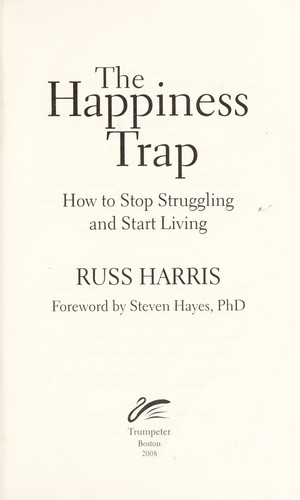
9. THE HAPPINESS TRAP BY RUSS HARRIS
Russ Harris | ⭐ 4.5/5
Who it’s for: People who have tried traditional self-improvement approaches and found they backfire. Harris uses Acceptance and Commitment Therapy (ACT) to frame self-compassion as something that emerges from willingness to experience painful emotions rather than from trying to change them. If you’ve tried to think your way to happiness and found it doesn’t work, this book offers a different model.
Get it here: https://www.amazon.com/Happiness-Trap-Struggling-Featuring/dp/1590305857?tag=readplug09-20
“The path to happiness is not about creating a life free of pain, but about learning to be with pain in a way that doesn’t trap us.”
Russ Harris writes about the “tyranny of positive thinking” — the modern assumption that we should always be aiming for positive emotions and treating any negative emotion as a failure. He offers an alternative: instead of trying to feel good, learn to be present with whatever you’re feeling, including the hard stuff. The self-compassion in this framework isn’t about feeling better — it’s about relating differently to what you’re already feeling.
The book introduces several ACT concepts that I find useful in my own practice: willingness (opening up to difficult emotions rather than avoiding them), defusion (stepping back from thoughts that cause suffering), and values (connecting with what matters most to you as a guide for action). Harris explains each one with examples and exercises that are practical without being simplistic.
I first read this book during a period when I was very focused on trying to be okay — performing happiness, essentially, instead of actually working through something. The ACT framework helped me see that the trying was part of the problem. The willingness to not be okay, at least for now, was the way through.
My take: For people who have tried positive thinking and found it makes things worse. ACT offers a compassionate alternative.
10. WHEN I PARENT MYSELF BY ELLIE CARNS
Ellie Carns | ⭐ 4.6/5
Who it’s for: People who struggle with being a parental figure to themselves — who have an inner child that carries unmet needs and unprocessed pain. This book is about reparenting, which is the practice of offering yourself the care that you needed but didn’t receive from your caregivers. If you’ve read self-compassion books and felt like something was missing because the wound was older and deeper than what those books addressed, this might be the one.
Get it here: https://www.amazon.com/When-I-Parenting-Myself-Processing-Childhood/dp/1637777985?tag=readplug09-20
“You can offer yourself the childhood you didn’t get. Not as a way to erase the past, but as a way to grow in the present.”
Ellie Carns writes about reparenting as a gentle but profound practice. She starts from the understanding that many people grew up with caregivers who were doing their best but couldn’t meet all of their needs — which is not a criticism of those caregivers, just a fact of human life. The unmet needs don’t go away. They show up in your adult relationships and your self-talk and your patterns. The reparenting practice is about going back to that younger self and offering what was missing.
I found this book important for reasons I didn’t expect. I don’t have children, but I do have a younger version of myself who was scared and confused and needed things she didn’t get, and it turns out that addressing her directly — in the journal, in the meditation — did something that all the adult-level self-compassion work hadn’t quite reached. It wasn’t instead of that work. It was underneath it.
The exercises in this book are simple and specific: writing letters to your younger self, creating a “nurture menu” of things that feel like care, practicing setting boundaries with yourself the way you would with someone you were protecting. I used the nurture menu one for a month and it changed something small but real in how I talked to myself on hard days.
My take: For people who feel like their self-criticism runs deeper than current-moment habits. If standard self-compassion isn’t reaching the wound, try this.
FREQUENTLY ASKED QUESTIONS
WHY IS SELF-COMPASSION SO HARD FOR SOME PEOPLE?
Self-compassion is hard for people who grew up in environments where it wasn’t modeled — where self-criticism was the primary language of motivation or care. If you learned that love meant being pushed to be better, and that warmth meant vulnerability to disappointment, self-compassion can feel threatening even when you intellectually understand its benefits. It can feel like letting go of vigilance, like giving yourself permission to fail. The books on this list approach this difficulty seriously. Self-Compassion by Kristin Neff addresses it in the opening chapters. The Compassionate Mind by Paul Gilbert addresses it throughout. The common thread is that the inner critic thinks it’s protecting you. Self-compassion is not about silencing the critic. It’s about building a different relationship with your own vulnerability so the critic can relax.
IS SELF-COMPASSION THE SAME AS SELF-INDULGENCE?
No. This is a common misunderstanding. Self-compassion is not about letting yourself off the hook or avoiding accountability. It’s about responding to your own suffering with warmth rather than attack, which is different from pretending bad behavior didn’t happen or not examining your mistakes. In fact, research suggests that self-compassionate people are more likely to take responsibility for errors — because they don’t have to protect themselves from the shame of admitting them. The inner critic’s job is to make sure you never fail, which means you never learn from mistakes. Self-compassion creates space for both acknowledging failure and growing from it. You can be honest about what went wrong and kind to yourself at the same time.
HOW DO I PRACTICE SELF-COMPASSION ON MY WORST DAYS?
The practice doesn’t have to be elaborate. On your worst days, self-compassion can be as simple as pausing and asking: “What do I need right now?” Not what you should be doing, not what you should have done, but what you actually need in this moment. Sometimes the answer is rest. Sometimes it’s food. Sometimes it’s to be alone. Sometimes it’s to connect with someone who can see you as you are. The inner critic will tell you that needing things is weakness. Self-compassion says: needing things is human, and I’m allowed to meet my own needs with the same care I’d offer anyone I loved. Start with that one question: what do I need right now? Let the answer be imperfect and honest.
CAN MINDFULNESS HELP WITH SELF-CRITICISM?
Yes. Mindfulness is actually a core component of self-compassion — the “mindfulness” component of Kristin Neff’s framework specifically refers to observing painful emotions without exaggerating or suppressing them. The practice of noticing when the inner critic is active, and simply observing that criticism without being run by it, is a form of mindfulness that creates space for a different response. Research suggests that regular mindfulness practice reduces the reactivity of the inner critic over time — not by eliminating it, but by changing your relationship to it. You notice the criticism arise, and then you have a choice about how to respond. That choice is where self-compassion lives.
WHAT IF I FEEL LIKE I DON’T DESERVE SELF-COMPASSION?
This is one of the most common objections, and it points to exactly the wound that self-compassion is designed to address. The feeling of not deserving care is usually something learned — often very early — and it persists because it keeps you in a kind of protective vigilance. The books on this list, especially The Compassionate Mind by Paul Gilbert and Radical Compassion by Tara Brach, address this directly. The work is not about believing you deserve compassion — it’s about recognizing that the belief itself is part of what you’re examining. You can investigate where the belief came from, what it costs you, and whether it’s actually true. Most people who feel they don’t deserve compassion find, over time, that the belief was a protection strategy that has outlived its usefulness.
HOW LONG DOES IT TAKE TO BUILD A SELF-COMPASSION PRACTICE?
This varies widely. Some people experience a shift within weeks of starting a consistent practice. For others, it takes months or years. The research on self-compassion suggests that it increases over time with practice, but not in a linear way — there are plateaus and sometimes regressions. What matters more than speed is consistency. A small daily practice is more effective than occasional intense sessions. Kristin Neff’s book includes exercises you can do daily. The RAIN practice from Tara Brach can be integrated into ordinary moments throughout the day. You don’t need an hour. You need regularity. Start small, protect the habit, and trust that the accumulation will do something even when you can’t see it happening.
THE BOTTOM LINE
Building self-compassion is not about becoming a different person. It’s about learning to hold the person you already are with warmth instead of attack. This is work that happens in small moments — the 3am moment when you can’t sleep because you’re rehearsing tomorrow’s failures, the morning moment when the inner critic is already active before your feet hit the floor, the moment after you’ve made a mistake when the old voice wants to tell you exactly how inadequate you are.
The books on this list meet you in those moments. They don’t tell you to think positive thoughts instead. They teach you to respond to your own pain with something other than war. The work is slow and it’s unglamorous and some days it feels like nothing is changing. And then, on a day you can’t predict, you notice that the voice in your head is a little quieter, or that you’re able to respond to yourself with something that feels like care instead of criticism.
Start with Self-Compassion by Kristin Neff if you’re new to this. If you’ve tried and couldn’t get there, try The Compassionate Mind by Paul Gilbert. If you’re ready to go deeper, try Radical Compassion by Tara Brach. Pick whichever one meets you where you are and stay with it. The practice is simple. The doing is hard. But it’s also the only thing I know of that actually changes the relationship to the voice in your head, and that change is worth everything.
Which book are you starting with?
Disclosure: This post contains affiliate links. If you purchase through these links, ReadPlug may earn a small commission at no extra cost to you. We only recommend books we’ve personally found valuable.