The first time something really bad happened to me, I was sixteen. My parents’ restaurant closed — not with drama, just a letter and silence and my father at the kitchen table, very still, like someone had removed the architecture of his day. I watched him and thought: this is what it looks like when someone doesn’t have a way back.
I’ve spent years thinking about what it means to not be stopped. What the machinery of resilience actually looks like, beyond “never give up” and “fall seven times, stand up eight.” Those aren’t wrong. They’re just incomplete. They don’t tell you about the cognitive architecture that allows someone to absorb a hit and keep moving.
Resilience isn’t a trait you’re born with. It’s a set of capacities — psychological, physiological, philosophical. The books on this list engage with that complexity. They show you what strength actually is, how you develop it, and why “mental toughness” usually misses the most interesting parts.
Quick Pick: The Best Book for Building Mental Resilience
Also see our guide to 10 BEST BOOKS FOR BUILDING MENTAL RESILIENCE AFTER ADVERSITY AND LEARNING TO TRUST YOURSELF AGAIN. Also see our guide to 10 BEST BOOKS FOR BUILDING UNSHAKEABLE MENTAL RESILIENCE WHEN LIFE KEEPS KNOCKING YOU DOWN. Also see our guide to 10 Best Books for Building Unshakeable Mental Resilience When Life Keeps Knocking You Down. Also see our guide to 10 BEST BOOKS FOR BUILDING UNSHAKEABLE MENTAL RESILIENCE WHEN LIFE KEEPS KNOCKING YOU DOWN.If you only have time for one book, go with “The Body Keeps the Score” by Bessel van der Kolk. I know — it’s primarily about trauma, and if you’re reading this list, you might not identify as someone who has experienced trauma in the clinical sense. But van der Kolk’s central insight applies much more broadly than the trauma label suggests: the body is not separate from the mind when it comes to how we process difficulty. You can’t think your way through everything. Sometimes the resilience you’re trying to build is being undermined by something your body hasn’t processed, and you won’t understand what’s happening until you read this book. (I resisted it for a long time because I thought it wasn’t for me. It was for me.)
The 10 BEST BOOKS FOR BUILDING UNSHAKEABLE MENTAL RESILIENCE WHEN LIFE KEEPS KNOCKING YOU DOWN
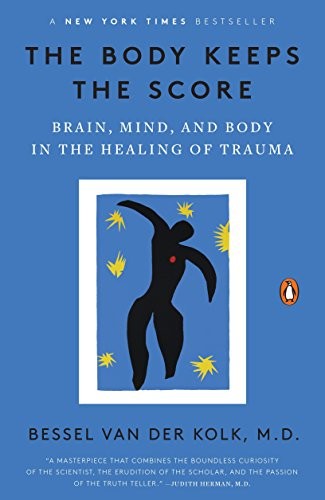
1. THE BODY KEEPS THE SCORE BY BESSEL VAN DER KOLK
Bessel van der Kolk | ⭐ 4.7/5
Who it’s for: People who have experienced any form of prolonged stress or trauma, readers who feel like they’ve processed things intellectually but still feel stuck in their bodies, anyone who wants to understand the connection between physical experience and psychological resilience.
Get it here: https://www.amazon.com/Body-Keeps-Score-Brain-Mind/dp/0143127748?tag=readplug09-20
“Trauma is not the event itself. Trauma is what happens inside us as a result of the event. The critical issue is not whether the event was catastrophic, but whether the organism was prepared to metabolize the experience.”
Bessel van der Kolk is a psychiatrist who spent decades working with trauma survivors. His central argument: psychological trauma doesn’t only live in the mind — it lives in the body, and if you don’t address it in both places, you’re only getting part of the picture.
Here’s what I keep thinking about, weeks after I finished it: our culture’s approach to psychological difficulty — talk therapy, cognitive restructuring, medication — is heavily weighted toward the mind. But trauma is stored in the body. You might intellectually understand that you’re safe now but your body still flinches at loud noises.
I found myself arguing with this book. Van der Kolk’s emphasis on body-based therapies sometimes felt like it underweighted the cognitive work. But then I’d notice my shoulders holding tension in high-stress situations, and I’d think: maybe he’s onto something.
My take: Essential reading, even if you don’t think of yourself as someone with trauma.

2. MAN’S SEARCH FOR MEANING BY VIKTOR FRANKL
Viktor Frankl | ⭐ 4.8/5
Who it’s for: People going through a difficult period who want to understand the relationship between meaning and survival, readers interested in existential psychology, anyone who has found themselves wondering “what’s the point” and wanting a serious answer.
Get it here: https://www.amazon.com/Mans-Search-Meaning-Viktor-Frankl/dp/0807014293?tag=readplug09-20
“When we are no longer able to change a situation, we are challenged to change ourselves.”
Viktor Frankl was a psychiatrist who survived four concentration camps, including Auschwitz. He lost almost everything — his wife, his family, his entire world. And what he found is that the thing that kept him alive wasn’t hope or willpower or even luck. It was meaning.
His approach, logotherapy, is based on a simple (in description, not in practice) idea: the primary human drive is not pleasure, as Freud claimed, but meaning. We need to feel that our lives have purpose, and when that sense of purpose is taken away — by circumstance, by loss, by the accumulation of difficulty — we suffer in a way that material comfort or distraction can’t address.
What I found useful about this book is that it’s not about being tough. Frankl doesn’t say “be stronger.” He says: find the meaning in it. Which sounds too simple until you sit with it long enough to realize it’s actually one of the hardest things a person can do.
My take: A foundational text on resilience that no one should skip.

3. option b by sheryl sandberg and adam grant
Sheryl Sandberg and Adam Grant | ⭐ 4.3/5
Who it’s for: People who have experienced significant loss or adversity and want to understand how to build resilience after, readers who find traditional self-help too shallow and want a more research-based approach, anyone supporting someone through difficulty.
Get it here: https://www.amazon.com/Option-B-Facing-Adversity-Building-Resilience/dp/0553410196?tag=readplug09-20
“Option B is about building strength when life goes right, so you have reserves to draw from when life goes wrong.”
Sheryl Sandberg’s husband died suddenly in 2015. She was one of the most prominent businesspeople in the world — a person with resources and status — and also, as she discovered, almost no framework for handling the kind of loss that doesn’t have a business case for recovery. This book is her exploration of what she learned, with Adam Grant, an organizational psychologist who studies resilience.
What I appreciate about Option B is that it doesn’t pretend. Sandberg describes the mess, the anger, the way grief doesn’t follow a linear path toward resolution. Then she and Grant bring in the research on resilience — what actually predicts who bounces back and who doesn’t — and it’s more interesting and more complicated than I expected.
The concept of “post-traumatic growth” was useful: many people, after adversity, don’t just return to baseline. They develop capacities they wouldn’t have developed otherwise, clarify their values, build deeper relationships.
My take: A practical, research-grounded book that avoids both toxic positivity and despair.

4. THE POWER OF REGRET BY DAN PINK
Dan Pink | ⭐ 4.4/5
Who it’s for: People who are held back by past decisions and want to reframe their relationship with regret, readers who want to understand how reflection on the past can build resilience for the future, anyone who feels like their history is a liability rather than an asset.
Get it here: https://www.amazon.com/Power-Regret-Looking-Backward-Moving/dp/0735210502?tag=readplug09-20
“Regret is not dangerous. Regret is useful. Regret is the gateway drug to living a better life.”
Dan Pink has a way of taking a psychological concept that feels like a weakness and reframing it as a capacity. His argument about regret: it’s not a sign of failure. It’s data. Regret tells you what you value, what you would do differently, and often what you need to do next.
The book is structured around three types of regret: base regrets (things you didn’t do that you wish you had), bold regrets (risks you didn’t take), and moral regrets (things you did that you wish you hadn’t). Pink argues that base regrets — the regrets of omission — are the most common and most corrosive, because they represent the life you didn’t live. The antidote is to use regret as a map: this is what I value. This is what I need to do differently.
My take: A practical book about turning the weight of history into a resource for the future.
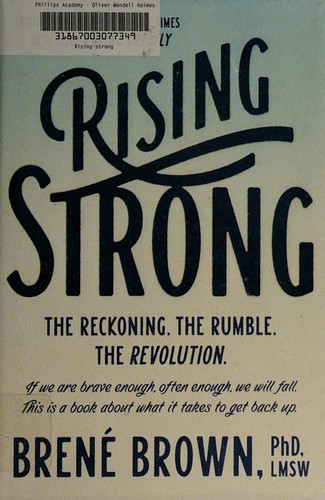
5. RISING STRONG BY BRENE BROWN
Brene Brown | ⭐ 4.5/5
Who it’s for: People who avoid risk because they’re afraid of failing publicly, readers who want to understand the relationship between vulnerability and resilience, anyone who has experienced a fall — professional, personal, creative — and doesn’t know how to get back up.
Get it here: https://www.amazon.com/Rising-Strong-Brene-Brown/dp/0812985808?tag=readplug09-20
“You can only be brave enough to be vulnerable if you’ve first made peace with having been wounded.”
Brene Brown’s work on vulnerability has become so widely cited that it’s easy to forget how radical the basic insight still is: vulnerability is not weakness. It’s the birthplace of courage, creativity, and connection. And the people who are most resilient are not the people who never fall. They’re the people who know how to fall in a way that doesn’t become permanent.
Rising Strong breaks the process of getting up into three stages: reckoning (the emotion part), rumble (the meaning-making part), and revolution (the integration part). The book is in Brown’s voice, which some people find hokey and which others find clarifying. If you think “vulnerability” is a soft concept, Brown’s rigor in defining it will probably surprise you.
What I found useful: getting up is a skill you can develop, not just an attitude you need to have.
My take: Brown can be an acquired taste, but this is the book of hers I recommend most to skeptics.
6. THE RESILIENCE FORMULA BY ANDREW HORRELL
Andrew Horrell | ⭐ 4.2/5
Who it’s for: People who want a practical, actionable framework for building resilience in their daily lives, readers who are skeptical of vague self-help and want specific behaviors they can implement, professionals who need to maintain resilience under sustained pressure.
Get it here: https://www.amazon.com/Resilience-Formula-Press/dp/1951522264?tag=readplug09-20
“Resilience is not about never falling. It’s about having a system for getting back up.”
Andrew Horrell is a resilience researcher who studied people who perform well under extreme pressure — military personnel, athletes, emergency responders. His approach: extract a formula, specific inputs that produce resilient outputs. He’s not interested in theories. He wants to know what you actually do.
His formula has three components: capacity (psychological and physical resources), coping (strategies for managing demand), and connection (supporting relationships). These interact — low capacity increases need for coping, poor coping depletes capacity, connection underpins both. If any component fails, the system fails.
What I appreciate: Horrell gives you specific tools for each component. The book is compact because he could have written three hundred pages on each section but chose not to.
My take: The most practical book on this list for people who want a system rather than a philosophy.

7. ATOMIC HABITS BY JAMES CLEAR
James Clear | ⭐ 4.6/5
Who it’s for: People who have tried to build resilience through force of will and failed, readers who want to understand how environment and systems shape behavior, anyone who wants to build resilient habits that don’t depend on motivation.
Get it here: https://www.amazon.com/Atomic-Habits-James-Clear/dp/0735211292?tag=readplug09-20
“You do not rise to the level of your goals. You fall to the level of your systems.”
I know — Atomic Habits has become so ubiquitous that it almost feels weird to include it. But hear me out. Resilience isn’t just something you feel. It’s something you build, through repeated action, in small increments, over time. Building anything that lasts requires a system that doesn’t depend on you being motivated or well-rested. James Clear’s argument: the most effective way to build a resilient life is through the accumulation of small, consistent actions, not dramatic decisions.
The insight I keep returning to: the identity-based approach to habits. Clear argues that the most effective motivation isn’t “I want to achieve X” but “I want to become the kind of person who does X.” When you build habits that reinforce a resilient identity, that identity becomes a resource you can draw on even when your motivation is low.
My take: The most useful book on behavior change I’ve encountered. Essential for building sustained resilience that doesn’t depend on willpower.
8. STOIC PHILOSOPHY FOR HUMAN BEINGS BY RYAN HOLIDAY
Ryan Holiday | ⭐ 4.4/5
Who it’s for: Readers who have tried traditional self-help and found it insufficient, people interested in philosophy as a practical tool for resilience, anyone who wants to understand how ancient wisdom applies to modern difficulty.
Get it here: https://www.amazon.com/Stoic-Philosophy-Human-Beings/dp/1950113047?tag=readplug09-20
“The obstacle is the way. Whatever is in the way becomes the path.”
Ryan Holiday has made a career of translating Stoic philosophy for a modern audience, and this is his most direct treatment. The Stoics — Marcus Aurelius, Seneca, Epictetus — were practitioners who developed specific techniques for handling difficulty, and Holiday translates those techniques into language contemporary readers can actually use.
The core Stoic insight for resilience: what happens to you isn’t the problem. Your judgment about what happens — the meaning you assign, the story you tell — is where the work happens. This doesn’t mean your pain isn’t real. It means you have more control over how you relate to it than you think.
I find myself arguing with Holiday in several places. His version of Stoicism can feel like it’s asking too much — calibrated for an idealized sage rather than an actual human being having a difficult day. But then I find myself using his framework: What is the obstacle here? What is this difficulty trying to teach me? The questions are useful even when I don’t fully buy the premise.
My take: The most accessible entry point to Stoic philosophy. Useful as a daily practice.

9. THE INNER GAME OF TENNIS BY TIMOTHY GALLEWY
Timothy Gallwey | ⭐ 4.5/5
Who it’s for: Athletes and non-athletes alike who want to understand the mental component of performance, people whose own minds are the primary obstacle to what they’re trying to do, readers who want to understand the relationship between self-interference and achievement.
Get it here: https://www.amazon.com/Inner-Game-Tennis-Revised/dp/0679778314?tag=readplug09-20
“The opponent in tennis is not the other player. The opponent is the voice in your head telling you what to do and how to do it badly.”
The Inner Game started as a tennis instruction book and became a meditation on how the mind interferes with performance. Gallwey’s argument: there’s “self 1” — the voice of instruction, judgment, and anxiety — and “self 2” — the part that actually knows how to do things. When self 1 gets too loud, self 2 can’t operate.
This applies to resilience: when you’ve been knocked down, the voice in your head gets louder. That voice is trying to help. It’s also the primary obstacle to recovering and moving forward. The skill of resilience isn’t just having good strategies. It’s having the capacity to not let your own anxiety undermine what you know how to do.
I read this during a period when I kept getting in my own way — second-guessing, starting over, deleting work I’d done. Gallwey’s framework gave me a language for what was happening: self 1 is doing its thing again. And naming it made it slightly less powerful.
My take: A strange, almost mystical book that somehow works.
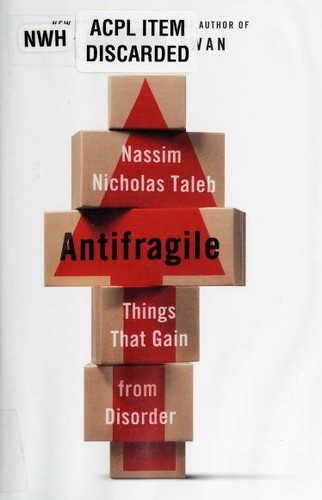
10. ANTIFRAGILE BY NASSIM TALEB
Nassim Taleb | ⭐ 4.3/5
Who it’s for: Readers who are interested in systems thinking, people who want to understand why fragility isn’t just a personal quality but a property of many systems, anyone who has noticed that some people and organizations get stronger under stress while others collapse.
Get it here: https://www.amazon.com/Antifragile-Things-Gain-Disorder-Prose/dp/0812979680?tag=readplug09-20
“Some things benefit from shocks; they thrive and grow when exposed to volatility, randomness, and disorder.”
Nassim Taleb is the author of The Black Swan, and he’s made a career arguing against how we think about risk. Antifragile is his attempt to articulate a concept that doesn’t have a good English word: the opposite of fragile isn’t “robust.” It’s “antifragile.” Things that are antifragile don’t just survive stress — they get stronger from it.
He applies this to biology, economics, psychology, and more. The personal application matters: some people, habits, and systems are antifragile. They use difficulty as fuel. The question isn’t just “how do I survive?” but “how do I build something that actually benefits from what I go through?”
I found this book maddening. Taleb is provocative to the point of being irritating. But the core insight — that you want to build systems that benefit from stress rather than merely surviving it — is one I haven’t been able to stop thinking about.
My take: A demanding but rewarding book for people who want a higher level of abstraction about resilience.
FREQUENTLY ASKED QUESTIONS
IS RESILIENCE SOMETHING YOU’RE BORN WITH OR SOMETHING YOU BUILD?
The research consensus: resilience is substantially learned. Some people have temperamental advantages — higher baseline emotional stability, more secure attachment — but these are modifiers, not determinants. The capacities that make up resilience — regulating emotion, maintaining relationships, finding meaning in difficulty, taking effective action under stress — are substantially developed through practice. The question isn’t “are you a resilient person?” but “are you building resilient capacities?”
WHAT’S THE DIFFERENCE BETWEEN RESILIENCE AND JUST BEING TOUGH?
Toughness is about not feeling things. Resilience is about feeling things and recovering. The tough person achieves it through numbing — not feeling the full weight of difficulty, which means not processing it. The resilient person feels the full weight, has the response, and integrates it. The difference shows up over time: the tough person often has a delayed breakdown, while the resilient person has smaller, more frequent adjustments.
I KEEP GETTING KNOCKED DOWN IN THE SAME WAY. HOW DO I BREAK THE PATTERN?
You break patterns by understanding what drives them. Usually it isn’t weakness — it’s a specific vulnerability: a cognitive bias, an emotional trigger, a habit of thinking that keeps producing the same failure. The books on this list give you frameworks for understanding your patterns. But understanding alone isn’t enough. You need to change the system that produced the pattern, not just patch the symptom.
CAN THERAPY HELP BUILD RESILIENCE OR IS IT JUST FOR “BROKEN” PEOPLE?
Therapy is not only for people who are broken. The most effective therapy for resilience builds capacities — emotional regulation, cognitive flexibility, relationship skills — not just processes pathology. CBT, ACT, and somatic therapies are training programs in skills that resilient people have developed, often through years of hard experience. Therapy is a shortcut to those skills.
HOW LONG DOES IT TAKE TO ACTUALLY BUILD RESILIENT CAPACITY?
It depends on what you mean by “build.” Some capacities shift in weeks — meditation practice, therapy, exercise produce measurable changes within a couple of months. But the deeper shift — who you are, how you think about difficulty — takes years. The project of building resilience is not a sprint. It’s a practice.
WHAT IF THESE BOOKS AREN’T ENOUGH FOR REALLY BAD TRAUMA?
If you’ve been through something genuinely traumatic — the kind that overwhelms the normal coping system — the standard self-help framework may not be enough. The van der Kolk book on this list is specifically for that situation, and I’d start there.
THE BOTTOM LINE
I think about my father at that kitchen table, and I think about what I didn’t understand then: he wasn’t just sad about the restaurant. He was grieving the architecture of his life, the thing that had given him a way to be in the world. And I don’t know if he had the framework to build something new, or if he ever found one. What I know is that I watched him be stopped, and I became someone who was determined not to be stopped in the same way.
The books on this list are what I found useful in building determination into capacity. “The Body Keeps the Score” because you can’t think your way through everything. “Man’s Search for Meaning” because the difference between surviving and growing is usually meaning. “Atomic Habits” because resilience isn’t a feeling, it’s a practice, and practices need systems.
And “Antifragile” by Taleb because the most important question isn’t “how do I survive?” It’s “how do I build something that gets stronger from what I go through?”
Which book are you grabbing first?
Disclosure: This post contains affiliate links. If you purchase through these links, ReadPlug may earn a small commission at no extra cost to you. We only recommend books we’ve personally found valuable.