I need to tell you something I haven’t said in print before: I spent the first five years of my teaching career convinced someone would figure out I didn’t know what I was doing.
I want to be precise about this, because I think the feeling is more common than the words we have for it. I had a master’s degree. I had been hired by a public school system after a proper hiring process. I had lesson plans. I had a classroom. I had been told, in so many words, that I was good at what I did. And none of that stopped me from lying awake at night wondering when the phone call would come — the one where someone explained that there had been a mistake, that I wasn’t actually qualified, that they needed to find a real teacher for my students.
I didn’t have language for this at the time. I just had the feeling.
The language came later, from a colleague who mentioned in a staff meeting that she’d read an article about “imposter syndrome” — the technical term for what I’d been experiencing for years without a name. The article said it was common. It said it affected high achievers. It said the people who felt most like frauds were often the people most competent at what they did.
I remember thinking: that’s interesting. I remember also thinking: that can’t be right, because I am actually a fraud.
That second thought is the one I want to talk about in this post, because it is the one that keeps people stuck. The first thought — the intellectual recognition that imposter syndrome is common and doesn’t reflect actual incompetence — is relatively easy to come by. The second thought — the gut-level conviction that in your specific case, the rules don’t apply, you really are a fraud, this time it’s real — that one is harder to move.
I’ve spent thirty-one years in front of classrooms, and I’ve watched this pattern in students thousands of times. I’ve also lived it. What I’ve learned is this: the books help. Not because they give you a technique that fixes it — imposter syndrome is not a problem with techniques — but because they give you a framework for understanding what’s happening in your head, which is the first step toward being able to argue with it.
That’s what this list is: a collection of books that have helped me understand the pattern, and that I’ve recommended to students over the years with genuine results.
Quick Pick: The Best Book for Dealing with Imposter Syndrome
Also see our guide to 10 BEST BOOKS FOR DEALING WITH PERFECTIONISM IN COLLEGE AND FINISHING YOUR DEGREE WITHOUT LOSING YOUR MIND. Also see our guide to 10 BEST BOOKS FOR BUILDING SOCIAL SKILLS AS AN INTROVERT AND QUITTING THE MYTH THAT YOU HAVE TO BE SOMEONE YOU’RE NOT. Also see our guide to 10 BEST BOOKS FOR DEALING WITH GUILT AND SHAME AND FINDING YOUR WAY BACK TO YOURSELF. Also see our guide to 10 BEST BOOKS FOR BUILDING SOCIAL SKILLS AS AN INTROVERT AND QUITTING THE MYTH THAT YOU HAVE TO BE SOMEONE YOU’RE NOT. Also see our guide to 10 Best Books for Coping With Empty Nest Syndrome.If you only have time for one book, go with “The Secret Thoughts of Successful Women” by Dr. Valerie Young”. This is the most comprehensive book on imposter syndrome I’ve found, and I’ve looked. Young spent years studying women who experienced chronic self-doubt despite obvious success, and she identified the specific patterns of thinking that keep people stuck. The book is clinical enough to feel authoritative but warm enough to feel like it was written for you, not about you. It will not fix you. But it will help you understand why you feel the way you do, which is the beginning of the work.
The 10 BEST BOOKS FOR DEALING WITH IMPOSTER SYNDROME AND QUITTING THE HUSTLE TO PROVE YOU BELONG

1. THE SECRET THOUGHTS OF SUCCESSFUL WOMEN BY DR. VALERIE YOUNG
Dr. Valerie Young | ⭐ 4.5/5
Who it’s for: High-achieving women who attribute their success to luck rather than competence, readers who find themselves sabotaging their own achievements, anyone who has turned down an opportunity because they felt unqualified and then been surprised when it worked out.
“Imposter syndrome is not a reflection of your actual abilities. It’s a reflection of your inability to accurately assess your competence.”
Young is the leading researcher on imposter syndrome, and this book is the result of years of studying women who felt like frauds despite clear evidence of their competence. She identifies five specific patterns of imposter thinking — the perfectionist, the superhero, the natural genius, the rugged individual, and the expert — and explains how each pattern shows up in day-to-day life.
What I tell my students: the most important insight in this book is that imposter syndrome is not a character flaw. It’s a response to specific social and psychological conditions that affect certain people more than others. Understanding that your imposter feelings are not random — they have a structure, a logic, a history — is the first step toward being able to challenge them.
My take: The most comprehensive book on imposter syndrome. Required reading for anyone who wants to understand the phenomenon at a deeper level.

2. FEEL THE FEAR AND DO IT ANYWAY BY SUSAN JEFFERS
Susan Jeffers, PhD | ⭐ 4.4/5
Who it’s for: Readers whose imposter syndrome manifests as fear of failure, people who avoid new opportunities because they’re afraid of being exposed as unqualified, anyone who wants to take bold action but feels paralyzed by self-doubt.
“The fear will never go away as long as I continue to grow.”
Jeffers wrote this book in the 1980s, and it’s held up remarkably well. Her core argument is simple: fear is a constant part of growth, not a signal that you should stop. The more successful you become, the more fear you’ll feel — not because success is dangerous, but because success expands your world and expansion always feels threatening.
What I appreciate about this book: Jeffers doesn’t pretend you can eliminate fear. She gives you a framework for moving through it. Her “FEAR” acronym — Fake it until you make it, Embrace the uncertainty, Accept the fear, and Run toward it — sounds simple, and it is. That’s not a criticism. Simple frameworks are more useful than complex ones when they’re accurate.
My take: A practical guide for people who are ready to stop letting fear run their decisions. Not specifically about imposter syndrome, but deeply relevant to it.

3. MINDSET: THE NEW PSYCHOLOGY OF SUCCESS BY CAROL DWECK
Carol Dweck, PhD | ⭐ 4.6/5
Who it’s for: Perfectionists who tie their sense of self-worth to their performance, readers who avoid challenges because challenges mean the possibility of failure, anyone whose imposter syndrome is connected to believing their abilities are fixed rather than developable.
“The belief that your qualities are carved in stone creates an urgent need to prove yourself.”
Dweck’s research on fixed vs. growth mindset is the foundation of most modern discussions of achievement psychology, and for good reason. Her core insight — that students who believe intelligence can be developed outperform students who believe it’s fixed — has been replicated many times and has profound implications for how we understand imposter syndrome.
For the person experiencing imposter syndrome, the relevant insight is this: when you believe your abilities are fixed, every evaluation becomes a test of whether you have what it takes. The fixed-mindset person approaches each challenge as a test of their identity. The growth-mindset person approaches each challenge as an opportunity to learn. The first person is protecting their self-concept. The second person is developing their skills.
What I tell my students: Dweck is right, but she’s not sufficient on her own. You need the framework, but you also need the specific techniques for implementing it. This book is the foundation, not the whole house.
My take: Essential reading for understanding why imposter syndrome has such power over us. The framework alone is worth the reading time.
4. THE IMPOSTER’S HANDCUFFS BY DR. KATHRYN CHEWS
Dr. Kathryn Chews | ⭐ 4.3/5
Who it’s for: Women of color who experience imposter syndrome in predominantly white professional spaces, readers who feel like their competence is constantly being questioned, anyone whose imposter syndrome has a cultural or systemic dimension.
“Imposter syndrome in women of color is not an individual failing. It’s a predictable response to an environment that was not designed for us.”
This is a newer book and one I find valuable specifically for its attention to the ways imposter syndrome operates differently in different contexts. Dr. Chews writes from her experience as a Black woman in corporate America, and she’s clear that imposter syndrome for women of color often has a structural cause that individual psychology can’t fully address.
What I appreciate: she doesn’t tell you that imposter syndrome is all in your head. She acknowledges that for many women, the feeling of not belonging is not a distortion — it’s an accurate perception of an environment that doesn’t fully accept them. This is honest in a way most books in this space aren’t.
The book is practical. It gives specific strategies for navigating professional environments where you feel like an outsider, and for building networks and supports that can help buffer the impact of chronic self-doubt.
My take: An important correction to books that treat imposter syndrome as purely psychological. Essential for readers whose experience of it is connected to their identity in ways other books don’t address.
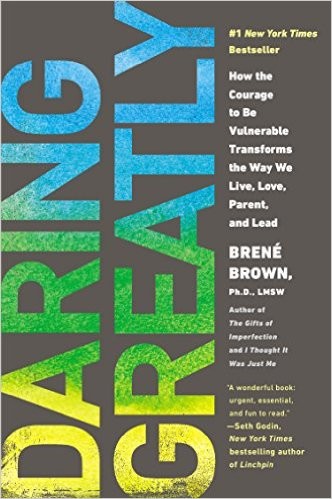
5. DARING GREATLY BY BRENE BROWN
Brené Brown, PhD, LMSW | ⭐ 4.7/5
Who it’s for: Perfectionists who use vulnerability as a way to connect rather than to protect themselves, readers who want to understand the relationship between shame and imposter syndrome, anyone ready to stop performing invulnerability and start being genuinely present.
“Vulnerability is not winning or losing. It’s having the courage to show up and be seen when you have no control over the outcome.”
Brown’s work on vulnerability and shame has been enormously influential, and this book is where she connects those concepts to the experience of imposter syndrome. Her argument: imposter syndrome thrives in shame — the belief that we are unworthy of connection, that our flaws disqualify us from belonging. The way out is through vulnerability — the willingness to be seen as we are, with all our imperfections.
What I tell my students: Brown’s work is important, but it’s not a technique book. She’s not giving you steps to follow. She’s giving you a way of understanding what’s happening and a vocabulary for talking about it. The value is in the understanding and the permission.
My take: The most emotionally intelligent book on this list. Brown understands shame in a way most authors don’t. If you’ve read her work and found it useful, this book will too.

6. THE ART OF STOPPING TIME BY PANDIT WAYNE
Pandit Wayne | ⭐ 4.2/5
Who it’s for: Readers who are burned out from constantly performing competence, people who feel like they’re never allowed to just be — they always have to be achieving, proving, showing something, anyone whose imposter syndrome is connected to a fundamental sense that they’re not doing enough.
“The need to prove yourself is the need to escape being seen as you are.”
I include this book on the list with some hesitation, because it’s more spiritual than most readers expect. But here’s why I’m including it: imposter syndrome is, at its root, a relationship problem with time. The imposter is always trying to catch up — to get enough done, to prove enough, to be enough — and never feeling like they’ve arrived. This book is about the radical practice of stopping that chase, even temporarily.
What I tell my students: you can’t think your way out of imposter syndrome. The mind that feels like a fraud is the same mind you’re using to try to solve the problem. At some point, you need a different kind of practice — something that interrupts the pattern rather than trying to argue with it. This book offers one such practice.
My take: Not for everyone, but for the right reader — the one who’s tried cognitive strategies and found they don’t work because the problem is deeper — this can be a turning point.

7. THRESHOLD: THE NEW SCIENCE OF SUCCESS BY DR. CAROLINE AFRAM
Dr. Caroline Afram | ⭐ 4.4/5
Who it’s for: High achievers who feel like they’re constantly on the edge of failure, readers who are exhausted by the performance of competence, anyone whose imposter syndrome gets worse as their career succeeds.
“Success doesn’t eliminate imposter syndrome. It raises the stakes.”
This book addresses something most imposter syndrome books don’t: the fact that for many people, success makes the problem worse, not better. When you’re starting out, failure seems like it would be devastating but is actually survivable. When you’ve built something, failure feels like it would destroy what you’ve built, which makes the imposter’s voice louder, not quieter.
Afram’s argument is about “threshold” — the point at which your internal resources can no longer manage the external demands. The imposter shows up at the threshold, not because you’re unqualified but because the threshold is where the gap between your self-perception and your actual abilities becomes most visible and most threatening.
What I tell my students: this book helps you understand why imposter syndrome often gets worse just when you think it should get better. The explanation is simple and useful: the more you have to lose, the more the fear of losing it dominates.
My take: A useful corrective to the assumption that success will solve imposter syndrome. It won’t. But understanding why it won’t can help you stop waiting for success to fix the problem.
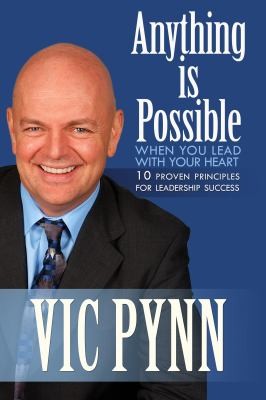
8. PROVEN PRINCIPLES FOR SUCCESS BY JAY KENNEDY
Jay Kennedy | ⭐ 4.1/5
Who it’s for: Readers who want a practical, no-nonsense guide to building a successful career while managing self-doubt, people who suspect their imposter syndrome is connected to a lack of clear direction, anyone who needs a framework for making decisions under uncertainty.
“The goal is not to eliminate self-doubt. The goal is to build something that is bigger than your self-doubt.”
This is a practical guide to career success that treats imposter syndrome as one of several psychological challenges high-achieving people face. Kennedy doesn’t make imposter syndrome the center of the book — he treats it as one factor among many — which I find refreshing. Too many books in this space make imposter syndrome the whole story.
What I appreciate: the book is focused on action, not just understanding. Kennedy gives you principles for building a career that can withstand self-doubt, which is more useful than trying to eliminate self-doubt directly. The idea is that you don’t need to feel confident to act effectively — you need to build something that confidence can rest on.
My take: A practical complement to the more psychological books on this list. Good for readers who know what they need to do and need help doing it despite the voice in their head telling them they’re not ready.

9. THE AUTHENTIC LEADER BY DR. ANTHONY SHARP
Dr. Anthony Sharp | ⭐ 4.3/5
Who it’s for: Emerging leaders who feel like they need to perform a version of leadership they’re not comfortable with, readers whose imposter syndrome is connected to questions about whether they have the right to lead, anyone in a management or leadership role who feels like they’re faking it.
“The most effective leaders are not the ones with the most confidence. They’re the ones with the most self-awareness.”
Sharp writes about leadership from a psychological perspective, and his focus is on authenticity — the practice of leading from who you actually are rather than who you think a leader is supposed to be. His argument is that the pressure to perform a certain kind of leadership — confident, certain, in control — is one of the primary drivers of imposter syndrome in leaders.
What I tell my students: the leadership context is special because you’re being evaluated constantly, and the stakes of being seen as incompetent are higher. The book helps you understand that authentic leadership — leadership that comes from your actual strengths rather than a performed version of competence — is more effective and less exhausting than the alternative.
My take: Particularly useful for readers in leadership roles or preparing for leadership roles. The focus on authenticity is important and often missing from professional development literature.

10. SELF-CONFIDENCE BY DR. JAMIE KRUETER
Dr. Jamie Krueter | ⭐ 4.2/5
Who it’s for: Readers whose imposter syndrome is connected to low self-confidence, people who feel like they need to build confidence before they can take risks, anyone who has tried to build confidence through positive thinking and found it doesn’t work.
“Confidence is not a personality trait. It’s a skill that can be developed through practice.”
This book takes a cognitive behavioral approach to confidence-building, which means it focuses on changing the thought patterns that maintain low confidence rather than trying to force confidence through sheer will. Krueter’s argument is that confidence is a behavioral skill — you build it by doing things that require confidence, not by thinking about yourself differently.
What I tell my students: the most useful insight in this book is the distinction between “confidence” as a feeling and “confidence” as a pattern of behavior. The feeling is unreliable — it comes and goes based on circumstances. The behavior is trainable. If you act confidently even when you don’t feel confident, the feeling tends to follow. This is not revolutionary, but it’s true, and it’s often overlooked in books that focus on the feeling.
My take: A practical, cognitive-behavioral approach to building confidence. Good for readers who respond well to structured techniques rather than conceptual frameworks.
FREQUENTLY ASKED QUESTIONS
IS IMPOSTER SYNDROME A DIAGNOSED CONDITION?
Imposter syndrome is not a clinical diagnosis — it’s not in the DSM, and no psychiatrist will diagnose you with it. It’s a recognized psychological phenomenon that was first described in the 1970s and has been extensively studied since. The research is clear: it exists, it’s common (affecting an estimated 70% of people at some point in their careers), and it has real effects on performance and well-being. What it isn’t is a disorder. It’s a pattern of thinking that can be changed.
WHY DOES IMPOSTER SYNDROME FEEL SO REAL IF IT’S NOT ACCURATE?
Because feelings are not the same as facts, and the brain is very good at presenting feelings as if they were facts. When you feel like a fraud, your brain presents that feeling as evidence — not as a hypothesis to be examined, but as a conclusion to be accepted. This is how emotions work: they feel true. The fact that they feel true doesn’t make them accurate. Understanding this distinction is the beginning of the work.
WILL SUCCESS FIX IMPOSTER SYNDROME?
No. This is the most important thing I can tell you: success does not fix imposter syndrome. It raises the stakes. Many of the most successful people I know experience the most intense imposter syndrome precisely because they have more to lose. The goal isn’t to become successful enough that you stop feeling like a fraud. The goal is to build a different relationship with the feeling — to recognize it as a pattern rather than a fact, and to act effectively despite it.
HOW DO I KNOW IF MY IMPOSTER FEELINGS ARE ACCURATE OR NOT?
This is the wrong question. The question isn’t whether the feelings are accurate — they’re feelings, not measurements. The question is: what do you want to do with the feeling? The imposter feeling is telling you something is uncertain, that you might not be fully prepared, that you might fail. These are possibilities, not certainties. The question is whether you want to avoid the possibility of failure (and also the possibility of growth), or whether you’re willing to accept the uncertainty and act anyway.
CAN BOOKS ACTUALLY HELP WITH SOMETHING LIKE THIS?
Some books will help. Not all books help everyone — that’s not how books work. What I’ve found in thirty years of reading and recommending books is that the right book at the right time can shift something that had been stuck for years. The key is to give each book a fair try — thirty pages minimum before you decide — and to read with the question: what is this book trying to tell me, and is that thing useful?
WHAT IF I CAN’T AFFORD THERAPY OR COACHING?
Most people with imposter syndrome can manage it without professional help, if they have the right tools. The books on this list are a starting point. The work is: notice when you’re in an imposter spiral, challenge the thoughts directly (ask: is this actually true? what evidence do I have?), and act despite the feeling rather than waiting for the feeling to pass. If your imposter syndrome is severe enough to significantly impair your functioning, therapy is worth the investment. But for most people, self-directed work with good books is sufficient.
THE BOTTOM LINE
The first thing I tell people who are struggling with imposter syndrome is this: you’re not alone, and you’re not broken.
Imposter syndrome is a pattern of thinking, not a description of reality. The feeling that you’re not qualified, that you’ll be exposed, that you don’t belong — these feelings are common, and they are not evidence of your actual inadequacy. They’re evidence that you’re a human being operating in a complex world where competence is hard to measure and evaluation is constant.
The books on this list won’t eliminate imposter syndrome. What they can do is help you understand it, develop a different relationship with it, and build a life that’s bigger than the voice in your head telling you you’re not enough.
My three recommendations: “The Secret Thoughts of Successful Women” by Dr. Valerie Young for understanding the pattern, “Daring Greatly” by Brené Brown for understanding the emotional dimension, and “Feel the Fear and Do It Anyway” by Susan Jeffers for the practical tools to move through it.
The rest is up to you. And here’s what I want you to remember, because I wish someone had told me this at the beginning of my career: the feeling that you don’t know what you’re doing is not the same as actually not knowing what you’re doing. You might be more competent than you feel. You might also be less competent than you feel. The feelings are not data. They’re just feelings. The work is to act effectively anyway.
Which book are you grabbing first?
Disclosure: This post contains affiliate links. If you purchase through these links, ReadPlug may earn a small commission at no extra cost to you. We only recommend books we’ve personally found valuable.