The email came in at 11 PM on a Saturday. My boss wanted me to revise a PowerPoint slide — not the content, but the font size on a specific bullet point. The slide was for a Monday presentation. I wasn’t even in the office on Saturday. She wanted me to remote in and make the change.
I made the change. I sat there for twenty minutes wondering how I’d ended up here.
Three years, two performance reviews, and countless weekend emails later, I finally understand what was happening. My boss wasn’t just difficult. She was a micromanager — someone so afraid of losing control that she couldn’t let anyone else do anything without her oversight.
This list is for everyone who’s lived through that experience. These books helped me understand why micromanagement happens, how to survive it without losing your mind, and how to reclaim your professional autonomy even when your boss won’t let go.
Quick Pick: The Best Book for Handling Micromanagement
“The No Asshole Rule” by Robert Sutton is the book that finally gave me permission to take my experience seriously. Micromanagers aren’t just annoying — they’re toxic. Sutton’s framework for dealing with difficult workplace personalities is the most practical I’ve found. Pair it with “Crucial Conversations” by Kerry Patterson for the specific skills you need to have the hard conversations that might actually change your situation.
The 10 Best Books for Dealing with Micromanaging Bosses

1. The No Asshole Rule by Robert Sutton
Robert Sutton | ⭐ 4.7/5
Who it’s for: Anyone who’s been ground down by a toxic, controlling boss — and needs both validation and a framework for responding.
“The best organizations are the ones where people treat each other with dignity and respect. The worst organizations are the ones where they don’t. It’s that simple.”
Sutton’s book gave me something I desperately needed: permission to say that what I was experiencing was not normal, not acceptable, and not something I had to accept. His “no asshole rule” — the idea that civilized workplaces don’t tolerate people who treat others with disrespect — is both a diagnostic tool and a prescription.
My take: The practical value of this book is in Sutton’s analysis of why difficult people behave the way they do, and what you can do about it. His framework for dealing with workplace toxicity — without becoming toxic yourself — is grounded in both research and practical wisdom. This is the book that helped me stop blaming myself for my boss’s behavior.

2. Crucial Conversations by Kerry Patterson, Joseph Grenny, Ron McMillan, and Al Switzler
Kerry Patterson et al. | ⭐ 4.7/5
Who it’s for: Anyone who needs to have a difficult conversation with their boss about boundaries, autonomy, or the micromanagement pattern — and wants tools for doing it effectively.
“High stakes, opposing opinions, strong emotions — that’s when most people fall apart. That’s when the real you comes out.”
If you’re going to address micromanagement with your boss directly, you need skills for managing the conversation. This book provides them. The framework for creating psychological safety, expressing your views clearly without triggering defensiveness, and moving toward mutual resolution applies directly to the micromanagement conversation.
My take: What I found most valuable was the emphasis on creating conditions where both parties can speak honestly. Most micromanagers aren’t aware of the damage they do — and the conversation itself, if handled well, can be a wake-up call. If you handle it poorly, it confirms their worst fears about employees can’t be trusted. This book gives you the tools to handle it well.
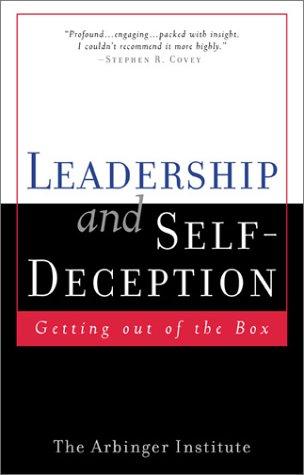
3. Leadership and Self-Deception by The Arbinger Institute
The Arbinger Institute | ⭐ 4.6/5
Who it’s for: Anyone who wants to understand the psychological dynamics that create micromanagement — and how to respond in ways that don’t perpetuate the problem.
“The moment you see yourself as the cause of the problem rather than the solution, everything changes. The moment you see your boss as a person rather than a barrier, everything changes.”
This book is different from most leadership books because it focuses on the inner game — the mental states that create difficult workplace dynamics. Its central insight is that most workplace conflict is perpetuated by how we see ourselves and others. When we see people as obstacles rather than human beings, we behave in ways that make the obstacles real.
My take: For micromanagement specifically, this book helped me understand that my boss’s behavior was about her fear and insecurity, not my inadequacy. That reframe didn’t fix the problem, but it changed how I responded to it — and in changing my response, I changed the dynamic at least enough to survive it.

4. The One Minute Manager Meets the Monkey by Kenneth Blanchard and William Oncken Jr.
Kenneth Blanchard & William Oncken Jr. | ⭐ 4.5/5
Who it’s for: Anyone who’s being loaded with tasks, oversight, and responsibility by a boss who should be handling them — and wants a framework for setting boundaries.
“The main problem with monkeys is that people don’t know how to feed them or when to feed them. The result: the monkey dies of hunger or the caretaker becomes exhausted trying to feed it.”
This short book is about delegation — specifically, how to delegate effectively and how to stop accepting responsibility for things that should stay with your boss. The “monkey” metaphor is powerful: every time you let your boss offload a problem onto you, you’re accepting a monkey that will consume your time and energy.
My take: For micromanagement situations, the value is indirect but important: understanding that the pattern of excessive oversight often reflects a boss who’s not delegating effectively — and learning how to stop playing along. When you start returning the monkeys to their proper owners, you reclaim time and autonomy.

5. Search Inside Yourself by Chade-Meng Tan
Chade-Meng Tan | ⭐ 4.6/5
Who it’s for: Anyone whose sanity is being eroded by workplace stress — and wants practical tools for maintaining emotional equilibrium even in difficult circumstances.
“The most important skill for navigating the modern workplace isn’t technical expertise. It’s emotional intelligence — the ability to understand and manage your own emotions and the emotions of others.”
Meng, Google’s famed “Jolly Good Fellow,” developed an internal mindfulness program at Google that became legendary. This book distills that program into practical tools for anyone. His emphasis on emotional self-awareness and self-compassion helped me maintain my equilibrium during the worst period of micromanagement.
My take: The insight that helped most: when you can observe your own emotional reactions without being controlled by them, you gain freedom. You can feel frustrated without letting frustration drive destructive behavior. You can feel hurt without acting on hurt. This book won’t fix your micromanager — but it might save your sanity.
6. The Hard Thing About Hard Things by Ben Horowitz
Ben Horowitz | ⭐ 4.7/5
Who it’s for: The professional who’s considering leaving a difficult situation — and wants a realistic, no-nonsense framework for making that decision.
“When you are walking through hell, keep walking. The only way through is to run as hard as possible.”
Horowitz doesn’t write about micromanagement specifically, but his hard-won wisdom about navigating terrible professional situations applies directly. His argument: sometimes you need to fight through a bad situation, sometimes you need to leave, but you should never be confused about which you’re doing.
My take: For micromanagement situations, the most valuable insight is his framework for assessing when to stay and when to go. Sometimes micromanagement is a temporary dynamic you can survive. Sometimes it’s a structural problem that will erode your mental health until you leave. This book helps you think clearly about which situation you’re in.

7. Thinking, Fast and Slow by Daniel Kahneman
Daniel Kahneman | ⭐ 4.8/5
Who it’s for: Anyone who wants to understand why micromanagers behave the way they do — and why most management advice doesn’t work on them.
“We’re prone to overestimate what we understand and underestimate what we don’t.”
Kahneman’s research on cognitive bias isn’t specifically about workplace dynamics, but it provides the deepest explanation I’ve found for why micromanagement happens. Many micromanagers are driven by an illusion of control — the belief that if they just watch closely enough, they can prevent bad outcomes. This is a cognitive trap. The closer they watch, the more they interfere, the worse outcomes get — but they can’t see the connection because they’re focused on the wrong signals.
My take: Understanding this dynamic helps you stop taking micromanagement personally. It’s not about you. It’s about a mind caught in a pattern it’s designed to repeat. This book won’t solve your micromanagement problem, but it will help you see it clearly.

8. Difficult Conversations by Douglas Stone, Bruce Patton, and Sheila Heen
Douglas Stone, Bruce Patton & Sheila Heen | ⭐ 4.7/5
Who it’s for: Anyone who needs to have a conversation about patterns of behavior — not a single incident, but a recurring dynamic that’s damaging the relationship.
“Difficult conversations are not about the truth. They’re about feelings, identity, and meaning. Once you understand that, everything changes.”
This book goes deeper than most into the psychology of hard conversations. Its framework — separating the “what happened” conversation from the feelings conversation and the identity conversation — is particularly useful for micromanagement situations.
My take: When you talk to your boss about micromanagement, she’s likely to become defensive. This book helps you navigate that defensiveness without triggering an escalation. The key insight: you can express your experience without accusing, and you can listen to her experience without abandoning your own. The goal is not to win an argument but to shift the dynamic.

9. The Power of Vulnerability by Dr. Brene Brown
Dr. Brene Brown | ⭐ 4.6/5
Who it’s for: Anyone who struggles to advocate for themselves in difficult situations — and needs both permission and courage to speak up.
“Vulnerability is not winning or losing. It’s having the courage to show up when you can’t control the outcome.”
Brown’s research on vulnerability and courage helped me understand that advocating for myself wasn’t just strategically necessary — it was emotionally necessary. The suppressed frustration from micromanagement doesn’t just disappear. It leaks out in passive aggression, resentment, and burnout. Speaking up — even when it’s scary — is healthier than staying silent.
My take: What I took from this book is that vulnerability isn’t weakness. It’s the willingness to be honest about your experience even when you can’t control how the other person responds. That’s exactly what advocating for autonomy requires.

10. Boundaries for Leaders by Dr. Henry Cloud
Dr. Henry Cloud | ⭐ 4.6/5
Who it’s for: Anyone in a leadership position who needs to create boundaries — or anyone who needs to advocate for boundaries with their own leader.
“Leadership is about creating a world for people to live in, not creating a world they have to survive in.”
Cloud is one of the clearest thinkers on organizational boundaries, and this book is his most practical. His argument: leaders who don’t create boundaries for themselves and their teams create chaos. Leaders who do create boundaries produce better results and healthier cultures.
For micromanagement situations, the value is in understanding that healthy relationships — including reporting relationships — require boundaries. Micromanagement is what happens when a leader can’t or won’t maintain appropriate boundaries. Understanding this helps you identify what’s missing and, potentially, create a conversation about what healthy boundaries would look like.
Frequently Asked Questions
Should I confront my boss directly about micromanagement?
Yes — but carefully. Most micromanagers are not aware of the damage they do. A direct but compassionate conversation can be a wake-up call. But the conversation needs to be handled with skill: focused on specific behaviors and their impact, not on character judgments. Use “I” statements (“I feel less trusted when…”) rather than “you” statements (“You don’t trust me…”). And go in with realistic expectations — some micromanagers will hear you and change; others won’t.
How do I keep micromanagement from destroying my confidence?
The most damaging effect of micromanagement is the erosion of self-trust. When someone watches your every move and corrects your every decision, you start to doubt your own judgment. Combat this by deliberately maintaining areas of autonomy outside your boss’s view. Keep a private record of decisions you made that worked out. Build relationships with colleagues who can validate your competence. And remember: your boss’s need for control says more about her than about you.
Is micromanagement ever justified?
Rarely, but yes. New employees in their first 90 days might reasonably require more oversight. Employees in highly regulated roles where errors have serious consequences might legitimately need close monitoring. The key distinction: micromanagement is a pattern imposed regardless of actual need. If your boss is watching you closely because she doesn’t trust you based on past performance, that’s micromanagement. If she’s watching you closely because you’re new and she’s doing her job, that’s normal supervision.
Should I start job hunting while dealing with micromanagement?
Usually, yes — but for reasons that might surprise you. Micromanagement tends to be deeply ingrained. Even if your boss responds to feedback and changes initially, the underlying pattern usually reasserts itself. If micromanagement is causing measurable damage to your mental health, professional development, or career trajectory, the most rational response is usually to find a healthier environment. Staying and hoping things will change is usually a losing strategy.
How do I document micromanagement for HR or legal purposes?
Keep a contemporaneous log: date, time, what was micromanaged, and the impact on your work or wellbeing. Focus on specific behaviors and measurable impacts, not interpretations or characterizations. Emails and messages that demonstrate micromanagement patterns are particularly valuable. Understand that documentation is most useful if you’re building a case for HR involvement or an employment lawyer — not for winning arguments with your boss. Documentation without legal context rarely changes micromanagement dynamics.
How do I respond when my boss criticizes my work in front of others?
Address it directly but privately afterward. Say something like: “I noticed you had feedback on my work in the meeting. I’d appreciate discussing it with you directly so I can make sure I’m meeting your expectations.” This does two things: it signals that public criticism isn’t acceptable, and it opens a private conversation where you can address the substance. If the public criticism continues, that’s a pattern you can escalate — but only if you’ve made the private conversation the norm first.
Can micromanagement actually be helpful sometimes?
If you’re new to a role and genuinely learning, close oversight can accelerate your development — if it’s paired with coaching. But micromanagement as a pattern, imposed regardless of your experience level or performance, is almost always destructive. The difference is whether oversight is in service of your growth or in service of your boss’s anxiety. If you feel less capable as a result of the oversight, it’s micromanagement. If you feel more capable, it might be legitimate coaching.
The Bottom Line
Micromanagement is one of the most corrosive workplace dynamics. It erodes confidence, suppresses initiative, and sends a clear message that you are not trusted. And the worst thing about it is how isolating it feels — it’s hard to explain to people who haven’t lived through it.
Start with Sutton’s “No Asshole Rule” for validation and framework. Use “Crucial Conversations” for the specific skills you need to advocate for yourself. Let “Leadership and Self-Deception” give you the psychological reframe that helps you stop taking it personally.
My take: And remember: you cannot control your boss’s behavior. You can only control your response to it. Sometimes the healthiest response is to leave.
Which book are you grabbing first?
Disclosure: This post contains affiliate links. If you purchase through these links, ReadPlug may earn a small commission at no extra cost to you. We only recommend books we’ve personally found valuable.
Never miss a life-changing book.
Get our spoiler-free book picks every Tuesday.