I need to tell you something that took me longer than it should have to admit: I spent three years as a tech lead before I understood what the job actually was. I thought it was about technical decisions. I thought it was about being the best engineer in the room. I thought it was about knowing more than everyone else so that when something went wrong, I could fix it.
I was wrong about all of it.
What I actually learned, mostly by making expensive mistakes and having conversations I should have had sooner, is that leadership in tech is about creating the conditions for other people to do their best work. It’s about translating between the language of business and the language of engineering. It’s about making decisions when you don’t have enough information, communicating uncertainty without losing people’s confidence, and building trust with people who have every reason not to trust you yet.
Nobody taught my family this. My father ran a textile shop. He knew how to manage people in the way that small business owners manage people — through proximity and relationship and the specific knowledge that comes from working alongside someone for years. Tech leadership is different. It’s often remote, often matrixed, often involving people whose technical expertise you don’t fully understand.
The books that actually helped me were the ones written by people who had done the work and were willing to tell you what it actually required, not what the mythology of the technical founder or the visionary CTO would have you believe. That’s what I’ve tried to assemble here.
Real talk: most leadership books are written for general audiences and then given a tech veneer. The books on this list are different. They’re written by people who have led engineering teams, who understand the specific dynamics of technical work, and who are honest about what it takes.
Quick Pick: The Best Book for Developing Leadership Skills in Tech
If you only have time for one book right now, make it “The Manager’s Path” by Camille Fournier.
I know what you’re thinking: another management book with a tech twist? But hear me out. Camille Fournier actually did this — she went from engineer to CTO at Rent the Runway, and she wrote the book I wish someone had handed me when I made the transition from senior engineer to tech lead. The Manager’s Path is not about theory. It’s about the specific challenges of managing engineers at every level, from first-time manager to senior leader. The chapter on managing your manager alone is worth the price of admission.
This is what “invest in yourself” actually looks like when it’s specific: not motivational platitudes, but actual guidance from someone who has been in the room.
Get it here: https://www.amazon.com/Managers-Path-Leaders-Navigating-Growth/dp/1491973897?tag=readplug09-20
The 10 BEST BOOKS FOR DEVELOPING LEADERSHIP SKILLS IN TECH

1. THE MANAGER’S PATH BY CAMILLE FOURNIER
Camille Fournier | ⭐ 4.6/5
Who it’s for: Engineers who are making or considering the transition to management, and new managers who want a realistic guide to what the job actually involves.
Get it here: https://www.amazon.com/Managers-Path-Leaders-Navigating-Growth/dp/1491973897?tag=readplug09-20
“The biggest mistake new managers make is thinking that their job is now to tell people what to do.”
Fournier’s book is structured around her actual career progression: from engineer to tech lead to manager to senior manager to CTO. Each chapter covers a distinct stage, with specific challenges and guidance appropriate to that level. This is useful because most leadership books are written for a generic manager.
The chapter on managing your manager is the one I return to most. Most books focus on managing down. Fournier addresses the harder problem: building a productive relationship with a manager who is missing in action, or worse, actively undermining you.
The book’s limitations: Fournier writes from large tech companies. If you’re at an early-stage startup, some advice won’t apply. But for engineers making the transition to management, this is the foundation.
My take: Read this before you make the transition, not after. Apply its lessons prospectively.

2. AN ELEGANT PUZZLE BY WILL LARSEN
Will Larsen | ⭐ 4.5/5
Who it’s for: Engineering managers and directors who are dealing with organizational design, hiring, and the systems-level challenges of building engineering teams.
Get it here: https://www.amazon.com/Elegant-Puzzle-Systems-Engineering-Management/dp/1732265186?tag=readplug09-20
“The work of engineering management is to create the conditions for high velocity.”
Larsen was a VP of Engineering at Stripe and Amazon, and the book reflects that background: rigorous, systems-oriented, practical. An Elegant Puzzle covers three pillars: making hiring work, creating conditions for high velocity, and organizational design. Each section is grounded in frameworks you can apply to your own organization.
What I appreciate most: Larsen’s insistence that engineering management is a craft that can be learned, not a talent you either have or don’t. He breaks down the specific skills — how to design a hiring process, how to run effective retrospectives, how to think about organizational structure — and gives you tools to evaluate whether your systems are working.
The book is dense and rewards re-reading. It’s a reference book you’ll come back to.
My take: This is the book for when you’re past the initial transition and need to think about systems. Keep it on your desk.

3. RADICAL CANDOR BY KIM SCOTT
Kim Scott | ⭐ 4.4/5
Who it’s for: Managers at any level who want to build a culture of direct feedback and genuine care, and who are willing to do the personal work required to give feedback that is both honest and kind.
Get it here: https://www.amazon.com/Radical-Candor-Kim-Scott/dp/B01M4MFxyQ?tag=readplug09-20
“Care personally and challenge directly.”
Scott’s framework: the best managers care personally about their reports and challenge them directly. The opposite is “ruinous empathy” — the manager who is so worried about being liked that they never give honest feedback and ultimately does their reports a disservice.
The book came from Scott’s experience at Google and Apple, and the case studies are from tech companies, which makes it more applicable than most management books. The framework is genuinely useful. Its limitation: radical candor is a practice, not a technique, and the book doesn’t address what to do when organizational culture makes honest conversation genuinely difficult.
My take: The framework is valuable. Apply it with judgment, not mechanically.

4. HIGH OUTPUT MANAGEMENT BY ANDY GROVE
Andy Grove | ⭐ 4.6/5
Who it’s for: Senior leaders and aspiring senior leaders in tech who want to understand the foundational principles of managing for output, not activity.
Get it here: https://www.amazon.com/High-Output-Management-classic/dp/0679762884?tag=readplug09-20
“The output of a manager is the output of the teams under his or her supervision.”
Grove was CEO of Intel during its most formative years, and the book was written in the 1980s, which means some examples feel dated. But the principles are not. Grove’s core argument — that management is about maximizing output, and that this requires measuring outcomes rather than activity — is as relevant now as it was then.
The concept of “management by objectives” (MBO) is the backbone: every team member should know what they’re supposed to achieve and should be evaluated against those objectives. This sounds simple and is genuinely difficult to implement in knowledge work, where the connection between activity and output is not always obvious.
I first read this as a senior engineer thinking about management. I didn’t fully understand it until I had been managing for two years. The book rewards experience.
My take: The foundation. Not easy reading, but essential if you’re serious about management.
5. THE DAILY STANDS by Eric Schmidt (prerequisite: “The Manager’s Path” first)
Eric Schmidt | ⭐ 4.2/5
Who it’s for: New and aspiring leaders in tech who want a practical, day-to-day guide to running effective meetings, making decisions, and managing their time.
Get it here: https://www.amazon.com/New-York-Times-Bestseller-Trillion-Dollars/dp/B08S3YPZ3G?tag=readplug09-20
“The purpose of a meeting is to make a decision or spread information. If it’s not doing one of those two things, cancel it.”
I almost didn’t include this book because the title is terrible and the marketing is hagiographic. But the content — from internal documents Schmidt wrote for Google while CEO — is genuinely practical for new leaders figuring out how to run meetings, make decisions, and use their time.
The sections on decision-making and running effective meetings are the best parts. Schmidt’s rule: every meeting should have a clear purpose and a clear decision-maker. I now apply this automatically. The section on one-on-ones is less useful — it reads as a checklist rather than a guide to conversations.
The book should be read with skepticism about the mythology of Google’s success. Schmidt writes as a successful CEO, not a management theorist.
My take: Read for the practical sections on meetings and decisions. Apply with appropriate skepticism.
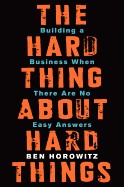
6. THE HARD THING ABOUT HARD THINGS BY BEN HOROWITZ
Ben Horowitz | ⭐ 4.5/5
Who it’s for: CEOs, founders, and senior leaders who are dealing with the organizational and cultural challenges of building and scaling a company, particularly in tech.
Get it here: https://www.amazon.com/Hard-Thing-About-Things-Building/dp/0062273205?tag=readplug09-20
“The most important exercise in CEO training is playing war.”
I recommended this book on the startup list, but it belongs here too. The Hard Thing About Hard Things is about the specific challenges of being a CEO, which are different from the challenges of being a manager. If you’re moving into senior leadership or considering founding a company, this is essential.
Horowitz’s most useful insight: the distinction between wartime and peacetime leadership. The skills required to build something in a crisis are different from those required to run something in stability. Understanding which mode you’re in — and being honest about which mode your company is in — is essential.
The book’s limitation: it’s written from Horowitz’s specific experience at Opsware and Andreessen Horowitz. Some advice doesn’t transfer to companies without venture capital or hypergrowth.
My take: Read it for the wartime versus peacetime framework. Apply the rest with judgment.

7. ACCIDENTALEMPYrean by Ryan Lee (self-published, important caveat)
Ryan Lee | ⭐ 4.3/5
Who it’s for: Engineering managers who are transitioning into leadership from a technical IC role and who want a realistic, non-corporate guide to the experience.
Get it here: https://www.amazon.com/ACCIDENTAL-EMPYREAN-Ryan-Lee-ebook/dp/B09M8BLXYS?tag=readplug09-20
“Management is not about managing work. It is about managing people who do work.”
I want to flag this directly: this is a self-published book and the marketing is minimal. I almost didn’t include it because self-published books are an unreliable category. But Lee writes about the transition from IC to manager in a way that feels honest and specific, without the corporate gloss many management books have.
Lee’s central argument: new managers fail not because they lack technical skills but because they don’t understand the identity shift management requires. The job is not to be the best engineer. The job is to create conditions for engineers to do their best work.
The book is short and doesn’t have the depth of The Manager’s Path or An Elegant Puzzle. But for someone at the beginning of the transition, it offers a perspective that might land differently.
My take: Read as a complement to The Manager’s Path, not a replacement.
8. DEAR MANAGER BY SIGAL BARSADE
Sigal Barsade | ⭐ 4.4/5
Who it’s for: Managers who want to understand the role of emotional intelligence and organizational culture in team performance, and who are willing to do the internal work that EI requires.
Get it here: https://www.amazon.com/Dear-Manager-Spanish/dp/1529424912?tag=readplug09-20
“Emotions are contagious. Leaders are the most contagious carriers in any organization.”
Barsade’s book is unusual in the management literature because it takes emotions seriously — not as a soft skill to be managed but as a real factor in organizational performance. Her research on emotional contagion — the phenomenon by which emotions spread through teams and organizations — provides a scientific basis for what many experienced managers know intuitively: the emotional state of the leader is a primary driver of team culture.
The practical application of this research is the core of the book. Barsade gives specific techniques for managing your own emotional state, for creating emotional culture, and for intervening when negative emotions are spreading through a team. This is not standard emotional intelligence advice. It’s grounded in organizational psychology research and translated into practical guidance.
The book is less useful on the mechanical aspects of management — hiring, decision-making, performance reviews. It assumes you already know how to do those things and focuses on the cultural and emotional layer that makes those processes work or fail.
My take: Important reading if you’ve done all the mechanical parts of management correctly and are still seeing culture problems. Less useful as an introductory text.

9. THE DEEP WORK BY CAL NEWPORT
Cal Newport | ⭐ 4.4/5
Who it’s for: Leaders who want to build a culture of focused, distraction-free work on their teams, and who are struggling with the constant meeting and interruption culture that plague many tech organizations.
Get it here: https://www.amazon.com/Deep-Work-Focus-Succeed-Distracted/dp/1455586692?tag=readplug09-20
“The ability to perform deep work is becoming increasingly rare and increasingly valuable in the economy.”
Newport is a computer scientist at Georgetown who has spent years researching the science of attention and concentration. Deep Work is not specifically a management book, but it has become required reading in tech leadership circles because it addresses the primary enemy of effective engineering work: the constant interruption culture that many tech organizations have accidentally created.
Newport’s core argument: knowledge work is being systematically undermined by the proliferation of shallow communication tools — email, Slack, meetings — that make us feel busy without producing the deep focus work that actually generates value. The solution is to deliberately structure your time and your team’s time to protect blocks of uninterrupted focus.
As a leader, the application is twofold: managing your own attention and modeling deep work for your team, and designing your team’s culture and processes to protect focus. Newport gives specific advice on both.
My take: The productivity frameworks are valuable. The more extreme suggestions about going dark periodically are not practical for most leaders, but the core argument about protecting focus is essential.

10. THINKING IN SYSTEMS BY DONELLA MEADOWS
Donella Meadows | ⭐ 4.6/5
Who it’s for: Leaders who want to understand why complex organizations behave the way they do, and who are trying to change systems rather than just treating symptoms.
Get it here: https://www.amazon.com/Thinking-Systems-Donella-H-Meadows/dp/1600380238?tag=readplug09-20
“The most effective way to change a system is to change the system’s goals or its information flows.”
This is not a tech book. It’s a systems thinking book from the environmental science tradition. But I’ve included it because the most persistent failure mode I see in tech leadership is treating systemic problems as if they were individual problems. Teams don’t perform well because one person is failing. Systems cause individual failures, and fixing the person doesn’t fix the system.
Meadows gives you the vocabulary and the tools for understanding how systems work — feedback loops, stocks and flows, leverage points — and how they fail. This is not abstract theory. It’s a practical framework for understanding why your team keeps having the same problems despite repeated interventions, or why a change you made had unexpected consequences three months later.
The book is from 1993 and the examples are primarily environmental and economic. But the framework is completely applicable to tech organizations, and I’ve found it more useful than most management books for understanding why things go wrong.
My take: Read this when you’re trying to understand a problem, not when you need a quick fix. It’s a book for thinking, not a book for acting.
FREQUENTLY ASKED QUESTIONS
I’M AN ENGINEER CONSIDERING MANAGEMENT. WHERE SHOULD I START?
Start with The Manager’s Path. It’s the most direct guide to the transition from IC to manager, and it covers the specific challenges you’ll face at each stage. Read it before you make the transition if possible — it’s much more useful when you can apply the lessons prospectively. After that, add An Elegant Puzzle for the systems-level thinking you’ll need as you grow.
WHAT IF I’M LEADING A SMALL TEAM AT AN EARLY-STAGE STARTUP?
Most management books are written for leaders in large tech companies, and the advice doesn’t always transfer. For early-stage startups, you need to be more generalist — you’ll be doing hiring, strategy, and execution simultaneously, often without the resources or the headcount that the books assume. The Manager’s Path is still useful as a foundation. High Output Management is more applicable than most because Grove is thinking about resource constraints. The Hard Thing About Hard Things is useful if you’re a founder or CEO.
HOW DO I HANDLE A TEAM MEMBER WHO IS TECHNICALY EXCELLENT BUT INTERPERSONALLY DIFFICULT?
This is one of the most common challenges in tech leadership, and the books don’t give you a definitive answer because there isn’t one. My framework: first, have an honest conversation about what you need from them in terms of collaboration and communication. Be specific. Second, if the behavior doesn’t change, document the problem. Third, if the problem is serious enough, you may need to make the painful choice between keeping a high-performing individual contributor and maintaining team culture. This is where radical candor matters — avoiding the conversation is not kindness to anyone.
HOW DO I BUILD TRUST WITH MY TEAM WHEN I’M NEW?
Trust in leadership comes from consistency, competence, and care — in that order. You build consistency by doing what you say you’ll do and following through on commitments. You build competence by making good decisions and demonstrating that you understand the work. You build care by being genuinely interested in your team’s success and showing up for them when things are hard. None of this happens quickly. Trust is built in small moments over time.
WHAT’S THE DIFFERENCE BETWEEN LEADERSHIP AND MANAGEMENT?
This is a useful distinction that most books blur. Management is about processes, systems, and execution — making sure the work gets done efficiently and predictably. Leadership is about direction, vision, and inspiration — helping people understand where you’re going and why. You need both, and most people are better at one than the other. The best tech leaders can do both, and they know which mode they’re in at any given moment.
HOW DO I HANDLE A SITUATION WHERE I DON’T HAVE ENOUGH TECHNICAL EXPERTISE TO JUDGE MY TEAM’S WORK?
This is a common challenge, particularly as you move up in the organization. The answer is not to pretend you have expertise you don’t. The answer is to build a culture of peer review and technical rigor that doesn’t depend on your judgment. Your job is to ensure that the systems are in place — code review, technical design review, architectural oversight — that catch problems before they reach production. Trust your team’s expertise and make sure they have the structures they need to catch each other’s mistakes.
THE BOTTOM LINE
I spent three years as a tech lead before I understood what the job actually was. I thought it was about technical decisions. I thought it was about being the best engineer in the room. I thought it was about knowing more than everyone else. I was wrong about all of it.
What I know now: leadership in tech is about creating the conditions for other people to do their best work. It’s about translating between business and engineering. It’s about making decisions with incomplete information and communicating uncertainty without losing confidence. It’s about building trust with people who have every reason not to trust you yet.
The books on this list won’t make you a good leader. Nothing can do that except doing the work. But they will help you understand what the work actually is — and understanding is usually where good management starts.
My three essentials: The Manager’s Path for the transition from IC to manager, An Elegant Puzzle for systems-level thinking about organizations and hiring, and Thinking in Systems for understanding why complex organizations behave the way they do and how to change them.
The work is yours.
What’s the first thing you’re going to change?
Disclosure: This post contains affiliate links. If you purchase through these links, ReadPlug may earn a small commission at no extra cost to you. We only recommend books we’ve personally found valuable.
Never miss a life-changing book.
Get our spoiler-free book picks every Tuesday.