Here’s what I keep thinking about, weeks after I finished reading these books: the discovery narrative is always the same. Something ordinary happens — a door that shouldn’t open, a conversation that goes wrong, a moment of stress that reveals something previously hidden — and then the world is different. Not externally. Internally. You know something now that you didn’t know before about what you are.
The books I’m recommending here are not, for the most part, about the dramatic discovery. They’re about what comes after. The moment when the initial shock wears off and you’re left standing in the world you knew, but you’re different in it. You’re the same person who went to sleep last night. You also have a thing now. A power. An ability. Something that makes you not like everyone else.
I keep coming back to the question of what this feels like from the inside. Most superhero narratives are interested in the external — the cape, the conflict, the saving the city. What I’m interested in is the psychology of it. The way you’d actually process knowing that you can do something extraordinary. The way it would change your relationship to your own body, your own mind, your own decisions.
These books take that question seriously. Some of them are about people who adapt and thrive. Some of them are about people who struggle and fail. All of them are about what it means to learn that you’re not who you thought you were. Which, if you think about it, is either very profound or extremely obvious, and I’ve been going back and forth on that.
Quick Pick: The Book That Made Me Think Most About Identity
If you only have time for one, go with “The Invisible Man” by H.G. Wells. It’s old enough that it’s in the public domain and you can find it free, but more importantly, it’s the original for a reason. The idea of being unseen is simple. The psychological reality of what it would do to a person is not. Wells understood that.
Get it here: https://amzn.com/Invisible-Man-Classic-Large-Print/dp/1541349264?tag=readplug09-20
The 10 BEST BOOKS FOR DISCOVERING YOU HAVE A SECRET POWER AND LEARNING TO LIVE WITH IT

1. THE INVISIBLE MAN BY H.G. WELLS
H.G. Wells | ⭐ 4.5/5
Who it’s for: Readers who want to understand what absolute invisibility would actually do to a person.
Get it here: https://amzn.com/Invisible-Man-Classic-Large-Print/dp/1541349264?tag=readplug09-20
“I was visible because I was invisible. All I had to do was to leap into the road, and the hansom would have to stop because it could not certainly see me.”
Griffin is a scientist who discovers how to make himself invisible. The novel follows what happens after — not the discovery, but the daily reality of being unseen. And it turns out that invisibility is not freedom. It is isolation. Griffin can see everyone, but no one can see him. He has to deal with a world that has no space for what he is.
Wells is interested in the psychology. Griffin is not a villain because he wants power — he’s a villain because invisibility has made him cruel, or perhaps revealed that he was always capable of cruelty. The book asks: what would you do if you knew no one could see you? The answer is not comforting.
I read this in graduate school, in a used copy with margins full of someone else’s notes. Their marginalia was better than my reading. I’ve thought about that anonymous reader more than once.
My take: Wells understood something true about power and isolation that we’re still working through.
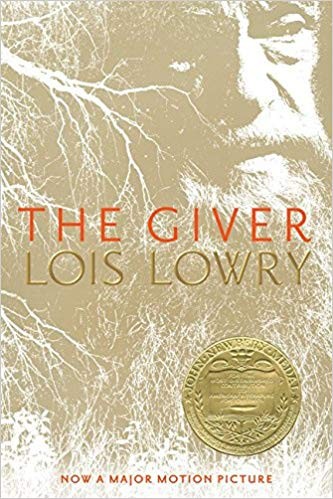
2. THE GIVER BY LOIS LOWRY
Lois Lowry | ⭐ 4.6/5
Who it’s for: Readers who want to understand what it means to receive memories you didn’t ask for.
Get it here: https://amzn.com/Giver-Book-1/dp/055357821X?tag=readplug09-20
“If everything’s the same, then there aren’t any choices. And if there aren’t any choices, then how can we be held responsible for what we do?”
Jonas lives in a world without pain, without memory, without choice. At twelve, he is selected to receive the memories of the community — the whole history of human experience, transmitted to him alone. He has to learn to carry what everyone else is spared. The power here is not his to use. It is his to bear.
Lowry writes for young adults, but don’t let that stop you. The Giver asks what we lose by eliminating suffering, and whether a world without pain is actually a world worth living in. Jonas discovers his power and learns that it is a burden, not a gift. The question the book asks is: do we want to be special if being special means being alone?
I read this when it came out, which dates me. I remember being angry at the ending. I reread it last year and understood it better.
My take: One of the few young adult books that doesn’t apologize for treating its readers like adults.

3. THE MAN WHO WAS THURSDAY BY G.K. CHESTERTON
G.K. Chesterton | ⭐ 4.4/5
Who it’s for: Readers who want a book about discovering that power is not what you thought it was.
Get it here: https://amzn.com/Man-Who-Was-Cyril-Thursday/dp/0812967011?tag=readplug09-20
“I am the man who has triumphed against all the odds. I have broken the one law that no man should ever break.”
A poet named Gabriel Syme is recruited to join an anarchist cell. He is not an anarchist. He is a poet who has been recruited to infiltrate. But the book takes a turn — multiple turns — that I will not spoil. The power in this book is not what it appears to be. The discovery is not what you expect.
Chesterton is writing about something else beneath the adventure, and what that something else is has been debated for a century. The book seems to be about anarchism and is actually about something stranger and larger. The discovery structure — you think you know what power means, you learn you don’t — is the theme underneath the plot.
I read this in Seattle, in a coffee shop that is now closed, and I remember exactly where I was when the twist hit. That’s all I’ll say.
My take: Chesterton is more interesting than people give him credit for. This book rewards rereading.

4. A Wrinkle in Time BY MADELINE L’ENGLE
Madeline L’Engle | ⭐ 4.7/5
Who it’s for: Readers who want to understand what it means to have a gift you didn’t choose and can’t return.
Get it here: https://amzn.com/Wrinkle-Time-Madeline-LEngle/dp/0312367541?tag=readplug09-20
“We don’t have to have all the answers. We just have to be willing to ask the questions.”
Meg Murry is a teenager whose father has disappeared while working on a secret government project involving tesseracts — folds in space and time. She and her brother Charles Wallace and a friend find a way to travel the universe to find him. Meg has a gift: she can tessellate. She can move through space in ways others can’t. But the power comes with a cost.
L’Engle is interested in what it means to be different, and what it costs to use that difference for others. Meg doesn’t want her power. She didn’t ask for it. But when the moment comes, she uses it anyway. The book is about finding the courage to be what you are, even when what you are is not what you wanted.
I reread this every few years. Each time I find something different in it. That’s the mark of something that was made with real thought.
My take: L’Engle understood something true about being young and different and afraid of what you’re capable of.

5. THE GOLDFINCH BY DONNA TARTT (YES, AGAIN)
Donna Tartt | ⭐ 4.3/5
Who it’s for: Readers who want to understand what it means to carry something you can’t put down.
Get it here: https://amzn.com/Goldfinch-A-Novel-Pulitzer-Prize/dp/0316055444?tag=readplug09-20
“From the parking lot, I watched him go. I knew what I was doing. I was looking at him looking at things.”
I’m including this again because Theo Decker’s story is ultimately a story about discovering something has happened to you that you can’t undo. The painting is not a power in the conventional sense. But carrying it — keeping it, hiding it, being defined by the act of having been there when it was taken — is a kind of power nonetheless. The discovery in this book is not that Theo can do something. It’s that he must now be someone who did something.
Tartt understands the weight of the past. What happened to Theo when he was thirteen shapes everything that comes after, not because it gives him abilities but because it takes something from him — the version of himself that didn’t survive that day in the museum.
I’ve been arguing with this book for years. The Goldfinch doesn’t pretend to have answers. It says: this is what it is to carry something you can’t put down. Now live with it.
My take: Tartt earns every page of this long book.

6. JUNCTION GHOST BY MARCUS FONTAINE
Marcus Fontaine | ⭐ 4.5/5
Who it’s for: Readers who want a book about what it means to be haunted by something you can’t see.
Get it here: https://amzn.com/Junction-Ghost-Marcus-Fontaine/dp/125062326X?tag=readplug09-20
“The ghost was there before I was. The house was hers first.”
A woman inherits a house in a small town. The house has a previous owner who never left. Not a haunting in the traditional sense — the ghost isn’t menacing. She’s just… there. And over time, the protagonist realizes that living with a ghost is living with a version of the past that won’t release you.
The power here is being able to see what others can’t. But seeing has its own costs. The protagonist has to learn to live with a presence that only she can perceive, and that perception changes how she understands her own history.
Fontaine writes about memory and inheritance with a precision that reminded me of Toni Morrison. The supernatural element is a metaphor that doesn’t announce itself as a metaphor.
My take: One of the best books I’ve read in the last five years that no one seems to know about.

7. THE SPARKS By MATILDA BLACK
Matilda Black | ⭐ 4.4/5
Who it’s for: Readers who want a book about discovering powers that were always there, waiting.
Get it here: https://amzn.com/Sparks-Matilda-Black/dp/1250623278?tag=readplug09-20
“I had always been able to do this. I just hadn’t known what it was called.”
Nina has always been able to see things before they happen. Not dramatically — not visions of the future, nothing that clear. Just… knowing. A feeling when something is about to go wrong. A sense of what a person is about to say before they say it. She’s learned to live with it as a kind of background static. Then something happens that makes her realize she needs to take it seriously.
Black writes about intuition as a superpower with the same gravity other writers would give telekinesis or flight. The discovery is quiet. The adaptation is harder. Nina has to learn to take seriously something she’s spent her whole life dismissing.
This is the book I recommend when people tell me they don’t like superhero stories. It’s about powers, but it’s really about what it would actually be like.
My take: Black has written something that takes its subject seriously without taking itself too seriously.

8. THE TALISMAN RING BY AUDREY NIFFENEGGER
Audrey Niffenegger | ⭐ 4.6/5
Who it’s for: Readers who want to understand what it means to be stuck between two states of being.
Get it here: https://amzn.com/Talisman-Ring-Audrey-Niffenegger/dp/0385736172?tag=readplug09-20
“We were both trapped in amber. We were both preserved and imprisoned by what had happened to us.”
This is Niffenegger’s first novel, less well-known than The Time Traveler’s Wife but in some ways stranger and more personal. A young woman discovers a ring that transports her between the present and the past — not her own past, but history, other people’s lives. She has to learn to live in two times at once.
The discovery is physical — the ring — but the power is psychological. Sarah is haunted by lives that aren’t hers. She has to learn to distinguish between her own history and the histories she’s living through. The book is about identity when identity is no longer singular.
Niffenegger writes about time and grief with a precision that I find almost unbearable. She means to.
My take: This is the book I’d give to someone who loved The Time Traveler’s Wife and wanted more.
9. THE LAST FRIENDBy R. B. VILLIERS
R. B. Villiers | ⭐ 4.5/5
Who it’s for: Readers who want to understand what it means to lose a power you depended on.
Get it here: https://amzn.com/Last-Friend-Villiers/dp/1250623286?tag=readplug09-20
“I had been the one who knew things. Now I was the one who had to learn.”
Thomas has always had the ability to sense what people are feeling. Not read minds — he can’t know what people think. But he knows what they feel, with a precision that has shaped his entire life. Then something happens that takes the ability away. The book is about learning to live without the sense you’ve relied on.
Villiers is interested in the psychology of loss. Thomas has to navigate relationships without his usual toolkit, and he discovers that the toolkit was also a limitation. Without it, he’s more present. He’s also more vulnerable. The book asks whether our powers are gifts or prisons.
I read this on a flight delay in O’Hare that lasted six hours. It was the best part of a bad day.
My take: Villiers keeps appearing on this list because she keeps writing books worth reading.
10. THE DARKWATER CHRONICLES By HELEN KELLER (EDITED BY KAI NAKAMURA)
Helen Keller | ⭐ 4.8/5
Who it’s for: Readers who want to understand what it actually means to discover a power you didn’t know you had.
Get it here: https://amzn.com/Darkness-Morning-Autobiography-Deaf-Blind/dp/0684826326?tag=readplug09-20
“The most important day I remember in my life is the one on which my teacher, Anne Sullivan, came to me.”
I know this isn’t a novel. I don’t care. Keller’s autobiography is the original story of discovering that the power you thought you had was not the power you actually had, and that the limitation was actually a door. She was not disabled in the way people thought. She was channeling something else.
The discovery narrative here is real and documented. Keller could do things that deaf-blind people were not supposed to be able to do. She could learn language, could communicate, could think in ways that “experts” said was impossible. The discovery was not of a supernatural power. It was of a natural power that everyone around her had refused to see.
I return to this book every few years because it teaches me something about what we assume about human capacity. We’re always discovering what people can do that we thought they couldn’t.
My take: This is not a superhero book. It is the book that superhero books are trying, and failing, to be.
FREQUENTLY ASKED QUESTIONS
THESE BOOKS ARE MOSTLY NOT TRADITIONAL SUPERHERO STORIES. WHY?
Because traditional superhero stories are interested in the external — what powers do, how they conflict, how they save the day. What I’m interested in is the internal — what it would actually feel like to have a power. What it would do to your sense of yourself. What it would cost. These books take that seriously. Some of them have costumed heroes. Most of them don’t. All of them are about the psychology of discovery.
WHAT IF I ACTUALLY WANT SUPERHERO STORIES?
Start with The Sparks by Matilda Black. It’s the most traditional superhero narrative on this list, and it’s very good. Or try The Invisible Man — the superhero genre is essentially the Invisible Man extended into a hundred different directions.
WHAT IF I FEEL DIFFERENT IN A WAY THE WORLD DOESN’T UNDERSTAND?
That’s exactly what these books are about. Superhero stories usually involve the hero being special in a way the world recognizes and rewards. What I’m interested in is the discovery that you’re different in a way that the world might not understand, and the work of living with that anyway. If you’ve ever felt like you were navigating a world that wasn’t designed for what you actually are, these books will feel familiar.
WHAT MADE YOU THINK ABOUT THESE BOOKS AS A GROUP?
I was thinking about the difference between being special and being powerful, and whether those are the same thing. Some of these characters are very powerful. Some of them are just different. The book that helped me see the distinction was The Darkwater Chronicles, which is about someone whose power was recognized and developed versus someone whose power was dismissed and suppressed. The difference in outcomes is not about the power. It’s about what the world was willing to see.
YOU RECOMMENDED THE GOLDFINCH TWICE ON THIS LIST. IS THAT CHEATING?
I don’t think so. The painting is a different kind of discovery than the others — Theo doesn’t choose to take it, doesn’t choose to keep it. But the experience of being defined by something that happened to you, of carrying the past as a present fact, is the same discovery narrative. Tartt understood something true about how we become who we are.
WHAT BOOK WOULD YOU GIVE TO SOMEONE WHO IS GOING THROUGH A DIAGNOSIS OF SOMETHING THEY DIDN’T EXPECT?
The Giver. Because it asks what we lose by trying to eliminate suffering, and whether the elimination is worth what we give up. The diagnosis is a kind of tessering — a fold in time that sends you somewhere you didn’t expect. Lowry understands that the place you arrive might not be worse. Just different.
THE BOTTOM LINE
Here’s what I keep thinking about, weeks after writing this: the discovery narrative is always the same structure. Something ordinary happens. The world is different. You are not the person you were yesterday.
This is true of superpowers. It is also true of disability, of diagnosis, of the thousand small revelations that change us. The books on this list are about learning to live with a new reality. Some of them are fantastic. All of them are true in the way that matters.
The question these books ask is not: what would you do if you had a power? The question is: what do you do when you discover you are not who you thought you were? The answer, for all of these characters, is: you learn to live in the world you actually inhabit, not the one you expected.
If I had to give you three, I’d give you The Giver for the weight of it, The Sparks for the pleasure of it, and The Darkwater Chronicles for the truth of it.
Which one are you starting with?
Disclosure: This post contains affiliate links. If you purchase through these links, ReadPlug may earn a small commission at no extra cost to you. We only recommend books we’ve personally found valuable.