There is a particular grief that has no name — or rather, it has a name, but you don’t learn it until you’re in it. It’s the grief of finishing a book you loved. Not a book that ended badly. A book that ended well, too well — a book that made a room in your head you didn’t know was there and then left it empty when you turned the last page.
I felt it most acutely after “The House in the Cerulean Sea.” I closed the cover and sat there for a long time. Then I picked up my phone and opened every book app I had and stared at nothing. I didn’t want to read another book. I wanted to read that book again. I wanted to live in Linus Baker’s world where bureaucratic loneliness could meet found family and win.
That’s the paradox. The books we love most are the ones that make reading anything else feel like a consolation prize.
If you’re here, you know exactly what I mean. You’ve just finished something — “The Midnight Library,” “Piranesi,” “The Song of Achilles” — and you’re sitting in that emptiness. You want someone to hand you a book and say: this will give you that feeling. This will fill the room that book left.
I can’t promise I can fill it. Some rooms stay empty in ways that are good for us. But I can hand you ten books that came close for me — books that arrived at the right moment and did something I didn’t know I needed.
Quick Pick: The Best Book for Finding Your Next Favorite Read
Also see our guide to 10 BEST BOOKS ABOUT DEEPLY MESSED UP FAMILIES AND FINDING YOUR WAY THROUGH THE CHAOS. Also see our guide to 10 BEST BOOKS FOR BREAKING THROUGH A CREATIVE SLUMP AND FINDING INSPIRATION AGAIN. Also see our guide to 10 BEST BOOKS FOR BROADENING YOUR UNDERSTANDING OF THE WORLD AND SEEING WHAT YOU’VE BEEN MISSING. Also see our guide to 10 BEST BOOKS FOR FINDING YOUR NEXT FAVORITE READ WHEN YOU’VE LOVED A BOOK SO MUCH YOU DON’T KNOW WHAT TO READ NEXT. Also see our guide to 10 BEST BOOKS FOR FINDING YOUR NEXT FAVORITE READ WHEN YOU’VE LOVED A BOOK SO MUCH YOU DON’T KNOW WHAT TO READ NEXT.If you only have time for one book and you’re in that post-reading haze, go with “Eleanor Oliphant is Completely Fine” by Gail Honeyman. This is the book I recommend most often because it does what all great second books need to do: it surprises you. It’s about loneliness and connection that you go into thinking you know what it is, and it becomes something else. I read it in three days — which for me means it was either very good or I was very desperate. Probably both. When you’re missing a book, you need something that demands your attention so completely you forget you were looking.
The 10 BEST BOOKS FOR FINDING YOUR NEXT FAVORITE READ WHEN YOU’VE LOVED A BOOK SO MUCH

1. THE HOUSE IN THE CERULEAN SEA BY TJ KLUNE
TJ Klune | ⭐ 4.8/5
Who it’s for: Readers who loved “The Midnight Library” or “Piranesi” — anyone who craves a story that feels like being wrapped in something warm and strange at the same time.
“I wanted to tell Linus Baker that he had changed my life. But I wasn’t sure if that was true. Maybe what changed my life was simply the fact that someone had thought to look.”
“The House in the Cerulean Sea” is the story of Linus Baker, a caseworker sent to an orphanage on a remote island where six magical children live — a boy who starts fires, a girl who hears thoughts, a shapeshifter, the antichrist. It’s about bureaucracy and loneliness and found family, and it should not work as well as it does. The plot sounds absurd. The execution is devastating.
What stayed with me: Klune asks what makes a family, what makes a person whole. Not new questions, but answered in a way that felt like coming home. If you loved “The Midnight Library,” Klune does something similar but warmer. His book believes in goodness without being naive.
My take: If you’ve just finished something and you want to feel something hopeful without being beaten over the head with it, this is the book. It’s a hug in book form. (And that’s okay — we all need hugs sometimes.)

2. ELEANOR OLIPHANT IS COMPLETELY FINE BY GAIL HONEYMAN
Gail Honeyman | ⭐ 4.7/5
Who it’s for: Readers who loved character-driven fiction that slowly reveals what’s wrong and trusts you to care anyway. If you liked “A Man Called Ove” or “Anxious People,” this is for you.
“I am not a tragic heroine. I am simply a woman who has no one to help her get dressed in the mornings. This is different.”
Eleanor Oliphant is a social worker in Glasgow who has perfected being fine. She lives alone, goes to work, drinks vodka on weekends. She has no friends — or rather, she’s decided she doesn’t need them. Then she falls in love with a stranger she’s never spoken to.
This is a book about loneliness — not being alone, but choosing isolation because connection feels too dangerous. I recognized Eleanor in ways that made me uncomfortable. The way she narrates her life with such precision, such distance, as if describing someone else’s existence. What makes this work is Honeyman’s refusal to make Eleanor’s loneliness a joke or a tragedy. It’s just a fact. And the slow way she begins to change feels earned in a way fiction rarely does.
My take: This is the book you read when you’re not okay but you’re not ready to say that yet. It’s quiet. It’s precise. It knows something about isolation that I don’t think I could have written, only lived.
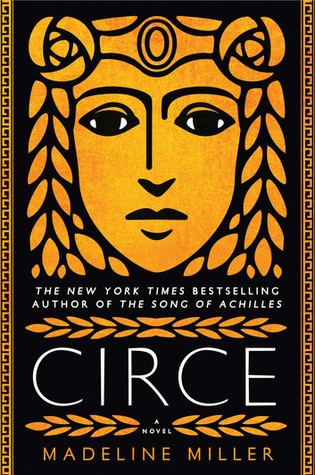
3. CIRCE BY MADELINE MILLER
Madeline Miller | ⭐ 4.8/5
Who it’s for: Readers who fell in love with “The Song of Achilles” or “The Silence of the Girls” and need more mythological retellings told from the perspectives we weren’t given.
“I thought once that gods are the opposite of death, but I see now they are more dead than anything, for they are unchanging.”
“Circe” is the witch of Aeaea, exiled to a desert island for being ordinary in a family of gods. She discovers she can transform — plants, animals, men — and uses that power in ways the gods never anticipated.
Miller’s prose makes you forget you’re reading. She writes about magic with the matter-of-factness of making dinner. The chapter where Circe meets Odysseus — turning his men into pigs and then, bored, turning them back — is one of the best scenes in contemporary fiction. If you loved the tenderness of “The Song of Achilles,” you’ll find the same intimacy here. Circe is her own person, not an extension of someone else’s story.
My take: Read this if you’ve ever felt like you didn’t belong, like you were ordinary in a family or a world that expected something extraordinary from you. Circe’s story is about finding power in the ordinary. That’s not a small thing.
4. PIRATESI BY SUSANNA CLARKE
Susanna Clarke | ⭐ 4.6/5
Who it’s for: Readers who loved the dreamlike quality of “Piranesi” — its sense of being inside a world that operates by rules you don’t fully understand but want to.
“The Ninth Bridget is dead. I find the JH pages much more interesting. They are a mystery which I am determined to solve.”
“Piranesi” is about a man living in a house with infinite halls, infinite statues, infinite tides. He’s not trapped — or rather, he was, but he’s forgotten. He’s created a religion around the tides and the birds in the upper halls. He journals his observations. He is, in every way that matters, alone.
And then someone else arrives.
I won’t say more — the less you know, the better. Clarke has constructed something that feels like a fever dream in the best possible way. The horror is quiet. The loneliness is not. If you loved it, try “The Starless Sea” — but honestly, you should just read “Piranesi” again. That’s allowed.
My take: This is the book you read when you want to be somewhere else so badly that anywhere will do. Piranesi’s house is infinite and lonely and full of birds. It’s a place you can visit and leave. That’s not nothing.
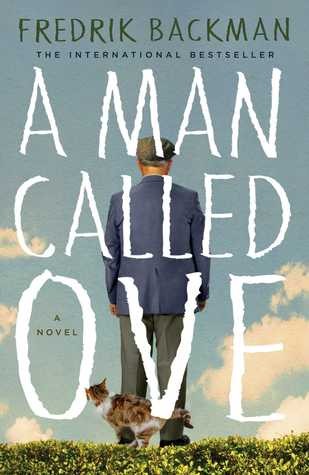
5. A MAN CALLED OVE BY FREDRIK BACKMAN
Fredrik Backman | ⭐ 4.7/5
Who it’s for: Readers who loved “Eleanor Oliphant” or “The House in the Cerulean Sea” — anyone who believes that grumpy people are usually just people who have been hurt and forgotten how to say so.
“‘You could have a beer with me,’ he said. ‘I don’t drink beer.’ ‘You could learn.’”
A Man Called Ove is a grumpy man. He has strong opinions about parking bicycles. He visits his wife’s grave every Thursday. He has decided he’s done with life.
Then new neighbors arrive — a pregnant Iranian woman and her toddler daughter who keeps accidentally inserting herself into Ove’s ordered world. And something shifts.
Backman writes Ove with such specificity that he stops being a type and becomes a person you recognize. The book is sentimental — I won’t pretend otherwise. It wants you to cry and it will. But the crying feels earned because Backman takes Ove’s grief seriously. His wife’s death isn’t a plot device. It’s a wound that hasn’t healed and may never heal.
My take: Read this if you want to feel something and you’re tired of pretending you don’t. That’s not a criticism. Some of us are very tired.
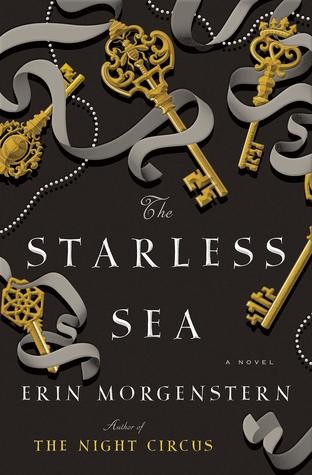
6. THE STARLESS SEA BY ERIN MORGENSTERN
Erin Morgenstern | ⭐ 4.5/5
Who it’s for: Readers who loved “The Night Circus” and wanted more of that same dreamlike, world-building quality — or readers who loved “Piranesi” and wanted something equally strange but more narratively structured.
“Some stories are better than others, and the best ones are the ones that come true.”
“The Starless Sea” is about Zachary Ezra Rawlins, a graduate student who discovers a door to an underground library full of stories about other stories. The alternating chapters — Zachary’s story and the stories-within-stories — can be disorienting. If you came expecting “The Night Circus,” you may be frustrated.
But if you loved “Piranesi,” you’ll find something similar here. Morgenstern builds atmosphere the way some people build houses: slowly, carefully. The Starless Sea isn’t a place you read about. It’s a place you inhabit. The question it asks: What do we owe the stories we’ve loved? Is a story ours once we’ve read it?
My take: Read this if you’ve ever wanted to live inside a book forever. That’s a dangerous wanting. Morgenstern makes it feel possible.
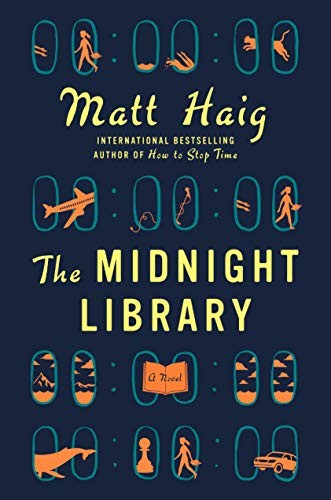
7. THE MIDNIGHT LIBRARY BY MATT HAIG
Matt Haig | ⭐ 4.6/5
Who it’s for: Readers who are going through something — a transition, a loss, a moment where they wonder if they made the right choices — and want a book that holds that uncertainty without trying to fix it.
“There are infinite numbers between 0 and 1. There’s 0.1 and 0.12 and 0.112 and an infinite collection of others. Of course, between 0 and 2, there are more numbers still.”
The Midnight Library is Nora Seed’s story. She’s thirty-five, alone, unemployed, grieving her cat. One night she finds herself in a library between life and death — infinite shelves, each book a life she could have lived.
Haig writes about depression and regret with directness that can feel uncomfortable. He doesn’t wrap these experiences in metaphor. He names them. Nora is depressed and the book doesn’t pretend otherwise. But it doesn’t wallow either.
What makes this work: Haig’s refusal to let any single life be the right answer. It’s not “here’s how to fix your life.” It’s “here’s how to understand that the life you have is still worth living.” That’s the book you read when you need permission to stay.
My take: This is the book I give to people who are in the middle of something hard and don’t know how to say that. It says it for them. In that way, it’s a gift.
8. THE MARTIAN BY ANDY WEIR
Andy Weir | ⭐ 4.7/5
Who it’s for: Readers who loved “Project Hail Mary” — the science, the problem-solving, the stubbornness of a protagonist who refuses to die even when dying would be easier.
“I’m going to do a job. A job I know a hell of a lot about. I’m going to NASA and I’m telling them I have a plan.”
“The Martian” is Mark Watney, an astronaut on Mars. His crew thinks he’s dead. He’s not. He has limited food, no way to communicate, and a planet trying to kill him. He decides to survive anyway.
Weir’s book is propulsive — problems escalate and Mark solves them with science and stubbornness. Both books are funny in the way people under extreme duress are often funny: dark, gallows humor. The humor of people who’ve accepted how bad things are and decided to keep going. It’s deeply satisfying when the survival is earned.
My take: Read this if you want to feel competent vicariously. Read it if you’ve ever thought “I could probably figure this out” even when you absolutely could not. Mark Watney would be insulted by your doubt. In the best way.

9. ANXIOUS PEOPLE BY FREDRIK BACKMAN
Fredrik Backman | ⭐ 4.6/5
Who it’s for: Readers who loved “A Man Called Ove” and want more of Backman’s particular blend of absurdity and heart — or readers who want something that sounds like a thriller but is actually about the impossibility of ever really knowing another person.
“A loser is someone who has never attempted anything, because you can fail at something you attempt. But you can’t fail at something you never attempted.”
“Anxious People” is about a bank robber who takes hostages during an apartment open house in Sweden. It’s about the negotiation, the police, the gun. It’s also about a father’s grief and a failed actor’s regret and the particular loneliness of being middle-aged in a world that keeps asking you to be more than you are.
Backman writes a thriller structure but fills it with warmth. The hostage situation is absurd and tense. The characters are Stockholmed into something like family. The resolution isn’t what you expect — and it’s exactly right.
Backman’s gift is giving you feelings you don’t know what to do with. You sit with them. That’s not always comfortable. It’s usually necessary.
My take: This is the book you read when you want to be surprised by a book. Backman takes every expectation you have and asks you, gently, why you had it in the first place.

10. THE SILENCE OF THE GIRLS BY PAT BARKER
Pat Barker | ⭐ 4.5/5
Who it’s for: Readers who loved “The Song of Achilles” and wanted a more unflinching look at the women’s stories in Greek mythology — or readers who want to understand why we keep telling these stories and what we’re missing when we tell them wrong.
“I am the thing that happened. I am the aftermath.”
“The Silence of the Girls” is Briseis’s story — the captive woman who belongs to Achilles. It’s about being a prize in someone else’s war, about the silence of women whose voices were never recorded.
Where Miller’s “The Song of Achilles” is tender and romantic, Barker’s book is angry and precise. Briseis is not passive. She is furious at the waste of it all — lives, time, breath. She keeps count. She remembers everyone who dies.
This is not an easy book. Barker asks you to sit with discomfort — to understand that the stories we call classics are often stories we tell to justify what we’ve done, and the women who suffered in those stories deserve to have their silence broken.
My take: Read this if you’re ready to be angry. That’s not always what you want from a book. Sometimes it’s what you need.
FREQUENTLY ASKED QUESTIONS
WHY DO I FEEL SO SAD AFTER FINISHING A GREAT BOOK?
That feeling has a name — sometimes called a “book hangover” or “post-reading depression.” It’s the emptiness from leaving a world you inhabited, characters you spent real time with. Psychologically, it may relate to parasocial bonds with characters, the social withdrawal when a reading period ends, the contrast between an immersive fictional world and ordinary life. It fades. It doesn’t mean you’re broken. It means the book worked.
HOW DO I KNOW IF I’M IN A READING SLUMP VS. JUST NEEDING THE RIGHT BOOK?
A reading slump feels like aversion — you can’t finish anything, reading feels like a chore. What you’re describing sounds more like post-reading grief: you loved something and can’t move on. Different. The best cure is usually a very short book (poetry, a novella) or something in a different genre that demands less emotional investment. The right book will find you.
CAN I RE-READ THE SAME BOOK AGAIN?
Of course you can. There’s a cultural idea that re-reading is cheating — that you should always move forward. That’s nonsense. Some books are meant to be read more than once, the way some songs are meant to be heard more than once. I’ve read “The House in the Cerulean Sea” four times. Each time I find something new — not in the book, but in myself. The book doesn’t change. You do. That’s the point of rereading.
WHAT IF I LOVED A VERY SPECIFIC TYPE OF BOOK AND NOTHING ELSE COMPARES?
This is common with breakout books — a first novel that hit perfectly, or a book that arrived at exactly the right moment. Nothing will be exactly like the book you loved — you can’t replicate first-reading conditions. Find books that give you some of what you loved: if it was the voice, look for distinctive narrators; if it was the world, look for elaborate settings; if it was the emotional experience, look for similar themes. The feeling may return in a different shape.
ARE BOOK RECOMMENDATIONS FROM ALGORITHMS ANY GOOD?
Algorithms are fine. But they’re trained on patterns — if you loved X, you might love Y because others did too. That works sometimes. It doesn’t understand why you loved X — the specific voice, the particular hope, the way the main character reminded you of someone lost. Use algorithms as a starting point. But when a book mattered to you, ask a specific person — a friend, a librarian, a book club — what else gave them that feeling.
WHAT IF I LOVED A BOOK BUT CAN’T REMEMBER WHY?
This happens more than you might think. You loved something, you recommended it, and then you can’t remember why. This isn’t a failure of memory. It’s often a sign the book affected you below conscious thought. Go back and read the first chapter again. If it doesn’t grab you, let it go. Some books are right for a moment and not for a lifetime. That’s not failure. That’s just being a reader.
THE BOTTOM LINE
The books we love most are the ones that find us when we needed them. But the grief of finishing them is real. You don’t need to push through it faster than you’re ready to.
What I hope this list gave you was not just ten books, but a reminder: you’re allowed to take your time, to sit with the emptiness, to pick up a book and put it down because nothing is landing yet. That doesn’t mean you’ve stopped being a reader. It means you’re a reader who loved something.
My three picks: “Eleanor Oliphant is Completely Fine” first — the one I recommend most because it reliably reaches people sitting where you are. Then “The House in the Cerulean Sea” — because it believes in goodness without being naive. And finally “Circe” — because Miller writes about women finding power in ways that feel earned.
You found one of these books and loved it. You’ll find another. The room that book left isn’t empty forever. It’s waiting.
Which book are you going to try first?
Disclosure: This post contains affiliate links. If you purchase through these links, ReadPlug may earn a small commission at no extra cost to you. We only recommend books we’ve personally found valuable.