The Phone Call That Changed Everything
I was standing in the cereal aisle at Target when my phone rang. My sister’s name flashed on the screen, and I knew before I answered. I just knew.
“Dad’s gone,” she said.
I put down the box of Cheerios I’d been holding, walked to my car, and sat there for three hours. I didn’t cry. I didn’t call anyone. I just sat, staring at the steering wheel, waiting for the world to make sense again.
It never did.
My father was 68 years old. He’d had a heart attack while mowing the lawn—the same lawn he’d mowed every Saturday for 35 years. One minute he was pushing the mower; the next he was gone. No goodbye. No final conversation. No chance to say the things I’d been meaning to say for years.
The funeral was a blur of handshakes, casseroles, and well-meaning people telling me he was “in a better place.” I smiled politely and thanked everyone and felt absolutely nothing. The grief didn’t hit me until three months later, when I found his handwriting on a grocery list stuck to the refrigerator. I collapsed on the kitchen floor and sobbed for an hour.
The Grief Nobody Prepared Me For
Nobody tells you that losing a parent reshapes your entire identity. My father wasn’t just a person—he was a reference point. He was the person I called when my car made a weird noise. He was the person who remembered my childhood stories. He was the person who knew me before I knew myself.
When he died, a part of my history died with him. And no amount of “he’s in a better place” platitudes could fill that void.
The books I’m about to share didn’t make the grief disappear. Nothing does. But they helped me understand what I was feeling, gave me permission to grieve in my own way, and showed me that there’s a path through the darkness—even when you can’t see it.
Quick Picks (For When You Can Barely Function)
If you’re in the raw early stages of grief, here are my top 3 recommendations:
1. “It’s OK That You’re Not OK” by Megan Devine – Start here. Devine’s book validates the messiness of grief and rejects the toxic positivity that surrounds bereavement. It gave me permission to not be okay.
2. “The Year of Magical Thinking” by Joan Didion – If you want to feel less alone in your grief, Didion’s memoir is a masterpiece of honesty. She captures the irrationality, the confusion, and the raw pain of loss with breathtaking precision.
3. “Option B” by Sheryl Sandberg & Adam Grant – If you need practical strategies for building resilience after loss, this book delivers. Sandberg’s experience of losing her husband combined with Grant’s research creates a powerful guide.
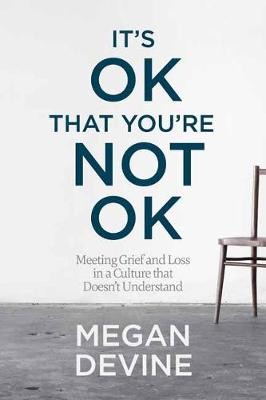
1. It’s OK That You’re Not OK by Megan Devine
Rating: ⭐⭐⭐⭐⭐ (5/5)
Who this is for: Anyone tired of being told to “stay strong” or “move on.” If the people around you don’t understand your grief, this book will be your validation.
“Devine’s book was the first thing I read that didn’t try to fix my grief. She just said, ‘This is terrible, and it’s OK that it’s terrible.’ That permission to not be okay saved me.” — Jennifer M.
My take: This is the most important grief book I’ve ever read. Devine, a grief counselor who lost her partner, rejects the cultural narrative that grief is a problem to be solved. Instead, she validates the messiness, the anger, the confusion, and the ongoing nature of loss. Her concept of “grief support vs. grief repair” changed how I understood my own healing. I wasn’t broken—I was grieving. And that’s allowed.

2. The Year of Magical Thinking by Joan Didion
Rating: ⭐⭐⭐⭐⭐ (5/5)
Who this is for: The person who wants to feel less alone in their grief. If your grief feels irrational and confusing, Didion’s memoir will mirror your experience with stunning accuracy.
“Didion’s description of ‘magical thinking’ (believing your loved one will somehow come back) was so accurate it took my breath away. I thought I was losing my mind—turns out I was just grieving.” — Michael R.
My take: Didion wrote this memoir after losing her husband, John Gregory Dunn, and it’s a masterpiece of grief literature. Her unflinching honesty about the irrationality of early grief—keeping his shoes because he’d need them, expecting him to walk through the door—captured my own experience perfectly. Reading this book made me feel less crazy, less alone, and more human.

3. Option B by Sheryl Sandberg & Adam Grant
Rating: ⭐⭐⭐⭐⭐ (5/5)
Who this is for: The person who needs practical strategies for resilience. If you’re struggling to function after loss and need concrete tools, this book delivers.
“Sandberg’s concept of ‘Option B’ (when Option A is no longer available) gave me a framework for moving forward. I couldn’t bring my father back, but I could build a meaningful life without him.” — Amanda L.
My take: Sandberg lost her husband suddenly while on vacation, and this book documents her journey through grief with the help of psychologist Adam Grant. The combination of personal narrative and research-based strategies makes this book both moving and practical. Grant’s research on resilience—showing that it can be built and strengthened—gave me hope that I wouldn’t feel this way forever.

4. When Things Fall Apart by Pema Chodron
Rating: ⭐⭐⭐⭐⭐ (5/5)
Who this is for: The person looking for a spiritual approach to grief. If you’re searching for meaning in your suffering, Chodron’s Buddhist perspective offers profound wisdom.
“Chodron’s teaching on ‘groundlessness’ (the feeling of having the earth pulled out from under you) perfectly described my grief. Her advice to lean into the uncertainty rather than fighting it transformed my healing.” — Emily T.
My take: Chodron is a Buddhist nun, and her approach to suffering is radically different from Western culture’s impulse to fix and avoid. She teaches that pain is an inevitable part of life, and that our suffering comes from resisting it rather than accepting it. Her concept of “groundlessness”—the terrifying feeling of having no solid ground to stand on—captured my grief perfectly. Learning to lean into that groundlessness rather than fight it has been transformative.

5. On Grief and Grieving by Elisabeth Kubler-Ross & David Kessler
Rating: ⭐⭐⭐⭐⭐ (5/5)
Who this is for: The person who wants to understand the stages of grief. If you’re trying to make sense of your emotions, this classic framework provides structure.
“Kubler-Ross’s five stages (denial, anger, bargaining, depression, acceptance) gave me a map for my grief. I didn’t follow the stages linearly, but knowing they existed helped me understand what I was feeling.” — Thomas K.
My take: This is the classic grief book, and while the “five stages” model has been criticized for being too linear, it provides a useful framework for understanding grief’s many faces. I experienced all five stages—not in order, but in a chaotic swirl that made more sense once I had the vocabulary. Kessler’s updated perspective (he wrote this after Kubler-Ross’s death) adds depth and nuance to the original model.

6. The Light of the World by Elizabeth Alexander
Rating: ⭐⭐⭐⭐⭐ (5/5)
Who this is for: The person who wants a literary, poetic approach to grief. If prose feels inadequate to capture your loss, Alexander’s memoir-in-verse provides a different language.
“Alexander’s memoir is the most beautiful thing I’ve ever read about loss. Her prose is so precise and tender that it made my own grief feel more bearable—like someone had finally found the right words.” — Jennifer B.
My take: Alexander, a poet, wrote this memoir after losing her husband, and it’s stunning. Her language is precise, tender, and achingly beautiful. She captures the small details of grief—the smell of his clothes, the sound of his laugh, the way he made coffee—with a poet’s precision. Reading this book felt like having a conversation with someone who truly understood.

7. Healing After Loss by Martha Whitmore Hickman
Rating: ⭐⭐⭐⭐ (4/5)
Who this is for: The person who needs daily support. If you’re struggling to get through each day, this daily meditation book provides comfort and guidance.
“Hickman’s daily readings gave me something to hold onto during the darkest days. I read one passage each morning, and it helped me face the day.” — Lisa P.
My take: This daily meditation book has been a constant companion during my grief. Each day offers a short reflection on a different aspect of loss—anger, guilt, loneliness, hope. Reading one passage each morning became a ritual that helped me face the day. The readings are gentle, wise, and never preachy.

8. I Wasn’t Ready to Say Goodbye by Brook Noel & Pamela Blair
Rating: ⭐⭐⭐⭐ (4/5)
Who this is for: The person experiencing sudden loss. If your parent died unexpectedly, this book addresses the unique challenges of grief without preparation.
“My mother died of a heart attack with no warning. This book was the first thing I read that understood the specific horror of sudden loss—no goodbye, no closure, no preparation.” — Robert M.
My take: This book is specifically for those experiencing sudden loss, and it addresses the unique challenges: shock, unfinished business, and the absence of preparation. My father’s death was sudden, and this book helped me understand why my grief felt different from those who’d had time to prepare. The practical advice for managing the immediate aftermath—funeral planning, legal matters, family dynamics—was invaluable.

9. Bearing the Unbearable by Joanne Cacciatore
Rating: ⭐⭐⭐⭐⭐ (5/5)
Who this is for: The person whose grief is so deep it feels unsurvivable. If you’re experiencing grief that feels like it might destroy you, this book offers hope.
“Cacciatore’s description of ‘inconsolable grief’ validated the depth of my loss. Her research on traumatic grief helped me understand that my reaction was normal, not pathological.” — Sarah M.
My take: Cacciatore is a bereavement researcher who has studied grief for decades, and this book combines scientific rigor with deep compassion. Her concept of “inconsolable grief”—grief so deep that consolation feels impossible—captured my experience perfectly. The book doesn’t try to fix your grief; it helps you learn to carry it.

10. The Wild Edge of Sorrow by Francis Weller
Rating: ⭐⭐⭐⭐⭐ (5/5)
Who this is for: The person who wants to understand grief as a communal and spiritual experience. If you feel isolated in your grief, Weller’s perspective on community healing is transformative.
“Weller’s concept of ‘the gates of grief’ (five portals into sorrow) helped me understand that grief isn’t just about death—it’s about all the losses we accumulate throughout life.” — David H.
My take: This book approaches grief from a perspective rarely seen in Western culture—as a communal, spiritual, and necessary experience. Weller identifies “five gates of grief” (everything we love, the sorrows of the world, ancestral grief, our unlived life, and death) and shows how each one offers a path to deeper connection and meaning. His vision of grief as a communal experience—not a private one—challenged my isolation and helped me seek support.
Frequently Asked Questions (Grief Edition)
Q: How long should I grieve? A: There’s no timeline. Grief isn’t something you “get over”—it’s something you learn to carry. Some days will be harder than others, even years later. Give yourself permission to grieve for as long as you need.
Q: Is it normal to feel angry at my parent for dying? A: Yes. Anger is a natural part of grief, even when it seems irrational. You might be angry at your parent for leaving, at the doctors for not saving them, at God for allowing it, or at yourself for things left unsaid. All of this is normal.
Q: How do I function at work while grieving? A: Be honest with your employer if possible. Take the bereavement leave you’re entitled to. When you return, set boundaries (leave early if needed, take breaks). And accept that your productivity will decrease—this is temporary.
Q: How do I help my surviving parent? A: Be present. Help with practical tasks (meals, paperwork, housework). Don’t try to fix their grief—just sit with them in it. Check in regularly, especially in the weeks and months after the funeral when everyone else has moved on.
Q: What if I didn’t have a good relationship with my parent? A: Complicated relationships create complicated grief. You might feel relief, guilt about feeling relief, anger, or unresolved conflict. All of these are valid. A therapist can help you navigate these complex emotions.
Q: How do I handle holidays and anniversaries? A: Plan ahead. Decide how you want to honor your parent’s memory. Create new traditions if the old ones are too painful. And give yourself permission to skip events if you need to.
Q: Should I see a therapist? A: If your grief is interfering with your daily functioning, relationships, or mental health, yes. A grief counselor or therapist can provide support and strategies that friends and family can’t.
Q: Will the pain ever go away? A: The sharp, overwhelming pain of early grief will soften over time. But grief isn’t something you “complete”—it’s something you integrate into your life. You’ll always miss your parent, but you’ll learn to carry that missing with grace.
Your Next Move
Losing a parent is one of the most profound losses you’ll ever experience. It reshapes your identity, your history, and your future. The grief is not something to be “fixed” or “gotten over”—it’s something to be honored, felt, and eventually integrated into the person you’re becoming.
These ten books gave me the language to understand my grief, the permission to feel it fully, and the hope that I could survive it. They didn’t take the pain away—but they made it bearable.
So start with one book. Maybe It’s OK That You’re Not OK if you need validation, or The Year of Magical Thinking if you need to feel less alone. Read it when you’re ready—there’s no rush.
Because grief isn’t a problem to be solved. It’s love with nowhere to go.
Which book are you grabbing first?
Disclosure: This post contains Amazon affiliate links. If you purchase through these links, I may earn a small commission at no extra cost to you. This helps support the blog and allows me to continue bringing you honest book recommendations. Thank you!
Never miss a life-changing book.
Join 10,000+ readers getting our data-driven picks every Tuesday.