I was 52 years old when I got laid off from a company I’d given 18 years of my life to. They called it “restructuring.” I called it being escorted to the parking lot with a cardboard box and a severance check that felt more like a consolation prize.
For the first two weeks, I did nothing. I mowed the lawn. I reorganized the garage. I watched an embarrassing amount of daytime television. My wife, God bless her, didn’t push. She just kept making coffee and leaving it on my desk — the desk where I used to take conference calls and now sat staring at LinkedIn job postings that all seemed to want someone 20 years younger with “digital native energy.”
I wasn’t old. But I felt old. And worse, I felt finished. Like the world had decided that my best professional years were behind me, and the only thing left was to find something “consulting-ish” to fill the time until retirement.
What changed everything wasn’t a job offer. It was a book. A friend dropped off a copy of something that reframe the entire second half of life as an opportunity rather than a countdown. That book led to another, and another, until I realized something that changed my entire trajectory: the skills, wisdom, and relationships I’d built over 30 years weren’t obsolete. They were my greatest assets. I just needed to learn how to deploy them differently.
If you’re navigating a career transition after 50 — whether by choice or by circumstance — these ten books will help you see what I eventually saw: the best part of your career might not be behind you. It might be just getting started.
Quick Pick: The Book I Recommend First
From Strength to Strength by Arthur C. Brooks. If you’re panicking about your career slowing down, this book is the antidote. Brooks, a Harvard professor, uses neuroscience and research to show that while one type of professional intelligence peaks early, another — wisdom-based intelligence — actually grows with age. This book doesn’t just make you feel better. It gives you a scientific roadmap for your most meaningful professional chapter yet.
10 Best Books for Navigating Career Transitions After 50
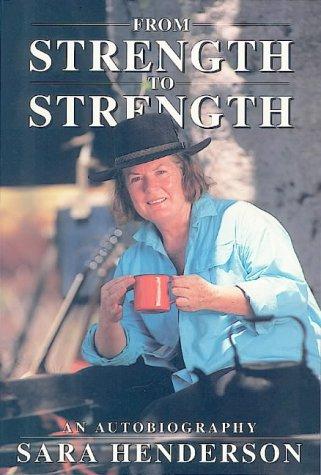
1. From Strength to Strength: Finding Success, Happiness, and Deep Purpose in the Second Half of Life
Author: Arthur C. Brooks Rating: ⭐⭐⭐⭐⭐ (4.7/5) Who it’s for: Professionals worried their best career years are behind them
“This book gave me language for what I was feeling and a map for where to go next. I’ve recommended it to everyone I know over 50.” — Goodreads reviewer
My take: Brooks identifies two types of intelligence that drive professional success. Fluid intelligence — raw mental horsepower, creativity, and the ability to solve novel problems — peaks in your late 30s or early 40s. That’s the bad news. The good news is that crystallized intelligence — the accumulated wisdom, pattern recognition, and deep knowledge you’ve gathered over decades — continues to grow well into your 70s.
The career implication is profound: instead of competing on the same playing field as younger workers (speed, novelty, energy), professionals over 50 should shift toward roles that leverage wisdom — teaching, mentoring, advisory work, writing, consulting, and leadership that draws on experience rather than innovation.
This isn’t settling. It’s upgrading. Brooks shows that the happiest, most fulfilled professionals in their 50s and 60s are those who made this shift intentionally, rather than clinging to the same success metrics they used at 35.
I read this book three months after my layoff, and it completely changed my job search. I stopped trying to prove I could keep up with 30-year-olds and started marketing the things they couldn’t offer: judgment, perspective, and the ability to see around corners.

2. The Second Fifty: Answers to the 7 Big Questions of Midlife and Beyond
Author: Debra Whitman, PhD Rating: ⭐⭐⭐⭐⭐ (4.6/5) Who it’s for: Anyone approaching 50 who wants a comprehensive, research-backed guide to what comes next
“This is the book I wish I’d read at 45 instead of panicking at 50. It answered every question I was afraid to ask.” — Amazon reviewer
My take: Debra Whitman is AARP’s chief public policy officer, and this book tackles the seven questions that keep people up at night as they approach and pass 50: How long will I live? Will I be healthy? Will I lose my memory? How long will I work? Will I have enough money? Where will I live? How will I die?
What makes this book exceptional for career transitions is Whitman’s research on the older workforce. She presents compelling evidence that Americans over 50 are a boon to the economy, not a drain on it. Dementia rates are declining. Productivity in experienced workers is often higher than expected. The narrative that older workers are “past their prime” is not just wrong — it’s contradicted by every major study.
The book is practical without being dry, and personal without being preachy. Whitman draws on her own family’s stories alongside interviews and data to create a roadmap for navigating the second half of life with purpose and confidence.

3. Wisdom at Work: The Making of a Modern Elder
Author: Chip Conley Rating: ⭐⭐⭐⭐⭐ (4.5/5) Who it’s for: Professionals who want to turn their experience into a competitive advantage
“Chip Conley gave me a new identity: not ‘old employee’ but ‘modern elder.’ That reframe changed everything.” — Goodreads reviewer
My take: Chip Conley was the founder of a boutique hotel empire when Airbnb hired him as a strategic advisor in his 50s. He was twice the age of most employees and initially felt completely out of place. What he discovered — and what this book documents — is that his decades of experience were exactly what the fast-growing startup needed.
Conley coined the term “Modern Elder” to describe professionals who are as curious as they are wise, who can be both mentors and interns at the same time. The book argues that the most valuable thing an experienced professional can bring to any organization isn’t technical skill — it’s emotional intelligence, pattern recognition, and the ability to navigate complex human dynamics.
The book is full of practical advice for repositioning yourself in a youth-dominated workplace. Conley addresses ageism head-on and provides strategies for combating it, both personally and organizationally. He also founded the Modern Elder Academy, a midlife wisdom school, which tells you how seriously he takes these ideas.
If you’re 50+ and feeling invisible at work, this book will make you feel seen. And then it will show you how to make sure others see you too.

4. Late Bloomers: The Power of Patience in a World Obsessed with Early Achievement
Author: Rich Karlgaard Rating: ⭐⭐⭐⭐⭐ (4.4/5) Who it’s for: Anyone who feels behind the curve and needs proof that their best work can still happen
“I spent 30 years feeling like a failure because I didn’t peak at 25. This book showed me I was just getting started.” — Amazon reviewer
My take: Rich Karlgaard, the publisher of Forbes, became obsessed with a question: why does our culture celebrate only early achievers when most meaningful accomplishments happen later in life? His research led to this book, which dismantles the myth that if you haven’t “made it” by 40, you never will.
Karlgaard draws on neuroscience to show that the brain doesn’t just decline with age — it transforms. The prefrontal cortex, responsible for judgment, emotional regulation, and complex decision-making, actually strengthens through your 50s and 60s. These are precisely the skills needed for leadership, entrepreneurship, and creative work at the highest level.
The book profiles dozens of late bloomers — people who found their greatest success after 50, 60, and even 70. From Vera Wang (who designed her first dress at 40) to Charles Darwin (who published On the Origin of Species at 50), Karlgaard shows that the timeline of success is far more varied than our culture acknowledges.
For anyone in a career transition at 50+, this book is oxygen. It doesn’t just tell you it’s not too late. It shows you, with data and stories, that you might be right on time.

5. Life Is in the Transitions: Mastering Change at Any Age
Author: Bruce Feiler Rating: ⭐⭐⭐⭐⭐ (4.5/5) Who it’s for: Anyone facing a major life change who wants a practical framework for navigating it
“Feiler didn’t just help me through my career change. He helped me understand that change itself is a skill I can develop.” — Goodreads reviewer
My take: Bruce Feiler spent years collecting “life story” interviews from hundreds of Americans, and what he found challenges the traditional narrative of a linear life: school, career, retirement. Instead, most people’s lives are full of disruptive “lifequakes” — involuntary upheavals that force them to reinvent themselves.
Feiler identifies a common pattern in how people navigate these transitions: the long middle. There’s the initial disruption, then a prolonged period of uncertainty and exploration, and finally a new identity. The long middle is where most people get stuck, and this book provides practical tools for moving through it.
What makes this book particularly useful for career transitions after 50 is Feiler’s finding that lifequakes become more frequent and more significant as we age. The average person will go through three to five major life disruptions in their lifetime, and the ones in midlife and beyond tend to be the most transformative.
Feiler doesn’t just describe the process. He provides specific strategies for each phase — from shedding your old identity to experimenting with new possibilities to building a new narrative. It’s like having a coach walk beside you through the hardest part of change.
6. Learning to Love Midlife: 10 Reasons to Stop Fearing Your Forties and Embrace Your Fifties
Author: Chip Conley Rating: ⭐⭐⭐⭐⭐ (4.5/5) Who it’s for: Anyone approaching or in their 50s who needs a positive reframe of midlife
“Chip Conley writes about midlife the way a great tour guide talks about a city you thought you already knew. You realize there’s so much more to see.” — Amazon reviewer
My take: This is Chip Conley’s follow-up to Wisdom at Work, and it broadens the lens from career to all of life. Conley argues that midlife (roughly ages 35 to 65) is the most misunderstood and undervalued stage of human development. We treat it as a crisis when it’s actually a chrysalis.
The book is organized around ten positive aspects of midlife, including emotional intelligence, deeper relationships, a clearer sense of purpose, and the freedom that comes from caring less about what others think. Conley draws on research, interviews, and his own experience at the Modern Elder Academy to show that midlife is when many people do their most meaningful work.
For career transitions, the key insight is that midlife professionals have something younger workers don’t: the ability to integrate. They can see connections across domains, understand complexity, and navigate ambiguity in ways that only come with experience. These aren’t consolation prizes. They’re superpowers.
Conley’s writing is warm, conversational, and surprisingly funny. This book feels like getting advice from a wise friend over coffee — someone who’s been where you are and come out the other side with a bigger smile.

7. Reinventing You: Define Your Brand, Imagine Your Future
Author: Dorie Clark Rating: ⭐⭐⭐⭐ (4.3/5) Who it’s for: Professionals who need a practical, step-by-step playbook for rebranding themselves
“I thought reinvention meant starting from scratch. Dorie Clark showed me it means building on what I already have.” — Goodreads reviewer
My take: Dorie Clark is a business strategist and Duke University professor, and this book provides the most tactical, actionable advice on this list for anyone navigating a career change. Clark’s approach is systematic: assess your current brand, identify how you want to be perceived, close the gap through strategic actions, and communicate your new identity to the world.
What makes this book particularly relevant for professionals over 50 is its emphasis on leveraging your existing reputation while pivoting toward something new. You don’t have to abandon your career history. You have to reframe it. Clark provides specific techniques for doing this — from updating your LinkedIn profile to having “rebranding conversations” with colleagues and contacts.
The book includes exercises, worksheets, and real-world case studies from people who successfully reinvented their professional identities at various ages. Clark doesn’t pretend reinvention is easy, but she breaks it down into manageable steps that make it feel possible rather than overwhelming.
I used Clark’s framework to reposition myself from “corporate operations executive” to “organizational consultant and leadership coach.” The transition took about six months, and Clark’s book was my playbook for every step.
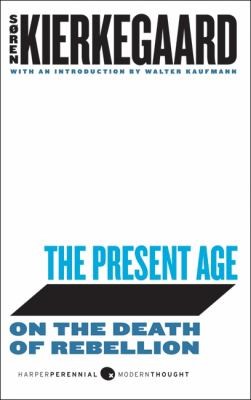
8. The Age Rebellion: Rewrite the Rules of Getting Older
Author: Lyndsey Simpson Rating: ⭐⭐⭐⭐⭐ (4.5/5) Who it’s for: Anyone who refuses to accept that their professional value declines after 50
“This book isn’t about aging gracefully. It’s about aging defiantly. I loved every page.” — Early reviewer
My take: Lyndsey Simpson is the CEO of 55/Redefined, a company that works with major corporations to develop age strategies for over-50 talent. This book is her manifesto for what she calls the “New Longevity” — the reality that we’ve added 30 healthy years to life expectancy in the past century, and our institutions haven’t caught up.
Simpson argues that the concept of retirement at 65 is a relic of a time when most people didn’t live much past that age. With many of us now healthy and active into our 80s and 90s, the idea of stopping productive work at 55 or 60 makes no sense — for individuals or for society.
The book is practical and action-oriented. Simpson provides alternatives to traditional retirement, strategies for staying relevant in a changing workforce, and frameworks for designing a life that maximizes the incredible potential of your most experienced years.
What I appreciate about Simpson’s approach is that she doesn’t just talk about individual reinvention. She addresses the systemic ageism that makes career transitions after 50 harder than they need to be, and she provides strategies for fighting it — both personally and in your organization.
9. What Should I Do with the Rest of My Life?: True Stories of Finding Success, Passion, and New Meaning in Later Life
Author: Bruce Frankel Rating: ⭐⭐⭐⭐ (4.4/5) Who it’s for: Anyone who needs proof that meaningful reinvention is possible at any age
“I cried reading this book. Not from sadness — from relief. These stories proved I wasn’t too old to start over.” — Amazon reviewer
My take: Bruce Frankel is a journalist who spent years collecting stories of people who found their greatest success, passion, and meaning after the age of 50. The stories are extraordinary: a woman who became a world-class sculptor at 60, a man who launched a successful tech company at 55, a former executive who found her calling as a nurse at 52.
What makes this book powerful is its diversity. Frankel doesn’t just profile celebrities or wealthy people. He tells the stories of ordinary individuals who faced the same fears, doubts, and practical challenges that anyone navigating a career transition at 50+ will recognize.
Each story follows a similar arc: a moment of reckoning, a period of uncertainty, and a gradual emergence into something new and meaningful. Frankel is honest about the difficulty of starting over — the financial risks, the social awkwardness, the moments of doubt. But he’s equally honest about the rewards.
I read this book during the darkest period of my post-layoff depression. These stories didn’t just inspire me. They showed me that reinvention wasn’t a fantasy. Real people, with real mortgages and real doubts, had done it. I could too.

10. The Long Game: How to Be a Long-Term Thinker in a Short-Term World
Author: Dorie Clark Rating: ⭐⭐⭐⭐⭐ (4.5/5) Who it’s for: Professionals who want to build a sustainable, meaningful career over the long haul
“This book taught me that career transitions aren’t sprints. They’re marathons. And I was built for marathons.” — Goodreads reviewer
My take: This is Dorie Clark’s other major book, and it complements Reinventing You perfectly. While the first book focuses on the tactical side of rebranding, The Long Game zooms out to address the strategic question: how do you build a career that sustains you for decades?
Clark argues that most professionals are trapped in “short-term thinking” — chasing quarterly results, immediate promotions, and quick wins. This approach creates burnout and fragility. The alternative is “long-term thinking” — investing in skills, relationships, and projects that compound over time.
For professionals over 50, this book is essential because it reframes the career timeline. You’re not running out of time. You’re investing in a longer runway than you think. Clark shows how to use strategic patience, build “permissionless leverage” (creating value without needing anyone’s permission), and play the long game in a world that rewards speed.
The book changed how I think about networking, skill development, and even the kinds of projects I take on. Instead of asking, “What will pay me the most this month?” I started asking, “What will be most valuable in five years?” That shift has made all the difference.
Frequently Asked Questions
Is it really possible to change careers after 50?
Absolutely, and research supports this. According to data cited in Debra Whitman’s The Second Fifty, Americans over 50 are starting businesses at higher rates than any other age group. Rich Karlgaard’s Late Bloomers profiles dozens of people who found their greatest professional success after 50. The key is to stop thinking of a career change as starting over and start thinking of it as redeploying decades of accumulated wisdom, skills, and relationships.
How do I overcome age discrimination in my job search?
Ageism is real, and it’s one of the biggest barriers to career transitions after 50. Chip Conley’s Wisdom at Work addresses this directly, providing strategies for positioning your experience as an asset rather than a liability. Dorie Clark’s Reinventing You offers practical techniques for rebranding yourself so that employers and clients see your value rather than your age. Lyndsey Simpson’s The Age Rebellion also provides strategies for fighting systemic ageism in organizations.
I don’t have the energy to start over. What do I do?
First, stop thinking of it as “starting over.” Arthur Brooks’ From Strength to Strength shows that you’re not losing what you had — you’re gaining new capabilities. Second, Bruce Feiler’s Life Is in the Transitions acknowledges that career transitions involve a difficult “long middle” period and provides specific strategies for getting through it. The exhaustion you feel is normal. It’s part of the process, not a sign you can’t do it.
What if I don’t know what I want to do next?
This is one of the most common challenges in midlife career transitions, and several books on this list address it directly. What Should I Do with the Rest of My Life? by Bruce Frankel provides stories of people who found their calling through exploration and experimentation. Dorie Clark’s Reinventing You includes exercises for identifying your strengths and interests. Chip Conley’s Learning to Love Midlife helps you understand that not knowing is actually a normal and productive part of the process.
Can I afford to make a career change at this stage?
Financial concerns are legitimate and shouldn’t be dismissed. However, several books on this list reframe the financial picture. The Second Fifty by Debra Whitman provides research on financial planning for the second half of life. The Long Game by Dorie Clark shows how strategic career investments can pay off more than chasing short-term income. Bruce Frankel’s What Should I Do with the Rest of My Life? includes stories of people who made transitions on tight budgets. The key is to plan carefully while keeping the long-term upside in view.
How long does a career transition after 50 typically take?
Bruce Feiler’s research in Life Is in the Transitions suggests that most significant life transitions take 3 to 5 years from disruption to full new identity. However, the process isn’t linear. There’s an initial shock, a long middle of exploration, and gradual emergence into something new. Dorie Clark’s Reinventing You provides a more tactical timeline — she suggests that meaningful rebranding can begin showing results within 6 to 12 months if you approach it strategically.
Should I go back to school or get new certifications?
It depends on your field and goals. Chip Conley’s Wisdom at Work argues that the most valuable “credential” for professionals over 50 is not a degree — it’s the demonstrated ability to solve complex problems and navigate human dynamics. That said, Dorie Clark’s The Long Game discusses how targeted skill development can create “permissionless leverage” — the ability to add value in new ways without needing formal credentials. Consider online courses, mentorships, and project-based learning before committing to expensive degree programs.
I’m scared. Is that normal?
Completely normal, and every book on this list acknowledges it. Bruce Frankel’s What Should I Do with the Rest of My Life? is full of people who were terrified before making their leap. Arthur Brooks writes about his own midlife fear in From Strength to Strength. Chip Conley describes feeling like an imposter when he joined Airbnb at 52. The fear doesn’t mean you can’t do it. It means you’re human, and you’re about to do something that matters.
Final Thoughts
I’m 55 now. Three years after that layoff, I run a small consulting practice, teach a leadership course at the local university, and mentor two young entrepreneurs who somehow think I know things. My income isn’t what it was at my corporate peak. But my satisfaction, my energy, and my sense of purpose are higher than they’ve been in 20 years.
The career you built in the first half of your life wasn’t a waste. It was training. Everything you learned — about people, about problems, about yourself — is the raw material for what comes next. You just need to believe that what comes next is worth building.
These ten books helped me believe it. I hope they do the same for you.
You’re not too old. You’re not too late. You’re right on time.
Which book are you grabbing first?
Disclosure: This article contains Amazon affiliate links. If you purchase through these links, we may earn a small commission at no extra cost to you. We only recommend books we’ve genuinely read and believe in.
Never miss a life-changing book.
Join 10,000+ readers getting our data-driven picks every Tuesday.