The Prayer That Went Unanswered
I was 32 years old, sitting in my car in the church parking lot, unable to go inside.
For 32 years, I’d walked through those doors every Sunday. I’d sung the hymns, taken the communion, bowed my head for the prayers. I’d been a deacon, a youth group leader, a Sunday school teacher. My entire social life, my community, my identity—all of it was built around this building and the people inside it.
But lately, the prayers felt hollow. The sermons felt rehearsed. The community felt conditional. And the questions I’d been suppressing for years—about the contradictions in scripture, about the harm done in God’s name, about why my prayers went unanswered while others’ were “miraculously” answered—were getting louder.
I sat in that parking lot for 45 minutes, engine running, hands gripping the steering wheel. Then I drove home.
That was the beginning of my deconstruction.
If you’re reading this, you might be in your own parking lot moment. You might be questioning beliefs you’ve held your entire life. You might be terrified of what you’ll find if you pull on the threads. You might be grieving a faith that once gave you comfort but now feels like a cage.
I want you to know: you’re not alone. And what you’re experiencing isn’t a failure of faith—it’s a growth of consciousness.
What Is Deconstruction?
Deconstruction is the process of critically examining the beliefs, practices, and institutions you were raised in. It’s not about losing faith—it’s about finding truth. Sometimes that truth leads you to a deeper, more authentic faith. Sometimes it leads you away from religion entirely. Both outcomes are valid.
The process is rarely comfortable. It often involves:
- Questioning beliefs you’ve held since childhood
- Grieving the loss of certainty and community
- Facing the cognitive dissonance between what you were taught and what you’ve experienced
- Navigating relationships with people who don’t understand your journey
- Rebuilding your identity outside of religious structures
The books I’m about to share are companions for this journey. They won’t tell you what to believe—they’ll help you figure that out for yourself.
Quick Picks (For When You’re in Crisis)
If you’re in the middle of a faith crisis right now, here are my top 3 recommendations:
1. “Leaving the Fold” by Marlene Winell – Start here. Winell, a psychologist who specializes in religious recovery, provides a comprehensive framework for understanding and healing from harmful religious experiences.
2. “Faith Unraveled” by Rachel Held Evans – If you want a personal narrative that mirrors your own experience, Evans’ memoir is honest, vulnerable, and deeply relatable.
3. “When Religion Hurts You” by Laura Anderson – If your religious experience involved spiritual abuse or trauma, this book validates your pain and provides a path to healing.

1. Leaving the Fold by Marlene Winell
Rating: ⭐⭐⭐⭐⭐ (5/5)
Who this is for: Anyone leaving a high-control or fundamentalist religious environment. If your religious upbringing involved fear, shame, or thought control, this book is your guide to recovery.
“Winell described my exact experience: the fear of hell, the guilt over normal human desires, the inability to think independently. Her recovery framework gave me a roadmap out of the maze.” — Jennifer M.
My take: This is the definitive guide to recovering from harmful religion. Winell, a psychologist who grew up in a fundamentalist Christian home, identifies the specific ways high-control religion damages psychological development: black-and-white thinking, suppressed critical thinking, shame-based identity, and fear of autonomy. Her recovery exercises helped me identify which of my beliefs were genuinely mine and which were programmed into me. The most healing insight: leaving harmful religion isn’t a betrayal of God—it’s a commitment to truth.

2. Faith Unraveled by Rachel Held Evans
Rating: ⭐⭐⭐⭐⭐ (5/5)
Who this is for: The person who wants a personal narrative that validates their experience. If you’re looking for someone who’s been where you are, Evans’ memoir is your companion.
“Evans’ honesty about her own deconstruction—her doubts, her anger, her grief—made me feel less alone. She showed me that questioning your faith doesn’t make you a bad person.” — Michael R.
My take: This memoir captures the messy, non-linear process of deconstruction with honesty and grace. Evans grew up evangelical and spent years wrestling with her doubts before arriving at a more nuanced, compassionate faith. Her willingness to sit in uncertainty—to not have all the answers—gave me permission to do the same. Reading this book felt like having a conversation with a friend who understood.
3. When Religion Hurts You by Laura Anderson
Rating: ⭐⭐⭐⭐⭐ (5/5)
Who this is for: The person whose religious experience involved spiritual abuse. If you’ve been manipulated, controlled, or traumatized by religious leaders or communities, this book validates your pain.
“Anderson gave language to what I experienced: spiritual abuse. It’s real, it’s damaging, and it’s not your fault. This book helped me stop blaming myself.” — Amanda L.
My take: This book specifically addresses spiritual abuse—the use of religious authority to manipulate, control, or harm others. Anderson, a therapist who specializes in religious trauma, provides a framework for recognizing abuse, processing trauma, and rebuilding trust. Her work helped me understand that the harm I experienced wasn’t a “test of faith”—it was abuse. This distinction was crucial for my healing.
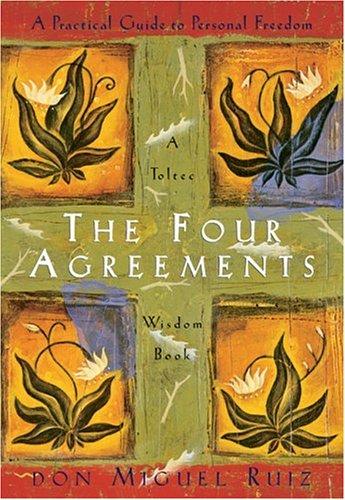
4. The Four Agreements by Don Miguel Ruiz
Rating: ⭐⭐⭐⭐⭐ (5/5)
Who this is for: The person who’s ready to build a new framework for living. If you’re deconstructing religious beliefs and need something to replace them with, this book provides four simple principles.
“After deconstructing my religious beliefs, I felt lost. Ruiz’s four agreements—be impeccable with your word, don’t take anything personally, don’t make assumptions, always do your best—gave me a new moral framework.” — Thomas K.
My take: This book isn’t about religion—it’s about living with integrity and freedom. After years of living by external rules (religious commandments), Ruiz’s four agreements provided a new internal compass. The most transformative: “Don’t take anything personally.” When I stopped taking other people’s judgments of my faith journey personally, my anxiety decreased dramatically. These four simple principles have become my new foundation.
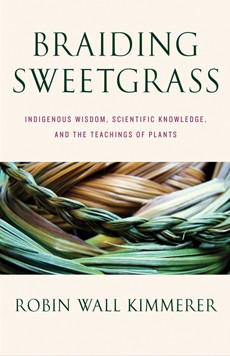
5. Braiding Sweetgrass by Robin Wall Kimmerer
Rating: ⭐⭐⭐⭐⭐ (5/5)
Who this is for: The person who’s lost their connection to the sacred but doesn’t want to return to organized religion. If you’re looking for a spiritual framework that doesn’t require belief in supernatural beings, this book offers one.
“Kimmerer’s integration of Indigenous wisdom and scientific knowledge showed me that spirituality doesn’t require belief in the supernatural. The natural world is sacred enough.” — Emily T.
My take: This beautiful book weaves together Indigenous wisdom, scientific knowledge, and personal narrative to create a vision of spirituality rooted in relationship with the natural world. After deconstructing my religious beliefs, I missed the sense of the sacred. Kimmerer showed me that I could find it in the reciprocity between humans and the earth—in gratitude, in attention, in care. This book became my new spiritual practice.

6. Untamed by Glennon Doyle
Rating: ⭐⭐⭐⭐ (4/5)
Who this is for: The person who’s ready to stop performing and start living authentically. If you’ve spent your life following religious rules at the expense of your true self, this book is your permission slip.
“Doyle’s message—’You are not here to be good. You are here to be you.’—was revolutionary for someone who’d spent her life trying to be good according to someone else’s definition.” — Jennifer B.
My take: This memoir is about unlearning the expectations we’ve internalized—including religious ones. Doyle, who left her marriage and came out as queer after years of evangelical Christianity, writes about the courage it takes to be authentic in a world that rewards conformity. Her message—that you are the authority on your own life—was exactly what I needed to hear during my deconstruction.
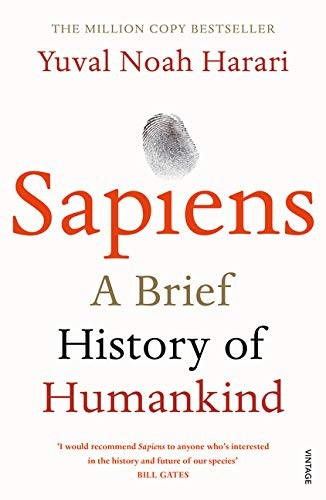
7. Sapiens by Yuval Noah Harari
Rating: ⭐⭐⭐⭐⭐ (5/5)
Who this is for: The person who wants to understand religion from an evolutionary and historical perspective. If you’re asking “Why do humans create religions?” this book provides answers.
“Harari’s explanation of religion as a ‘shared fiction’ that enables large-scale cooperation completely reframed how I understand faith. It’s not true or false—it’s useful or not useful.” — Robert M.
My take: This book provides a macro perspective on human history, including the development of religion. Harari argues that religions are “shared fictions” that enable cooperation among large groups of strangers. This reframing helped me understand religion not as divine truth but as a human creation with both benefits and costs. It didn’t tell me what to believe—it helped me understand why humans believe.
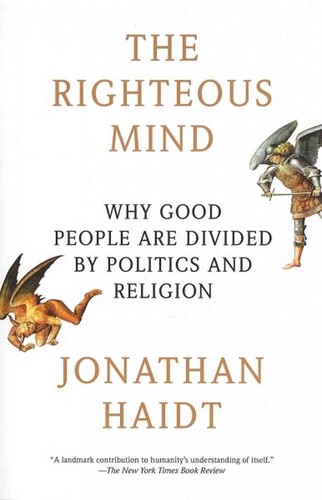
8. The Righteous Mind by Jonathan Haidt
Rating: ⭐⭐⭐⭐ (4/5)
Who this is for: The person trying to understand why religious people believe what they believe. If you’re struggling to maintain relationships with religious family members, this book provides insight.
“Haidt’s moral foundations theory helped me understand my religious family’s values—not to agree with them, but to understand where they’re coming from. This reduced the conflict.” — Lisa P.
My take: This book explores the psychology of morality and politics, including the role of religion. Haidt identifies six moral foundations (care, fairness, loyalty, authority, sanctity, liberty) and shows how different cultures and religions prioritize them differently. Understanding that my religious family values sanctity and authority while I value care and fairness helped me stop seeing them as “wrong” and start seeing them as “different.” This understanding reduced conflict in my relationships.

9. Falling Upward by Richard Rohr
Rating: ⭐⭐⭐⭐⭐ (5/5)
Who this is for: The person who wants to find meaning in the deconstruction process. If you’re looking for a spiritual framework that embraces doubt and uncertainty, this book provides it.
“Rohr’s concept of the ‘two halves of life’ validated my deconstruction. The first half is about building the container (beliefs, rules, identity). The second half is about filling it with meaning. My deconstruction was the transition between the two.” — David H.
My take: This book, written by a Franciscan friar, embraces doubt and uncertainty as necessary stages of spiritual growth. Rohr argues that the second half of life requires letting go of the rigid beliefs and structures of the first half—including religious ones. His concept of “falling upward” (losing your certainties and finding deeper meaning) described my deconstruction perfectly. This book didn’t try to pull me back to religion—it helped me understand my journey as spiritual growth.

10. Leaving Church by Barbara Brown Taylor
Rating: ⭐⭐⭐⭐⭐ (5/5)
Who this is for: The person who’s leaving a religious career or leadership role. If you were a pastor, ministry leader, or deeply involved volunteer, this memoir validates your experience.
“Taylor, an Episcopal priest who left ministry, wrote about her deconstruction with honesty and grace. Her story showed me that leaving church doesn’t mean leaving God—or that leaving God is okay too.” — Sarah M.
My take: This memoir is written by a woman who was an Episcopal priest before leaving ministry. Taylor’s journey—from passionate believer to burned-out minister to spiritual seeker outside the church—mirrors the journey of many who deconstruct. Her honesty about the costs of leaving (community, identity, vocation) and the benefits (freedom, authenticity, peace) is refreshing. This book gave me hope that there’s life after deconstruction.
Frequently Asked Questions (Deconstruction Edition)
Q: What is religious deconstruction? A: Deconstruction is the process of critically examining the religious beliefs, practices, and institutions you were raised in. It’s not about losing faith—it’s about finding truth, whatever that truth may be.
Q: Is deconstruction the same as leaving religion? A: Not necessarily. Some people deconstruct and arrive at a more nuanced, authentic faith. Others leave religion entirely. Both outcomes are valid. The process itself is what matters.
Q: How do I know if I’m deconstructing? A: Signs include: questioning beliefs you’ve held since childhood, feeling disconnected from your religious community, experiencing cognitive dissonance between teachings and reality, and grieving the loss of certainty.
Q: How do I talk to my religious family about my doubts? A: Carefully. Not everyone will understand or accept your journey. Start with people you trust. Use “I” statements (“I’m struggling with…”). Be prepared for negative reactions and have support systems in place.
Q: Will I lose my community? A: Possibly. Religious communities can be conditional—offering belonging only to those who believe the “right” things. This loss is real and painful. But new communities exist for people on deconstruction journeys.
Q: Is deconstruction a sign of weakness? A: No. Deconstruction requires courage, critical thinking, and willingness to face uncomfortable truths. It’s one of the bravest things a person can do.
Q: How long does deconstruction take? A: There’s no timeline. Some people deconstruct quickly; others take years. The process isn’t linear—there will be forward movement and backward slides. Be patient with yourself.
Q: Can I deconstruct and still believe in God? A: Absolutely. Many people deconstruct organized religion but maintain a personal spirituality. Others arrive at a deeper, more authentic faith after deconstruction. There’s no one right outcome.
Your Next Move
Deconstruction is one of the most courageous journeys you can take. It requires you to question everything you’ve been taught, face the loss of certainty, and build a new foundation for your life.
These ten books gave me the language to understand my journey, the validation to honor my doubts, and the tools to build a new framework for meaning. They didn’t tell me what to believe—they helped me figure that out for myself.
So start with one book. Maybe Leaving the Fold if you need recovery tools, or Faith Unraveled if you need a companion. Read it when you’re ready—there’s no rush.
Because deconstruction isn’t about losing faith. It’s about finding yourself.
Which book are you grabbing first?
Disclosure: This post contains Amazon affiliate links. If you purchase through these links, I may earn a small commission at no extra cost to you. This helps support the blog and allows me to continue bringing you honest book recommendations. Thank you!