Last year, I had to tell my manager that a project she championed was failing. Not slightly behind schedule. Failing. The client hated it, the team was demoralized, and every “quick fix” we tried just made things worse.
I spent three days rehearsing that conversation. In the shower. In my car. At 2 a.m. staring at the ceiling. When I finally walked into her office, my voice cracked on the first sentence. But here’s the thing — the conversation went better than I expected. Not because I was some communication genius, but because I’d read enough about these moments to know that my fear was normal, and that avoiding the talk would make everything ten times worse.
That experience sent me down a rabbit hole. I started devouring books about workplace communication, negotiation, and having the conversations that make your stomach knot up. Turns out, there’s an entire science behind why we dread these talks and, more importantly, how to get through them without losing our dignity or our relationships.
If you’ve ever rehearsed a feedback session in front of your bathroom mirror, avoided eye contact with a colleague after a disagreement, or typed and deleted the same Slack message eleven times — this list is for you. These ten books transformed how I handle conflict at work, and I genuinely wish I’d found them years earlier.
Quick Pick: The Book I Recommend First
Crucial Conversations by Joseph Grenny, Kerry Patterson, Ron McMillan, Al Switzler, and Emily Gregory. If you only read one book on this list, make it this one. It’s the gold standard for a reason — it gives you a repeatable framework for talking when emotions run high and the stakes matter. The STATE method alone changed how I show up in every difficult meeting.
10 Best Books for Navigating Tricky Conversations at Work

1. Crucial Conversations: Tools for Talking When Stakes Are High
Authors: Joseph Grenny, Kerry Patterson, Ron McMillan, Al Switzler, Emily Gregory Rating: ⭐⭐⭐⭐⭐ (4.8/5) Who it’s for: Anyone who faces high-stakes conversations at work — which is literally everyone
“This book should be required reading for anyone who works with other humans. Period.” — Goodreads reviewer
My take: This is the book that started it all for me. The third edition is fully updated for our post-pandemic, hybrid-work world, and it still hits differently. The core idea is simple: when stakes are high, opinions vary, and emotions run strong, most of us either clam up or blow up. Neither works.
The authors give you the STATE method — Share your facts, Tell your story, Ask for others’ paths, Talk tentatively, and Encourage testing. It sounds formulaic until you try it. Then you realize it’s the conversational equivalent of having a seatbelt. You hope you never need it, but when you do, you’re incredibly glad it’s there.
What I love most is how the book addresses the “sucker’s choice” — the false binary where you think you have to choose between being honest and being kind. Spoiler: you don’t. This book shows you how to be both.

2. Difficult Conversations: How to Discuss What Matters Most
Authors: Douglas Stone, Bruce Patton, and Sheila Heen Rating: ⭐⭐⭐⭐⭐ (4.7/5) Who it’s for: People who overthink conversations and need a framework to stop spiraling
“I’m on my third reading. Half the pages are dog-eared. This is a mind-bogglingly powerful book.” — Tom Peters
My take: Out of the Harvard Negotiation Project (the same folks behind Getting to Yes), this book blew my mind with one insight: every difficult conversation is actually three conversations happening at once.
There’s the “What Happened?” conversation (where we argue about facts and blame), the Feelings conversation (the emotions underneath), and the Identity conversation (what this situation says about who we are). Most of us stay stuck in the “What Happened?” layer and wonder why nothing gets resolved.
The 2023 edition is updated with sections on digital communication, race, culture, and power dynamics — all things that make workplace conversations even more layered. The authors don’t just tell you to “be a better listener.” They show you exactly how to stop debating about who’s right and start understanding what each person actually needs.
I especially love the chapter on “starting from the third story” — learning to frame the conversation from a neutral observer’s perspective. It’s a game-changer when you need to bring up something uncomfortable without making the other person defensive.

3. Fierce Conversations: Achieving Success at Work & in Life, One Conversation at a Time
Author: Susan Scott Rating: ⭐⭐⭐⭐⭐ (4.6/5) Who it’s for: Leaders and managers who know they’re avoiding important conversations
“Susan Scott doesn’t let you hide. And that’s exactly why this book works.” — Amazon reviewer
My take: Susan Scott’s definition of “fierce” surprised me. She doesn’t mean aggressive or confrontational. She means engaged, authentic, and fully present. A fierce conversation is one where you bring your whole self — not your polished corporate mask.
The book’s central metaphor stuck with me: “The conversation is the relationship.” Every interaction you have with a colleague, client, or direct report either deepens the relationship or erodes it. There’s no neutral ground.
The 20th anniversary edition includes updated case studies and a section on virtual team communication, which feels essential now that so many of our difficult conversations happen over Zoom. Scott’s “Mineral Rights” conversation framework is particularly useful for managers who need to dig beneath surface-level issues to find what’s really going on.
I’ll be honest — this book challenged me more than the others because Scott doesn’t let you off the hook. She asks you to examine the conversations you’re not having, and why. That part was uncomfortable. But also necessary.

4. Supercommunicators: How to Unlock the Secret Language of Connection
Author: Charles Duhigg Rating: ⭐⭐⭐⭐⭐ (4.7/5) Who it’s for: Anyone who wants to understand why some conversations click and others crash
“Duhigg makes the science of communication feel like a page-turner. I couldn’t put it down.” — Goodreads reviewer
My take: Charles Duhigg (the guy behind The Power of Habit) went deep on what makes certain people naturally great at conversations. His finding? It’s not charisma. It’s not being an extrovert. It’s something called “matching” — the ability to recognize what kind of conversation is happening and match it.
He identifies three types of conversations: practical (What do we do?), emotional (How do we feel about this?), and social (Who are we?). Most workplace conflicts happen because two people are having different types of conversations at the same time. Your colleague wants to vent about a bad meeting (emotional), and you jump into problem-solving mode (practical). Sound familiar?
The book is full of stories — from FBI negotiators to surgeons to everyday people navigating awkward family dinners. Duhigg makes the research accessible without dumbing it down. If you want to understand why you keep having the same argument with your boss or your team, this book will connect a lot of dots.

5. Radical Candor: Be a Kick-Ass Boss Without Losing Your Humanity
Author: Kim Scott Rating: ⭐⭐⭐⭐⭐ (4.6/5) Who it’s for: Managers and team leads who want to give honest feedback without destroying relationships
“Finally, a management book that doesn’t ask you to choose between being effective and being human.” — Amazon reviewer
My take: Kim Scott draws on her experience at Google and Apple to build a framework around two axes: Care Personally and Challenge Directly. When you do both, you’re in the “Radical Candor” sweet spot. Miss on either axis, and you end up with Obnoxious Aggression (challenging without caring), Manipulative Insincerity (neither), or Ruinous Empathy (caring without challenging).
The concept sounds simple. The execution is where it gets hard, especially for people-pleasers like me. Scott acknowledges this openly — she shares her own failures, including the time she realized her “kind” feedback was actually causing harm because nobody was improving.
What makes this book practical rather than just theoretical is the specific techniques: the “get, give, encourage, and praise” feedback framework, the idea of having regular 1:1s that aren’t just status updates, and the guidance on how to deliver criticism in a way that lands gently but clearly.
6. Having Difficult Conversations (HBR Emotional Intelligence Series)
Authors: Harvard Business Review, Amy Gallo, Rebecca Knight, Liane Davey, Joseph Grenny Rating: ⭐⭐⭐⭐ (4.5/5) Who it’s for: Busy professionals who want actionable advice without a 400-page commitment
“Short, sharp, and exactly what I needed before my performance review conversations.” — Goodreads reviewer
My take: This is a slim volume from the HBR Emotional Intelligence Series, and that’s part of its charm. At under 200 pages, it distills the best thinking from multiple experts into something you can actually read on a Sunday afternoon.
The book covers how to communicate productively under stress, offer and accept critical feedback, and make sure teams leave tough conversations feeling united rather than fractured. Amy Gallo’s sections on managing your own emotions during a difficult talk are particularly sharp.
If you’ve read Crucial Conversations and Difficult Conversations and want a quick refresher — or if you’re simply not a big reader and need something concise — this is your book. It’s like having five brilliant HBR articles compiled into one practical handbook. I keep it on my desk and flip through it before particularly tough meetings.

7. Never Split the Difference: Negotiating As If Your Life Depended On It
Author: Chris Voss Rating: ⭐⭐⭐⭐⭐ (4.8/5) Who it’s for: Anyone who needs to negotiate, influence, or advocate for themselves at work
“I used to think negotiation was for lawyers and car dealers. This book showed me I negotiate every single day.” — Amazon reviewer
My take: Chris Voss spent 24 years as the FBI’s lead international kidnapping negotiator. So when he talks about high-stakes conversations, he literally means life-or-death. The techniques he developed translate remarkably well to the workplace — whether you’re negotiating a salary, pushing back on unrealistic deadlines, or mediating a conflict between team members.
The concept that changed my approach most: “tactical empathy.” Voss argues that understanding the other person’s emotions and perspective isn’t weakness — it’s your most powerful tool. His technique of “labeling” (saying “It sounds like you’re frustrated about…” out loud) feels counterintuitive but works like magic to defuse tension.
Fair warning: after reading this, you’ll start noticing negotiation dynamics everywhere. In meetings. In email threads. In the break room when someone’s trying to claim the last donut. You’ve been warned.

8. Thanks for the Feedback: The Science and Art of Receiving Feedback Well
Authors: Douglas Stone and Sheila Heen Rating: ⭐⭐⭐⭐⭐ (4.6/5) Who it’s for: Anyone who dreads performance reviews or gets defensive when criticized
“I bought this thinking it would teach me to give better feedback. Instead, it taught me how to receive it — and that was the real game-changer.” — Goodreads reviewer
My take: Most communication books focus on how to deliver feedback. This one flips the script and focuses on receiving it. And honestly? That’s the harder skill.
Stone and Heen identify three triggers that make feedback hard to hear: truth triggers (the feedback feels wrong), relationship triggers (you don’t trust the person giving it), and identity triggers (it threatens your sense of self). Understanding which trigger is firing in any given moment helps you stay grounded instead of shutting down.
The book also tackles a common workplace problem: even well-intentioned feedback is often delivered clumsily. Instead of dismissing bad feedback because it was delivered badly, the authors teach you to separate the delivery from the message. There might be gold buried in that clumsy critique.
I read this book right after getting some tough feedback on a project I’d poured my heart into. It helped me stop defending and start learning. That shift alone was worth the price of the book.
9. How to Disagree Better
Author: Julia Minson Rating: ⭐⭐⭐⭐⭐ (4.7/5) Who it’s for: Professionals who want to disagree productively without burning bridges
“This is the book the world needs right now. Minson proves that disagreeing well is a skill, not a personality trait.” — Early reviewer
My take: Julia Minson is a behavioral scientist at Harvard Kennedy School, and this book (released in 2026) brings decades of research on disagreement psychology into a practical framework. Her central finding challenges everything we think we know: the average person would rather go to the dentist than have a 20-minute conversation with someone they strongly disagree with.
Yet disagreement is essential — for innovation, for good decision-making, for healthy teams. Minson’s answer isn’t to avoid conflict or “win” arguments. It’s to develop “receptiveness,” the skill of genuinely engaging with opposing views without losing your composure.
What makes this book stand out is the research backing. Minson doesn’t just share opinions — she shares experiments. She shows why traditional persuasion strategies backfire and how simple shifts in language and body posture can transform a contentious meeting into a productive one.
This is the newest book on my list, and I think it’s going to become a classic. If you work in an environment where healthy debate matters (and every workplace should be), read this.
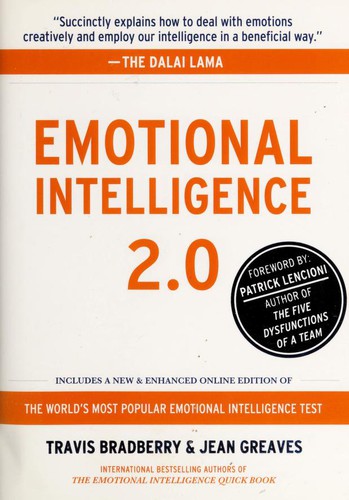
10. Emotional Intelligence 2.0
Authors: Travis Bradberry and Jean Greaves Rating: ⭐⭐⭐⭐ (4.5/5) Who it’s for: Anyone who wants to build the emotional foundation that makes difficult conversations easier
“I always thought emotional intelligence was a soft skill. This book showed me it’s a survival skill.” — Amazon reviewer
My take: I’m putting this one last because it’s not specifically about conversations — but it’s the foundation everything else builds on. Emotional intelligence is the operating system. The other books on this list are the apps.
Bradberry and Greaves break EI into four components: self-awareness, self-management, social awareness, and relationship management. Each one directly impacts how you show up in difficult conversations. Can you notice when your heart rate spikes during a tough meeting? That’s self-awareness. Can you pause before firing off a reactive email? That’s self-management.
The book includes an online assessment (with a code in the back) that gives you your EI score and personalized strategies for improvement. It’s practical in a way that a lot of EI books aren’t. The strategies are short, specific, and actually doable between meetings.
I recommend reading this one first if you’re newer to the communication skills space, or last if you’ve already read the others and want to shore up your foundation.
Frequently Asked Questions
What’s the best book for someone who hates confrontation?
Start with Difficult Conversations by Stone, Patton, and Heen. It reframes confrontation entirely — showing you that most difficult conversations aren’t about winning or losing, but about understanding. The book helps you see that the discomfort you feel isn’t a sign you should avoid the conversation. It’s a sign the conversation matters.
I’m a new manager. Which book should I read first?
Radical Candor by Kim Scott. It was practically written for new managers who want to lead with honesty and compassion. The framework is simple enough to remember in the moment, and the stories make the concepts stick. Many of the top tech leaders I know credit this book with shaping their management style.
Are these books useful for remote and hybrid teams?
Absolutely. Several of these books have been updated specifically for remote work. Crucial Conversations (third edition) addresses digital communication challenges, and Fierce Conversations (20th anniversary edition) includes new material on virtual teams. The core principles apply whether you’re talking face-to-face or over Zoom — but the books help you adapt to the nuances of each medium.
Can these books help with personal relationships too?
Yes, and this is one of my favorite things about them. Difficult Conversations and Never Split the Difference are used in couples counseling and family therapy. Supercommunicators includes stories from all kinds of relationships — not just workplace ones. The skills transfer because the underlying dynamics are the same. People are people, whether they’re your colleague or your spouse.
How long does it take to see results from reading these books?
Most people notice a shift within a few weeks of actively applying the techniques. The key word is “actively.” You can’t just read and hope for osmosis. Crucial Conversations and Radical Candor both include exercises and frameworks you can practice in low-stakes situations first. Start with a conversation that feels mildly uncomfortable (not terrifying), and build from there.
Do I need to read all 10 books?
No. If you read just two, I’d recommend Crucial Conversations and Difficult Conversations. They cover the most ground and are the most universally applicable. Add Never Split the Difference if you negotiate regularly, and Thanks for the Feedback if performance reviews give you anxiety. Build your library over time — don’t try to read them all at once.
What if I don’t have time to read full books?
Start with Having Difficult Conversations from the HBR Emotional Intelligence Series — it’s under 200 pages and can be finished in a weekend. You can also listen to any of these as audiobooks during your commute. Many of the authors have given TED talks and podcast interviews that cover the core ideas in 20-30 minutes.
Which book is best for giving critical feedback to direct reports?
Radical Candor is your best bet here. Kim Scott’s framework for “caring personally while challenging directly” is specifically designed for managers giving feedback. The book walks you through how to praise specifically, criticize kindly, and create a culture where feedback flows in all directions — not just top-down.
Final Thoughts
Here’s what I’ve learned from reading all ten of these books: the conversations you avoid define your career as much as the ones you have. Every promotion you didn’t ask for, every conflict that festered, every brilliant idea you kept to yourself because you were afraid of the pushback — they all add up.
The good news is that having difficult conversations is a skill, not a talent. Nobody’s born knowing how to give tough feedback or negotiate a raise or disagree with their boss without their voice shaking. These skills are learned, practiced, and refined over time.
You don’t need to read all ten books this month. Pick one that resonates with where you are right now. Read a chapter. Try one technique in your next meeting. See what happens.
The conversation you’ve been avoiding might be the one that changes everything.
Which book are you grabbing first?
Disclosure: This article contains Amazon affiliate links. If you purchase through these links, we may earn a small commission at no extra cost to you. We only recommend books we’ve genuinely read and believe in.