Move-in day was supposed to be exciting. My parents drove me six hours to a campus I’d visited once, helped me carry boxes up three flights of stairs, and then stood in my tiny dorm room looking at me like I was about to be launched into space. My mom cried. My dad gave me a handshake that lasted too long. And then they drove away, and I was alone for the first time in my life.
I stood at my window and watched their car disappear down the road. My roommate hadn’t arrived yet. I didn’t know anyone. I didn’t know where the dining hall was. I didn’t know how to do laundry — I genuinely, embarrassingly did not know how to use a communal washing machine. I was 18 years old, 500 miles from home, and I had absolutely no idea what I was doing.
The first semester nearly destroyed me. Not academically — I’d always been a good student. It was everything else: the loneliness that hit hardest at 10 PM when the hallway went quiet, the overwhelming freedom of nobody telling me when to sleep or eat or show up, the 2 AM pizza that felt like companionship, the classes I skipped because nobody was making me go, the social anxiety that turned every dining hall meal into a tactical operation, the homesickness that came in waves, and the slow, sinking realization that being smart in high school wasn’t going to be nearly enough. College demanded a completely different set of skills — time management, social navigation, emotional regulation, basic life competency, and the ability to function when every decision was suddenly mine to make.
These ten books would have saved me from the worst of it. Not the failure — I needed to fail a little to grow. But the unnecessary suffering, the weeks of confusion, the avoidable mistakes. If you’re starting college this fall — or know someone who is — put these on your shelf (or in your bag alongside the bedding and the laptop). You’ll thank yourself later.
Quick Pick if You’re Impatient
Start with The Defining Decade by Meg Jay. It’s the book that reframes why these years matter more than you think — and how to use them intentionally rather than letting them slip by. If you need practical study strategies first, go straight to How to Become a Straight-A Student by Cal Newport. If you want the emotional and social side covered — roommate drama, homesickness, finding your people — start with The Freshman Survival Guide by Nora Bradbury-Haehl and Bill McGarvey.
The List: 10 Books That Make College Actually Survivable
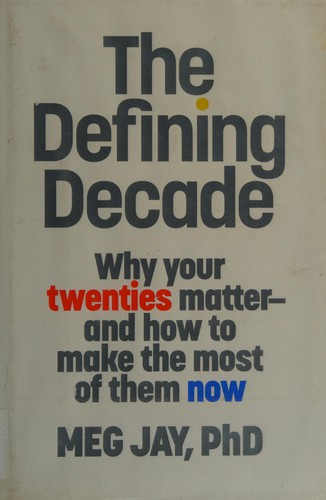
1. The Defining Decade – Meg Jay
- Rating: ⭐⭐⭐⭐⭐ (5/5)
- Who this is for: College students who think they have plenty of time to figure out who they want to be.
Meg Jay is a clinical psychologist who spent two decades working specifically with twentysomethings, and what she discovered challenged everything we assume about the “figuring it out later” mentality. Your twenties — which begin in college — are when the decisions about identity, work, and relationships compound in ways that shape the next fifty years. She writes about how delaying the hard questions about career, love, and purpose doesn’t protect you; it just gives you fewer options later.
Jay’s central argument isn’t that you need to have your life figured out by graduation. It’s that the habits you form in these years — how you approach work, who you spend time with, what you believe you’re capable of — create a trajectory that’s surprisingly hard to redirect later. She backs this up with research on brain development, identity formation, and the way opportunity windows open and close.
“I was planning to coast through college, figure out my career after graduation. Jay showed me that these years aren’t a waiting room — they’re the foundation. I changed my major, started reaching out to people in fields I was curious about, and graduated with actual direction instead of just a diploma.” – Marcus, Amazon reviewer
My take: Read this before freshman orientation. Not during — before. It’ll reframe everything.

2. How to Become a Straight-A Student – Cal Newport
- Rating: ⭐⭐⭐⭐⭐ (5/5)
- Who this is for: College students who are studying hard but not getting the grades they want.
Before Cal Newport became famous for “deep work,” he wrote this book by actually interviewing and observing students who consistently topped their classes. What he found was counterintuitive: the best students rarely studied more than their peers — they studied differently. They time-blocked their calendars, treating study sessions like mandatory classes. They used retrieval practice, testing themselves repeatedly instead of passively rereading notes. They prioritized ruthlessly, focusing on the three most impactful tasks each day.
Newport’s methods sound almost too simple until you try them. The “quiz and recall” technique — closing the book and writing down everything you know about a topic before checking your notes — feels awkward at first. But the science behind it is ironclad: active recall creates stronger neural pathways than passive review. I know students who went from 6 hours of daily studying to 3 hours using these strategies and watched their GPAs jump by a full point.
“I went from studying 6 hours a day to 3 hours a day and my GPA went from 2.8 to 3.7. Newport’s methods are counterintuitive and incredibly effective.” – Priya, Amazon reviewer
My take: This book is the academic survival guide for the modern college student. No fluff, no motivation — just strategy.

3. The Freshman Survival Guide – Nora Bradbury-Haehl & Bill McGarvey
- Rating: ⭐⭐⭐⭐⭐ (5/5)
- Who this is for: Any freshman who wants a mentor who can anticipate the emotional curveballs college throws.
This is the book that should come with every dorm room key. Bradbury-Haehl and McGarvey cover everything that textbooks, orientation sessions, and parents don’t tell you: how homesickness actually works, what to do when your roommate drives you insane, how to navigate party culture without losing yourself, how to recognize when you’re slipping into depression and what to do about it, how to find your community when it feels like everyone else already has one.
What’s remarkable about this book is its tone. It’s not preachy. It doesn’t assume you’re going to make perfect decisions. It meets you where you are — tired, overwhelmed, maybe a little lost — and says: here’s what you’re probably going through, and here’s how people have gotten through it before you. That validation alone is worth the read.
“This book told me that my homesickness was completely normal. Not ‘kind of normal’ — statistically, almost universal. That alone was worth the read. I felt less broken.” – Sarah, Amazon reviewer
My take: The emotional survival guide for the parts of college that nobody prepares you for.

4. Mindset: The New Psychology of Success – Carol Dweck
- Rating: ⭐⭐⭐⭐⭐ (5/5)
- Who this is for: Students who tie their entire self-worth to their grades and see setbacks as proof of failure.
Carol Dweck spent decades studying how students respond to challenges, and what she found changed the field of psychology. Students who believe intelligence is fixed — you’re either smart or you’re not — approach difficulties by avoiding them, protecting their ego, and quitting when things get hard. Students who believe intelligence is malleable — that it grows through effort, strategy, and persistence — see challenges as opportunities to improve.
This distinction sounds academic until you live it. In college, where every class is full of high-achievers and every exam is curved against people who are also used to being the best, the fixed-mindset trap is devastating. A single bad grade feels like confirmation that you don’t belong. Dweck shows you how to reframe that grade as data — not a verdict. The course was harder than expected. You need a different study strategy. You’re not bad at this subject; you’re just early in the learning process.
“I used to think I was ‘bad at math.’ Dweck showed me I was just unpracticed. I changed my internal dialogue from ‘I’m not a math person’ to ‘I haven’t mastered this yet.’ My grades followed my mindset.” – Jake, Amazon reviewer
My take: The mindset foundation that changes how you approach every challenge in college and beyond.

5. Make It Stick: The Science of Successful Learning – Peter Brown, Henry Roediger & Mark McDaniel
- Rating: ⭐⭐⭐⭐⭐ (5/5)
- Who this is for: Students who want to learn more effectively and remember what they study long-term.
If you want one book that explains why most of your study habits are counterproductive, this is it. Brown, Roediger, and McDaniel are cognitive scientists who synthesized decades of learning research into a framework that anyone can apply. The key findings that will make you rethink everything: retrieval practice (testing yourself) beats rereading every time. Spaced repetition — studying a topic repeatedly over days and weeks — creates far more durable memory than massed practice (cramming). And interleaving — mixing different types of problems or topics in a single study session — produces deeper learning than blocked practice (doing all math problems of one type before moving to the next).
The book is packed with specific, actionable strategies you can start using this week. It also explains the neuroscience behind why cramming feels productive but doesn’t stick — your brain needs time and repetition to consolidate memories. If you’re going to invest time in studying, invest it in methods that actually work.
“I stopped highlighting everything in my textbooks and started testing myself after every chapter. My retention tripled. This book should be required reading before freshman orientation.” – David, Amazon reviewer
My take: Learn how to learn before you take your first college exam.
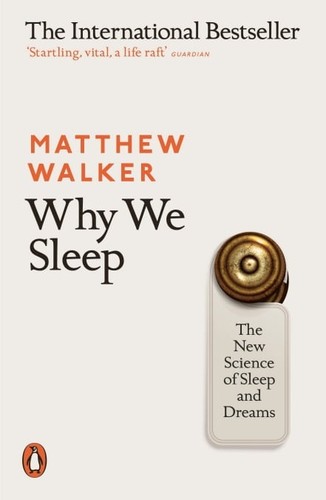
6. Why We Sleep: Unlocking the Power of Sleep and Dreams – Matthew Walker
- Rating: ⭐⭐⭐⭐⭐ (5/5)
- Who this is for: College students who treat sleep as optional and can’t figure out why they feel so terrible.
Matthew Walker, a sleep scientist at UC Berkeley, has produced one of the most important books of the last decade for anyone who cares about their brain. His research is startling: sleeping less than 7 hours significantly impairs memory consolidation, creative problem-solving, emotional regulation, and immune function. One night of 4-6 hours of sleep reduces your cognitive performance to the equivalent of legal intoxication. The all-nighter culture of college isn’t just unhealthy — it’s academically counterproductive.
Walker explains exactly why sleep matters for every aspect of college life: learning (memory consolidation happens during deep sleep), emotional resilience (sleep deprivation amplifies anxiety and depression), academic performance, and even physical health. He also provides practical guidance for improving sleep quality, from maintaining consistent sleep schedules to understanding the role of caffeine and alcohol.
“I was pulling all-nighters every week and getting C’s. After reading Walker, I started protecting 7+ hours of sleep like it was a class. My grades went up and my anxiety went down.” – Chris, Amazon reviewer
My take: Sleep is the foundation of everything in college — your grades, your mood, your relationships, your health. This book makes that case irrefutably.

7. The Power of Now: A Guide to Spiritual Enlightenment – Eckhart Tolle
- Rating: ⭐⭐⭐⭐ (4/5)
- Who this is for: College students who spend more time worrying about future outcomes or replaying past mistakes than being present.
Eckhart Tolle’s central insight is deceptively simple: most of human suffering comes from two sources — dwelling on the past and projecting into the future — while the only moment we can actually live in is the present one. For college students, this manifests constantly: anxiety about whether you’ll get into grad school, rumination over a social mistake you made last week, stress about an exam that’s still three days away. Tolle’s approach isn’t about suppressing these thoughts; it’s about noticing when you’ve been pulled out of the present and gently returning.
Some readers find Tolle’s writing style too spiritual or abstract for their taste, and that’s a fair critique. But even students who don’t connect with the spiritual framing report that the core techniques — especially the practice of observing your thoughts without judgment — have helped with the anxiety and overthinking that define modern college life.
“This book taught me to stop worrying about what grade I’d get on my finals and focus on what I was actually learning in my classes right now. The anxiety didn’t disappear, but it lost its grip on me.” – Maria, Amazon reviewer
My take: The antidote to the anxiety and overthinking that makes freshman year feel heavier than it needs to.

8. The Gifts of Imperfection: Let Go of Who You’re Supposed to Be and Embrace Who You Are – Brené Brown
- Rating: ⭐⭐⭐⭐⭐ (5/5)
- Who this is for: College students who feel paralyzed by perfectionism, people-pleasing, or the pressure to have it all figured out.
Brené Brown’s research on shame and vulnerability led her to identify what she calls the “guideposts for wholehearted living” — ten qualities like authenticity, self-compassion, intuition, and resilient energy that distinguish people who engage with life fully from those who are merely performing. For college students navigating identity formation, social comparison (amplified by social media), academic pressure, and the constant judgment of peers, these guideposts are practically a survival toolkit.
Brown writes with warmth and humor, and she doesn’t pretend she has it all together. She shares her own failures and embarrassments with radical honesty. Her message — that imperfection is not a liability but the foundation of connection, creativity, and courage — is one that every college student needs to hear, especially at an age when the pressure to curate a perfect image is overwhelming.
“Brown gave me permission to be imperfect. I needed that permission more than I needed any study guide or academic advice. My first semester was so much better after reading this.” – Priya, Amazon reviewer
My take: College is hard enough without perfectionism crushing you. This book is your permission slip to be a work in progress.

9. How to Win Friends and Influence People – Dale Carnegie
- Rating: ⭐⭐⭐⭐⭐ (5/5)
- Who this is for: College students who want to build a social life from scratch and learn to connect with people authentically.
This 1936 classic has outsold almost every business and self-help book ever written, and the reason is simple: it works. Carnegie’s principles — become genuinely interested in other people, remember names, listen more than you talk, make the other person feel important, smile — seem almost too obvious. But in practice, in a dorm full of strangers all trying to figure out the same social dynamics, these principles are transformative.
Carnegie’s book is particularly valuable for students who are naturally introverted or socially anxious. It doesn’t ask you to become someone you’re not. It teaches specific, concrete behaviors that create genuine connection — behaviors like following up with someone after you meet them, asking questions that show you’re paying attention, and finding common ground. These skills compound: every good social interaction makes the next one easier.
“I was terrified of making friends in a new city. Carnegie’s book gave me the tools — not tricks, actual tools. I made three lifelong friends in my first semester, and I credit this book with showing me how.” – Jake, Amazon reviewer
My take: Social skills are learnable. This book is the proof.

10. Adulting: How to Become a Grown-Up in 535 Easy Ways – Kelly Williams Brown
- Rating: ⭐⭐⭐⭐ (4/5)
- Who this is for: College students who can write a thesis but don’t know how to unclog a drain, tip a server, or balance a checkbook.
There is a fundamental gap between what college prepares you for academically and what life actually demands. Brown — who started this book in her twenties — realized that nobody had written a practical guide to the mundane skills of adulthood: how to tip appropriately, how to negotiate your salary, how to clean a bathroom properly, how to make five basic meals, how to write a thank-you note, how to deal with a landlord, how to manage a budget, how to handle a broken appliance. These aren’t glamorous topics, but they’re the skills that determine whether your post-grad life feels chaotic or manageable.
Brown writes with self-deprecating humor and zero condescension. She assumes you’re intelligent but inexperienced, and she meets you there. The book is organized into short, readable sections — you can pick it up and put it down, reference specific chapters, and return to it throughout college and beyond.
“I didn’t know how to do laundry, cook an egg, or tip a bartender when I got to college. This book taught me that and 505 other things nobody bothered to tell me.” – Marcus, Amazon reviewer
My take: The practical life skills book that should be in every college care package.
Frequently Asked Questions
What’s the hardest part of freshman year?
Loneliness. Most freshmen are surrounded by thousands of people and still feel profoundly alone. It takes time to find your community — the people who feel like home even when you’re 500 miles from it. Give it a semester. Join clubs, attend events, say yes to invitations even when you’re tired, and resist the urge to retreat. The loneliness fades when you find your people.
How do I deal with homesickness?
Call home regularly — but not every day. Create new routines that feel grounding (a morning coffee ritual, a Sunday dinner tradition with hallmates). Get genuinely involved in campus activities. Stay physically active. And know that the homesickness almost always peaks around weeks 3-6 and then gradually fades as your brain rewires itself to see your new environment as home.
Should I join a fraternity or sorority?
That’s deeply personal. Greek life provides instant community and powerful networking, but it also comes with social pressure, financial costs, and time demands. Attend rush events, talk honestly to current members about what they actually do and how they manage their time, and trust your gut. There’s no universally right answer — only what’s right for you.
How do I choose a major if I have no idea what I want to do?
Take genuinely diverse classes your first year — not just the requirements, but things that genuinely interest you. Talk to professors about what their fields are really like, not just the textbook version. Talk to professionals in industries you’re curious about (LinkedIn is great for this). Choose something you’re genuinely curious about, not just what’s “practical.” And know that most people change their major at least once. The goal isn’t to know everything — it’s to start exploring.
What if I’m already struggling academically in my first semester?
Go to office hours. Visit the tutoring center. Form a study group. Talk to your academic advisor. Ask for help early — not the week before finals, but the first week you notice you’re confused. Professors genuinely want to help students who are trying. The biggest mistake struggling students make is suffering in silence.
How do I balance my social life with my academics?
Time blocking works better than to-do lists. Schedule your study time first, treating it like a mandatory class. Then schedule social time. When you know exactly when you’re studying and when you’re socializing, the guilt of taking a night off disappears — you’ve already earned it. Also remember: the quality of your study time matters far more than the quantity. Two focused hours beats four distracted ones every time.
Is it normal to feel lost about my identity in college?
Completely normal — and actually healthy. College is one of the few times in adult life when you’re surrounded by people who are also questioning everything. This period of exploration — of values, beliefs, relationships, career paths — is exactly what adolescence is supposed to be. The discomfort of not knowing who you are yet isn’t a problem to fix; it’s a process to embrace.
What Should I Read Next?
College is one of the most transformative experiences you’ll ever have — but only if you’re intentional about it. These books won’t prevent the hard parts. Nothing can. You’ll still get homesick, fail an exam, have your heart broken, and feel lost at 2 AM in a hallway full of strangers. But they’ll give you tools to navigate those moments — and the perspective to understand that those moments are where the actual growth happens, not in the comfortable ones.
If you’ve read a book that helped you through freshman year that I missed — I want to hear about it. Drop it in the comments. And if you’re about to start college: you’re going to be okay. Really. It’s hard in the way that matters.
This post contains Amazon affiliate links. As an Amazon Associate, ReadPlug earns from qualifying purchases. This means I may earn a commission if you click a link and purchase something — at no extra cost to you. I only recommend books I’ve read and genuinely believe in.