I said yes to everything for thirty-four years. Not dramatically. Not in a way that anyone noticed, which is the trick of people-pleasing — it looks like being helpful. It looks like being a team player. It looks like being kind. And it is those things, sometimes. But underneath, it’s something else. It’s the quiet, relentless belief that your value comes from your usefulness, and that if you stop being useful, you stop being wanted.
I said yes to the extra committee at school. I said yes to covering a colleague’s lunch duty when she forgot. I said yes to organizing the staff potluck, the birthday cards, the baby shower for a teacher I’d spoken to twice. I said yes when a parent asked for a meeting outside my scheduled hours. I said yes when my ex needed to switch weekends with the kids, even when I already had plans — plans that were just mine, which somehow felt like they didn’t count.
And honestly? I wasn’t okay. Not because any single yes was unreasonable. But because the collection of them — the pile of small surrenders — was eating the life I was supposed to be building. I’d come home at 6pm and be too tired to write. Too tired to play with the kids. Too tired to do anything but sit at the kitchen table with cold tea and the specific guilt of a person who gave away too much and kept too little.
My therapist, Dr. Nair, called it “the nice girl tax.” The price you pay for being the person who never says no. She said it’s not about being nice — it’s about being afraid. Afraid that if you stop being useful, you’ll stop being loved. And when she said it, I thought about my mom, who never said no either, who worked double shifts and watered her plants and went to bed, and I realized I’d inherited a way of being that was slowly killing me in the most polite way possible.
These ten books are the ones that helped me learn to stop. Not to become cold. Not to stop caring. Just to start caring about myself at the same volume I care about everyone else.
Quick Pick: In a Hurry?
| Book | Best For | Rating | |——|———-|——–| | Not Nice by Dr. Aziz Gazipura | Understanding the fear behind people-pleasing | ⭐⭐⭐⭐⭐ | | The No Club by Linda Babbatch et al. | Practical strategies for saying no to non-promotable work | ⭐⭐⭐⭐⭐ | | Set Boundaries, Find Peace by Nedra Glennon Tawwab | Scripts and frameworks for real conversations | ⭐⭐⭐⭐⭐ |
10 Best Books for Overcoming People-Pleasing at Work

1. Not Nice: Stop People Pleasing, Staying Silent, & Feeling Guilty by Dr. Aziz Gazipura
⭐⭐⭐⭐⭐
Who it’s for: Someone who intellectually knows they should say no more but can’t make their mouth form the word.
This is the book that broke something open in me. Dr. Gazipura is a psychologist who specializes in social anxiety and people-pleasing, and his central argument is devastating in its simplicity: nice isn’t nice. It’s a strategy. It’s the thing you learned to do as a child to stay safe, to keep the peace, to make sure the adults around you didn’t get upset. And it worked. It kept you safe. But you’re not a child anymore, and the strategy has become a cage.
He distinguishes between genuine kindness — which includes the ability to say no — and “nice,” which is the compulsive need to make everyone comfortable at your own expense. At work, this shows up as volunteering for things you don’t want to do, staying late when you don’t need to, laughing at jokes that aren’t funny, and agreeing with decisions you disagree with because conflict feels more dangerous than compliance.
The chapter on “the fear of being selfish” is the one that undid me. He writes about how people-pleasers have an equation in their heads: saying no = being selfish = being bad = being rejected. And that equation is so deeply wired that the mere thought of declining a request triggers a panic response. I read that chapter at the kitchen table and had to put the book down because my chest was doing the thing it does when something too true shows up uninvited.
My take: “I thought I was just being nice. Turns out I was being terrified. This book taught me the difference.”
2. The No Club: Putting a Stop to Women’s Dead-End Work by Linda Babbatch, Brenda Peyser, Lise Vesterlund, and Laurie Weingart
⭐⭐⭐⭐⭐
Who it’s for: A woman who says yes to every request at work and then wonders why she’s not advancing.
Four professors noticed that their male colleagues were spending more time on promotable work — research, publications, high-profile projects — while the women were drowning in non-promotable tasks. Committee work. Mentoring. Event planning. The invisible labor that keeps an organization running but doesn’t show up in performance reviews.
They started a “no club” where they practiced declining these tasks, and this book is the result. The research is damning: women are asked to do more non-promotable work than men, and they say yes more often. Not because they’re weaker. Because they’re socialized to be helpful, and saying no feels like a violation of a contract they never signed.
The practical framework is the best thing on this list. Three questions before saying yes: Is this task promotable? Is it something only I can do? Is it something I want to do? If the answer to all three is no, you have permission to decline. And they give you the words: “I’m focusing my time on projects that advance my current priorities. Can we find someone else for this?”
I used this at Lincoln when they asked me to lead a new wellness committee. I said no. Someone else did it. The school survived. I went home at 4pm and didn’t feel guilty. That was new.
My take: “I realized half my workload wasn’t even my job. It was just… handed to me.”

3. Set Boundaries, Find Peace: A Guide to Reclaiming Yourself by Nedra Glennon Tawwab
⭐⭐⭐⭐⭐
Who it’s for: Someone who needs scripts — actual words to say — because they freeze in the moment.
Nedra Tawwab is a therapist, and this book is the most practical thing on this list. She gives you language. Not theory, not philosophy — words you can use tomorrow. “I care about this, and I can’t take it on right now.” “I want to help, and I need to protect my time.” These aren’t cold. They’re honest.
For people-pleasing at work specifically, the chapter on boundaries with colleagues and supervisors is gold. She writes about the friendships that are built on a shared dynamic — the helper and the helped, the listener and the talker — and what happens when one person stops playing their assigned role. Some people adjust. Some people leave. Both outcomes tell you something important.
The key insight for me: boundaries aren’t about controlling other people. They’re about controlling yourself. You can’t make your boss stop asking for unreasonable things. You can stop agreeing to them.
My take: “I used one of her scripts with my boss the next day. It worked. I almost fell over.”

4. The Disease to Please by Harriet Braiker
⭐⭐⭐⭐
Who it’s for: Someone who treats people-pleasing as a compulsion rather than a choice.
Harriet Braiker was one of the first psychologists to identify people-pleasing as a pattern with real psychological roots — not just a personality quirk. She calls it “the disease to please” because it operates like an addiction: the relief you feel after saying yes is the same dopamine hit that keeps gamblers pulling the lever. And the crash that comes after — the resentment, the exhaustion, the feeling that your life isn’t yours — is the hangover.
Her work on “pleasing addiction” at work is the most useful section. She identifies three types: the approval-seeking pleaser (who needs everyone to like them), the conflict-avoiding pleaser (who will agree to anything to keep the peace), and the caretaking pleaser (who needs to be needed). I am all three, which is apparently possible and also exhausting.
The book is from 2001, and some of the language shows its age. But the framework is the foundation that every other people-pleasing book builds on. If you’ve never read anything on this topic, start here. If you have, you might find it redundant. That’s fine.
My take: “I didn’t think ‘people-pleasing’ was a real condition. Then I read this book and checked every single box.”

5. Crucial Conversations: Tools for Talking When Stakes Are High by Patterson, Grenny, McMillan, and Switzler
⭐⭐⭐⭐½
Who it’s for: Someone who avoids hard conversations at work and then pays for it in resentment.
People-pleasers don’t just say yes too much. They also avoid saying the hard thing — the “I disagree,” the “this isn’t working,” the “I need something different.” This book is about those conversations. The ones that make your stomach clench and your mouth go dry and your brain start composing a text message instead of speaking out loud.
The framework they provide — start with heart, make it safe, state your path, explore theirs — is the most practical communication tool I’ve ever used. At work, it changed how I handle disagreements with colleagues. Instead of smiling and seething, I can now say: “I see this differently, and I’d like to share my perspective.” That sentence cost me three years of therapy and one very good book.
The most useful chapter for people-pleasers is the one about “silence” — the tendency to withdraw, avoid, and pretend everything is fine when it isn’t. They call silence “the fool’s choice” — the belief that you can either be honest or be kind, but not both. The whole book is about proving that choice wrong.
My take: “I had a conversation I’d been avoiding for two years the week after I finished this book. It went fine. The avoidance was worse than the actual thing.”

6. Self-Compassion: The Proven Power of Being Kind to Yourself by Kristin Neff
⭐⭐⭐⭐½
Who it’s for: Someone who beats themselves up every time they try to say no and the other person gets upset.
The hardest part of overcoming people-pleasing isn’t the first no. It’s the aftermath. The guilt. The replaying the conversation. The wondering if you were selfish. Kristin Neff’s book is about being kind to yourself in those moments — not in a “you go girl” way, but in a way that actually changes the internal script.
Her three components — self-kindness, common humanity, and mindfulness — are what I reach for after a hard boundary conversation. Not “I shouldn’t feel guilty” (which is just self-criticism wearing a costume). More like: “This is hard. Other people find this hard too. I’m doing my best.”
I used her method after I told my principal I couldn’t take on the new initiative. She was disappointed. I went to the bathroom and did Neff’s self-compassion break — hand on chest, three breaths, “this is a moment of suffering.” It didn’t fix her disappointment. But it stopped me from spiraling.
My take: “The self-compassion break exercise changed how I talk to myself. Permanently.”

7. Year of Yes by Shonda Rhimes
⭐⭐⭐⭐
Who it’s for: Someone who needs a fun, accessible entry point into the idea that you can change your patterns.
Shonda Rhimes spent a year saying yes to everything that scared her. But the deeper story — the one that applies to people-pleasers — is about the year before, when she was saying no to life because saying yes felt too risky. She was hiding behind her success, her work, her introversion, and calling it “being strategic” when it was really being afraid.
This book isn’t a clinical guide. It’s a memoir by someone who figured out, in real time, that the safest version of her life was also the smallest. At work, it helped me see that my “yes” was sometimes a “no” in disguise — no to being honest, no to being visible, no to taking up space.
My take: “I said yes to three things this week that I would have said no to last month. Two were amazing. One was terrible. I regret nothing.”

8. Emotional Labor: The Invisible Work Shaping Our Lives by Rose Hackman
⭐⭐⭐⭐⭐
Who it’s for: Someone who does more emotional work at their job than their job description says and can’t figure out why they’re so tired.
This book names something I’d been feeling for years but couldn’t articulate. Emotional labor — the unacknowledged work of managing other people’s feelings — is disproportionately performed by women, rarely compensated, and treated as a natural trait rather than actual work.
Hackman’s research shows that people-pleasers at work aren’t just being nice. They’re performing invisible emotional maintenance: defusing tension, mediating conflicts, absorbing anger, planning celebrations, remembering birthdays, noticing when someone is upset. The janitor who mops. The receptionist who absorbs customer rage. The woman who plans the birthday cards.
I underlined the sentence: “We don’t ask janitors if they enjoy mopping. Why do we ask women if they enjoy caretaking?” Because I do enjoy it, most of the time. But enjoyment isn’t obligation, and the moment my enjoyment became expected rather than chosen, it stopped being a gift and started being a tax.
My take: “This book named something I’d been feeling for twenty years but couldn’t articulate.”
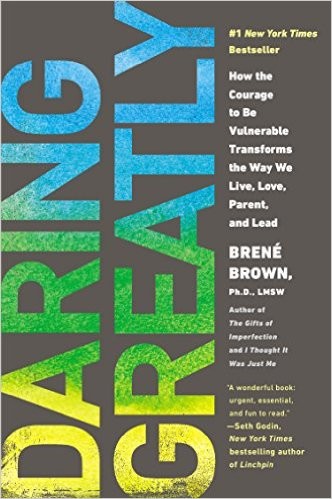
9. Daring Greatly by Brené Brown
⭐⭐⭐⭐⭐
Who it’s for: Someone who needs to understand that vulnerability — not niceness — is the real source of courage at work.
If people-pleasing is armor, Daring Greatly is about taking it off. Brown’s argument is that vulnerability — being seen, being uncertain, risking failure — isn’t weakness. It’s the birthplace of confidence, creativity, and connection. You can’t build real professional relationships while hiding behind niceness. You can only build the appearance of them.
The chapter on “the vulnerability hangover” — the feeling after you’ve been honest about something real — is the most relatable thing I’ve ever read about work. I get it every time I push back on a decision, every time I admit I don’t know something, every time I ask for help. The hangover is the price of showing up as yourself, and knowing it’s coming makes it easier to show up anyway.
My take: “I thought vulnerability was for therapy sessions. This book made me realize it’s for everywhere.”

10. Atlas of the Heart by Brené Brown
⭐⭐⭐⭐⭐
Who it’s for: Someone who needs to name what they’re feeling before they can stop people-pleasing around it.
You can’t change a pattern you can’t name. And most people-pleasers are terrible at naming what they’re actually feeling — we say “stressed” when we mean resentful, “fine” when we mean overwhelmed, “happy to help” when we mean I can’t say no.
Brown maps 87 emotions in this book, and for people-pleasing at work, the most useful distinction is between “resentment” and “anger.” Resentment is the people-pleaser’s alarm system — it’s what shows up when you’ve said yes too many times and your body is keeping score. Most people-pleasers ignore resentment because they think they shouldn’t feel it. Brown helped me understand that resentment is information. It’s my body telling me a boundary has been crossed — usually by me.
The chapter on “overwhelm” versus “stress” changed how I describe my workday. I used to say I was stressed. I wasn’t. I was overwhelmed — there was too much and not enough of me. Stressed is a reaction to a specific threat. Overwhelmed is the feeling of drowning in too many inputs. The distinction sounds academic. It’s the difference between needing a break and needing a boundary.
My take: “I didn’t know there were 87 words for what I’ve been calling ‘tired.’ Now I can finally be specific.”
Frequently Asked Questions
1. How do I know if I’m a people-pleaser at work?
If you regularly say yes when you mean no. If you volunteer for things you don’t want to do. If you avoid conflict at all costs. If you feel guilty every time you prioritize yourself. If you’re exhausted but can’t explain why. If your colleagues describe you as “reliable” and you describe yourself as “tired.” That’s people-pleasing.
2. Is people-pleasing the same as being a team player?
No. A team player contributes willingly and can also decline. A people-pleaser contributes compulsively and can’t say no even when they should. If you’re resentful and exhausted but can’t stop helping, that’s not teamwork. That’s a pattern.
3. How do I start saying no without getting fired?
Start with Tawwab’s scripts (#3). “I want to help with this, and I need to protect my time on [specific project].” Combine warmth with clarity. You’re not rejecting the person. You’re protecting your capacity. Most reasonable bosses respond well to directness. If yours doesn’t, that’s information about the workplace, not about you.
4. What if my boss is the one I can’t say no to?
Read The No Club (#2) and Crucial Conversations (#5). The key is to reframe the conversation from “I don’t want to” to “here’s what I’m prioritizing and here’s the tradeoff.” Most managers respond to structure: “I can do A or B this week. Which one matters more?”
5. I feel guilty every time I say no. How do I handle that?
Kristin Neff’s Self-Compassion (#6). The guilt is a sign that you’re going against a deeply held belief — probably that your worth comes from being useful. That belief served you once. It’s hurting you now. Self-compassion isn’t about making the guilt go away. It’s about treating yourself kindly while it runs its course.
6. Can people-pleasing actually hurt my career?
Yes. The No Club (#2) shows that people who say yes to everything get stuck doing non-promotable work while their more assertive colleagues advance. People-pleasing keeps you busy. It doesn’t keep you moving.
7. How do I stop people-pleasing without becoming the office jerk?
The goal isn’t to stop being kind. It’s to stop being kind at your own expense. Genuine kindness includes the ability to say no. Compulsive niceness doesn’t. You can be warm and honest at the same time. That’s not being a jerk. That’s being an adult.
A Final Thought
It’s a Tuesday. I said no to something today — a request to join a new committee at school — and the old version of me would have said yes before the sentence was finished. Instead I said: “I appreciate you thinking of me. I need to protect my time this semester.” The principal nodded. That was it. No drama. No fallout. Just a sentence I couldn’t have said a year ago.
I drove home at 4pm. Nora was at her dad’s. Eli was at a playdate. I had two hours of silence — the kind I used to fill with guilt and now fill with tea and whatever book I’m reading. The silence used to feel like a room with the furniture removed. Today it felt like a room with the windows open.
That’s what overcoming people-pleasing actually looks like. Not a dramatic transformation. Not a scene in a movie. Just a Tuesday where you say a sentence you couldn’t say before, and the world doesn’t end, and you go home and sit in the quiet and it’s yours.
Which book are you grabbing first?
Disclosure: This article contains affiliate links. If you purchase through these links, ReadPlug may earn a small commission at no additional cost to you. We only recommend books we genuinely believe in.
Never miss a life-changing book.
Get our spoiler-free book picks every Tuesday.