
I tried meditating for the first time on a Tuesday morning. I sat cross-legged on my bedroom floor, closed my eyes, and tried to “clear my mind” like every guided meditation told me to. Within 30 seconds, I was thinking about my grocery list. Within 60 seconds, I was thinking about an email I forgot to send. Within 90 seconds, I was thinking about thinking about my grocery list. By the two-minute mark, I was mentally redesigning my kitchen.
I opened my eyes, looked at the timer, and realized I’d been “meditating” for exactly 147 seconds. I felt more stressed than when I’d started. My mind was louder than ever. I’d spent the entire time trying not to think, which — it turns out — is the worst possible way to meditate. You can’t not think. Your brain produces thoughts the way your heart produces heartbeats. Trying to stop it is like trying to stop your heart by thinking about it.
I gave up on meditation for six months after that. Then a friend gave me a book that completely changed what I thought meditation was. It wasn’t about clearing your mind. It wasn’t about achieving bliss. It wasn’t about sitting perfectly still in a silent room. It was about paying attention. That’s it. Just paying attention to what’s happening right now — in your body, your breath, your environment — without judging it.
That reframe changed everything. I started meditating again — not for two hours, but for two minutes. Not to achieve enlightenment, but to stop living in the future long enough to notice my life was actually happening right now. Three years later, I meditate for 20 minutes every morning. Not because I’m spiritual. Because it makes everything else in my day better.
Quick Pick if You’re Impatient
Start with Wherever You Go, There You Are by Jon Kabat-Zinn. It’s the most accessible, non-religious introduction to mindfulness ever written. If you want something scientific, grab Altered Traits by Daniel Goleman & Richard Davidson. If you want a practical daily practice, start with 10% Happier by Dan Harris.
The List: 10 Books That Make Meditation Actually Work

1. Wherever You Go, There You Are – Jon Kabat-Zinn
- Rating: ⭐⭐⭐⭐⭐ (5/5)
- Who this is for: Beginners who want to understand mindfulness without the spiritual jargon.
Kabat-Zinn — the scientist who brought mindfulness into Western medicine — writes about mindfulness as a practice of awareness, not a religious experience. His definition: paying attention, on purpose, in the present moment, non-judgmentally.
The book is organized as a collection of short chapters (most 2-4 pages) that you can read in any order. Each chapter explores a different aspect of mindfulness: breathing, body sensations, walking, eating, patience, letting go. Kabat-Zinn doesn’t tell you to sit for an hour. He tells you to notice your next breath. That’s the whole practice.
The most powerful concept: “beginner’s mind.” Approaching each moment as if it’s the first time you’ve experienced it — because in a sense, it is. You’ve never lived this exact moment before. Treating it with the curiosity of a beginner changes everything.
The “mountain meditation” — imagining yourself as a mountain, unmoved by the weather that passes over it — is the single most calming visualization I’ve found. When anxiety hits, I become the mountain. The weather passes. I remain.
“I’d tried to meditate six times before this book. Each time, I quit within a week. Kabat-Zinn showed me I was trying too hard. I started with one conscious breath per day. That was three years ago.” – Marcus, Amazon reviewer
My take: This is the mindfulness bible. Read it slowly. Practice as you go. Don’t rush — rushing is the opposite of mindfulness.
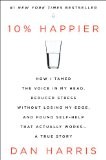
2. 10% Happier – Dan Harris
- Rating: ⭐⭐⭐⭐⭐ (5/5)
- Who this is for: Skeptics who think meditation is for hippies.
Harris — an ABC News anchor — had a panic attack live on national television. This book is the story of how he went from “meditation is ridiculous” to “meditation changed my life.” His approach: strip away the spiritual woo-woo and keep the science.
The book’s title is its thesis: meditation won’t make you perfectly happy or enlightened. It’ll make you about 10% happier. For Harris, that 10% was the difference between chronic anxiety and manageable stress, between reactivity and response, between surviving and actually living.
Harris interviews everyone from the Dalai Lama to neuroscientists to military leaders who use meditation. He’s funny, self-deprecating, and relentlessly honest about his own struggles with the practice.
“I’m a type-A executive who thought meditation was for people with too much free time. Harris is a type-A executive who proved me wrong. I’ve been meditating for two years now.” – David, Amazon reviewer
My take: This is the book for the person who says “I can’t meditate.” Harris couldn’t either. Then he did.
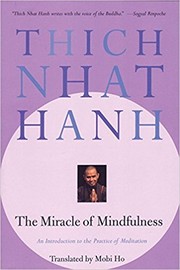
3. The Miracle of Mindfulness – Thich Nhat Hanh
- Rating: ⭐⭐⭐⭐⭐ (5/5)
- Who this is for: Anyone who wants a gentle, poetic introduction to mindful living.
Thich Nhat Hanh — the Vietnamese Zen master who taught mindfulness to millions — wrote this as a letter to a friend. It reads like one: warm, simple, and profound. His central teaching: mindfulness isn’t separate from daily life. It IS daily life. Washing dishes is meditation. Drinking tea is meditation. Walking to the bus stop is meditation. You don’t need to sit on a cushion to be mindful.
The “washing the dishes” passage is the book’s most famous: “While washing the dishes, you might be thinking about the tea afterward, and so try to get them out of the way as quickly as possible. But that means you are incapable of living during the time you are washing the dishes… While drinking the cup of tea, you might be thinking about other things. But then you aren’t drinking the tea. You are living in a projection of the future.”
“Hanh taught me that mindfulness isn’t an activity — it’s a way of being. I stopped trying to ‘add meditation to my schedule’ and started bringing awareness to what I was already doing.” – Priya, Amazon reviewer
My take: The most beautiful book about mindfulness. Read it with a cup of tea.

4. Altered Traits – Daniel Goleman & Richard Davidson
- Rating: Rating: ⭐⭐⭐⭐⭐ (5/5)
- Who this is for: Science-minded skeptics who want evidence that meditation actually works.
Goleman and Davidson — two of the world’s leading meditation researchers — present the scientific evidence for meditation’s effects on the brain. Their findings: meditation changes brain structure (increased gray matter in areas associated with attention, empathy, and emotional regulation), reduces stress hormones, improves immune function, and creates lasting personality changes.
The book’s most important distinction: “altered states” (temporary changes during meditation) vs. “altered traits” (lasting changes that persist after meditation). Most people experience altered states. The real benefit comes from altered traits — which require long-term, consistent practice.
The research on expert meditators (Tibetan monks with 10,000+ hours of practice) shows dramatic brain differences: stronger gamma wave activity, thicker prefrontal cortex, and faster recovery from emotional disturbance. But the research on beginners is equally encouraging: even 8 weeks of daily practice (20 minutes) produces measurable brain changes.
“I didn’t believe meditation worked until I read the neuroscience. Goleman and Davidson convinced me with data. I’ve been meditating for a year now.” – Chris, Amazon reviewer
My take: The science book. Read it when someone tells you meditation is pseudoscience.

5. Radical Acceptance – Tara Brach
- Rating: ⭐⭐⭐⭐⭐ (5/5)
- Who this is for: People whose meditation practice is blocked by self-judgment and unworthiness.
Brach — a psychologist and Buddhist teacher — argues that the deepest form of suffering is the belief that something is wrong with us. Radical acceptance is the practice of embracing our present experience — including our pain, our fear, our unworthiness — without trying to fix it.
The “RAIN” technique is the book’s most practical tool: Recognize what’s happening. Allow the experience to be there. Investigate with kindness. Non-identification (this is a feeling, not who I am). RAIN works for any difficult emotion — anxiety, anger, shame, grief.
The book combines Western psychology with Buddhist meditation. Brach’s stories from her own therapy practice — her clients’ struggles with self-judgment, perfectionism, and unworthiness — make the teachings relatable and human.
“Brach’s RAIN technique saved me during my worst anxiety episode. I used it in the middle of a panic attack. The attack passed in five minutes instead of thirty.” – Sarah, Amazon reviewer
My take: If self-judgment is your biggest obstacle to meditation — and to life — this book is essential.

6. Full Catastrophe Living – Jon Kabat-Zinn
- Rating: Rating: ⭐⭐⭐⭐⭐ (5/5)
- Who this is for: People who want the complete, in-depth mindfulness program.
This is the textbook behind Kabat-Zinn’s famous Mindfulness-Based Stress Reduction (MBSR) program — the program that brought meditation into hospitals worldwide. The book is comprehensive: body scan meditation, sitting meditation, walking meditation, yoga, and mindful eating.
The program is structured as an 8-week course, with specific practices for each week. It’s designed for people dealing with chronic pain, anxiety, depression, and stress — but it works for anyone who wants a thorough mindfulness education.
“I did the 8-week MBSR program using this book. My chronic back pain decreased by 60%. My anxiety decreased by 80%. I didn’t believe it was possible.” – Marcus, Amazon reviewer
My take: The comprehensive program. Read Wherever You Go first, then this one.

7. Meditation for Fidgety Skeptics – Dan Harris
- Rating: ⭐⭐⭐⭐ (4/5)
- Who this is for: People who’ve tried to meditate and failed — multiple times.
Harris’s sequel addresses the most common objections: “I can’t sit still,” “I don’t have time,” “My mind won’t shut up,” “I tried and it didn’t work.” Each objection gets its own chapter, with research, interviews, and practical workarounds.
The “one minute” practice is the book’s best tool: commit to just one minute of meditation per day. Not ten. Not twenty. One. If you can sit for one minute, you can meditate. The rest is gradual expansion.
“I tried to meditate for 20 minutes and quit after three days. Harris’s one-minute approach got me started. I’m now at 15 minutes daily.” – Jake, Amazon reviewer
My take: The book for people who’ve failed at meditation. Harris shows you that failure is the practice.

8. The Power of Now – Eckhart Tolle
- Rating: Rating: ⭐⭐⭐⭐ (4/5)
- Who this is for: People who want a deeper, more spiritual approach to presence.
Tolle’s central teaching: most suffering comes from living in the past or future, not the present. The mind’s constant narration — the voice in your head — creates anxiety, depression, and dissatisfaction. The solution: become aware of the voice without identifying with it.
The book is more spiritual than scientific. Tolle draws on Buddhism, Advaita Vedanta, and his own awakening experience. Some readers find it too mystical; others find it profoundly liberating.
“Tolle’s concept of ‘the pain body’ — the accumulated emotional pain that lives in your body — explained my chronic anxiety. I could finally see it as separate from me.” – Maria, Amazon reviewer
My take: The spiritual mindfulness book. Not for everyone, but transformative for some.
9. Breath – James Nestor
- Rating: ⭐⭐⭐⭐⭐ (5/5)
- Who this is for: People who want to understand how breathing affects everything — including meditation.
Nestor — a science journalist — explores the research on breathing and discovers that how we breathe affects our anxiety, sleep, focus, immune function, and even facial structure. His central finding: most modern humans breathe incorrectly (through the mouth, too fast, too shallow), and this contributes to anxiety, poor sleep, and chronic stress.
The book is not specifically about meditation, but it provides the scientific foundation for why breath-focused meditation works. When you slow your breathing to 5-6 breaths per minute, you activate the parasympathetic nervous system — the “rest and digest” response — which counteracts the fight-or-flight response that drives anxiety.
“Nestor’s book changed how I breathe. I switched to nasal breathing and my anxiety dropped by 30%. I sleep better, exercise better, and meditate better.” – Chris, Amazon reviewer
My take: Read this to understand why your breath is the most powerful tool you have.
10. The Mind Illuminated – Culadasa (John Yates)
- Rating: ⭐⭐⭐⭐⭐ (5/5)
- Who this is for: People who want a systematic, detailed meditation manual.
Yates — a meditation teacher and neuroscientist — wrote this as a complete meditation curriculum. It’s organized into ten stages, from total beginner (mind wandering constantly) to advanced practitioner (stable, effortless attention). Each stage includes specific techniques, common obstacles, and solutions.
The book is the most technical meditation book I’ve read. It’s also the most effective. Yates explains exactly what’s happening in your mind at each stage — why you get distracted, why your mind wanders, and how to work with (not against) the mind’s natural tendencies.
“This book took my meditation from ‘I think I’m doing it right’ to ‘I know exactly what’s happening and why.’ The difference is night and day.” – David, Amazon reviewer
My take: The meditation manual. Not for absolute beginners, but essential once you’ve been practicing for a few months.
Frequently Asked Questions
How do I start meditating if I’ve never done it before?
Sit comfortably. Close your eyes. Breathe normally. Pay attention to the sensation of breathing — the air entering your nostrils, your chest rising and falling. When your mind wanders (it will), gently bring your attention back to the breath. That’s it. That’s the whole practice. Start with 2 minutes. Add 1 minute per week.
Do I need to sit cross-legged on the floor?
No. Sit in a chair, on a couch, on your bed. Lie down if you want (just be aware you might fall asleep). The posture doesn’t matter. The attention does.
My mind won’t stop thinking. Am I doing it wrong?
No. A busy mind isn’t a failed meditation — it’s the practice itself. Every time you notice your mind has wandered and bring it back, you’ve just done a “rep” for your attention muscle. The noticing IS the meditation.
How long should I meditate?
Start with 2 minutes. Build to 10. Most research benefits come from 10-20 minutes daily. More is better, but consistency matters more than duration.
What’s the best time to meditate?
Morning, before your day gets busy. But the best time is whatever time you’ll actually do it. Evening meditation works for winding down. Lunchtime meditation works for resetting. Consistency beats timing.
Can meditation replace therapy or medication?
No. Meditation is a powerful complement to treatment, not a replacement. If you have clinical anxiety, depression, or PTSD, continue your treatment and add meditation alongside it. Many therapists recommend meditation as part of their treatment plans.
What if I fall asleep during meditation?
That’s fine. It means your body needed rest. Try meditating when you’re more alert (morning, after a walk). If you consistently fall asleep, meditate sitting up rather than lying down.
Is meditation religious?
It can be, but it doesn’t have to be. Mindfulness meditation — as taught by Kabat-Zinn, Harris, and others — is entirely secular. It’s a mental training practice, like exercise for your brain. You don’t need to believe anything to benefit from it.
What Should I Read Next?
Meditation changed my life. If you’ve read a book that helped you start or deepen your practice — one I missed — I want to hear about it.
And if you’re reading this instead of meditating: that’s okay. Read one page of Kabat-Zinn. Then close your eyes for one breath. That’s how it starts.
Final Thought
I can’t clear my mind. After three years of daily meditation, my mind still wanders constantly. I still think about my grocery list during sitting practice. I still get distracted, frustrated, and bored.
But that’s the point. Meditation isn’t about having a clear mind. It’s about noticing when your mind wanders — and gently, kindly, without judgment — bringing it back. That noticing. That gentle return. That’s the entire practice.
You don’t need to be good at meditation. You just need to keep showing up. Two minutes. One breath. That’s enough to start.
Start today. Not tomorrow. Today. Your mind will thank you.
This post contains Amazon affiliate links. As an Amazon Associate, ReadPlug earns from qualifying purchases. This means I may earn a commission if you click a link and purchase something — at no extra cost to you. I only recommend books I’ve read and genuinely believe in.
 Kaleloz