Move-in day was supposed to be exciting. My parents drove me six hours to a campus I’d visited once, helped me carry boxes up three flights of stairs, and then stood in my tiny dorm room looking at me like I was about to be launched into space. My mom cried. My dad gave me a handshake that lasted too long. And then they drove away, and I was alone for the first time in my life.
I stood at my window and watched their car disappear down the road. My roommate hadn’t arrived yet. I didn’t know anyone. I didn’t know where the dining hall was. I didn’t know how to do laundry. I was 18 years old, 500 miles from home, and I had absolutely no idea what I was doing.
The first semester nearly destroyed me. Not academically — I’d always been a good student. It was everything else: the loneliness, the freedom, the 2 AM pizza, the skipped classes, the social anxiety, the homesickness, the slow realization that being smart wasn’t enough. I needed skills I’d never been taught — time management, social navigation, emotional regulation, self-care, and the ability to function when nobody was telling me what to do.
These ten books would have saved me from the worst of it. If you’re starting college — or know someone who is — put these in their bag alongside the bedding and the laptop.
Quick Pick if You’re Impatient
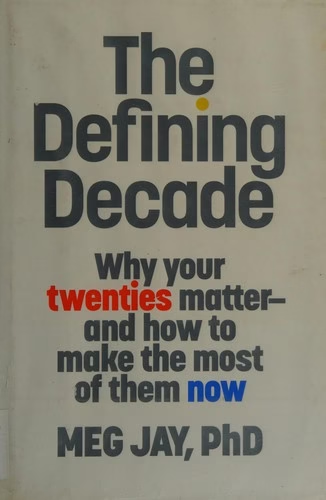
Start with The Defining Decade by Meg Jay. It’s the book that shows why college matters more than you think — and how to use these years intentionally. If you want study skills, start with How to Become a Straight-A Student by Cal Newport. If you want emotional preparation, start with The Freshman Survival Guide by Nora Bradbury-Haehl.
The List: 10 Books That Make College Easier
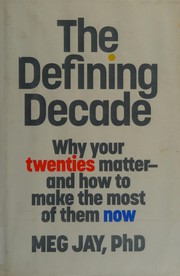
1. The Defining Decade – Meg Jay
- Rating: ⭐⭐⭐⭐⭐ (5/5)
- Who this is for: Freshmen who think they have plenty of time to figure things out.
Jay — a clinical psychologist specializing in twentysomethings — argues that your twenties are the most important decade of your life. The decisions you make in college about identity, relationships, and career compound for decades.
“I was planning to coast through college. Jay showed me that these years are the foundation of everything that follows. I changed my major, started networking, and graduated with purpose.” – Marcus, Amazon reviewer
My take: Read this before freshman orientation.
2. How to Become a Straight-A Student – Cal Newport
- Rating: ⭐⭐⭐⭐⭐ (5/5)
- Who this is for: Students who want to study less and get better grades.
Newport studied straight-A students and found they don’t study more — they study smarter. His strategies: time blocking (schedule study sessions like classes), the “quiz and recall” method (test yourself instead of rereading), and the “big three” prioritization (focus on the three most important tasks each day).
“I went from studying 6 hours a day to 3 hours a day and my GPA went from 2.8 to 3.7. Newport’s methods are counterintuitive and effective.” – Priya, Amazon reviewer
My take: This book is the academic survival guide.

3. The Freshman Survival Guide – Nora Bradbury-Haehl & Bill McGarvey
- Rating: ⭐⭐⭐⭐⭐ (5/5)
- Who this is for: Freshmen who need help with the emotional and social side of college.
This book covers everything textbooks don’t: homesickness, roommate conflicts, partying, loneliness, mental health, relationships, and finding your people. It’s honest, compassionate, and practical.
“This book told me that my homesickness was normal. That alone was worth the read.” – Sarah, Amazon reviewer
My take: The emotional survival guide.
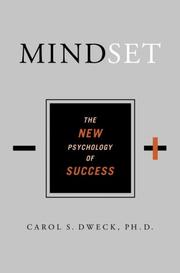
4. Mindset – Carol Dweck
- Rating: ⭐⭐⭐⭐⭐ (5/5)
- Who this is for: Students who tie their self-worth to their grades.
Dweck’s growth mindset: intelligence isn’t fixed — it grows through effort and learning. Students who believe they can improve (growth mindset) outperform those who believe intelligence is static (fixed mindset).
“I used to think I was ‘bad at math.’ Dweck showed me I was just unpracticed. I changed my self-talk and my grades followed.” – Jake, Amazon reviewer
My take: The mindset shift that changes everything.
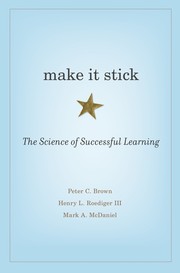
5. Make It Stick – Peter Brown, Henry Roediger, Mark McDaniel
- Rating: ⭐⭐⭐⭐⭐ (5/5)
- Who this is for: Students who want to learn more effectively.
The most evidence-based learning book ever written. The key findings: testing yourself (retrieval practice) is more effective than rereading. Spacing out study sessions beats cramming. Interleaving different topics beats focusing on one.
“I stopped highlighting and started testing myself. My retention tripled.” – David, Amazon reviewer
My take: Learn how to learn before you learn anything else.
6. Why We Sleep – Matthew Walker
- Rating: ⭐⭐⭐⭐⭐ (5/5)
- Who this is for: Freshmen who think sleep is optional.
Walker’s research: sleeping less than 7 hours impairs memory, creativity, emotional regulation, and immune function. One night of 4-6 hours reduces cognitive performance to the level of legal intoxication.
“I was pulling all-nighters and getting C’s. After reading Walker, I started sleeping 7+ hours. My grades went up and my stress went down.” – Chris, Amazon reviewer
My take: Sleep is the foundation of academic success.

7. The Power of Now – Eckhart Tolle
- Rating: ⭐⭐⭐⭐ (4/5)
- Who this is for: Students who are anxious about the future or ruminating about the past.
Tolle’s mindfulness approach: most suffering comes from living in the past or future, not the present. Learning to be present reduces anxiety, improves focus, and increases enjoyment.
“This book taught me to stop worrying about what grade I’d get and focus on what I was learning right now.” – Maria, Amazon reviewer
My take: The antidote to college anxiety.
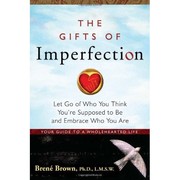
8. The Gift of Imperfection – Brené Brown
- Rating: ⭐⭐⭐⭐⭐ (5/5)
- Who this is for: Freshmen who feel pressure to be perfect.
Brown’s guideposts for wholehearted living — authenticity, self-compassion, resilience — are essential for college students navigating the pressure to perform.
“Brown gave me permission to be imperfect. I needed that more than any study guide.” – Priya, Amazon reviewer
My take: College is hard enough without perfectionism.
9. How to Win Friends and Influence People – Dale Carnegie
- Rating: ⭐⭐⭐⭐⭐ (5/5)
- Who this is for: Freshmen who want to build a social life from scratch.
The social skills manual for college: become genuinely interested in others, remember names, listen more than you talk. These principles work in dorms, classrooms, and parties.
“I was terrified of making friends. Carnegie’s book gave me the tools. I made three lifelong friends in my first semester.” – Jake, Amazon reviewer
My take: Social skills are learnable. This book teaches them.
10. Adulting: How to Become a Grown-Up – Kelly Williams Brown
- Rating: Rating: ⭐⭐⭐⭐ (4/5)
- Who this is for: Freshmen who don’t know how to do laundry, cook, or manage money.
506 tips for being a functional adult: how to tip, how to unclog a drain, how to make a budget, how to cook five basic meals, how to write a thank-you note. Funny, practical, and necessary.
“I didn’t know how to do laundry when I got to college. This book taught me that and 505 other things.” – Marcus, Amazon reviewer
My take: The practical life skills book.
Frequently Asked Questions
What’s the hardest part of freshman year?
Loneliness. Most freshmen are surrounded by people and still feel alone. It takes time to find your community. Give it a semester. Join clubs. Say yes to invitations. The loneliness fades.
How do I deal with homesickness?
Call home regularly (but not daily). Create new routines that feel like home (morning coffee ritual, Sunday dinners with friends). Get involved in campus activities. The homesickness peaks at weeks 3-6 and gradually fades.
Should I join a fraternity/sorority?
That’s personal. Greek life provides instant community but also social pressure. Attend rush events, talk to current members, and trust your gut. There’s no right answer.
How do I choose a major?
Take diverse classes your first year. Talk to professors and professionals in fields you’re curious about. Choose something you’re genuinely interested in — not what’s “practical.” You can always change.
What if I’m struggling academically?
Go to office hours. Visit the tutoring center. Form a study group. Ask for help early — not the week before finals. Professors want to help. You have to ask.
How do I balance social life and academics?
Time blocking: schedule study time first, then social time. Treat study sessions like classes — non-negotiable. The 80/20 rule: 80% of your learning happens in 20% of your study time. Find that 20%.
What Should I Read Next?
College is the most transformative experience of your life — if you’re intentional about it. If you’ve read a book that helped you through freshman year — one I missed — I want to hear about it.
And if you’re about to start college: you’re going to be okay. Really.
Final Thought
I survived freshman year. Barely. I made every mistake in the book: I skipped classes, ate terrible food, slept too little, worried too much, and spent too many nights feeling alone.
But I also learned. I grew. I became someone I wouldn’t have become if I’d stayed home.
These books won’t prevent the hard parts of college. Nothing can. But they’ll give you the tools to navigate the hard parts — and the perspective to see that the hard parts are where the growth happens.
Pack these books alongside your bedding. You’ll need them.
This post contains Amazon affiliate links. As an Amazon Associate, ReadPlug earns from qualifying purchases. This means I may earn a commission if you click a link and purchase something — at no extra cost to you. I only recommend books I’ve read and genuinely believe in.
 Kaleloz