
The Thanksgiving That Changed Everything
My mother leaned across the dinner table, looked me dead in the eye, and said, “You’ve gained weight. Are you depressed? Your cousin just got promoted to director, by the way.”
Fourteen people witnessed this. Nobody said a word.
I smiled, excused myself to the bathroom, and cried for 20 minutes. Then I washed my face, returned to the table, and spent the rest of dinner pretending everything was fine. Because that’s what we do in my family. We absorb the hit. We smile. We don’t make waves.
For 34 years, I’d been the family punching bag. My mother’s criticism. My father’s passive-aggressive comments. My sister’s competitive jabs. My uncle’s inappropriate jokes. I took it all because I believed that’s what family does. You endure. You forgive. You show up again next holiday and do it all over again.
Then one day, my therapist asked me a question that changed my life: “If a friend treated you the way your family treats you, would you continue the friendship?”
The answer was instant: absolutely not.
The Myth of Family Obligation
We’re taught that family is everything. That blood is thicker than water. That you should love your family unconditionally. And while those sentiments sound beautiful, they’re often weaponized to keep us trapped in toxic dynamics.
Here’s the truth: love does not mean tolerance. Family does not mean obligation. And setting boundaries is not the same as cutting people off.
The books I’m about to share taught me that boundaries are the most loving thing you can offer a difficult family member. When you stop enabling bad behavior, you give that person the opportunity to grow. When you stop absorbing their pain, you free yourself to become the person you were meant to be.
Quick Picks (For When You Need Help NOW)
If you’re dreading the next family gathering, here are my top 3 recommendations:
1. “Boundaries” by Henry Cloud & John Townsend – The gold standard for boundary-setting. If you read one book on this topic, make it this one. It changed my relationship with every difficult person in my life.
2. “Adult Children of Emotionally Immature Parents” by Lindsay Gibson – If your parents are the difficult ones, this book will validate your experience and give you strategies for maintaining your sanity.
3. “Set Boundaries, Find Peace” by Nedra Glennon Tawwab – Practical, actionable, and immediately useful. Tawwab provides scripts for every boundary-setting situation you’ll encounter.

1. Boundaries by Henry Cloud & John Townsend
Rating: ⭐⭐⭐⭐⭐ (5/5)
Who this is for: Anyone who says yes when they mean no. If you feel guilty setting limits with family, this book will change your perspective forever.
“I gave this book to my sister, and she said, ‘I didn’t know I was allowed to say no to Mom.’ That sentence broke my heart and rebuilt it at the same time.” — Amanda R.
My take: This is the bible of boundary-setting. Cloud and Townsend use biblical principles (though the book works for any belief system) to explain why boundaries are healthy, necessary, and loving. The concept that changed my life: “What I will and will not allow in my life.” Simple, but revolutionary. I now have a clear list of behaviors I won’t tolerate from anyone, family included. The guilt is fading, and my self-respect is growing.

2. Adult Children of Emotionally Immature Parents by Lindsay Gibson
Rating: ⭐⭐⭐⭐⭐ (5/5)
Who this is for: Anyone whose parents are emotionally unavailable, narcissistic, or controlling. If you’ve always felt like the parent in the relationship, this book validates your experience.
“Gibson described my mother perfectly. For the first time in my life, I understood that my mother’s behavior wasn’t my fault. I cried for an hour after reading the first chapter.” — Jennifer M.
My take: Gibson identifies four types of emotionally immature parents: emotional, driven, passive, and rejecting. My mother is a textbook “emotional” parent—everything is about her feelings, everyone else’s needs are secondary. The book taught me that I can’t change my mother, but I can change how I respond to her. I now use Gibson’s “maturity awareness approach”—observing her behavior without getting emotionally entangled. It’s not perfect, but it’s preserved my sanity.

3. Set Boundaries, Find Peace by Nedra Glennon Tawwab
Rating: ⭐⭐⭐⭐⭐ (5/5)
Who this is for: The person who needs practical, step-by-step guidance. If you know you need boundaries but don’t know how to set them, this book provides the scripts.
“Tawwab’s scripts saved my relationship with my sister. I used her exact words to set a boundary about her unsolicited parenting advice. It worked the first time.” — Robert M.
My take: This book is incredibly practical. Tawwab provides specific scripts for every boundary-setting scenario you’ll encounter with difficult family members. Her “boundary pyramid” (deal-breakers, firm boundaries, flexible boundaries) helped me prioritize which boundaries were non-negotiable and which I could bend on. I’ve used her scripts with my mother, my sister, and my in-laws with remarkable success. The key insight: boundaries without action are just suggestions. You have to enforce them.
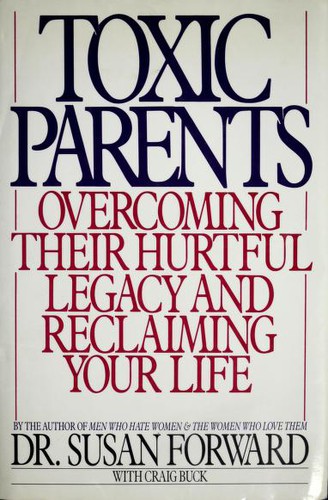
4. Toxic Parents by Susan Forward
Rating: ⭐⭐⭐⭐⭐ (5/5)
Who this is for: Anyone dealing with abusive, manipulative, or controlling parents. If your parents’ behavior crosses into emotional abuse, this book provides the framework for confrontation.
“Forward’s ‘confrontation letter’ technique gave me the courage to finally tell my father how his drinking affected me. He didn’t change, but I did. The letter set me free.” — Lisa P.
My take: This book is for the harder cases—parents who are genuinely toxic, not just difficult. Forward provides a structured approach to confronting toxic behavior, including writing a confrontation letter (even if you never send it). I wrote letters to both my parents. I never sent them, but the process of articulating my pain was incredibly healing. The book also addresses the guilt that comes with setting boundaries with parents—and shows you how to release it.

5. The Dance of Anger by Harriet Lerner
Rating: ⭐⭐⭐⭐⭐ (5/5)
Who this is for: Women who struggle to express anger constructively. If you either explode or suppress your anger with family, this book teaches you to use it as information.
“Lerner taught me that anger is a signal, not a weapon. When my mother criticizes me, I now ask, ‘What is my anger telling me?’ instead of either lashing out or shutting down.” — Emily T.
My take: As women, we’re often taught that anger is unfeminine or destructive. Lerner shows that anger is actually a valuable signal—it tells us when our boundaries are being crossed. Her concept of “overfunctioning” and “underfunctioning” in relationships helped me see that I was overfunctioning in my family (taking responsibility for everyone’s feelings) while they were underfunctioning (refusing to take responsibility for their own). Changing this dynamic started with learning to express my anger clearly and calmly.

6. Recovering from Emotionally Immature Parents by Lindsay Gibson
Rating: ⭐⭐⭐⭐⭐ (5/5)
Who this is for: Anyone who’s ready to heal from childhood emotional neglect. If you’ve read Adult Children of Emotionally Immature Parents and want deeper healing, this is the follow-up.
“Gibson’s ‘self-reparenting’ exercises helped me give myself what my parents couldn’t: emotional validation. I now comfort myself the way I wish my parents had.” — Thomas K.
My take: This book picks up where Adult Children leaves off. Gibson provides practical exercises for healing the emotional wounds caused by immature parents. Her “self-reparenting” concept—learning to give yourself the emotional support your parents couldn’t—is transformative. I now have a daily practice of checking in with my emotions and validating them, something my parents never did. The healing isn’t complete, but it’s progressing in ways I never thought possible.

7. Will I Ever Be Good Enough? by Karyl McBride
Rating: ⭐⭐⭐⭐ (4/5)
Who this is for: Daughters of narcissistic mothers. If your mother made everything about herself and left you feeling invisible, this book is your mirror.
“McBride’s description of the narcissistic mother-daughter dynamic was so accurate it felt like she’d been a fly on the wall in my childhood home. The healing exercises helped me stop seeking my mother’s approval.” — Sarah M.
My take: This book is specifically for daughters of narcissistic mothers, and it’s heartbreaking and healing in equal measure. McBride’s five-step recovery process helped me understand that my mother’s narcissism wasn’t about me—it was about her own unhealed wounds. The most powerful insight: I will never get the validation I need from my mother, because she doesn’t have it to give. I must give it to myself. That realization set me free from the endless cycle of seeking her approval.
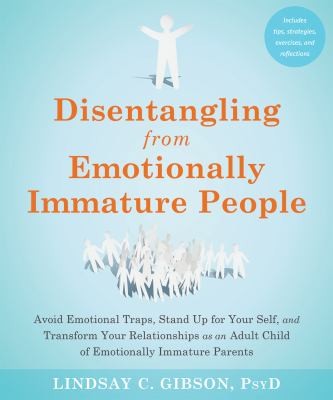
8. Disentangling from Emotionally Immature People by Lindsay Gibson
Rating: ⭐⭐⭐⭐⭐ (5/5)
Who this is for: Anyone who needs to maintain relationships with difficult family members while protecting themselves. If you can’t go no-contact but need emotional distance, this book provides the strategies.
“Gibson’s concept of ‘detaching with love’ gave me a way to stay connected to my difficult family without losing myself. I can now attend family gatherings without dreading them.” — Jennifer B.
My take: This is Gibson’s third book in the series, and it’s the most practical for ongoing relationships. Her strategies for “detaching with love” and maintaining emotional safety while staying connected are invaluable for those of us who can’t or don’t want to cut family off completely. I now use her “emotional maturity awareness” technique—observing my family’s behavior without getting drawn into it. Family dinners are still challenging, but they no longer destroy me.

9. Stop Walking on Eggshells by Paul Mason & Randi Kreger
Rating: ⭐⭐⭐⭐ (4/5)
Who this is for: Anyone dealing with a family member who has borderline personality disorder (BPD) or BPD traits. If you’re constantly walking on eggshells to avoid triggering someone’s rage, this book is your guide.
“This book helped me understand my sister’s behavior and stop taking it personally. I can now set boundaries with her without feeling like I’m abandoning her.” — David H.
My take: While this book focuses on BPD, its principles apply to anyone dealing with an emotionally volatile family member. Mason and Kreger provide practical strategies for setting boundaries, protecting yourself, and responding to manipulation. The most valuable insight: you can’t control someone else’s emotions, and you’re not responsible for managing them. I’ve stopped trying to prevent my sister’s outbursts and started taking care of myself instead.

10. It Didn’t Start with You by Mark Wolynn
Rating: ⭐⭐⭐⭐ (4/5)
Who this is for: Anyone who suspects their family patterns go deeper than their own experience. If your family’s dysfunction seems to repeat across generations, this book explores transgenerational trauma.
“Wolynn’s work on inherited family trauma showed me that my anxiety wasn’t just mine—it was passed down through generations. This understanding helped me stop blaming my parents and start breaking the cycle.” — Robert L.
My take: This book takes a different approach to family dysfunction. Wolynn explores how trauma is passed down through generations—not just through behavior, but through epigenetics. Understanding that my family’s patterns existed long before I was born helped me release blame and focus on healing. The book includes practical exercises for identifying inherited trauma and breaking the cycle. I now see my healing work as not just for me, but for my future children.
Frequently Asked Questions (Family Boundaries Edition)
Q: How do I set boundaries with family without causing a fight? A: Use “I” statements (“I feel uncomfortable when…”), be specific about the behavior (not the person), and state what you need (“I need you to stop commenting on my weight”). Tawwab’s scripts in Set Boundaries, Find Peace are excellent for this.
Q: What if setting boundaries causes my family to cut me off? A: Then they valued what you provided (compliance, emotional labor) more than they valued you. That’s painful, but it’s also information. True love respects boundaries. If your family can’t respect yours, that tells you something important about the relationship.
Q: How do I set boundaries with elderly parents? A: The same way you would with anyone else, but with added compassion. Elderly parents may be more set in their ways, but they can still learn. Be patient, be consistent, and be willing to repeat yourself. Gibson’s books provide specific strategies for emotionally immature parents of any age.
Q: What if I’m financially dependent on my difficult family? A: Start with emotional boundaries while working toward financial independence. You can’t control what they say, but you can control how you respond. Create a plan for financial independence and work toward it steadily.
Q: How do I handle family guilt? A: Recognize that guilt is often a conditioned response, not a moral compass. Your family may have taught you that saying no is selfish, but boundaries are healthy. Cloud and Townsend’s Boundaries addresses guilt directly—showing that it’s often a sign you’re doing something right.
Q: What if my spouse’s family is the problem? A: Your spouse should set the boundaries with their own family. If they won’t, you need to have a serious conversation about priorities. Marriage counseling can help mediate this.
Q: Can people change? A: Yes, but only if they want to. You can’t set a boundary hoping someone will change—set it to protect yourself. If they change, that’s a bonus. If they don’t, you’re still protected.
Q: How do I explain boundaries to family members who don’t believe in them? A: You don’t need their permission or understanding. Boundaries aren’t up for debate—they’re statements of what you will and won’t accept. If your family doesn’t understand boundaries, that’s their issue to work through.
Your Next Move
Setting boundaries with difficult family members is one of the hardest things you’ll ever do. It feels selfish. It feels ungrateful. It feels like betrayal.
But here’s what I’ve learned: boundaries aren’t walls—they’re bridges. They’re the bridge between who you’ve been (compliant, exhausted, resentful) and who you want to be (healthy, peaceful, whole).
These ten books gave me the courage to set boundaries with my family—and the skills to maintain them. My relationships aren’t perfect, but they’re honest. I’m no longer the family punching bag. I’m a person with limits, and I’m finally honoring them.
So start with one book. Read it. Highlight the passages that resonate. Practice the scripts. And then—when you’re ready—set your first boundary.
Because you deserve to be treated with respect. Even by your family. Especially by your family.
Which book are you grabbing first?
Disclosure: This post contains Amazon affiliate links. If you purchase through these links, I may earn a small commission at no extra cost to you. This helps support the blog and allows me to continue bringing you honest book recommendations. Thank you!