I was 27 years old, sitting in my car in a parking lot, eating a gas station sandwich for the third time that week, and wondering if this was it. I had a degree I wasn’t using, a job I didn’t care about, and a vague sense that I was wasting my life — but no idea what I was supposed to be doing instead. Everyone around me seemed to have it figured out. My college roommate was a doctor. My best friend was building a startup. My cousin was traveling the world as a photographer. And I was… eating a gas station sandwich.
The problem wasn’t that I lacked options. The problem was that I had too many — and none of them felt right. I’d tried marketing, teaching, freelancing, nonprofit work. Each one was fine. None of them was “it.” And I was running out of time to figure it out. Or at least it felt that way.
The books on this list didn’t give me my purpose. That’s not how purpose works. But they gave me the frameworks, the questions, and the courage to stop waiting for a lightning bolt and start building a life that mattered — one experiment at a time.
Quick Pick if You’re Impatient
Also see our guide to 10 BEST BOOKS FOR COPING WITH GRIEF AND ILLNESS AND FINDING HEALING THROUGH DIFFICULT TIMES. Also see our guide to 10 BEST BOOKS ABOUT DEEPLY MESSED UP FAMILIES AND FINDING YOUR WAY THROUGH THE CHAOS. Also see our guide to 10 BEST BOOKS FOR FINDING YOUR NEXT FAVORITE READ WHEN YOU’VE LOVED A BOOK SO MUCH YOU DON’T KNOW WHAT TO READ NEXT. Also see our guide to 10 BEST BOOKS FOR BREAKING THROUGH A CREATIVE SLUMP AND FINDING INSPIRATION AGAIN. Also see our guide to 10 Best Books for Finding Purpose After Divorce.Start with Designing Your Life by Bill Burnett & Dave Evans. It’s the most practical, hands-on approach to finding purpose — no philosophy required. If you want the classic existential exploration, start with Man’s Search for Meaning by Viktor Frankl. If you want the Japanese perspective, read Ikigai by Héctor García & Francesc Miralles.
The List: 10 Books That Help You Find Your Way

1. Designing Your Life – Bill Burnett & Dave Evans
- Rating: ⭐⭐⭐⭐⭐ (5/5)
- Who this is for: People who are stuck and want a practical, design-thinking approach to figuring out their life.
Burnett and Evans — Stanford design professors — apply design thinking to life design. Their argument: you don’t “find” your purpose. You design it through prototyping, iteration, and experimentation — the same way designers create products.
The book’s most powerful exercise: “Odyssey Plans.” You write three radically different versions of your life for the next five years. Plan A is your current path. Plan B is what you’d do if Plan A disappeared. Plan C is what you’d do if money and judgment were irrelevant. The exercise frees you from the myth that there’s one “right” life to live.
The “wayfinding” approach replaces goal-setting with action. Instead of figuring out what you want and then pursuing it, you try things, notice what energizes you, and adjust. Purpose emerges from action, not contemplation.
“I’d been stuck for three years trying to figure out my purpose. Burnett and Evans showed me I was doing it wrong — I should be prototyping, not pondering.” – Marcus, Amazon reviewer
My take: This is the book for people who are paralyzed by indecision. It’s not about finding the answer. It’s about building the answer.

2. Man’s Search for Meaning – Viktor Frankl
- Rating: ⭐⭐⭐⭐⭐ (5/5)
- Who this is for: Anyone asking the deepest question: “What’s the point?”
Frankl — a psychiatrist who survived Auschwitz — wrote this as both memoir and philosophical treatise. His conclusion: the primary human drive isn’t pleasure or power — it’s meaning. And meaning comes from three sources: creating something (work), experiencing something (love, beauty, truth), and choosing your attitude in suffering.
The book’s most famous line: “Everything can be taken from a man but one thing — the last of the human freedoms — to choose one’s attitude in any given set of circumstances.” This isn’t toxic positivity. It’s the hardest-won wisdom in history.
“This book answered the question I’d been asking for years. Not with an easy answer — with a framework for finding my own.” – Priya, Goodreads
My take: Read this book. Then read it again. It gets deeper every time.
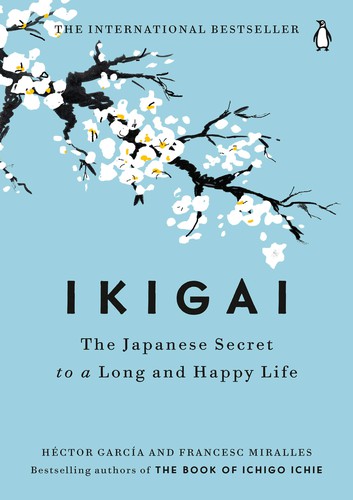
3. Ikigai – Héctor García & Francesc Miralles
- Rating: ⭐⭐⭐⭐⭐ (5/5)
- Who this is for: People who want the Japanese secret to a long, purposeful life.
Ikigai is the Japanese concept of “reason for being.” The book explores the world’s longest-lived communities — particularly in Okinawa, Japan — and discovers that every centenarian has an ikigai: a reason to get up in the morning.
The ikigai framework sits at the intersection of four questions: What do you love? What are you good at? What does the world need? What can you be paid for? Your ikigai is where all four overlap.
But the book goes deeper than a Venn diagram. It shows that purpose isn’t just about career — it’s about daily rituals, community, movement, nutrition, and the refusal to retire. The Okinawan elders don’t stop working. They just shift to work that fulfills them.
“I was looking for my purpose in a career. This book showed me it was in my daily life — my morning walk, my evening cooking, my community garden.” – Chris, Amazon reviewer
My take: This book is gentle, warm, and transformative. It doesn’t pressure you to find your purpose. It invites you to live with purpose — one small ritual at a time.

4. The Alchemist – Paulo Coelho
- Rating: ⭐⭐⭐⭐⭐ (5/5)
- Who this is for: Anyone who needs a story — not a framework — to remind them that purpose is a journey.
Santiago is a shepherd who dreams of finding treasure at the Egyptian pyramids. He sells his flock and travels across North Africa, encountering alchemists, thieves, and the love of his life. The treasure he finds at the end isn’t what he expected.
Coelho’s parable is about “Personal Legend” — the thing you were born to do. The universe conspires to help those who pursue their Personal Legend, but the journey requires sacrifice, risk, and trust.
“I read this at 22 and thought it was cheesy. I read it at 35 and cried. Some books have to find you at the right time.” – David, Goodreads
My take: This is the book for the person who’s forgotten how to dream.

5. Let Your Life Speak – Parker Palmer
- Rating: ⭐⭐⭐⭐⭐ (5/5)
- Who this is for: People who’ve been living someone else’s life and are ready to hear their own voice.
Palmer — a Quaker educator — wrote this after his own depression and identity crisis. His argument: vocation isn’t something you choose. It’s something you listen for. Your life is speaking to you all the time — through your energy, your curiosity, your restlessness. The job is to listen.
The most powerful chapter: “When Way Closes.” Palmer argues that you learn your purpose as much from failure as from success. When doors close — when jobs don’t work out, when relationships end, when plans fail — you learn what isn’t your path. The closed doors are as important as the open ones.
“I’d been following my parents’ dream for my life. Palmer showed me that my life was speaking — I just wasn’t listening. I quit law school the next semester. Best decision I ever made.” – Sarah, Amazon reviewer
My take: This is the quietest, most profound book on the list. Read it slowly.

6. The Crossroads of Should and Must – Elle Luna
- Rating: ⭐⭐⭐⭐ (4/5)
- Who this is for: Creative people torn between what they “should” do and what they must do.
Luna — an artist and designer — wrote this after leaving a successful tech career to pursue painting. The book is part memoir, part manifesto, part workbook. The central tension: “Should” is what others expect of you. “Must” is what you can’t not do.
The book is short (160 pages) and visually stunning — every page is a work of art. It’s designed to be browsed, not read linearly. The exercises (mapping your shoulds, identifying your musts, creating rituals) are simple but powerful.
“I’d been living in ‘should’ for 15 years. Luna’s book was the permission slip I needed to try ‘must.’” – Maria, Amazon reviewer
My take: This is the book for the artist trapped in an office.
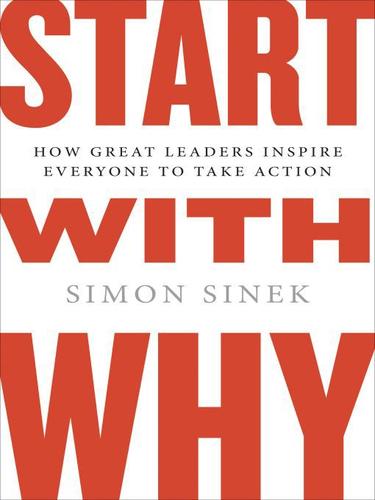
7. Start with Why – Simon Sinek
- Rating: ⭐⭐⭐⭐ (4/5)
- Who this is for: People who want to find purpose through understanding their “why.”
Sinek’s Golden Circle: most people know WHAT they do. Some know HOW they do it. Few know WHY. The “why” is the purpose, cause, or belief that drives you. When you lead with your why, everything else falls into place.
The book is primarily about organizations and leaders, but the framework applies to individuals. Your “why” isn’t your job or your skills. It’s the contribution you make and the impact you have.
“Sinek showed me that my purpose wasn’t a job title — it was a way of being. Once I found my why, every career decision became obvious.” – Jake, Amazon reviewer
My take: The framework is powerful. Apply it to your life, not just your business.

8. Range – David Epstein
- Rating: ⭐⭐⭐⭐⭐ (5/5)
- Who this is for: Generalists, late bloomers, and people who’ve tried many things without finding “the one.”
Epstein’s research shows that the most successful people aren’t specialists who found their passion early. They’re generalists who tried many things, failed at several, and eventually connected their diverse experiences into something unique.
The book is liberating for anyone who feels “behind” because they haven’t found their purpose yet. Epstein shows that late bloomers often outperform early specialists because their broad experience gives them a wider range of tools and perspectives.
“I was 35 and had changed careers four times. I thought I was a failure. Epstein showed me I was building range. That range became my superpower.” – Marcus, Amazon reviewer
My take: This is the book for every late bloomer. You’re not lost. You’re exploring.
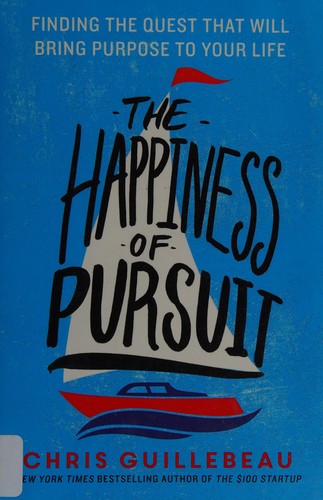
9. The Happiness of Pursuit – Chris Guillebeau
- Rating: ⭐⭐⭐⭐ (4/5)
- Who this is for: People who need a quest — a meaningful long-term project that gives their life direction.
Guillebeau — who visited every country in the world — profiles people who’ve taken on quests: walking across America, visiting every country, reading a book from every nation, learning to play every instrument. The quests are different, but the pattern is the same: a quest gives you purpose, direction, and community.
“I started my quest the day I finished this book. Three years later, I’ve visited all 50 states. The quest didn’t just give me purpose — it gave me a story.” – Chris, Amazon reviewer
My take: Purpose doesn’t have to be a career. It can be a quest.

10. Tribe of Mentors – Tim Ferriss
- Rating: ⭐⭐⭐⭐ (4/5)
- Who this is for: People who want to learn from the world’s most successful people — and steal their strategies.
Ferriss asked 130+ world-class performers the same questions: What’s the book you’ve given most as a gift? What purchase of $100 or less has most improved your life? How has a failure set you up for success? The answers are a goldmine of strategies, books, and habits.
The book doesn’t give you a single framework for finding purpose. It gives you 130+ perspectives — and somewhere in those perspectives, you’ll find yours.
“I read one interview per day for four months. Each one gave me a new idea. The composite of all their advice became my roadmap.” – Priya, Amazon reviewer
My take: Dip in and out. Don’t read cover to cover. The right interview will find you.
Frequently Asked Questions
Is there really such a thing as “purpose”?
Yes — but not in the way most people think. Purpose isn’t a single, fixed calling that you discover once and follow forever. It’s a direction that evolves as you grow. Research shows that people who report a sense of purpose live longer, healthier, and happier lives. The key is finding a purpose that aligns with your values and strengths — not waiting for a cosmic revelation.
What if I have too many interests and can’t choose one?
You don’t have to choose one. The most successful people combine multiple interests into something unique. Range by David Epstein shows that generalists often outperform specialists. Your purpose might not be a single thing — it might be the intersection of several things.
What if nothing interests me?
That might be a sign of depression rather than purposelessness. If you’ve lost interest in everything, talk to a professional. If you’re just uninspired by your current options, try Designing Your Life — the prototyping approach helps you discover interests through action, not introspection.
How long does it take to find your purpose?
There’s no timeline. Some people know at 18. Others find it at 40, 50, or 60. The research shows that purpose often emerges from accumulated experiences — not from a single revelation. Stop pressuring yourself to “figure it out” and start experimenting. Purpose follows action.
Can my purpose be my job?
It can be, but it doesn’t have to be. Many people find purpose outside their careers — in family, community, hobbies, volunteer work, or creative projects. Your purpose is how you contribute to the world. That can happen in any context.
What’s the single best exercise for finding purpose?
The “Odyssey Plans” from Designing Your Life. Write three different five-year life plans. This exercise breaks the myth of “the one right life” and opens up possibilities you haven’t considered. Most people discover that their Plan B or C is more exciting than their Plan A.
What Should I Read Next?
Purpose isn’t found in a book. It’s found in living. But books can point the way. If you’ve read a book that helped you find your purpose — one I missed — I want to hear about it.
And if you’re still searching: that’s okay. The search itself is part of the purpose.
Final Thought
I found my purpose not in a single book, but in the act of reading all of them. Each one asked a different question. Each one pointed in a different direction. And somewhere in the intersection of all their answers, I found mine.
Your purpose is out there. Not waiting to be discovered — waiting to be built.
Start building.
This post contains Amazon affiliate links. As an Amazon Associate, ReadPlug earns from qualifying purchases. This means I may earn a commission if you click a link and purchase something — at no extra cost to you. I only recommend books I’ve read and genuinely believe in.
Enjoyed this list?
Get our best book picks delivered to your inbox — no spam, just great reads.