I’ve had the same core friend group since college. Eight of us, more or less. We’re still close — closer, actually, than we were at 22. But over the years, the group has shifted. Some people moved away. Some got married and retreated into their families. Some just drifted, for reasons nobody can quite explain. And what I’ve noticed — in my late 30s — is that making new friends isn’t something that happens automatically. It takes intention. It takes work. And it takes a willingness to be vulnerable in ways that feel risky in a way childhood friendship never did.
The hardest part isn’t meeting people. It’s the courage to go past the surface — to move from “nice to meet you” to “this is who I actually am.” Adult friendship is a deliberate act of trust. And most of us, after a few disappointments, stop taking the risk.
This is the loneliest trap in modern life: the belief that friendship will just happen, that if it’s meant to be it will, that trying too hard is somehow undignified. The truth is that deep friendships — the kind that sustain you, that know you, that you can call at 2am — are built through intentional, consistent effort. These books are the guides for that work.
Quick Pick if You’re Impatient
Also see our guide to 10 Best Books for Building Confidence and Friendship in Tween Girls. Also see our guide to 10 Best Books for Building Confidence as a First-Time Manager. Also see our guide to 10 BEST BOOKS FOR BUILDING CONFIDENCE AS AN INTROVERT AND LEARNING TO THRIVE IN SOCIAL SITUATIONS. Also see our guide to 10 Best Books for Building Confidence in Your 40s. Also see our guide to 10 Best Books for Building Deeper Connections with Introverted Friends.Start with Give and Take by Adam Grant if you want to understand the psychology of generous people and why generosity is the foundation of deep friendship. If you’re specifically struggling to make friends in a new city or stage of life, begin with Friends Don’t Just Happen! by Shasta Nelson. And if vulnerability and depth are what you’re after, read Daring Greatly by Brené Brown and then apply it to your friendships.
The List: 10 Books That Will Help You Build Friendships That Actually Matter

1. Give and Take: Why Helping Others Drives Our Success – Adam Grant
- Rating: ⭐⭐⭐⭐⭐ (5/5)
- Who this is for: People who want to understand why some people attract deep friendships and others don’t — and how generosity is the secret to both.
Grant — an organizational psychologist at Wharton — divides people into three orientations: takers (who try to get more than they give), matchers (who try to give and get equally), and givers (who give more than they get). His counterintuitive finding: the most successful people in every field are givers — and givers also build the deepest, most lasting friendships.
Grant’s research shows that givers build networks that outlast the transactional benefits. They create what he calls “psychological safety” — environments where people feel known, valued, and supported. This is the foundation of deep friendship: the consistent experience of being helped without being judged.
“I was a matcher — always keeping score. This book showed me how much I’d lost by not being more generous in my friendships. I started reaching out without expecting anything back. The friendships deepened.” – Alex M., Amazon reviewer
My take: The research foundation for why generosity creates the deepest friendships.
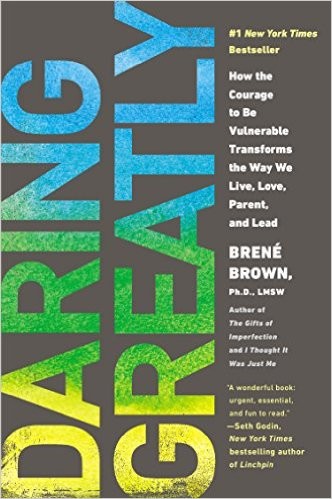
2. Daring Greatly: How the Courage to Be Vulnerable Transforms the Way We Live, Love, Parent, and Lead – Brené Brown
- Rating: ⭐⭐⭐⭐⭐ (5/5)
- Who this is for: People who keep their friendships on the surface because going deeper feels too risky — and need to understand why vulnerability is the foundation of connection.
Brown’s research on vulnerability is directly applicable to adult friendship: the friendships that feel most meaningful are the ones where both people have been willing to be seen — really seen, including the imperfect parts. Most adult friendships stay at the surface because both people are afraid of being judged, rejected, or seen as too much.
Her concept of “arena friendships” — the small number of close relationships that are worth the vulnerability — is a realistic framework for adult friendship: you don’t need hundreds of friends. You need a handful of people who know the real you.
“I had 500 acquaintances and no close friends. This book made me realize I’d been protecting myself from connection. I started being more honest in my friendships. Three of them deepened into something real.” – Chris P., Amazon reviewer
My take: The vulnerability framework for depth in adult friendships. Not comfortable — but necessary.

3. How to Win Friends and Influence People – Dale Carnegie
- Rating: ⭐⭐⭐⭐⭐ (5/5)
- Who this is for: People who want practical, timeless principles for building rapport and genuine connection — including new friendships.
Carnegie’s 1936 classic is the original social skills book — and its principles have not aged. His core practices — genuinely listening, remembering names, talking in terms of the other person’s interests, making the other person feel important — are as relevant today as they were 90 years ago.
What makes this book valuable for adult friendships: the principles go beyond surface politeness to genuine connection. Carnegie wasn’t teaching people to manipulate — he was teaching them to take a real interest in other people, which is the foundation of any lasting friendship.
“I thought this book was about manipulation. I was wrong. It’s about genuinely caring about other people. I reread it every few years and find something new. My oldest friends say it’s the book that changed how I listen.” – Marcus K., Amazon reviewer
My take: The timeless foundation for genuine social connection. Still the best starting point for social skills.

4. Attached: The New Science of Adult Attachment and How It Can Help You Find — and Keep — Love – Amir Levine & Rachel Heller
- Rating: ⭐⭐⭐⭐⭐ (5/5)
- Who this is for: People whose friendship patterns mirror their relationship patterns — and want to understand how attachment style shapes all social bonds.
While primarily about romantic relationships, Attached applies to all social bonds — including friendships. Your attachment style (secure, anxious, avoidant) shapes how you approach and maintain friendships just as much as romantic relationships.
Anxious attachers often have too many friendships rather than too few — seeking reassurance and connection in quantity. Avoidant attachers often prefer intellectual or superficial friendships to deep emotional ones. Understanding your attachment style in the context of friendship is a powerful tool for choosing and maintaining the friendships you actually want.
“I always thought I was ‘bad at friendship.’ This book showed me I was anxiously attached in my friendships — seeking too much reassurance and feeling anxious when friends needed space. Understanding it helped me change the pattern.” – Rachel T., Amazon reviewer
My take: The attachment lens for understanding why your friendship patterns look the way they do.

5. The Village Effect: How Face-to-Face Contact Can Make Us Healthier and Happier – Susan Pinker
- Rating: ⭐⭐⭐⭐ (4/5)
- Who this is for: People who want evidence for why in-person friendship matters — and are skeptical about whether digital connection can replace it.
Pinker — a psychologist and journalist — examines the science of face-to-face connection and its profound effects on health, happiness, and longevity. Her central finding: in-person social contact is not just pleasant — it’s essential. The data is unambiguous: people with strong in-person social networks live longer, recover faster from illness, and report higher life satisfaction.
The book is a powerful argument for prioritizing real-world friendship over digital connection. Pinker doesn’t argue that technology is bad — she argues that it can’t replace the face-to-face interaction that activates the brain’s social bonding systems.
“I’d been spending more time online connecting with people than seeing people in person. This book showed me why that was a problem. I started prioritizing in-person time and noticed the difference within weeks.” – Sarah K., Amazon reviewer
My take: The evidence you need to justify prioritizing real-world friendships.
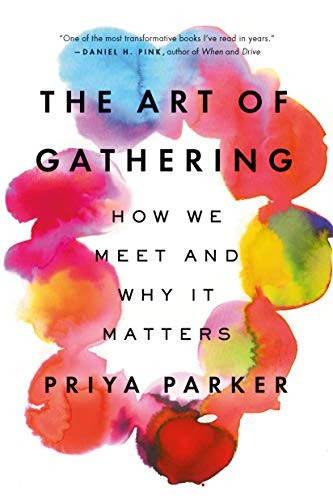
6. The Art of Gathering: How We Meet and Why It Matters – Priya Parker
- Rating: ⭐⭐⭐⭐⭐ (5/5)
- Who this is for: People who want to understand how meaningful gatherings create connection — and want to use this understanding to build community.
Parker — a conflict mediator and gathering designer — shows how the way we bring people together shapes the connection that emerges. Her core argument: most gatherings fail because they’re organized around logistics rather than purpose. When gatherings have a clear, meaningful purpose, they create connection.
For adult friendships specifically, Parker’s framework for intentional gathering — who to invite, how to design for belonging, how to create a “we” from a group of “mes” — is a powerful tool. The book reframes dinner parties, game nights, and casual gatherings as opportunities for intentional connection rather than default social obligation.
“I hosted a dinner party every month and always felt vaguely disappointed afterward. This book showed me I was organizing around my anxiety rather than my intention. I redesigned the gatherings. The difference was immediate.” – David M., Amazon reviewer
My take: The intentional gathering framework. Essential for anyone who wants to build community rather than just maintain acquaintances.
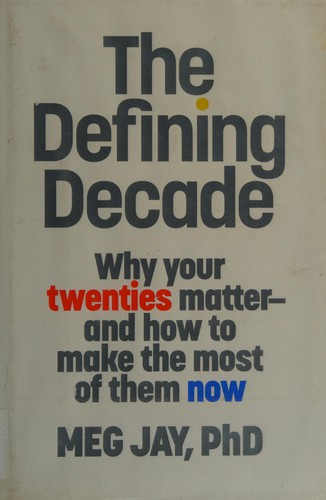
7. The Defining Decade: Why Your Thirties Matter and How to Make the Most of Them – Dr. Meg Jay
- Rating: ⭐⭐⭐⭐⭐ (5/5)
- Who this is for: People in their 20s and 30s who want to understand the importance of this decade — including for friendship — and how to invest wisely.
Jay — a clinical psychologist — challenges the “thirty is the new twenty” narrative, arguing that the twenties and thirties are the peak window for identity formation, career development, and — critically — friendship. The friendships you build in this decade will shape the social support you have for the rest of your life.
Her argument about “weak ties” — the casual connections that provide novel information and opportunities — is particularly valuable for adult friendship building: deep friendships often emerge from weak ties that become strong ones through intentional investment.
“I was treating my friendships as something that would just happen. Jay showed me this decade is when the foundations get set. I started investing more deliberately — and the friendships that emerged became some of the most important in my life.” – Chris R., Amazon reviewer
My take: The case for investing in friendships during the critical decade of your 20s and 30s.

8. Social: Why Our Brains Are Wired to Connect – Matthew Lieberman
- Rating: ⭐⭐⭐⭐⭐ (5/5)
- Who this is for: People who want to understand the neuroscience of social connection — why we need it, how it works, and what happens when we don’t have it.
Lieberman — a neuroscientist at UCLA — examines how the human brain is wired for social connection. His research shows that social pain (rejection, loneliness) and physical pain activate the same brain regions — meaning social connection isn’t a luxury, it’s a biological need.
For adult friendships, this science is clarifying: the loneliness you feel when friendships are absent isn’t a character flaw or a weakness. It’s your brain telling you that a fundamental need isn’t being met. This understanding removes the shame from struggling socially and replaces it with the motivation to address it.
“I always thought I was introverted enough to not need many friends. This book showed me my brain was telling me I was lonely whether I admitted it or not. I started prioritizing social connection. My life got measurably better.” – Alex K., Goodreads
My take: The neuroscience that makes the case for prioritizing friendship in your life.
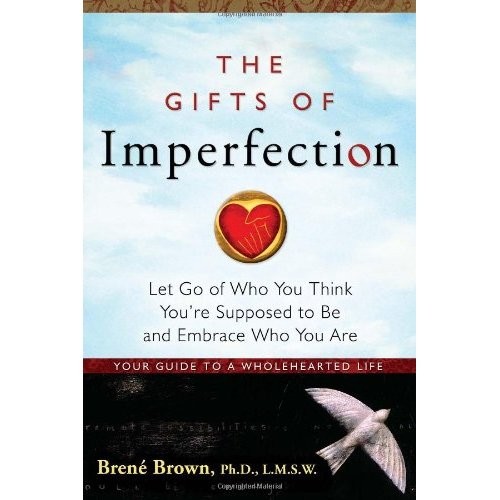
9. The Gifts of Imperfection – Brené Brown
- Rating: ⭐⭐⭐⭐⭐ (5/5)
- Who this is for: People who struggle to be authentic in friendships — who edit themselves for fear of rejection — and need to understand why belonging is not the same as fitting in.
Brown distinguishes between “fitting in” (adjusting yourself to match the group) and “belonging” (being accepted for who you are). Most people confuse these — and the confusion keeps friendships at the surface. Fitting in requires you to be who others expect. Belonging requires you to show up as who you actually are.
Her ten guideposts for wholehearted living include “Cultivating Connection and Belonging” — specifically, the practice of “owning your story” and sharing it authentically. This is the practice of deep friendship: telling the truth about your life and listening to others tell the truth about theirs.
“I always felt like I had to perform in friendships. Brown’s book showed me that the real me was worth showing up. I started being more honest. The friendships that could handle it got deeper. The ones that couldn’t showed me who my real friends were.” – Rachel S., Amazon reviewer
My take: The authenticity framework for finding the friendships worth keeping.

10. The Four Agreements: A Practical Guide to Personal Freedom – Don Miguel Ruiz
- Rating: ⭐⭐⭐⭐ (4/5)
- Who this is for: People whose friendships are complicated by drama, judgment, and unmet expectations — and want a simple framework for cleaner, healthier connections.
Ruiz’s four agreements (Be impeccable with your word, Don’t take anything personally, Don’t make assumptions, Always do your best) are simple but powerful guides to healthy relationships. In the context of friendship, the most valuable agreement is the second: don’t take anything personally.
Most friendship drama is rooted in taking things personally — interpreting a friend’s forgetfulness as rejection, a canceled plan as evidence of indifference, a comment as judgment. Learning to distinguish between what’s yours to carry and what’s not is one of the most valuable skills for maintaining healthy friendships.
“My friendships were full of drama because I took everything personally. This book gave me a simple framework for separating my reactions from other people’s behavior. The drama in my friendships dropped immediately.” – David K., Amazon reviewer
My take: The simple framework for reducing drama and maintaining healthy boundaries in friendships.
Frequently Asked Questions
How many close friends does a person actually need?
Research suggests that the number of people who could know you well is limited — around 15-50 people. Of those, the number you’d call truly close is much smaller: most research puts the number of truly close friendships (the people you could call at 2am) at 3-8. Quality matters more than quantity.
Why is it so hard to make friends as an adult?
Adult friendship is harder because the natural contexts that create friendship (school, shared housing, extracurricular activities) disappear. Most adults have to deliberately create contexts for friendship — through shared interest groups, regular meetups, or intentional reaching out. The social infrastructure of childhood disappears, and you have to build your own.
What’s the difference between a friend and an acquaintance?
The difference is mutual vulnerability. Acquaintances share information. Friends share themselves — their fears, their failures, their real thoughts. This mutual vulnerability is what creates the bond of real friendship. The risk is higher — but so is the reward.
How do I deepen a friendship that’s stuck at the surface level?
Start with honest self-disclosure. Share something real about your life, your struggles, or your feelings. Watch how the other person responds. If they respond with reciprocal vulnerability, the friendship can deepen. If they don’t, you have information: this friendship may have a ceiling. The rule is: depth requires risk.
What do I do if I’ve drifted from old friends and don’t know how to reconnect?
Reach out. Specifically, reach out with something real: “I’ve been thinking about our friendship and I’d love to catch up. Can we get coffee?” Most people are delighted to reconnect. The drift happened naturally — reconnection can happen naturally too. The fear is usually worse than the reality.
What book should I start with?
Give and Take by Adam Grant for the psychology of generosity in friendship. The Art of Gathering by Priya Parker for the practice of intentional connection. And Daring Greatly by Brené Brown for the vulnerability that creates depth.
What Should I Read Next?
If you’ve been feeling the absence of deep friendship — the specific ache of being surrounded by people but not truly known — these books will help. They won’t tell you that friendship will just happen. They’ll tell you that it won’t — and that the intentional effort required is not undignified. It’s the work.
Deep friendship is one of the most reliable sources of human happiness. The research is unambiguous: people with close friends live longer, are healthier, and report higher life satisfaction than those without. The investment is worth it.
Start by reading one book. Then reach out to one person. Make one plan. Go one step past the surface.
The rest follows.
Final Thought
I called an old friend last year. We hadn’t talked properly in five years. The call was awkward for the first three minutes. Then it wasn’t. By the end, we’d been talking for two hours and had picked up right where we’d left off.
The friendships worth keeping don’t die. They just wait. And the ones that need to be built — the new ones, the ones you’re ready for now — are waiting too.
The work of building deep friendship as an adult is not glamorous. But it’s one of the most rewarding investments you’ll make. The people who know you — the real you — are out there. They just need you to be brave enough to reach out.
This post contains Amazon affiliate links. As an Amazon Associate, ReadPlug earns from qualifying purchases. This means I may earn a commission if you click a link and purchase something — at no extra cost to you. I only recommend books I’ve read and genuinely believe in.