Quick Reference
- The Making of a Manager by Julie Zhuo
- Radical Candor by Kim Scott
- The First 90 Days by Michael Watkins
- Dare to Lead by Bren Brown
- The Coaching Habit by Michael Bungay Stanier
- An Everyone Culture by Robert Kegan & Lisa Lahey
- Turn the Ship Around by L. David Marquet
- The Five Dysfunctions of a Team by Patrick Lencioni
- High Output Management by Andy Grove
- Mindset by Carol Dweck
The Promotion That Felt Like a Demotion
Also see our guide to 10 Best Books for Building Confidence and Friendship in Tween Girls. Also see our guide to 10 BEST BOOKS FOR BUILDING CONFIDENCE AS AN INTROVERT AND LEARNING TO THRIVE IN SOCIAL SITUATIONS. Also see our guide to 10 Best Books for Building Confidence in Your 40s. Also see our guide to 10 Best Books for Building Confidence as a First-Time Manager. Also see our guide to 10 Best Books for Building Confidence as a First-Time Manager.Three weeks into my new management role, I locked myself in a conference room and cried.
Not because anything terrible had happened. Because I’d just spent 45 minutes in a team meeting where I said “um” seventeen times, contradicted myself twice, and completely lost my train of thought while explaining a project timeline. My team—five people who used to be my peers—stared at me with expressions ranging from pity to impatience.
The worst part? I’d been the top performer on this team for three years. I knew the work inside and out. I could do everyone’s job better than they could. And now, as their manager, I couldn’t even run a meeting without falling apart.
My boss had promoted me because I was “ready for the next level.” But nobody told me that being a great individual contributor has absolutely nothing to do with being a great manager. Nobody told me that the skills that got me promoted—technical expertise, attention to detail, working independently—were completely different from the skills I needed now—delegating, coaching, giving feedback, and leading people who used to be my friends.
I went from being the person everyone came to for answers to being the person who had no answers. And it was terrifying.
The First-Time Manager Trap
If you’re a new manager, you’re probably experiencing some version of my story. You got promoted because you were good at your job, and now you’re struggling with a completely different job that nobody trained you for.
The statistics are brutal: 60% of new managers underperform in their first two years, and 50% of them fail completely. The #1 reason? Lack of training. Companies promote their best individual contributors and then abandon them to “figure it out.”
The books I’m about to share are the training I wish I’d received. They cover the skills, mindset, and strategies that separate struggling new managers from confident ones. Whether you’re managing former peers, leading a remote team, or navigating office politics for the first time, these books will help you not just survive your first management role—but thrive in it.
Quick Picks (For When You’re Drowning Right Now)
If you’re in crisis mode as a new manager, here are my top 3 recommendations:
1. “The Making of a Manager” by Julie Zhuo – Start here. Zhuo became a manager at Facebook at 22 and writes with honesty about the terror and triumph of first-time management. Practical, relatable, and immediately useful.
2. “Radical Candor” by Kim Scott – If you’re struggling with giving feedback (especially to former peers), this book provides the framework. Scott’s “care personally, challenge directly” approach is the key to effective management.
3. “The First 90 Days” by Michael Watkins – If you’re in a new role and need a transition plan, this book provides it. Watkins’ strategies for accelerating your learning and building credibility are essential.

1. The Making of a Manager by Julie Zhuo
Rating: ⭐⭐⭐⭐⭐ (5/5)
Who this is for: Any new manager who feels like they’re faking it. If you’re terrified that everyone will discover you have no idea what you’re doing, this book is your mirror and your map.
“Zhuo described my exact experience: promoted because I was good at my job, then completely lost when I had to manage people. Her honesty about her own failures made me feel less alone.” — Jennifer M.
My take: This is the best book for first-time managers, period. Zhuo became a manager at Facebook at 22 and writes with refreshing honesty about the terror, mistakes, and eventual growth of learning to lead. Her framework for understanding what managers actually do (purpose, people, process, and results) gave me clarity when I had none. I implemented her “new manager playbook” and my confidence increased dramatically. The key insight: your job isn’t to have all the answers—it’s to build a team that finds them.

2. Radical Candor by Kim Scott
Rating: ⭐⭐⭐⭐⭐ (5/5)
Who this is for: The manager who struggles with feedback. If you either avoid difficult conversations or deliver them too harshly, this book teaches you the balance.
“Scott’s framework (care personally, challenge directly) transformed how I give feedback. I stopped avoiding hard conversations and started having them with empathy. My team’s performance improved immediately.” — Michael R.
My take: This book addressed my biggest management challenge: giving honest feedback to people I care about. Scott’s framework—Radical Candor (caring personally while challenging directly)—provides a clear path between the ineffective extremes of “ruinous empathy” (caring without challenging) and “obnoxious aggression” (challenging without caring). I now have weekly 1:1s focused on both professional development and personal connection, and my team trusts me more than ever.

3. The First 90 Days by Michael Watkins
Rating: ⭐⭐⭐⭐⭐ (5/5)
Who this is for: The manager who’s in a new role and needs to build credibility fast. If you’re struggling to establish yourself in your first few months, this book provides the playbook.
“Watkins’ 90-day transition framework saved my management career. I went from flailing to focused by following his step-by-step plan for securing early wins and building alliances.” — Thomas K.
My take: This book is essential for any new manager or anyone transitioning to a new leadership role. Watkins’ framework—secure early wins, build alliances, and establish your credibility—provides a clear roadmap for the critical first 90 days. I followed his plan religiously and secured two quick wins that established my credibility with both my team and my boss. The key insight: the first 90 days set the trajectory for your entire tenure—invest them wisely.

4. Dare to Lead by Bren Brown
Rating: ⭐⭐⭐⭐⭐ (5/5)
Who this is for: The manager who wants to lead with vulnerability. If you think leadership means having all the answers and showing no weakness, this book will transform your perspective.
“Brown’s research on vulnerability in leadership showed me that admitting I don’t know something actually increases trust, not decreases it. I stopped pretending to be perfect and started being real.” — Amanda L.
My take: This book redefined leadership for me. Brown proves that vulnerability isn’t weakness—it’s the foundation of brave leadership. Her framework for “rumbling with vulnerability” (having difficult conversations with courage and empathy) has transformed how I lead. I now start team meetings by sharing my own challenges and uncertainties, and the response has been remarkable—my team is more open, more creative, and more willing to take risks. The key insight: you can’t ask your team to be brave if you’re not willing to be vulnerable first.

5. The Coaching Habit by Michael Bungay Stanier
Rating: ⭐⭐⭐⭐⭐ (5/5)
Who this is for: The manager who gives too much advice. If you’re exhausted from solving everyone’s problems, this book teaches you to coach instead of tell.
“Stanier’s seven coaching questions transformed my 1:1s. Instead of telling my team members what to do, I ask questions and let them find their own solutions. They’re more engaged and I’m less exhausted.” — Robert M.
My take: As a new manager, I was solving everyone’s problems—which meant I was working 60-hour weeks while my team wasn’t growing. Stanier’s seven coaching questions (especially “What’s the real challenge here for you?” and “How can I help?”) taught me to coach rather than tell. My team now solves most problems on their own, and I have time to focus on strategic work. The key insight: your job isn’t to have the best answers—it’s to ask the best questions.

6. An Everyone Culture by Robert Kegan & Lisa Lahey
Rating: ⭐⭐⭐⭐ (4/5)
Who this is for: The manager who wants to build a culture of continuous learning. If you want your team to grow and develop, this book shows you how to create a “deliberately developmental” organization.
“Kegan and Lahey’s concept of a ‘deliberately developmental organization’ inspired me to create a team where everyone is expected to grow. We now have weekly learning sessions and quarterly development goals.” — Emily T.
My take: This book introduces the concept of a “deliberately developmental organization”—a workplace where personal growth is woven into the fabric of daily work. While implementing the full framework requires organizational buy-in, I’ve adapted several principles for my team: regular feedback sessions, learning goals alongside performance goals, and creating psychological safety for experimentation. The results have been remarkable—my team’s engagement and performance have both improved significantly.
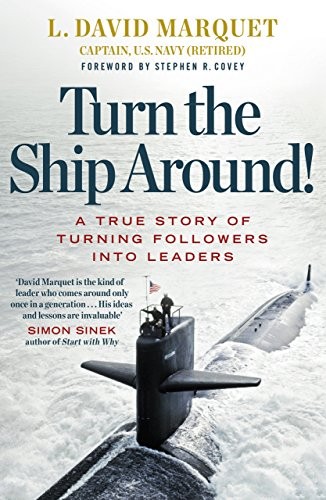
7. Turn the Ship Around by L. David Marquet
Rating: ⭐⭐⭐⭐⭐ (5/5)
Who this is for: The manager who wants to empower their team instead of micromanaging. If you’re tired of being the bottleneck, this book shows you how to distribute leadership.
“Marquet’s ‘leader-leader’ model (instead of ‘leader-follower’) transformed my management approach. I stopped giving orders and started giving intent. My team’s ownership and initiative increased overnight.” — Jennifer B.
My take: Marquet took command of the worst-performing submarine in the US Navy and transformed it into the best—by giving control to his crew instead of taking it. His “leader-leader” model (distributing leadership throughout the organization) is the antidote to micromanagement. I implemented his “intent-based leadership” (having team members state their intentions before taking action) and the results were immediate—my team became more proactive, more engaged, and more innovative. The key insight: control is an illusion; the more you give away, the more you have.

8. The Five Dysfunctions of a Team by Patrick Lencioni
Rating: ⭐⭐⭐⭐ (4/5)
Who this is for: The manager whose team isn’t working well together. If your team lacks trust, avoids conflict, or doesn’t commit to decisions, this book diagnoses and treats the problem.
“Lencioni’s model showed me that my team’s lack of trust was causing every other dysfunction. I implemented his trust-building exercises, and within a month, our team dynamics transformed.” — Thomas B.
My take: This book is a fable about team dysfunction, and it’s incredibly practical. Lencioni identifies five dysfunctions that prevent teams from performing: absence of trust, fear of conflict, lack of commitment, avoidance of accountability, and inattention to results. My team had all five. His step-by-step approach to building trust (starting with personal histories exercise) helped me break through the dysfunction and build a cohesive team. The key insight: trust is the foundation of everything—if you don’t have it, nothing else matters.

9. High Output Management by Andy Grove
Rating: ⭐⭐⭐⭐⭐ (5/5)
Who this is for: The manager who wants a systematic approach to management. If you’re an engineer or analytical thinker who wants frameworks and processes, this book delivers.
“Grove’s management as a ‘production system’ framework appealed to my analytical brain. I now view my team as a system with inputs, processes, and outputs—and manage accordingly.” — David H.
My take: This classic from Intel’s legendary CEO approaches management as a production system. Grove’s frameworks—particularly his “leverage” concept (activities that multiply your effectiveness) and his meeting taxonomy (process-oriented vs. mission-oriented)—have become foundational to my management practice. I now evaluate every activity by its leverage: does this multiply my team’s effectiveness, or am I just keeping busy? The key insight: your time is your most limited resource—spend it on high-leverage activities.

10. Mindset by Carol Dweck
Rating: ⭐⭐⭐⭐⭐ (5/5)
Who this is for: The manager who wants to build a growth mindset in their team. If you’re frustrated by team members who give up easily or resist challenges, this book shows you how to change the culture.
“Dweck’s growth mindset research transformed how I develop my team. I now praise effort and learning instead of talent, and my team’s resilience and willingness to take on challenges has skyrocketed.” — Lisa P.
My take: Dweck’s research on fixed vs. growth mindset is essential for any manager. Teams with a fixed mindset avoid challenges and give up when things get hard. Teams with a growth mindset embrace challenges and learn from failure. I now consciously praise effort (“You worked really hard on that”) rather than talent (“You’re so smart”), and the culture shift has been remarkable. My team now views setbacks as learning opportunities rather than evidence of inadequacy.
Frequently Asked Questions (First-Time Manager Edition)
Q: How do I manage former peers? A: Have an honest conversation about the new dynamic. Acknowledge the awkwardness, set clear expectations, and establish new boundaries. Don’t pretend nothing has changed—things have changed, and addressing it directly builds trust.
Q: How do I give feedback to someone older or more experienced than me? A: Focus on the work, not the person. Use specific examples, ask for their perspective, and approach the conversation with curiosity rather than authority. Their experience is an asset—leverage it.
Q: How do I deal with a team member who’s underperforming? A: Address it early and directly. Use Radical Candor’s framework: care personally, challenge directly. Understand the root cause (skill gap, motivation, unclear expectations) and create a clear improvement plan.
Q: How do I prioritize when everything feels urgent? A: Use High Output Management’s leverage concept. Ask: “What activities will multiply my team’s effectiveness?” Focus on those and delegate or defer the rest.
Q: How do I build trust with my team? A: Start with vulnerability (Dare to Lead), follow through on commitments, and create psychological safety for honest conversations. Trust takes time but can be destroyed in an instant—guard it carefully.
Q: How do I avoid micromanaging? A: Shift from telling to asking (The Coaching Habit). Use intent-based leadership (Turn the Ship Around). Set clear expectations and then trust your team to deliver. If you’re constantly checking in, you haven’t set clear expectations.
Q: What if my boss isn’t supportive? A: Build alliances with other leaders (The First 90 Days). Document your wins. Find a mentor outside your organization. And consider whether this is the right environment for your growth.
Q: How do I know if I’m a good manager? A: Look at your team: Are they growing? Are they engaged? Are they performing? A good manager’s success is measured by their team’s success, not their own individual contributions.
Your Next Move
Being a first-time manager is one of the hardest transitions you’ll ever make. It’s a completely different job from the one you were promoted from, and nobody gives you the training you need.
But here’s the good news: management is a skill, not a talent. It can be learned, practiced, and mastered. These ten books gave me the foundation to go from a terrified new manager to a confident leader.
So start with one book. Maybe The Making of a Manager if you need reassurance and practical guidance, or Radical Candor if feedback is your biggest challenge. Read it, implement one strategy, and see what happens.
Because the best managers aren’t born—they’re made. And your journey starts now.
Which book are you grabbing first?
Disclosure: This post contains Amazon affiliate links. If you purchase through these links, I may earn a small commission at no extra cost to you. This helps support the blog and allows me to continue bringing you honest book recommendations. Thank you!
Related Reads
- 10 Best Books for Dealing with Micromanaging Bosses and Regaining Your Autonomy
- 10 Best Books for Developing Emotional Intelligence in Leadership