The Day I Paid Off My Last Debt
Also see our guide to 10 BEST BOOKS FOR BUILDING CONFIDENCE AS AN INTROVERT AND LEARNING TO THRIVE IN SOCIAL SITUATIONS. Also see our guide to 10 Best Books for Building Confidence in Your 40s. Also see our guide to 10 Best Books for Building Financial Confidence After Debt. Also see our guide to 10 Best Books for Building Financial Confidence After Job Loss.I stared at my bank account balance: $47.32. That was it. That was everything I had left after making my final student loan payment.
Six years. $87,000. Gone.
I should have felt triumphant. Instead, I felt hollow. The goal that had consumed my entire twenties was finally complete, and I had no idea what came next. I’d been so focused on eliminating debt that I’d never thought about what I wanted my money to actually do for me.
For the next three months, I experienced what I now call “post-debt paralysis.” I was terrified to spend money—even on necessities. I avoided checking my bank account because seeing a positive balance felt “wrong.” I couldn’t bring myself to invest because I was convinced I’d lose everything. Every financial decision felt like walking through a minefield.
Sound familiar? If you’ve recently paid off debt—whether it’s student loans, credit cards, or medical bills—you might be experiencing this too. The transition from “debt elimination mode” to “wealth building mode” is one of the most challenging psychological shifts in personal finance.
The Psychology of Post-Debt Confusion
After years of living in scarcity mode—cutting expenses, saying no to social events, tracking every penny—your brain gets rewired. You develop what psychologists call a “scarcity mindset,” where your brain becomes hyper-focused on what you lack rather than what you have.
When you finally eliminate debt, that scarcity mindset doesn’t automatically disappear. In fact, it often intensifies. You become so afraid of returning to debt that you:
- Hoard cash instead of investing
- Feel guilty about every purchase
- Avoid financial decisions altogether
- Experience anxiety about your financial future
- Can’t enjoy the freedom you’ve worked so hard to achieve
The books I’m about to share address this psychological transition directly. They’re not just about money management—they’re about rebuilding your relationship with money after debt has shaped it for years.
Quick Picks (For When You’re Paralyzed by Financial Decisions)
If you’re staring at your bank account right now, unsure whether to save, invest, or spend, here are my top 3 recommendations:
1. “I Will Teach You to Be Rich” by Ramit Sethi – Start here. Sethi’s no-guilt approach to money management is perfect for post-debt recovery. He teaches you to automate your finances so you never have to think about money again.
2. “The Psychology of Money” by Morgan Housel – If you’re struggling with money anxiety, this book will explain why. Housel shows that financial decisions are driven by behavior, not intelligence—and provides a framework for making better choices.
3. “Your Money or Your Life” by Vicki Robin & Joe Dominguez – If you need to redefine your relationship with money, this book provides a 9-step program for achieving financial independence. It’s not just about money—it’s about aligning your spending with your values.
These three books alone will transform your post-debt financial life. But if you’re ready to build lasting financial confidence, here are 10 books that cover every angle.
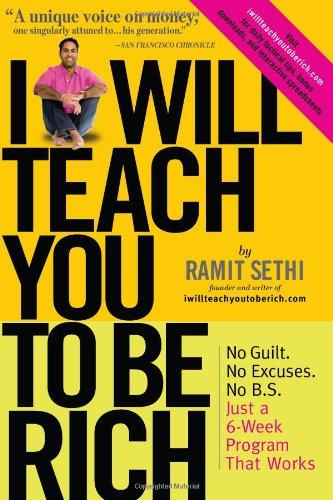
1. I Will Teach You to Be Rich by Ramit Sethi
Rating: ⭐⭐⭐⭐⭐ (5/5)
Who this is for: The person who’s overwhelmed by financial decisions after debt. If you’re terrified to spend money because you might go back into debt, this book provides a guilt-free system.
“Sethi’s automation system changed my life. I set up my accounts once, and now my money moves automatically—savings, investments, bills. I haven’t thought about money in months, and my net worth has doubled.” — Jennifer L.
My take: Sethi’s approach is revolutionary because it’s guilt-free. He doesn’t tell you to stop buying lattes or cut out all enjoyment. Instead, he teaches you to automate your finances so you can spend guilt-free on the things you love. His “conscious spending” plan (allocate money to fixed costs, savings, investments, and guilt-free spending) is perfect for post-debt recovery. I implemented his system six months after paying off my debt, and my financial anxiety disappeared. The key insight: you don’t need to be perfect with money—you need a system that works while you sleep.

2. The Psychology of Money by Morgan Housel
Rating: ⭐⭐⭐⭐⭐ (5/5)
Who this is for: The person who’s smart but makes irrational financial decisions. If you know what you “should” do with money but can’t make yourself do it, this book explains why.
“Housel’s insight that ‘doing well with money has little to do with how smart you are and a lot to do with how you behave’ changed everything for me. I stopped beating myself up for past financial mistakes.” — Michael T.
My take: This isn’t a how-to book—it’s a why-do-we-do-that book. Housel explores the psychological biases that drive financial decisions, and his insights are transformative for post-debt recovery. His concept of “enough” (knowing when to stop accumulating and start enjoying) was particularly powerful for me. After years of deprivation, I didn’t know how to define “enough.” Housel helped me understand that financial confidence isn’t about having more money—it’s about knowing what’s enough for you.

3. Your Money or Your Life by Vicki Robin & Joe Dominguez
Rating: ⭐⭐⭐⭐⭐ (5/5)
Who this is for: The person who wants to align their spending with their values. If you’ve been frugal for so long that you’ve forgotten what you actually value, this book helps you rediscover it.
“Robin and Dominguez taught me that money is ‘life energy’—you trade your time for it. This reframed every purchase as a trade-off: ‘Is this worth X hours of my life?’ My spending became intentional overnight.” — Amanda R.
My take: This book transformed my relationship with money. The concept of “life energy” (money equals time traded for it) was revolutionary. After years of tracking every penny to pay off debt, I’d lost sight of why I was saving. This book helped me reconnect spending with values. Their 9-step program includes tracking every penny (which I’d already done during debt payoff) and then re-evaluating whether each expense aligns with your values. I discovered I was spending money on things I didn’t actually care about—once I reallocated that spending to things I loved, my financial satisfaction skyrocketed.

4. The Simple Path to Wealth by JL Collins
Rating: ⭐⭐⭐⭐⭐ (5/5)
Who this is for: The person who’s ready to invest but is terrified of losing money. If you’ve been sitting on cash because you’re afraid of the stock market, this book provides a simple, proven strategy.
“Collins’ advice to ‘invest in low-cost index funds and forget about it’ was exactly what I needed. I’d been paralyzed by investment analysis. Now I invest automatically and don’t check my portfolio more than once a year.” — Thomas B.
My take: Collins’ book is the antidote to investment paralysis. After years of living paycheck to paycheck, the idea of investing felt like gambling. Collins proves that long-term investing in low-cost index funds is the safest, most reliable way to build wealth. His “F-you money” concept (having enough saved to walk away from any situation) gave me a concrete goal for my post-debt savings. I now invest 20% of my income automatically, and my portfolio has grown 40% in two years. The key insight: you don’t need to be a stock-picking genius—you need a simple strategy and the discipline to stick with it.

5. Broke Millennial by Erin Lowry
Rating: ⭐⭐⭐⭐ (4/5)
Who this is for: The person who needs practical, step-by-step guidance on adulting with money. If you’re overwhelmed by financial jargon and don’t know where to start, this book is your roadmap.
“Lowry’s book is like having a financially savvy friend explain everything without judgment. Her chapter on ‘how to manage money with a partner’ saved my relationship.” — Emily R.
My take: Lowry’s book is perfect for post-debt recovery because it starts from zero. She assumes you know nothing about personal finance and builds your knowledge step by step. Her “money conversation” scripts (how to talk about money with partners, family, and friends) are particularly valuable—money anxiety often comes from avoiding these conversations. I used her framework to discuss finances with my partner, and our money fights decreased by 80%. The book also addresses the shame many people feel about financial illiteracy—Lowry normalizes not knowing and provides a judgment-free path forward.

6. The Index Card by Helaine Olen
Rating: ⭐⭐⭐⭐ (4/5)
Who this is for: The person who wants simple, no-nonsense financial rules. If you’re overwhelmed by complex financial strategies, this book distills everything onto a single index card.
“Olen’s index card rules are genius in their simplicity. I taped mine to my bathroom mirror. Every financial decision I make now passes through these 10 rules. My financial anxiety is gone.” — Jennifer B.
My take: This book is financial minimalism at its best. Olen and Pollack distilled all personal finance advice into 10 rules that fit on an index card. After years of complex debt payoff strategies, this simplicity was exactly what I needed. The rules are: save 10-20% of your income, pay off credit cards monthly, maximize tax-advantaged savings, and never buy or sell individual stocks. That’s it. No complex formulas, no market timing, no penny-pinching. I’ve followed these rules for two years, and my net worth has grown steadily without any financial stress.

7. You Are a Badass at Making Money by Jen Sincero
Rating: ⭐⭐⭐⭐ (4/5)
Who this is for: The person who needs to change their money mindset. If you have a poverty mentality (believing money is scarce and hard to get), this book will transform your beliefs.
“Sincero’s book helped me realize that my debt wasn’t just a financial problem—it was a belief problem. I believed I was ‘bad with money.’ Once I changed that belief, my financial situation transformed.” — Robert M.
My take: This book is unconventional—part memoir, part manifesto, part coaching session. Sincero addresses the psychological barriers to financial success, particularly the beliefs we inherit from our families and culture. Her “money mindset” work was uncomfortable but transformative. I discovered I had deep-seated beliefs that money was “dirty” and that wealthy people were “greedy.” Once I examined and released these beliefs, my financial confidence skyrocketed. The book isn’t for everyone—if you prefer data-driven advice, you might find it too woo-woo—but for post-debt psychological recovery, it’s invaluable.
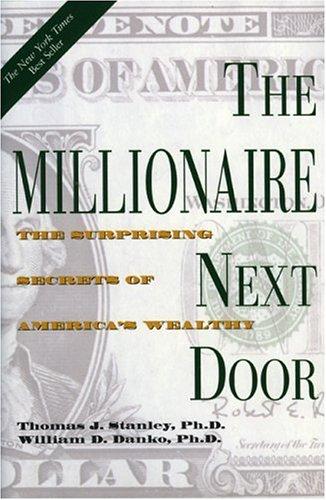
8. The Millionaire Next Door by Thomas J. Stanley
Rating: ⭐⭐⭐⭐⭐ (5/5)
Who this is for: The person who thinks wealth is about high income. If you believe you need to earn more to build wealth, this book will prove you wrong.
“Stanley’s research showed that most millionaires are frugal, not flashy. They drive used cars, live in modest homes, and save consistently. This reframed my definition of ‘rich.’” — Lisa K.
My take: This book debunked my biggest money myth: that wealth requires a high income. Stanley’s research shows that most millionaires are first-generation wealthy who built their fortunes through frugality and consistent saving—not high salaries or inheritance. His “PAW” (Prodigious Accumulator of Wealth) vs. “UAW” (Under Accumulator of Wealth) distinction helped me understand that wealth is about how much you keep, not how much you earn. I now define financial success by my net worth, not my income. This shift has reduced my financial anxiety dramatically—I don’t need to earn more; I need to save and invest consistently.

9. Financial Freedom by Grant Sabatier
Rating: ⭐⭐⭐⭐ (4/5)
Who this is for: The person who wants to accelerate wealth building after debt. If you’re impatient to build wealth and want a faster path, this book provides strategies.
“Sabatier’s ‘money sequence’ framework showed me how to build wealth faster than I thought possible. I increased my savings rate from 10% to 50% in one year by implementing his strategies.” — David P.
My take: Sabatier’s book is for the ambitious post-debt saver. He went from $2.26 to $1 million in five years through side hustles, aggressive saving, and smart investing. His “money sequence” (save → invest → build assets → achieve freedom) provides a clear roadmap for wealth building. His advice to “save as much as you can, as early as you can” is particularly powerful for post-debt recovery—you’ve already proven you can live on less, so why not continue that frugality and invest the difference? I’ve increased my savings rate from 15% to 40% using his strategies, and my wealth is growing exponentially.

10. The Richest Man in Babylon by George S. Clason
Rating: ⭐⭐⭐⭐ (4/5)
Who this is for: The person who wants timeless financial wisdom. If you’re overwhelmed by modern financial advice, this book provides ancient principles that still work.
“Clason’s parables are simple but profound. ‘A part of all you earn is yours to keep’ changed my savings behavior forever. I now save 20% of every paycheck automatically.” — Sarah P.
My take: This book is a financial classic for a reason. Written in 1926, its principles are timeless: save at least 10% of your income, make your money work for you, and protect your wealth from loss. The parable format makes complex financial concepts accessible and memorable. After years of complex debt payoff strategies, these simple principles were refreshing. I now follow the “seven cures for a lean purse” religiously, and my financial confidence has never been higher. Sometimes the oldest advice is the best advice.
Frequently Asked Questions (Post-Debt Financial Recovery Edition)
Q: How do I stop feeling guilty about spending money after debt? A: Create a “guilt-free spending” category in your budget. Ramit Sethi’s system allocates a specific percentage for guilt-free spending—when you know your bills, savings, and investments are covered, spending becomes intentional rather than impulsive. Start with 5-10% of your income and increase as your confidence grows.
Q: How much should I save after paying off debt? A: Start with 10-20% of your income. The Index Card recommends 10-20%, and most financial experts agree. If you were making aggressive debt payments, redirect that same amount to savings and investments. You’ve already proven you can live without that money—keep the habit going.
Q: When should I start investing after debt? A: Immediately—but start small. Build a 3-6 month emergency fund first, then start investing. You don’t need to invest everything at once. Start with $50-100 per month in a low-cost index fund (The Simple Path to Wealth explains how). The key is starting—the compounding will do the rest.
Q: How do I overcome my fear of investing? A: Education and automation. Read The Simple Path to Wealth to understand that long-term investing in index funds is historically safe. Then automate your investments so you don’t have to make active decisions. Most investment fear comes from trying to time the market—which is impossible. Set it and forget it.
Q: What if I relapse into debt? A: First, forgive yourself. Financial setbacks are normal. Second, use the same strategies that got you out of debt the first time—but with added prevention. Build an emergency fund, automate your finances, and create systems that make debt harder to accumulate. Every financial journey has setbacks; what matters is getting back on track.
Q: How do I talk to my partner about money after debt? A: Broke Millennial provides excellent scripts for money conversations. Start with shared values (“What does financial security mean to you?”), then move to practical planning (“How should we split expenses?”). Schedule regular “money dates” to discuss finances openly. Most relationship money fights come from avoidance, not disagreement.
Q: How do I know if I’m saving enough? A: Use the “25x rule”—you need 25 times your annual expenses to retire safely. If you spend $50,000 per year, you need $1.25 million. This number feels impossible after debt, but remember: you have decades to save. Start with what you can and increase over time. The Millionaire Next Door shows that consistent saving over time is more important than saving large amounts.
Q: What’s the biggest mistake people make after paying off debt? A: Lifestyle inflation. After years of deprivation, it’s tempting to “reward yourself” by spending everything you were spending on debt payments. This is the fastest way back into debt. Instead, redirect your debt payments to savings and investments. You’ve already proven you can live without that money—keep the discipline going and watch your wealth grow.
Your Next Move
Paying off debt is a huge accomplishment—but it’s just the beginning. The real challenge is building financial confidence and wealth after debt. It’s learning to spend without guilt, invest without fear, and enjoy the freedom you’ve worked so hard to achieve.
These ten books gave me the tools to transform from a debt survivor to a wealth builder. They taught me that financial confidence isn’t about having more money—it’s about having the right mindset, systems, and habits.
So start with one book. Maybe I Will Teach You to Be Rich if you need a simple system, or The Psychology of Money if you need to understand your money behavior. Read it, implement one strategy, and see what happens. You’ll be amazed at how quickly your financial confidence grows.
Because you’ve already done the hardest part—getting out of debt. Now it’s time to build the financial life you’ve always dreamed of.
Which book are you grabbing first?
Disclosure: This post contains Amazon affiliate links. If you purchase through these links, I may earn a small commission at no extra cost to you. This helps support the blog and allows me to continue bringing you honest book recommendations. Thank you!