Quick Reference
- The Book of Joy: Lasting Happiness in a Changing World
- One Thousand Gifts: A Dare to Live Fully Right Where You Are
- Thanks a Thousand: A Gratitude Journey
- Wintering: The Power of Rest and Retreat in Difficult Times
- Man’s Search for Meaning
- The Gifts of Imperfection: Let Go of Who You Think You’re Supposed to Be…
- Gratitude
- Joyful, Anyway: Finding Joy When Life Doesn’t Go as Planned
- Radical Acceptance: Embracing Your Life with the Heart of a Buddha
- The Happiness Project
The year my mom was diagnosed with cancer, I stopped noticing beautiful things. Sunsets went gray. My morning coffee tasted like nothing. A friend brought me flowers and I set them on the counter without water — they sat there for three days before I even noticed them wilting.
It wasn’t that I was ungrateful. I was numb. Gratitude felt like a luxury reserved for people whose lives weren’t falling apart. The Instagram posts telling me to “choose gratitude” felt almost offensive. Choose gratitude? I could barely choose to get dressed in the morning.
But here’s what surprised me: gratitude didn’t come to me through choosing. It came through noticing. Tiny moments started cracking through the numbness — my mom laughing at a terrible pun, the warmth of sunlight through a hospital window, a stranger holding the elevator when my hands were full. These weren’t life-changing revelations. They were barely blips. But they were there, and they mattered.
If you’re in a season where gratitude feels impossible, I want you to know: you don’t have to force it. You don’t have to journal three things every morning or paste a smile on your face. Sometimes gratitude starts as a flicker in the dark, and that’s enough. These ten books helped me find those flickers when I needed them most. They might help you too.
Quick Pick: The Book I Recommend First
Also see our guide to 10 BEST BOOKS FOR CULTIVATING PATIENCE AND LEARNING TO WAIT WITHOUT FRUSTRATION. Also see our guide to 10 Best Books for Building Mental Resilience in Tough Times. Also see our guide to 10 Best Books for Building Resilience in Tough Economic Times. Also see our guide to 10 BEST BOOKS FOR COPING WITH GRIEF AND ILLNESS AND FINDING HEALING THROUGH DIFFICULT TIMES. Also see our guide to 10 BEST BOOKS FOR CULTIVATING GRATITUDE IN DIFFICULT TIMES AND FINDING LIGHT IN THE DARK.The Book of Joy by the Dalai Lama and Desmond Tutu with Douglas Abrams. Two men who have endured exile, persecution, and unimaginable loss sit down together and laugh. A lot. This book is a masterclass in finding joy and gratitude not despite suffering, but through it. It changed how I understood what gratitude actually means.
10 Best Books for Cultivating Gratitude During Hard Times
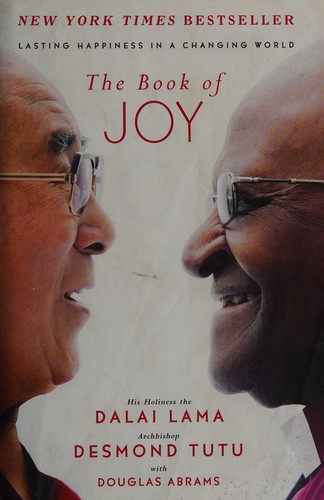
1. The Book of Joy: Lasting Happiness in a Changing World
Authors: Dalai Lama, Desmond Tutu, and Douglas Abrams Rating: ⭐⭐⭐⭐⭐ (4.8/5) Who it’s for: Anyone searching for lasting joy that doesn’t depend on circumstances going well
“Two of the most joyful people on the planet have also suffered more than most of us ever will. That paradox is the heart of this extraordinary book.” — Goodreads reviewer
My take: When the Dalai Lama and Archbishop Desmond Tutu sat down together for a week of conversations, the result was something rare: a book about joy that doesn’t ignore suffering. Both men have lived through exile, oppression, and deep personal loss. Both are also two of the most genuinely joyful humans on Earth. That combination makes their insights land differently than typical happiness advice.
The book identifies eight pillars of joy: perspective, humility, humor, acceptance, forgiveness, gratitude, compassion, and generosity. What struck me most was their insistence that gratitude isn’t something you practice only when life is good. It’s a practice you lean into specifically when life is hard, because that’s when you need it most.
The best parts are the unscripted moments — when Tutu teases the Dalai Lama about his snoring, or when they burst into laughter over something ridiculous. You can feel the genuine warmth between them. It reminds you that gratitude and joy aren’t solemn obligations. They can be playful, surprising, and downright silly.

2. One Thousand Gifts: A Dare to Live Fully Right Where You Are
Author: Ann Voskamp Rating: ⭐⭐⭐⭐⭐ (4.5/5) Who it’s for: People who need a concrete, daily practice for noticing the good in the middle of the mess
“I started counting gifts as a dare to myself. By number 200, something had shifted in me that I can’t fully explain.” — Amazon reviewer
My take: Ann Voskamp is a Canadian farm wife and mother of six who started a simple practice: writing down one thousand things she was grateful for. Not big things. Small, ordinary things — morning light through a kitchen window, the smell of clean laundry, the sound of her children’s laughter. What began as a list became a way of seeing.
This book is beautifully written, almost poetic in places. Voskamp weaves her gratitude practice through the story of her own grief — her family’s losses, her struggles with anxiety, the daily grind of raising a large family on a farm. She doesn’t pretend that gratitude erases pain. She shows how the two can exist side by side.
What makes this book powerful for hard times is its simplicity. You don’t need a therapist, a retreat, or a major life change. You need a notebook and the willingness to notice one small good thing each day. Voskamp’s writing will help you see those things everywhere once you start looking.

3. Thanks a Thousand: A Gratitude Journey
Author: A.J. Jacobs Rating: ⭐⭐⭐⭐⭐ (4.6/5) Who it’s for: Skeptics and overthinkers who want a practical, research-backed approach to gratitude
“If you roll your eyes at gratitude journals, this is the book for you. Jacobs makes gratitude feel scientific instead of sappy.” — Goodreads reviewer
My take: A.J. Jacobs is the guy who reads the entire encyclopedia, lives biblically for a year, and tries to optimize every aspect of his life. So when he decided to thank every single person involved in making his morning coffee — from the barista to the farmer in Colombia to the truck driver who delivered the beans — you know he went all in.
The result is a surprisingly moving and often hilarious journey. Jacobs thanks over a thousand people, and each interaction reveals something about the invisible web of human effort that sustains our daily lives. Along the way, he consults psychologists, neuroscientists, and philosophers about why gratitude works.
What I love about this approach is that it’s inherently outward-focused. When you’re in a hard season, being told to “look inward” and “journal your feelings” can feel exhausting. Jacobs flips the script — gratitude becomes an act of connecting with other people, not just navel-gazing. That shift made gratitude feel energizing instead of obligatory.

4. Wintering: The Power of Rest and Retreat in Difficult Times
Author: Katherine May Rating: ⭐⭐⭐⭐⭐ (4.6/5) Who it’s for: Anyone in a dormant season who feels guilty for not being productive or positive
“I didn’t know I needed permission to stop. This book gave it to me.” — Amazon reviewer
My take: Katherine May wrote this book after a year when everything fell apart simultaneously — her husband got sick, her son stopped going to school, and her own health collapsed. Instead of pushing through, she leaned into the season. She let herself winter.
The metaphor comes from nature: trees lose their leaves, the ground goes dormant, and everything looks dead. But underneath, roots are deepening, energy is being stored, and life is preparing to return. May argues that humans need wintering too — periods of withdrawal, rest, and quiet that aren’t failures but necessary cycles.
What makes this book special for gratitude is that it removes the pressure. You don’t have to be grateful right now if you’re not ready. You can winter first. You can let yourself be sad, tired, and unproductive. And when you emerge — and you will — gratitude will be waiting for you, growing quietly under the surface.
May’s writing is gentle, honest, and deeply personal. She blends memoir with history, science, and nature writing in a way that feels like a long walk with a thoughtful friend. I read this book in two sittings and then immediately bought copies for three people I love.

5. Man’s Search for Meaning
Author: Viktor E. Frankl Rating: ⭐⭐⭐⭐⭐ (4.7/5) Who it’s for: Anyone who needs a profound perspective shift on suffering and meaning
“After Auschwitz, Frankl could have written about despair. Instead, he wrote about the one thing that survived the camps: the human capacity to choose our response.” — Goodreads reviewer
My take: Viktor Frankl spent three years in Nazi concentration camps, including Auschwitz. He lost his wife, his parents, and his brother. He endured starvation, forced labor, and constant proximity to death. And yet this book — part memoir, part psychological treatise — is one of the most life-affirming things I’ve ever read.
Frankl’s central insight is that meaning is the foundation of resilience. The prisoners who survived weren’t necessarily the strongest or the healthiest. They were the ones who maintained a sense of purpose — the hope of seeing a loved one again, the desire to finish a manuscript, the commitment to bearing suffering with dignity.
This book isn’t about gratitude in the conventional sense. There’s no journaling practice or gratitude list. What it offers instead is the deepest possible foundation for gratitude: the realization that being alive, even in pain, is something that can be meaningful. After reading Frankl, the word “grateful” carries a weight it didn’t have before.
I return to this book every few years, and each time it hits differently. When I was 22, it was intellectual. When my mom was sick, it was survival.

6. The Gifts of Imperfection: Let Go of Who You Think You’re Supposed to Be and Embrace Who You Are
Author: Brené Brown Rating: ⭐⭐⭐⭐⭐ (4.6/5) Who it’s for: Perfectionists who struggle to feel grateful because nothing ever feels “good enough”
“I spent my whole life thinking I’d be grateful when I was finally perfect enough. Brené Brown showed me that gratitude requires imperfection.” — Amazon reviewer
My take: Brené Brown spent years researching vulnerability, shame, and courage. This book distills her findings into ten guideposts for “wholehearted living.” And here’s the surprising part: gratitude is one of the central guideposts. Not as a nice-to-have, but as a core practice for living with your whole heart.
Brown explains that many people struggle with gratitude because they’re waiting for circumstances to be perfect before they allow themselves to feel it. They think, “I’ll be grateful when I lose the weight, get the promotion, fix the relationship.” But gratitude doesn’t work that way. It’s not a reward for getting your life together. It’s a way of being in your life as it is.
What makes this book particularly useful for hard times is Brown’s emphasis on “ordinary” vulnerability. She doesn’t ask you to do something dramatic. She asks you to let yourself be seen, to stop performing, and to find worth in the messy, imperfect present. That’s where gratitude lives — not in the highlight reel, but in the unedited footage.
7. Gratitude
Author: Oliver Sacks Rating: ⭐⭐⭐⭐⭐ (4.7/5) Who it’s for: Anyone who wants a short, powerful meditation on gratitude written at the edge of life
“This tiny book contains more wisdom per page than almost anything else I’ve ever read.” — Goodreads reviewer
My take: Oliver Sacks was one of the greatest neurologists of our time — the author of Awakenings and The Man Who Mistook His Wife for a Hat. In 2015, at age 82, he was diagnosed with terminal cancer. He wrote these four essays in the months between his diagnosis and his death, and they are among the most beautiful things he ever produced.
The essays are short — you can read the entire book in an hour. But they carry the weight of a lifetime. Sacks writes about gratitude for his work, his relationships, his ability to think and create, and his acceptance of death. There’s no sentimentality here. Just clear-eyed wonder at having been alive at all.
What makes this book extraordinary for hard times is its brevity and directness. When you’re struggling, a 300-page self-help book can feel overwhelming. This slim volume meets you exactly where you are and says something essential: you are alive, and that is worth being grateful for, even now. Even here.
8. Joyful, Anyway: Finding Joy When Life Doesn’t Go as Planned
Author: Kate Bowler Rating: ⭐⭐⭐⭐⭐ (4.7/5) Who it’s for: Anyone tired of toxic positivity who wants an honest path to joy
“Kate Bowler doesn’t tell you to look on the bright side. She holds your hand in the dark and somehow helps you find a spark there.” — Early reviewer
My take: Kate Bowler was a Duke Divinity professor studying the prosperity gospel when she was diagnosed with Stage IV colon cancer at age 35. Her first book, Everything Happens for a Reason: And Other Lies I’ve Loved, was a searing takedown of the idea that suffering is a punishment or a test. This new book (coming April 2026) goes further — it makes the case for joy that exists not despite hard times but within them.
Bowler argues that our culture’s obsession with happiness actually makes joy harder to find. When we’re chasing optimization, productivity hacks, and positive vibes, we miss the real thing — the surprising, unscripted moments of connection and delight that show up when we stop performing and start paying attention.
This book is funny, raw, and deeply human. Bowler’s voice is warm without being preachy, and her willingness to sit with uncertainty — not knowing if her cancer will return, not knowing if life will get easier — gives her insights a weight that purely optimistic voices can’t match. If you’re allergic to toxic positivity, this is your book.

9. Radical Acceptance: Embracing Your Life with the Heart of a Buddha
Author: Tara Brach Rating: ⭐⭐⭐⭐⭐ (4.5/5) Who it’s for: Anyone whose inner critic makes gratitude feel impossible
“I thought gratitude meant fixing myself first. Tara Brach taught me that acceptance IS the doorway to gratitude.” — Amazon reviewer
My take: Tara Brach is a psychologist and Buddhist meditation teacher, and this book combines Western psychology with Eastern mindfulness in a way that feels neither clinical nor esoteric. Her central concept is “radical acceptance” — the practice of meeting each moment, including the painful ones, with compassion rather than resistance.
For Brach, gratitude and acceptance are inseparable. When you’re fighting reality — wishing things were different, criticizing yourself for not coping better, comparing your suffering to others’ — there’s no room for gratitude. Acceptance creates that room. Not resignation, but a clear-eyed acknowledgment of “this is what’s happening, and I can meet it with kindness.”
The book includes guided meditations and practical exercises that you can do at your own pace. Brach’s voice is calming and compassionate — she writes like a wise friend who’s been through her own dark nights and come out the other side with tenderness intact.
I especially recommend this book if your hard time involves self-blame. When you’re telling yourself you should be handling things better, or that your suffering isn’t “bad enough” to warrant support, radical acceptance cuts through that noise and says: you are enough, right now, as you are.
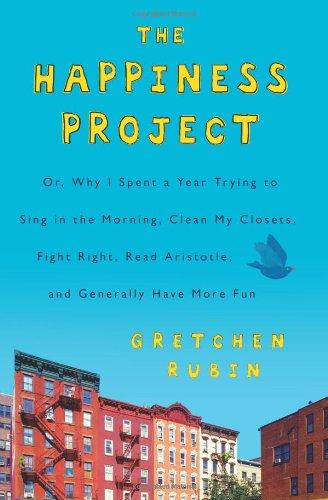
10. The Happiness Project
Author: Gretchen Rubin Rating: ⭐⭐⭐⭐ (4.4/5) Who it’s for: People who want a structured, year-long experiment in finding everyday happiness and gratitude
“This book made me realize that happiness isn’t a destination. It’s a Tuesday morning with a good cup of coffee.” — Goodreads reviewer
My take: Gretchen Rubin spent a year systematically trying to be happier. Each month focused on a different area — vitality, marriage, work, parenthood, friendship, money, and more. She researched the science of happiness, consulted experts, and then tried everything herself, reporting honestly on what worked and what didn’t.
This isn’t a book about overcoming tragedy. It’s a book about paying attention to ordinary life and finding that it’s better than you thought. Rubin’s monthly resolutions — from “sing in the morning” to “keep a gratitude notebook” — are simple and practical enough to adopt yourself.
I include this book on the gratitude list because it captures something that the deeper, more philosophical books sometimes miss: gratitude is often about the small stuff. The clean sheets. The funny text from a friend. The way your dog looks at you when you come home. Rubin’s genius is making the mundane feel precious.
For hard times, this book is useful as a gentle re-entry point. When you’ve been in the darkness for a while, you might not be ready for Frankl’s concentration camps or Brach’s Buddhist philosophy. Sometimes you just need someone to say, “Hey, notice that your coffee is warm and the sun is coming through the window. That’s not nothing.”
Frequently Asked Questions
How can I practice gratitude when everything in my life feels wrong?
Start impossibly small. Don’t try to be grateful for your whole life. Find one thing — the texture of your blanket, the sound of rain, the fact that you’re breathing. Ann Voskamp’s One Thousand Gifts is built on this principle: she started by writing down simple things like “morning light” and “the dog’s warm belly.” Gratitude doesn’t require you to deny your pain. It asks you to hold both — the hard and the good — at the same time.
Is gratitude just toxic positivity in disguise?
No, and this is an important distinction. Toxic positivity says, “Good vibes only! Don’t be negative!” Genuine gratitude says, “This is hard, AND there are things worth noticing.” Kate Bowler’s Joyful, Anyway addresses this head-on — she’s a cancer survivor who has zero patience for forced cheerfulness. True gratitude acknowledges suffering. It doesn’t pretend it away.
Can gratitude actually change my brain?
Yes. Neuroscience research shows that a consistent gratitude practice can increase activity in the prefrontal cortex, boost dopamine and serotonin production, and reduce cortisol levels. A.J. Jacobs explores this research in Thanks a Thousand, consulting with neuroscientists and psychologists along the way. The changes aren’t instant, but with regular practice, gratitude literally rewires your brain toward noticing the positive.
What if I’m too exhausted to read a whole book right now?
Start with Oliver Sacks’ Gratitude. It’s four essays, roughly 45 pages total, and it might be the most powerful book on this list in terms of wisdom per word. You can read it in a single sitting. If even that feels like too much, try Katherine May’s Wintering — it’s gentle and slow-paced, designed for people who are running on empty.
Are any of these books religious?
Some have spiritual elements. Ann Voskamp’s One Thousand Gifts has a Christian perspective, and The Book of Joy draws on Buddhist and Christian traditions. Tara Brach’s Radical Acceptance is rooted in Buddhist meditation. But none of them require you to adopt any specific faith. The gratitude practices and insights work regardless of your spiritual beliefs. If you prefer a completely secular approach, try Thanks a Thousand by A.J. Jacobs or The Happiness Project by Gretchen Rubin.
How is gratitude different from just pretending things are fine?
Gratitude isn’t pretending. It’s noticing. When you’re in a hard season, you don’t have to pretend the hard things aren’t happening. You’re simply adding awareness of the good things that coexist alongside the pain. Viktor Frankl didn’t pretend Auschwitz wasn’t horrific. But he noticed the moments of beauty, connection, and meaning that emerged even there. That noticing — without denial — is the heart of gratitude.
Can I practice gratitude without journaling?
Absolutely. Journaling is one way, but it’s not the only way. A.J. Jacobs practiced gratitude by thanking people in person. Katherine May practiced it by paying attention to seasonal changes. Oliver Sacks practiced it by writing letters. You can practice gratitude by taking a photo of something beautiful, sending a text to someone you appreciate, or simply pausing for 10 seconds to notice where you are. The practice doesn’t have to be formal to be real.
Which book is best for someone dealing with grief and loss?
Wintering by Katherine May and Gratitude by Oliver Sacks are both gentle companions for grief. May’s book gives you permission to stop and be still. Sacks’ book shows you that gratitude and grief can coexist even at the very end of life. If your grief is fresh and raw, these two will meet you there without trying to rush you through it.
Final Thoughts
Gratitude during hard times isn’t about pretending the hard parts don’t exist. It’s about refusing to let the hard parts be the only thing you see.
When my mom was sick, the flowers on my counter were dying because I couldn’t see them. But they were still there — still beautiful, still offering something, even as they wilted. Gratitude is the act of putting them in water, even when you’re not sure they’ll make it.
You don’t have to start with a thousand gifts or a meditation practice or a philosophical framework. You can start with one thing. One warm cup of tea. One text from a friend. One moment where the sun hits your face and you think, “Okay. This.”
That’s enough. That’s where it begins.
Which book are you grabbing first?
Disclosure: This article contains Amazon affiliate links. If you purchase through these links, we may earn a small commission at no extra cost to you. We only recommend books we’ve genuinely read and believe in.