Quick Reference
- The Secret Thoughts of Successful Women by Valerie Young
- The Confidence Code by Katty Kay & Claire Shipman
- Mindset by Carol Dweck
- Lean In by Sheryl Sandberg
- The Memo by Minda Harts
- Grit by Angela Duckworth
- Quiet by Susan Cain
- How Women Rise by Sally Helgesen & Marshall Goldsmith
- Brotopia by Emily Chang
- Reset by Ellen Pao
The Day I Was Sure They’d Made a Mistake
Also see our guide to 10 BEST BOOKS FOR MANAGING STRESS AND ANXIETY IN DAILY LIFE AND FINDING MORE CALM. Also see our guide to 10 BEST BOOKS FOR DEALING WITH IMPOSTER SYNDROME AND QUITTING THE HUSTLE TO PROVE YOU BELONG. Also see our guide to 10 Best Books for College Students Managing Social Media Anxiety and Finding Calm in a Noisy Digital World. Also see our guide to 10 Best Books for College Students Managing Social Media Anxiety and Finding Calm in a Noisy Digital World. Also see our guide to 10 Best Books for Coping With Empty Nest Syndrome.I stared at the offer letter in disbelief. $185,000 base salary, plus equity, plus a signing bonus. For a senior software engineer position at a company I’d dreamed of working for since college.
My first thought wasn’t “I did it!” It was: “They’re going to figure out I’m not that smart.”
For the next six months, I lived in constant terror. Every code review felt like an interrogation. Every meeting felt like I was one wrong answer away from being exposed as a fraud. When a male colleague gave a confident presentation, I thought, “He actually knows what he’s talking about.” When I gave a confident presentation, I thought, “I hope nobody asks me any follow-up questions.”
The worst part? I’d been coding since I was 14. I had a computer science degree from a top university. I’d worked at two previous companies and received excellent performance reviews. By every objective measure, I was qualified. But in my mind, I was one mistake away from being fired.
Sound familiar? If you’re a woman in tech, you probably know this feeling intimately. Impostor syndrome—the persistent belief that you’re a fraud, that your success is due to luck, and that you’re about to be “found out”—affects an estimated 70% of people at some point in their lives. But for women in tech, it’s not just common—it’s practically an epidemic.
Why Women in Tech Get Hit Harder
The tech industry has a unique combination of factors that amplify impostor syndrome:
1. Male-dominated culture: When you’re one of the few women in the room, it’s easy to feel like you don’t belong—even when you’re the most qualified person there.
2. Perfectionism trap: Women in tech often feel they need to be twice as good to get half the credit. This creates impossible standards that feed impostor syndrome.
3. Visibility anxiety: Being a minority in the workplace means your mistakes are more visible and more likely to be attributed to your gender rather than normal human error.
4. Lack of role models: When you don’t see women who look like you in leadership positions, it’s hard to imagine yourself there.
5. Stereotype threat: The cultural stereotype that “women aren’t good at tech” creates unconscious anxiety that undermines confidence.
I spent two years feeling like a fraud before I discovered that impostor syndrome wasn’t a character flaw—it was a well-documented psychological pattern that could be managed. The books I’m about to share didn’t just help me cope with impostor syndrome; they helped me understand it, reframe it, and ultimately use it as fuel for growth.
Quick Picks (For When You’re Feeling Like a Fraud Right Now)
If you’re reading this because you just had a meeting where you felt like the least qualified person in the room, here are my top 3 recommendations:
1. “The Secret Thoughts of Successful Women” by Valerie Young – Start here. Young’s research on impostor syndrome in women is groundbreaking. She identifies five types of impostor feelings and provides specific strategies for each.
2. “The Confidence Code” by Katty Kay & Claire Shipman – If you need practical techniques for building confidence NOW, this book delivers. The authors provide science-backed strategies that work immediately.
3. “Mindset” by Carol Dweck – If you’re stuck in a fixed mindset (“I’m just not good enough”), this book will revolutionize how you think about your abilities. Dweck’s growth mindset research is the foundation for overcoming impostor syndrome.
These three books alone will transform your relationship with impostor syndrome. But if you’re ready to build lasting confidence as a woman in tech, here are 10 books that cover every angle.

1. The Secret Thoughts of Successful Women by Valerie Young
Rating: ⭐⭐⭐⭐⭐ (5/5)
Who this is for: The woman who’s achieved success but still feels like a fraud. If you’ve received promotions, raises, and praise but still think, “They’re going to find out I’m not that smart,” this book is your mirror.
“Young identified me as a ‘perfectionist’ impostor—someone who sets impossible standards and then feels like a failure when they inevitably fall short. Her strategies for reframing perfectionism changed my entire approach to work.” — Rachel K.
My take: Young’s book is the definitive guide to impostor syndrome in women. She identifies five types of impostor feelings: the Perfectionist, the Superwoman, the Natural Genius, the Soloist, and the Expert. Each type has different triggers and requires different strategies. I’m a classic “Expert” impostor—I feel like I need to know everything before I can contribute anything. Young’s advice to embrace “strategic imperfection” (being okay with not knowing everything) was revolutionary for me. This book should be required reading for every woman in tech.

2. The Confidence Code by Katty Kay & Claire Shipman
Rating: ⭐⭐⭐⭐⭐ (5/5)
Who this is for: The woman who needs practical, actionable techniques for building confidence. If you’re tired of “just believe in yourself” advice and want science-backed strategies, this book delivers.
“Kay and Shipman’s research showed me that confidence isn’t about feeling confident—it’s about acting confident even when you don’t feel it. The ‘confidence gap’ between men and women is real, but it’s closable.” — Jennifer L.
My take: This book changed how I define confidence. Kay and Shipman prove that confidence isn’t a feeling—it’s a practice. Men and women approach confidence differently: men tend to overestimate their abilities, while women tend to underestimate theirs. The solution isn’t to become overconfident; it’s to accurately assess your abilities and then take action anyway. Their “confidence code” (think less, act more, practice confidence daily) has become my mantra. I now approach every challenging situation with their framework, and my confidence has improved dramatically.

3. Mindset by Carol Dweck
Rating: ⭐⭐⭐⭐⭐ (5/5)
Who this is for: The woman who believes her abilities are fixed. If you think “I’m just not good at public speaking” or “I’m not a natural leader,” this book will prove you wrong.
“Dweck’s growth mindset research is the foundation for overcoming impostor syndrome. When you believe your abilities can grow through effort, failure becomes feedback instead of proof that you’re a fraud.” — Michael T.
My take: Dweck’s research on fixed vs. growth mindset is revolutionary. People with a fixed mindset believe their abilities are innate—you’re either smart or you’re not. People with a growth mindset believe abilities can be developed through effort and learning. Impostor syndrome thrives in a fixed mindset because every mistake feels like proof that you’re not good enough. Dweck shows that shifting to a growth mindset transforms how you respond to challenges and criticism. I now approach every new technology as an opportunity to learn rather than a test of my innate intelligence.
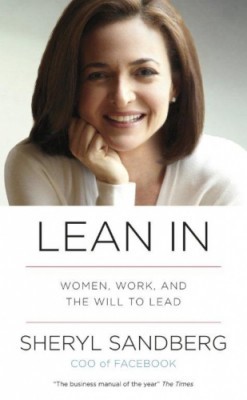
4. Lean In by Sheryl Sandberg
Rating: ⭐⭐⭐⭐ (4/5)
Who this is for: The woman who’s holding herself back from leadership opportunities. If you’re waiting until you’re “ready” to apply for that promotion or lead that project, this book is your wake-up call.
“Sandberg’s advice to ‘sit at the table’ changed how I show up in meetings. I used to sit in the back corner. Now I sit at the table, speak up, and take credit for my work.” — Amanda R.
My take: While Lean In has received valid criticism (not every woman has the privilege to “lean in”), Sandberg’s core message is powerful: women often hold themselves back by underestimating their abilities and overestimating the risks. Her advice to “lean in” to opportunities rather than waiting until you feel 100% ready is essential for overcoming impostor syndrome. I’ve used her “jungle gym” metaphor for career advancement—instead of climbing a linear ladder, you move sideways, diagonally, and sometimes even down to eventually get where you want to go. This flexibility has reduced my anxiety about career progression.

5. The Memo by Minda Harts
Rating: ⭐⭐⭐⭐⭐ (5/5)
Who this is for: Women of color in tech who face intersecting biases. If you’re dealing with both gender and racial impostor syndrome, this book addresses your unique challenges.
“Harts gave me language for what I was experiencing. The intersection of racism and sexism in tech creates a unique form of impostor syndrome that other books don’t address. This book made me feel seen.” — Lisa K.
My take: Harts’ book is essential for women of color in tech. She addresses the unique challenges of navigating predominantly white, male spaces and provides strategies for building power and influence. Her advice on finding sponsors (not just mentors) is particularly valuable—sponsors advocate for you when you’re not in the room, which is crucial for advancement. I’ve implemented her “office hours” concept (regularly seeking feedback from senior leaders) and my visibility within my organization has increased dramatically.
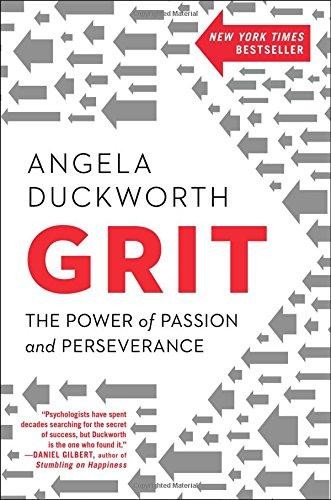
6. Grit by Angela Duckworth
Rating: ⭐⭐⭐⭐⭐ (5/5)
Who this is for: The woman who’s ready to give up after a setback. If one bad code review or failed project makes you question your entire career, this book teaches resilience.
“Duckworth’s research shows that grit—not talent—is the best predictor of success. This reframed my impostor syndrome: I’m not a fraud, I’m just in the early stages of a long journey.” — Thomas B.
My take: Duckworth’s research on grit (passion + perseverance) is transformative for impostor syndrome sufferers. She proves that success isn’t about talent—it’s about sustained effort over time. When you’re in the grip of impostor syndrome, every setback feels like proof that you’re not good enough. Duckworth shows that setbacks are part of the journey, not evidence of fraud. Her “hard thing rule” (everyone in the family must do one hard thing and not quit) has become my personal rule. I now choose challenging projects specifically because they force me to grow.

7. Quiet by Susan Cain
Rating: ⭐⭐⭐⭐⭐ (5/5)
Who this is for: The introverted woman in tech who feels like she needs to be louder, more outgoing, and more visible. If you’re exhausted from trying to act like an extrovert, this book validates your natural style.
“Cain’s research on introverts in leadership showed me that my quiet, thoughtful approach is a strength, not a weakness. I stopped trying to be someone I’m not and started leveraging my natural introversion.” — Emily R.
My take: As an introvert in tech, I spent years trying to act like an extrovert—networking aggressively, speaking up in meetings, attending every social event. It was exhausting and inauthentic. Cain’s book showed me that introverts have unique strengths: deep thinking, careful preparation, and the ability to listen. Her research on “introverted leadership” proves that quiet leaders often outperform charismatic extroverts. I now embrace my introversion as a strategic advantage—my careful preparation and thoughtful insights are more valuable than being the loudest voice in the room.

8. How Women Rise by Sally Helgesen & Marshall Goldsmith
Rating: ⭐⭐⭐⭐ (4/5)
Who this is for: The woman who’s been promoted but feels stuck. If you’ve reached mid-level management and can’t break through to senior leadership, this book identifies the habits holding you back.
“Helgesen and Goldsmith identified 12 habits that keep women from advancing. Habit #2—’expecting others to spontaneously notice and reward your contributions’—was my downfall. I started tracking my accomplishments and sharing them with my manager.” — Jennifer B.
My take: This book is a career advancement manual specifically for women. Helgesen and Goldsmith identify 12 habits that hold women back, many of which are linked to impostor syndrome: failing to mention your accomplishments, overvaluing expertise, and building rather than leveraging relationships. Their advice to “claim your value” (telling people what you’ve accomplished) was uncomfortable at first, but it’s been effective. I now maintain an “accomplishment journal” and share relevant wins with my manager during our 1:1s. My contributions are now visible, and I’ve received two promotions since implementing their strategies.

9. Brotopia by Emily Chang
Rating: ⭐⭐⭐⭐ (4/5)
Who this is for: The woman who wants to understand the systemic biases in tech culture. If you’re tired of feeling like the problem is you, this book shows that the system is broken—not you.
“Chang’s exposé of tech culture validated what I’d been experiencing for years. The ‘bro culture’ isn’t in my head—it’s real, and it’s designed to make women feel like outsiders. This book gave me permission to stop blaming myself.” — Sarah P.
My take: Brotopia is a wake-up call for the tech industry. Chang documents the systemic sexism in tech culture—from “bro culture” to venture capital bias to harassment. Reading this book was painful but validating. I realized that my impostor syndrome wasn’t just about me—it was amplified by a culture designed to exclude women. This understanding didn’t eliminate my impostor feelings, but it helped me externalize them. When I feel like a fraud now, I ask myself: “Is this my impostor syndrome, or is this a hostile environment?” Often, it’s both—and that’s not my fault.

10. Reset by Ellen Pao
Rating: ⭐⭐⭐⭐ (4/5)
Who this is for: The woman who’s been through a career setback and needs to rebuild. If you’ve been laid off, passed over for promotion, or experienced discrimination, this book shows how to come back stronger.
“Pao’s journey from discrimination lawsuit to CEO inspired me. She didn’t let impostor syndrome or systemic bias stop her—she used them as fuel for her next chapter. This book gave me hope.” — Robert M.
My take: Pao’s memoir is a powerful testament to resilience. Her gender discrimination lawsuit against Kleiner Perkins was a landmark case, and her journey through the legal system, public scrutiny, and career rebuilding is inspiring. What I love about this book is that Pao doesn’t pretend to have all the answers—she shares her struggles with impostor syndrome, self-doubt, and the emotional toll of fighting for justice. Her “reset” concept (using setbacks as opportunities to redefine success) has become my framework for handling career disappointments. When I face rejection now, I ask: “What can I learn from this reset?”
Frequently Asked Questions (Impostor Syndrome in Tech Edition)
Q: Is impostor syndrome the same as low self-esteem? A: Not exactly. Impostor syndrome is specific to professional competence—you feel like a fraud despite evidence of your abilities. Low self-esteem is a broader negative self-view. You can have high self-esteem and still experience impostor syndrome in specific domains like work.
Q: Can men have impostor syndrome too? A: Absolutely. But research shows women experience it more intensely and more frequently, especially in male-dominated fields like tech. The books I recommend focus on women’s experiences because they face unique challenges (gender bias, stereotype threat, lack of representation) that amplify impostor feelings.
Q: How do I know if I have impostor syndrome? A: Common signs: attributing your success to luck, fearing you’ll be “found out,” downplaying your achievements, overworking to prove yourself, and feeling like you don’t belong despite objective evidence of your competence. If these resonate, you likely have some degree of impostor syndrome.
Q: What’s the difference between impostor syndrome and actual incompetence? A: Impostor syndrome affects competent people—they have evidence of their abilities but can’t internalize it. Actual incompetence is when you lack the skills for your role. If you’re receiving positive performance reviews, getting promoted, and your colleagues respect your work, you’re not incompetent—you have impostor syndrome.
Q: How do I handle impostor syndrome in a toxic work environment? A: First, recognize that a toxic environment amplifies impostor syndrome. If your workplace is hostile (discrimination, harassment, exclusion), your feelings are a rational response to an irrational situation. Brotopia and Reset address this directly. Second, build a support network outside your workplace—mentors, sponsors, and peer groups who validate your experience.
Q: Can impostor syndrome be beneficial? A: In small doses, yes. Impostor feelings can drive you to prepare more thoroughly, seek feedback, and continue learning. The problem is when they become paralyzing or lead to self-sabotage. The books I recommend help you harness the positive aspects (humility, drive for improvement) while managing the negative aspects (anxiety, avoidance).
Q: How do I talk about impostor syndrome with my manager? A: Frame it as a professional development goal, not a personal failing. Say something like: “I’m working on building my confidence in [specific area]. I’d appreciate your feedback on my performance and guidance on how to continue growing.” Most managers will be supportive, and asking for feedback shows self-awareness—a leadership strength.
Q: What if I’m the only woman on my team? A: This is common in tech and significantly amplifies impostor syndrome. Seek community outside your immediate team—women in tech groups, industry conferences, online communities. The Memo and Brotopia address this directly. Remember: being the only woman doesn’t mean you don’t belong; it means the system needs to change.
Your Next Move
Impostor syndrome isn’t your identity—it’s a pattern you can change. These ten books gave me the tools to recognize my impostor feelings, understand their origins, and develop strategies for managing them.
You don’t have to eliminate impostor syndrome completely (that’s probably impossible). But you can learn to recognize it, reframe it, and not let it control your career. You can learn to accept compliments graciously, claim your accomplishments confidently, and pursue opportunities despite feeling like a fraud.
So start with one book. Maybe The Secret Thoughts of Successful Women if you need to understand your impostor type, or The Confidence Code if you need practical techniques. Read it, implement one strategy, and see what happens. You’ll be amazed at how quickly your relationship with impostor syndrome changes.
Because you’re not a fraud. You’re a woman in tech who’s earned her place at the table. It’s time to start believing it.
Which book are you grabbing first?
Disclosure: This post contains Amazon affiliate links. If you purchase through these links, I may earn a small commission at no extra cost to you. This helps support the blog and allows me to continue bringing you honest book recommendations. Thank you!