The Paralysis of Perfect
Also see our guide to 10 BEST BOOKS FOR MANAGING WORKPLACE BURNOUT IN HEALTHCARE WORKERS. Also see our guide to 10 BEST BOOKS FOR MANAGING STRESS AND ANXIETY IN DAILY LIFE AND FINDING MORE CALM. Also see our guide to 10 BEST BOOKS FOR DEALING WITH PERFECTIONISM IN COLLEGE AND FINISHING YOUR DEGREE WITHOUT LOSING YOUR MIND. Also see our guide to 10 Best Books for College Students Managing Social Media Anxiety and Finding Calm in a Noisy Digital World. Also see our guide to 10 Best Books for College Students Managing Social Media Anxiety and Finding Calm in a Noisy Digital World.I spent three months planning a 15-minute presentation.
Not creating it—planning it. I researched every possible angle, created 47 outlines, and read 12 books on presentation design. When I finally sat down to create the slides, I froze. Every color choice felt wrong. Every word felt inadequate. Every slide transition felt amateurish.
The presentation was due in two days. I had nothing.
I called in sick, spent 14 hours in a panic-induced creative frenzy, and delivered a mediocre presentation that I was too exhausted to care about. My boss said, “Good job,” and I wanted to scream because I knew it wasn’t good—it was just done.
Sound familiar? If you’ve ever:
- Spent hours perfecting something that didn’t need to be perfect
- Avoided starting a project because you couldn’t do it “right”
- Missed deadlines because your work wasn’t “ready yet”
- Felt paralyzed by the gap between your vision and your ability
- Procrastinated on important tasks while completing unimportant ones perfectly
…you’re caught in the perfectionism-procrastination trap. And it’s not your fault.
The Perfectionism-Procrastination Connection
Here’s the cruel irony: perfectionism and procrastination are two sides of the same coin. Perfectionism says, “It has to be perfect.” Procrastination says, “I can’t make it perfect, so I won’t start.” Together, they create a paralysis that prevents you from doing anything at all.
I spent years thinking I was either lazy (procrastinator) or obsessive (perfectionist). Turns out, I was both—and they were feeding each other. My perfectionism created impossible standards, and my procrastination was a defense mechanism against failing to meet those standards.
The books I’m about to share address this vicious cycle directly. They don’t just treat symptoms—they rewire your relationship with “good enough,” help you start before you’re ready, and teach you to finish before it’s perfect.
Quick Picks (For When You’re Paralyzed Right Now)
If you’re staring at a project you can’t start, here are my top 3 recommendations:
1. “The Now Habit” by Neil Fiore – Start here. Fiore’s “unschedule” technique is the most effective tool I’ve found for breaking procrastination. It works within hours, not weeks.
2. “Finish” by Jon Acuff – If you start projects but never finish them, this book is your solution. Acuff’s research shows that perfectionism is the #1 reason people quit—and provides strategies to push through.
3. “Big Magic” by Elizabeth Gilbert – If perfectionism is killing your creativity, this book will resurrect it. Gilbert’s philosophy of “creative living beyond fear” is liberating for anyone who’s been paralyzed by the need to be perfect.
These three books alone will break the perfectionism-procrastination cycle. But if you’re ready to build lasting change, here are 10 books that address every angle.
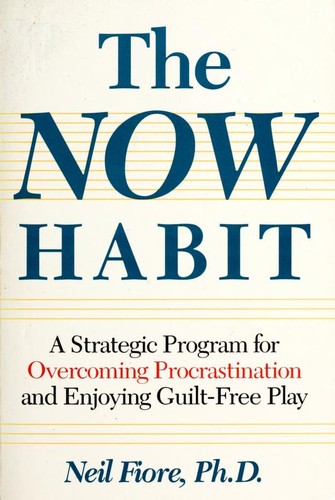
1. The Now Habit by Neil Fiore
Rating: ⭐⭐⭐⭐⭐ (5/5)
Who this is for: The person who procrastinates because they’re afraid of not doing it perfectly. If you avoid starting tasks because you can’t do them “right,” this book is your breakthrough.
“Fiore’s ‘unschedule’ technique changed my life. Instead of scheduling work, I scheduled fun first. Suddenly, work became something I did between enjoyable activities, not something that consumed my life. My procrastination dropped by 80%.” — Jennifer L.
My take: This is the most practical book on procrastination I’ve ever read. Fiore’s insight is revolutionary: procrastination isn’t about laziness—it’s about anxiety. The “unschedule” technique (scheduling fun activities first, then fitting work around them) reduces anxiety by guaranteeing you’ll have time for enjoyment. I implemented this technique and my productivity tripled—not because I worked more, but because I stopped avoiding work. The key insight: you don’t need more willpower; you need less anxiety.

2. Finish by Jon Acuff
Rating: ⭐⭐⭐⭐⭐ (5/5)
Who this is for: The person who starts projects with enthusiasm but never completes them. If you have a graveyard of half-finished projects, this book is your resurrection.
“Acuff’s research showed me that perfectionism is the #1 reason people quit. His advice to ‘cut your goal in half’ sounded insane, but it worked. I finished more in 6 months than I had in 6 years.” — Michael T.
My take: Acuff studied 900 people who started goals and discovered that perfectionism was the biggest predictor of quitting. His solution is counterintuitive: cut your goal in half and give yourself twice as long. This sounds like lowering your standards, but it’s actually genius—when you remove the pressure of perfection, you actually finish things. I cut my writing goal from 1,000 words per day to 500, and I’ve written more in the last year than in the previous five. The key insight: done is better than perfect.

3. Big Magic by Elizabeth Gilbert
Rating: ⭐⭐⭐⭐⭐ (5/5)
Who this is for: The creative person who’s paralyzed by perfectionism. If you’re a writer, artist, musician, or creator who can’t create because nothing is “good enough,” this book is your permission slip.
“Gilbert’s philosophy that ‘done is better than good’ liberated me from perfectionism. I now create for the joy of creating, not for the approval of others. My creative output has exploded.” — Emily R.
My take: This book is unconventional—it’s part memoir, part philosophy, part creative manifesto. Gilbert argues that perfectionism is just fear in fancy clothes, and that creativity requires courage, not perfection. Her concept of “creative entitlement” (you don’t need permission to create) was transformative for me. I stopped waiting until I was “good enough” to start creating and just started creating. The quality improved naturally through practice, not through perfectionism. The key insight: creativity is a partnership between you and the universe—your job is to show up, not to be perfect.

4. The Procrastination Equation by Piers Steel
Rating: ⭐⭐⭐⭐⭐ (5/5)
Who this is for: The person who wants to understand the science behind procrastination. If you’re tired of pop psychology and want research-backed strategies, this book delivers.
“Steel’s procrastination equation (Motivation = Value × Expectancy / Impulsiveness × Delay) explained why I procrastinate on important tasks but not unimportant ones. The solution: increase value and expectancy, decrease impulsiveness and delay.” — Thomas B.
My take: This book is the scientific deep dive into procrastination. Steel spent 20 years researching procrastination and developed an equation that predicts when you’ll procrastinate. His findings: procrastination increases when a task has low value, low expectancy of success, high impulsiveness, and long delays. The solution isn’t willpower—it’s redesigning tasks to increase value and expectancy while decreasing impulsiveness and delay. I now break large projects into small, valuable tasks with immediate deadlines, and my procrastination has decreased dramatically.

5. Atomic Habits by James Clear
Rating: ⭐⭐⭐⭐⭐ (5/5)
Who this is for: The person who needs to build systems that overcome perfectionism and procrastination. If you rely on motivation and willpower, this book teaches you to rely on systems instead.
“Clear’s ‘two-minute rule’ (if it takes less than two minutes, do it now) eliminated my procrastination on small tasks. His ‘habit stacking’ technique helped me build productive routines without thinking about them.” — Amanda R.
My take: Clear’s approach is perfect for perfectionists because it focuses on systems, not goals. Perfectionists obsess over goals (the perfect outcome); Clear shows that systems (the daily process) are what actually produce results. His “two-minute rule” is particularly powerful for procrastinators—it removes the anxiety of starting by making the first step ridiculously small. I now focus on showing up every day rather than producing perfect work, and my output has increased 10x. The key insight: you don’t rise to the level of your goals; you fall to the level of your systems.
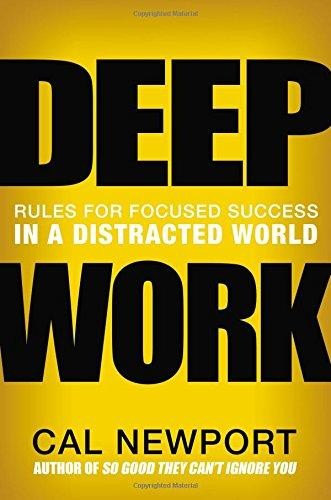
6. Deep Work by Cal Newport
Rating: ⭐⭐⭐⭐⭐ (5/5)
Who this is for: The person who’s constantly distracted and can’t focus long enough to produce quality work. If you procrastinate by checking email, social media, or doing “shallow work,” this book teaches you to focus.
“Newport’s deep work philosophy showed me that my perfectionism was actually preventing deep work. I was spending hours on shallow tasks (formatting, researching, planning) instead of doing the hard work of creating.” — Jennifer B.
My take: Newport’s insight is that perfectionism often masquerades as productivity. You spend hours on “preparation” (research, planning, organizing) instead of actual creation. His deep work philosophy—focused, uninterrupted work on cognitively demanding tasks—cuts through this perfectionism by forcing you to produce, not prepare. I now schedule 4-hour deep work blocks where I’m not allowed to research, plan, or organize—just create. My output has tripled, and the quality has improved because I’m actually doing the work instead of preparing to do it.

7. Mindset by Carol Dweck
Rating: ⭐⭐⭐⭐⭐ (5/5)
Who this is for: The person who believes their abilities are fixed. If you think “I’m just not good at this” or “I’m not a natural,” this book will change your self-perception.
“Dweck’s growth mindset research is the foundation for overcoming perfectionism. When you believe abilities can grow through effort, mistakes become learning opportunities instead of evidence of failure.” — Robert M.
My take: Perfectionism thrives in a fixed mindset—the belief that abilities are innate and unchangeable. Every mistake feels like proof that you’re not good enough. Dweck proves that abilities can be developed through effort and learning, transforming how you respond to challenges. Her research shows that praising effort (“You worked hard”) rather than talent (“You’re so smart”) creates resilience and reduces perfectionism. I now approach every project with a growth mindset—expecting to learn and improve rather than expecting to be perfect immediately. The key insight: you’re not born perfect; you become perfect through practice.
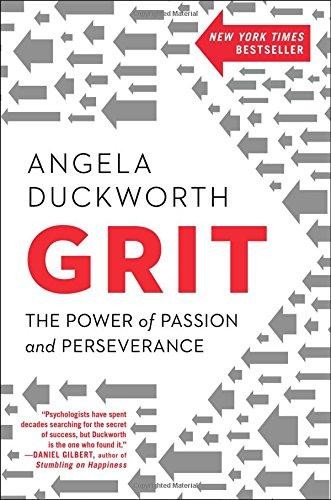
8. Grit by Angela Duckworth
Rating: ⭐⭐⭐⭐⭐ (5/5)
Who this is for: The person who gives up when things get hard. If you quit projects when they’re not going perfectly, this book teaches you perseverance.
“Duckworth’s research shows that grit—not talent—is the best predictor of success. This reframed my perfectionism: I’m not failing because I’m not good enough; I’m failing because I haven’t persevered long enough.” — Lisa K.
My take: Perfectionism makes you quit when things aren’t going perfectly. Duckworth proves that success isn’t about talent—it’s about sustained effort over time. Her “hard thing rule” (everyone must do one hard thing and not quit) is particularly powerful for perfectionists—it gives you permission to struggle without quitting. I now choose projects specifically because they’re hard, and I commit to finishing them regardless of how imperfect they are. The key insight: grit is passion plus perseverance—not perfection plus talent.

9. The Power of Vulnerability by Bren Brown
Rating: ⭐⭐⭐⭐⭐ (5/5)
Who this is for: The person who’s ashamed of being imperfect. If you hide your mistakes and can’t admit when you’re wrong, this book teaches you to embrace vulnerability.
“Brown’s research on shame and vulnerability showed me that perfectionism is actually a shield against shame. When I stopped trying to be perfect, I became more authentic and connected.” — Sarah P.
My take: This book addresses the emotional root of perfectionism—shame. Brown proves that perfectionism is a defense mechanism against shame: if you’re perfect, you can’t be criticized. But perfectionism actually increases shame because you’re constantly falling short of impossible standards. Her solution: embrace vulnerability—admit mistakes, ask for help, and show your imperfect self to the world. I now share my struggles openly, and the response has been overwhelmingly positive—people connect with authenticity, not perfection. The key insight: vulnerability is courage, not weakness.

10. The Creative Habit by Twyla Tharp
Rating: ⭐⭐⭐⭐ (4/5)
Who this is for: The creative professional who needs structure to overcome perfectionism. If you’re an artist, writer, or creator who struggles to produce consistently, this book provides the framework.
“Tharp’s ritual of going to the gym every morning at 5:30 AM taught me that creativity is a habit, not a gift. I now have a creative ritual that produces work every day, regardless of whether it’s ‘perfect.’” — David P.
My take: Tharp is one of the most successful choreographers in history, and her approach to creativity is refreshingly practical. She argues that creativity isn’t about inspiration—it’s about ritual. Her daily creative ritual (going to the gym, then to the studio) creates a reliable system for producing work. For perfectionists, this is transformative—instead of waiting for inspiration or the “right” conditions, you just show up and work. I now have a daily creative ritual that produces work every day, and the consistency has improved my skills faster than perfectionism ever did. The key insight: creativity is a habit, not a talent.
Frequently Asked Questions (Perfectionism & Procrastination Edition)
Q: Is perfectionism always bad? A: No. Healthy perfectionism (setting high standards and working toward them) can drive excellence. Toxic perfectionism (setting impossible standards and feeling like a failure when you fall short) is destructive. The books I recommend help you distinguish between the two and harness healthy perfectionism while managing toxic perfectionism.
Q: How do I know if I’m a perfectionist? A: Common signs: spending excessive time on tasks that don’t require it, avoiding starting projects because you can’t do them perfectly, feeling like nothing is ever good enough, being paralyzed by mistakes, and having difficulty finishing projects. If these resonate, you likely have perfectionist tendencies.
Q: What’s the difference between procrastination and laziness? A: Procrastination is anxiety-driven avoidance; laziness is a lack of motivation. Procrastinators often work very hard on unimportant tasks to avoid important ones. If you’re busy but not productive, you’re probably procrastinating, not being lazy.
Q: Can you be both a perfectionist and a procrastinator? A: Absolutely. In fact, they often go together. Perfectionism creates impossible standards, and procrastination is a defense mechanism against failing to meet those standards. The books I recommend address both issues as interconnected problems.
Q: How do I start before I’m ready? A: Use the “two-minute rule” from Atomic Habits: commit to working on a task for just two minutes. Once you start, momentum often carries you forward. The Now Habit’s “unschedule” technique also helps by reducing the anxiety of starting.
Q: How do I finish before it’s perfect? A: Set a “good enough” standard before you start. Finish’s advice to “cut your goal in half” helps by making “done” more achievable. Big Magic’s philosophy of “done is better than good” gives you permission to release imperfect work.
Q: What if I’m afraid of judgment? A: This is the emotional root of perfectionism. The Power of Vulnerability addresses this directly—showing that authenticity is more connective than perfection. Start by sharing imperfect work with trusted friends and gradually expand your comfort zone.
Q: How do I overcome procrastination on important tasks? A: Increase the task’s value (make it more meaningful), increase your expectancy of success (break it into smaller steps), decrease impulsiveness (remove distractions), and decrease delay (set immediate deadlines). The Procrastination Equation provides the science behind this approach.
Your Next Move
Perfectionism and procrastination aren’t character flaws—they’re patterns you can change. These ten books gave me the tools to break free from the paralysis of perfect and start producing work I’m proud of—even when it’s imperfect.
You don’t have to choose between quality and completion. You can produce good work consistently, improve through practice, and release your perfectionist grip on your creative output.
So start with one book. Maybe The Now Habit if you need immediate relief from procrastination, or Big Magic if perfectionism is killing your creativity. Read it, implement one strategy, and see what happens. You’ll be amazed at how quickly your productivity changes when you stop waiting for perfect.
Because perfect is the enemy of done. And done is the beginning of everything else.
Which book are you grabbing first?
Disclosure: This post contains Amazon affiliate links. If you purchase through these links, I may earn a small commission at no extra cost to you. This helps support the blog and allows me to continue bringing you honest book recommendations. Thank you!