I made $47,000 a year when I was twenty-six. That was my salary as a junior copywriter at a mid-sized agency in Charlotte, North Carolina. After taxes, health insurance, and my share of the rent on a two-bedroom apartment I split with a roommate, I had roughly $1,200 left each month. That had to cover food, gas, car insurance, my phone bill, and whatever else life decided to throw at me. Saving felt like a joke. Investing felt like a fantasy reserved for people who did not live in the real world.
I remember sitting at my kitchen table one Sunday night, staring at a spreadsheet I had built to track my expenses. The numbers did not lie: I was spending everything I earned. Not because I was reckless — I did not have a car payment, I rarely ate out, and my biggest “luxury” was a $12/month streaming subscription. I was spending everything because there was simply not enough left over. The financial advice I kept reading — max out your 401(k), invest in index funds, build a six-month emergency fund — assumed a salary I did not have and expenses I could not avoid.
What I did not understand then, and what the books on this list eventually taught me, is that building wealth on an average salary is not about earning more. It is about thinking differently. It is about understanding that wealth is not a number. It is a behavior. And the people who build the most wealth are not always the ones who earn the most. They are the ones who start early, stay consistent, and refuse to believe the lie that you need to be rich to get rich.
Quick Pick if You’re Impatient
Also see our guide to 10 Best Books for Building Confidence and Friendship in Tween Girls. Also see our guide to 10 Best Books for Building Confidence as a First-Time Manager. Also see our guide to 10 BEST BOOKS FOR BUILDING CONFIDENCE AS AN INTROVERT AND LEARNING TO THRIVE IN SOCIAL SITUATIONS. Also see our guide to 10 Best Books for Building Confidence in Your 40s. Also see our guide to 10 Best Books for Building Wealth in Your 20s (When $50 a Month Is All You Have).Start with The Psychology of Money by Morgan Housel if you want to fundamentally rethink your relationship with money. If you want a practical, no-nonsense guide to investing on a small budget, grab The Simple Path to Wealth by JL Collins. If you earn a low income and feel like the standard advice does not apply to you, read Broke Millennial by Erin Lowry. And if you want to understand the habits that separate wealthy people from everyone else, pick up The Millionaire Next Door by Thomas Stanley.

1. The Psychology of Money by Morgan Housel
Rating: ⭐⭐⭐⭐⭐ (4.7/5) Who it’s for: Anyone who wants to understand why smart people make bad financial decisions — and how to make better ones.
Morgan Housel is a former columnist at The Motley Fool and The Wall Street Journal, and The Psychology of Money is the best book about personal finance ever written. I do not say that lightly. The book is not about spreadsheets, compound interest formulas, or portfolio allocation. It is about the stories we tell ourselves about money — and how those stories determine our financial outcomes.
Housel’s central argument is that financial success is not a hard science. It is a soft skill, where how you behave is more important than what you know. He illustrates this with twenty short chapters, each exploring a different psychological principle. One chapter explains why getting wealthy and staying wealthy are two different skills. Another shows why room for error — saving more than you think you need — matters more than optimizing your returns. Another explains why doing nothing is often the best financial strategy.
For someone earning an average salary, the most important chapter is about compounding. Housel shows that Warren Buffett’s fortune is not primarily the result of his investment skill. It is the result of his investment skill compounded over seventy-five years. Time, not talent, is the most powerful force in finance. And time is something everyone has, regardless of income.
“Wealth is what you don’t see. It’s the cars not purchased, the clothes not worn, the upgrades not taken.”
My take: Why it helps on an average salary: It reframes wealth-building from a math problem to a behavior problem, which means anyone can do it.

2. The Simple Path to Wealth by JL Collins
Rating: ⭐⭐⭐⭐⭐ (4.6/5) Who it’s for: People who want a clear, simple investing strategy that does not require financial expertise or a large income.
JL Collins wrote this book originally as a series of letters to his daughter, and that origin story explains its tone: warm, direct, and free of jargon. Collins’s advice boils down to one idea: invest in a total stock market index fund (he recommends Vanguard’s VTSAX), keep investing through good times and bad, and do not touch the money until you need it.
The book covers debt, frugality, the f- you money concept (having enough savings to walk away from any situation), and the specific mechanics of how index funds work. Collins is fiercely anti-complexity. He argues that most financial products — actively managed funds, financial advisors, whole life insurance — are designed to extract money from you, not to build wealth for you. His alternative is so simple it feels like a trick: buy the entire market, hold it forever, and let compounding do the work.
For someone on an average salary, Collins’s most important message is that you do not need to be an expert. You do not need to pick stocks, time the market, or understand derivatives. You need one fund, one broker, and the discipline to keep investing a fixed amount every month regardless of what the market is doing.
“Spend less than you earn. Invest the surplus. Avoid debt.”
My take: Why it helps on an average salary: It proves that a simple, low-cost investing strategy can build wealth over time — even with small monthly contributions.
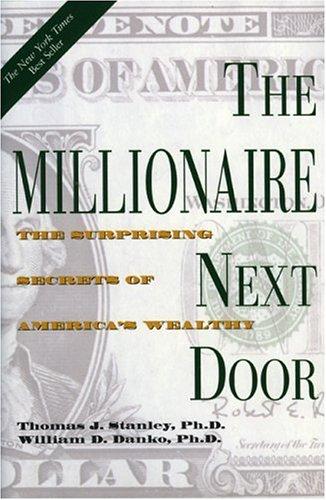
3. The Millionaire Next Door by Thomas J. Stanley and William D. Danko
Rating: ⭐⭐⭐⭐ (4.4/5) Who it’s for: Anyone who thinks millionaires are all high-income earners and wants to see what real wealth looks like.
This book, first published in 1996, is based on extensive research into how America’s millionaires actually live. The findings surprised almost everyone: most millionaires do not live in mansions, drive luxury cars, or wear designer clothes. They live in modest homes, drive used vehicles, and accumulate wealth through disciplined saving and investing over decades.
Stanley and Danko identify two types of people: “PAWs” (prodigious accumulators of wealth) and “UAWs” (under-accumulators of wealth). PAWs earn average or above-average incomes but save aggressively and invest consistently. UAWs often earn high incomes but spend everything and save nothing. The key predictor of wealth is not income. It is the ratio of wealth accumulated to income earned.
For someone on an average salary, this book is profoundly reassuring. It shows that building wealth is not about making six figures. It is about living below your means, investing the difference, and giving compounding enough time to work. Some of the millionaires in the study earned less than $60,000 a year.
“Wealth is not the same as income. If you make a good income each year and spend it all, you are not getting wealthier.”
My take: Why it helps on an average salary: It demolishes the myth that wealth requires a high income and shows that ordinary earners can become millionaires through discipline.

4. Broke Millennial by Erin Lowry
Rating: ⭐⭐⭐⭐ (4.4/5) Who it’s for: Young adults earning modest incomes who feel overwhelmed by financial advice that assumes a level of wealth they do not have.
Erin Lowry writes for people who are drowning in student debt, living paycheck to paycheck, and tired of being told to “just save more.” Broke Millennial is a practical, judgment-free guide to personal finance that starts from the assumption that you have very little money and need to make every dollar count.
The book covers budgeting, student loans, credit scores, banking, retirement accounts, and the emotional side of money — including how to talk about finances with a partner, how to split bills with friends, and how to handle money shame. Lowry’s tone is conversational and empathetic. She never makes you feel stupid for not knowing things. She just teaches you.
For someone on an average salary, Lowry’s most useful contribution is her “know your number” exercise — a simple calculation that tells you exactly how much you need to save each month to reach your financial goals. Most people avoid this calculation because they are afraid of the answer. Lowry shows that the answer is usually more manageable than you think.
“You don’t need to be rich to start investing. You need to be consistent.”
My take: Why it helps on an average salary: It speaks directly to the experience of earning a modest income and gives you a clear starting point.
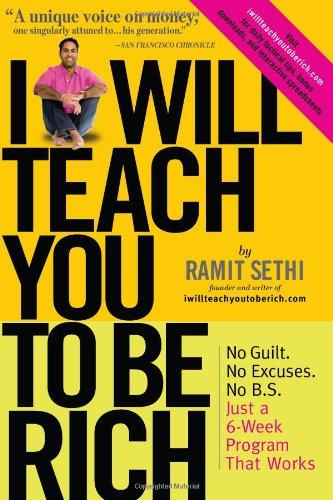
5. I Will Teach You to Be Rich by Ramit Sethi
Rating: ⭐⭐⭐⭐⭐ (4.5/5) Who it’s for: People who want an automated, no-guilt system for saving, investing, and spending on what they actually care about.
Ramit Sethi’s book has one of the worst titles in personal finance — it sounds like a scam. But the book itself is excellent. Sethi’s approach is built on the idea that frugality is not about cutting everything. It is about spending extravagantly on the things you love and cutting ruthlessly on the things you do not.
Sethi’s system is entirely automated. You set up automatic transfers from your checking account to your savings, investment, and bill-pay accounts, and then you spend whatever is left without guilt. The book walks you through the exact steps: choosing a bank, opening investment accounts, negotiating bills, and optimizing your credit cards.
For someone on an average salary, Sethi’s philosophy is liberating. Most financial advice tells you to spend less on everything. Sethi tells you to spend more on what matters to you and less on what does not. If you love travel, budget for it aggressively and cut your dining out budget. If you love good food, spend on restaurants and skip the gym membership you never use. The goal is not deprivation. It is alignment.
“There is a limit to how much you can save, but there is no limit to how much you can earn.”
My take: Why it helps on an average salary: It automates wealth-building so you do not have to rely on willpower, and it lets you spend on what you love without guilt.

6. The Total Money Makeover by Dave Ramsey
Rating: ⭐⭐⭐⭐ (4.3/5) Who it’s for: People who are in debt and need a clear, step-by-step plan to get out and start building wealth.
Dave Ramsey is polarizing — some people love his aggressive, no-excuses approach, and others find it too rigid. But The Total Money Makeover has helped millions of people get out of debt, and its “Baby Steps” framework is one of the most effective debt-elimination systems ever created.
The Baby Steps are: save a $1,000 emergency fund, pay off all debt using the debt snowball method (smallest balance first), save three to six months of expenses, invest 15 percent of income for retirement, save for college, pay off the mortgage, and build wealth.
For someone on an average salary who is also in debt, this book is the right starting point. You cannot build wealth while carrying high-interest debt. Ramsey’s system is not optimized for maximum mathematical efficiency — the debt avalanche method (highest interest rate first) saves more money — but it is optimized for human psychology. The feeling of paying off a small debt creates momentum that keeps you going.
“Personal finance is 80 percent behavior and 20 percent head knowledge.”
My take: Why it helps on an average salary: It gives you a clear, sequential plan for eliminating debt and building wealth, starting from wherever you are right now.

7. Your Money or Your Life by Vicki Robin and Joe Dominguez
Rating: ⭐⭐⭐⭐ (4.4/5) Who it’s for: People who want to rethink their entire relationship with money and understand what they are actually trading their life energy for.
This book, first published in 1992 and updated in 2018, is the foundational text of the financial independence movement. Robin and Dominguez introduce the concept of “life energy” — the idea that money is not just currency. It is the hours of your life you traded to earn it. When you spend $50 on dinner, you are not spending money. You are spending the three hours of work it took to earn that $50.
The book’s nine-step program includes tracking every dollar you spend, calculating your real hourly wage (including commute time, work clothes, and stress recovery), and evaluating every expense against the question: “Did I receive fulfillment proportionate to the life energy I spent?” This exercise alone can transform how you spend money.
For someone on an average salary, this book is especially powerful because it reframes wealth as financial independence rather than a specific dollar amount. You do not need millions. You need enough to cover your actual needs and to stop trading your life energy for things you do not value.
“Money is something we choose to trade our life energy for.”
My take: Why it helps on an average salary: It shows you that the goal is not to accumulate money for its own sake but to reclaim the hours of your life that money represents.

8. The Automatic Millionaire by David Bach
Rating: ⭐⭐⭐⭐ (4.2/5) Who it’s for: People who know they should be saving and investing but lack the discipline to do it manually.
David Bach’s central argument is that willpower is a terrible wealth-building strategy. If you have to make a conscious decision to save every month, eventually you will stop. The solution is automation — setting up systems that save and invest for you without requiring any ongoing effort.
Bach introduces the concept of the “latte factor” — the idea that small, daily expenses compound into large sums over time. He argues that most people can find $5 to $10 a day in spending they do not value, and that investing that amount consistently can make you a millionaire over a working lifetime.
The book has been criticized for oversimplifying — a daily latte is not the reason most people are broke. But the core principle is sound: automating your savings and investments removes the decision-making that derails most financial plans. Bach shows you exactly how to set up automatic transfers to retirement accounts, savings accounts, and investment accounts.
“The secret to getting ahead is getting started. The secret to getting started is breaking your complex overwhelming tasks into small manageable tasks, and then starting on the first one.”
My take: Why it helps on an average salary: It removes willpower from the equation entirely, making wealth-building possible even for people who struggle with financial discipline.

9. The Index Card by Helaine Olen and Harold Pollack
Rating: ⭐⭐⭐⭐ (4.3/5) Who it’s for: People who want the absolute simplest personal finance advice possible — so simple it fits on a single index card.
Harold Pollack, a University of Chicago professor, once said in an interview that the best personal finance advice could fit on a single index card. He wrote it down, someone photographed it, and it went viral. The Index Card is the book that expands on those ten simple rules.
The rules include: max out your 401(k) match, buy inexpensive, well-diversified mutual funds, never buy or sell individual stocks, save 20 percent of your income, pay off your credit card balance every month, and buy adequate insurance.
For someone on an average salary, this book is valuable because it cuts through the noise. There are thousands of personal finance books, blogs, podcasts, and courses. Most of them add complexity rather than clarity. Olen and Pollack argue that the fundamentals are simple. The hard part is not understanding what to do. It is actually doing it.
“The best financial advice is simple enough to write on an index card.”
My take: Why it helps on an average salary: It strips personal finance down to the essentials and proves that you do not need a complicated strategy to build wealth.

10. The Richest Man in Babylon by George S. Clason
Rating: ⭐⭐⭐⭐ (4.3/5) Who it’s for: Anyone who wants timeless financial wisdom told through parables that have been teaching people about money for nearly a century.
First published in 1926, The Richest Man in Babylon is a collection of parables set in ancient Babylon. The stories teach fundamental financial principles through characters who learn — often the hard way — how to build wealth.
The book’s core lessons are: save at least 10 percent of everything you earn, control your expenditures, make your money multiply through wise investments, protect your principal from loss, ensure a future income, and increase your ability to earn.
The parable format makes these principles feel universal rather than dated. The characters struggle with the same things modern earners struggle with — lifestyle inflation, bad investments, the temptation to spend, the fear of starting small. And the solutions are the same ones that work today: discipline, patience, and consistency.
For someone on an average salary, the book’s most important lesson is the first one: pay yourself first. Before you pay your rent, your bills, or your debts, set aside 10 percent of your income for savings. This single habit, applied consistently over decades, is the foundation of all wealth-building.
“A part of all you earn is yours to keep.”
Why it helps on an average salary: Its principles are timeless, accessible, and proven — and they work regardless of how much you earn.
Frequently Asked Questions
Can you really build wealth on an average salary?
Yes. The research from Thomas Stanley’s The Millionaire Next Door shows that most American millionaires earned average or above-average incomes and built wealth through disciplined saving and investing over decades. Morgan Housel’s The Psychology of Money demonstrates that time in the market matters more than the size of your contributions. Even saving $200 per month, invested in a total stock market index fund and left to compound for 30 years, can grow to over $300,000.
How much of my income should I save if I earn a modest income?
The standard advice is 15 to 20 percent, but that is not always realistic on a modest income. Start with whatever you can afford — even 3 percent or 5 percent — and increase it by 1 percent every six months. David Bach’s The Automatic Millionaire and JL Collins’s The Simple Path to Wealth both emphasize that consistency matters more than the amount. The habit of saving is more important than the specific percentage.
Should I pay off debt first or start investing?
It depends on the interest rate of your debt. If you have high-interest debt (credit cards, payday loans), pay it off first. Dave Ramsey’s debt snowball method is psychologically effective. If your debt is low-interest (federal student loans, mortgage), you can invest simultaneously — the long-term return of the stock market historically exceeds the interest rate on these debts. The Total Money Makeover addresses this directly.
What is the best investment for someone with a small amount of money?
A total stock market index fund, such as Vanguard’s VTSAX or the ETF equivalent VTI. JL Collins’s The Simple Path to Wealth explains why in detail: low fees, broad diversification, and no need to pick individual stocks. Most brokerages now allow you to start investing with as little as $1 through fractional shares.
How do I start investing if I know nothing about finance?
Read The Simple Path to Wealth by JL Collins. It will teach you everything you need to know in one book. Open a brokerage account (Vanguard, Fidelity, or Schwab are all good options), set up an automatic monthly transfer to a total stock market index fund, and then do nothing. That is the entire strategy.
Is the “latte factor” real? Does cutting small expenses actually matter?
The latte factor is real in the sense that small daily expenses add up over time. $5 per day is $1,825 per year, which invested over 30 years at a 7 percent return becomes roughly $170,000. But the latte factor has been criticized for shifting the focus from systemic issues (low wages, high housing costs) to individual behavior. The latte factor alone will not make you rich. But combined with consistent investing, it is a meaningful piece of the puzzle.
What if my expenses are already as low as they can go?
If you have already cut everything you can, the next step is to increase your income. Ramit Sethi’s I Will Teach You to Be Rich and David Bach’s The Automatic Millionaire both address side income, negotiating raises, and developing higher-value skills. Morgan Housel’s The Psychology of Money also emphasizes that earning more gives you a larger surplus to invest, which accelerates wealth-building.
What is the single most important financial habit?
Paying yourself first. Before you pay any bill, set aside a fixed percentage of your income for savings and investing. This habit — described in The Richest Man in Babylon and reinforced by virtually every book on this list — is the foundation of all wealth-building. If you automate it, as David Bach recommends, you do not even have to think about it.
Final Thoughts
I am thirty-four now. I still do not earn a fortune. But I have $62,000 in my retirement accounts, $15,000 in an emergency fund, and zero credit card debt. Eight years ago, I had $800 in savings and $22,000 in student loans. The change was not dramatic. It was not the result of a windfall, a lucky investment, or a big raise. It was the result of reading the books on this list, setting up automatic transfers, and doing nothing spectacular for eight years straight.
The lie that keeps most people from building wealth is that you need to earn a lot to save a lot. You do not. You need to start. You need to be consistent. And you need to give compounding enough time to do what it does best.
My take: Start with one book. Set up one automatic transfer. And then leave it alone. Your future self will thank you.
Which book are you grabbing first?
Disclosure: This article contains affiliate links. If you purchase through these links, we may earn a small commission at no extra cost to you. We only recommend books we have personally read and believe in.