Let me say something that most personal finance books won’t tell you directly: financial independence on a modest income is possible. It is also harder than the people with high incomes make it look, and any book that doesn’t acknowledge that is selling you a fantasy wrapped in a compound interest calculator.
My father worked six days a week at a textile shop in Alexandria and drove a private car service on Sundays. He worked harder than anyone I’ve ever known. He earned enough to keep us housed, fed, and in school. He did not earn enough to build wealth, and nobody in his life — not his family, not his friends, not the financial system he existed within — ever showed him how to close that gap. The information was available. It just wasn’t in the room he was in.
I chose economics because I wanted to understand why some people built wealth over generations and other people worked harder and had nothing to pass down. The answer, I found in my first semester, is not complicated. It’s about the gap between what you earn and what you spend, and what you do with that gap. But the gap is smaller when you earn less. And the books that talk about financial independence rarely write for the person whose gap is two hundred pounds a month, not two thousand.
That’s the person I’m writing for. If you earn a modest income — not poverty-level, but not the kind of money that makes financial advice easy — and you want to build something real, these are the ten books that gave me actual, specific, actionable frameworks. Not “invest in yourself.” Not “change your mindset.” Specifics.
Quick Pick: The Best Book for Financial Independence on a Modest Income
Also see our guide to 10 BEST BOOKS FOR BUILDING FINANCIAL LITERACY FOR YOUNG ADULTS AND TAKING CONTROL OF YOUR MONEY. Also see our guide to 10 Best Books for Building Financial Confidence After Debt. Also see our guide to 10 Best Books for Building Financial Confidence After Job Loss. Also see our guide to 10 BEST BOOKS FOR BUILDING FINANCIAL LITERACY FOR YOUNG ADULTS AND TAKING CONTROL OF YOUR MONEY. Also see our guide to 10 Best Books for Building Financial Independence on a Modest Income.If you only have time for one book, go with “Your Money or Your Life” by Vicki Robin. It’s the book that started the modern financial independence movement, and its core insight — that money is life energy, and you should spend it accordingly — reframes everything about how you earn, spend, and save. The nine-step program works at any income level.
THE 10 BEST BOOKS FOR BUILDING FINANCIAL INDEPENDENCE ON A MODEST INCOME

1. YOUR MONEY OR YOUR LIFE BY VICKI ROBIN
Vicki Robin | ⭐ 4.6/5
Who it’s for: Anyone who wants to fundamentally change their relationship with money. If you’ve been budgeting and saving but still feel stuck, this book will show you why and what to do differently.
“Money is something you trade your life energy for.”
Robin’s central insight: you don’t earn money. You trade hours of your life for it. When you spend money, you’re spending hours you’ll never get back. This reframe — from “can I afford it?” to “is this worth the hours of my life I traded for it?” — changes spending behavior more effectively than any budget I’ve tried.
The nine-step program includes tracking every penny you spend, calculating your real hourly wage (including commute, work clothes, and decompression time), and graphing your income against your expenses over time. When I did this exercise, I discovered my real hourly wage was about sixty percent of my stated salary. The gap was made up of commuting costs, work wardrobe, and the takeout I bought because I was too tired to cook after a twelve-hour day. That discovery alone changed my career calculations.
The book works at any income because it’s not about how much you earn. It’s about the gap between earning and spending, and what you do with that gap.
My take: The foundational financial independence book. Read it first. Read it again when you think you’ve outgrown it.

2. THE SIMPLE PATH TO WEALTH BY JL COLLINS
JL Collins | ⭐ 4.7/5
Who it’s for: Anyone who wants the simplest possible investment strategy. If the stock market terrifies you or you don’t know where to start investing, this book makes it almost embarrassingly simple.
“Spend less than you earn. Invest the surplus. Avoid debt.”
Collins originally wrote these letters for his daughter, and the book reads like that — direct, patient, and free of jargon. His entire investment strategy comes down to one thing: buy a total stock market index fund (specifically VTSAX or equivalent), hold it, and don’t touch it until you need it. That’s it. No stock picking. No market timing. No complicated portfolio allocation.
His argument for simplicity is based on data: over any twenty-year period, index funds outperform the vast majority of actively managed funds. The fund managers with MBAs and Bloomberg terminals can’t beat the index consistently. Neither can you. So stop trying and just buy the whole market.
What makes this work on a modest income is the low barrier to entry. Index funds have no minimum investment at most brokerages now. You can start with fifty dollars a month. Collins’s point: the amount matters less than the habit. Start where you are. Increase when you can.
My take: The most straightforward investment book I’ve ever read. If you’re paralyzed by investment complexity, this will un-paralyze you.

3. I WILL TEACH YOU TO BE RICH BY RAMIT SETHI
Ramit Sethi | ⭐ 4.5/5
Who it’s for: Young adults who want a practical, automated system for managing money without spending hours on it. If you want to “set it and forget it,” Sethi’s approach is for you.
“There is a limit to how much you can cut, but there is no limit to how much you can earn.”
Sethi’s system is built around automation: set up your accounts so that your paycheck is automatically split between bills, savings, investments, and guilt-free spending. Once the system is running, you don’t need to make daily financial decisions. The money goes where it needs to go.
His most useful concept for modest incomes: conscious spending. Instead of cutting everything, identify what you actually value and spend lavishly on that while cutting ruthlessly on everything else. If you love travel, budget for travel and stop spending on things you don’t care about. This is more sustainable than blanket frugality because it doesn’t feel like deprivation.
The book assumes a US financial system, so some of the account-specific advice doesn’t translate internationally. But the principles — automation, conscious spending, negotiating your salary — work everywhere.
My take: The best practical system for people who don’t want to think about money daily. Pair it with Robin for the philosophy and Collins for investing.
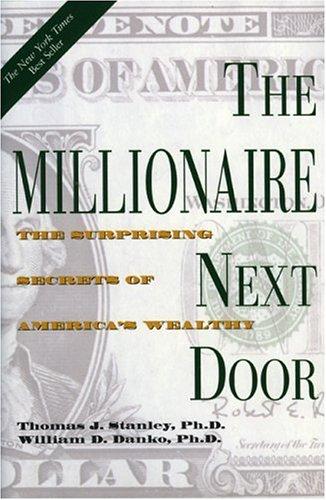
4. THE MILLIONAIRE NEXT DOOR BY THOMAS STANLEY AND WILLIAM DANKO
Thomas Stanley & William Danko | ⭐ 4.4/5
Who it’s for: Anyone who assumes wealth looks a certain way. If you think millionaires drive luxury cars and live in mansions, this book will reframe what wealth actually is.
“Wealth is not the same as income. If you make a good income each year and spend it all, you are not getting wealthier.”
Stanley and Danko studied actual millionaires and found that most don’t look wealthy. They drive used cars, live in modest homes, and buy clothes off the rack. True wealth is invisible. It’s the gap between what you earn and what you spend, compounded over time.
This book matters for modest incomes because it demolishes the excuse that you need to earn a lot to build wealth. Most of the millionaires in their study earned average incomes. They built wealth through frugality, discipline, and time — not through high salaries. The data is dated, but the core insight hasn’t changed.
Nobody taught my family this. My father worked harder than the millionaires in this book. He just never kept the difference.
My take: The most demystifying book about wealth. It proves that building wealth on an average income is not just possible — it’s the most common way it happens.

5. THE INDEX CARD BY HELAINE OLEN AND HAROLD POLLACK
Helaine Olen & Harold Pollack | ⭐ 4.3/5
Who it’s for: Anyone overwhelmed by financial advice. If you’ve read ten personal finance books and can’t figure out what to actually do, this book distills everything onto a single index card.
“All the financial advice you need can fit on an index card.”
The premise is literal. Pollack, a University of Chicago professor, claimed that everything important about personal finance could fit on a 4×6 index card. The book expands on each point, but the card itself is the thing: max out your employer’s retirement match, save 20% of your income, pay off credit card balances monthly, invest in low-cost index funds, buy appropriate insurance, and maximize tax-advantaged accounts.
For modest incomes, the clarity is the value. You don’t need to read twenty books. You need a simple, complete plan you can follow. This is that plan. The book explains why each point matters, but the card is the thing you tape to your refrigerator.
My take: The anti-overwhelm book. If financial advice makes your head spin, start here. Everything you need is on one card.
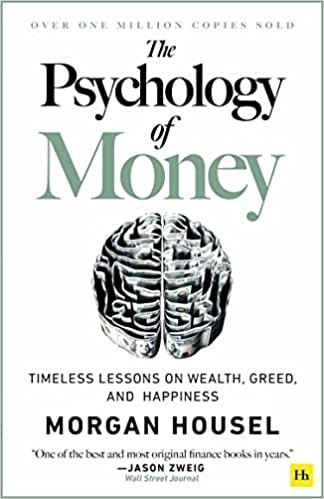
6. THE PSYCHOLOGY OF MONEY BY MORGAN HOUSEL
Morgan Housel | ⭐ 4.7/5
Who it’s for: Anyone who understands the math of money but still makes irrational decisions. If you know you should save more but don’t, this book explains why.
“Doing well with money has a little to do with how smart you are and a lot to do with how you behave.”
Housel’s central argument: money decisions are driven more by personal history, ego, and worldview than by any spreadsheet. Two people can look at the same investment and see completely different things because of where they grew up.
For modest incomes, his chapter on “room for error” is essential. He explains that the reason people from precarious backgrounds avoid investing isn’t irrationality — it’s that their experience taught them planning doesn’t work. Understanding this mechanism helps you override it. You can plan even if plans have failed before. The plan just needs enough margin for error to survive the inevitable bad months.
My take: The most important money book of the last decade. Read it alongside any practical book on this list.

7. SET FOR LIFE BY SCOTT TRENCH
Scott Trench | ⭐ 4.2/5
Who it’s for: Young people earning average salaries who want a realistic path to financial independence. If you’re in your twenties or thirties and don’t see how you’ll ever get ahead, this book is your roadmap.
“Financial independence isn’t about getting rich. It’s about having enough that work becomes optional.”
Trench wrote this book in his mid-twenties while earning a modest salary, and it reads that way — practical, specific, and unburdened by the “just save more” advice that works better when you earn more. His framework has three phases: house hacking (reducing your housing cost to near zero), side income (building skills that generate additional revenue), and investing (putting the surplus into index funds and real estate).
The house hacking section is the most useful for modest incomes. Trench shows that housing is the single largest expense for most people, and reducing it — through housemates, renting out rooms, or buying a duplex and living in one unit — frees up more money for saving than any amount of coupon-cutting.
Some of his advice assumes a US context and a level of risk tolerance that not everyone shares. But the core framework — reduce your biggest expense, increase your income, invest the difference — is sound.
My take: The most realistic FI book for young people on average incomes. Less philosophical than Robin, more accessible than Collins.

8. BROKE MILLENNIAL BY ERIN LOWRY
Erin Lowry | ⭐ 4.3/5
Who it’s for: Anyone who feels ashamed about their financial situation and doesn’t know where to start. If you’re embarrassed to talk about money, Lowry’s book meets you where you are.
“Being broke is a temporary financial situation. Being bad with money is a behavioral one.”
Lowry writes for people who weren’t taught about money and feel behind. She covers the basics without condescension: how to read a pay stub, how to open a savings account, how to negotiate a salary, how to talk about money with a partner. The tone is conversational and judgment-free.
The chapter on financial shame is the one that matters most. Lowry argues that shame about money — the feeling that you should know this stuff and the fact that you don’t means something is wrong with you — is the biggest barrier to financial progress. You can’t fix what you can’t face. Her approach: name the shame, understand it’s common, and start from where you are.
My take: The best book for people starting from zero. If financial books make you feel judged, this one won’t.

9. THE RICHEST MAN IN BABYLON BY GEORGE CLASON
George S. Clason | ⭐ 4.5/5
Who it’s for: Beginners who need the absolute fundamentals explained simply. If the entire world of finance feels overwhelming, start here.
“A part of all you earn is yours to keep.”
Published in 1926 as parables set in ancient Babylon, this book teaches one principle above all: pay yourself first. Before rent, before bills, before anything else — set aside at least ten percent of what you earn. That’s yours. Not for spending. For building.
The simplicity is the point. Clason strips away every complicated framework and gets to the core: wealth is built by consistently keeping more than you spend and putting the difference to work. On a modest income, ten percent might be fifty pounds a month. That’s fine. The amount matters less than the habit, and the habit, compounded over decades, is what builds wealth.
My take: The simplest money book ever written. Read it in an hour. Follow it for a lifetime.

10. THE LATTE FACTOR BY DAVID BACH
David Bach | ⭐ 4.0/5
Who it’s for: People who think they can’t afford to save. If you feel like every penny is already spoken for, this book will show you where the hidden money is.
“You don’t have to be rich to live rich.”
Bach’s famous “latte factor” argues that small, habitual spending — the daily coffee, the subscription you forgot about, the impulse purchase — adds up to significant amounts over time. If you redirect those small amounts into investments, the compound growth over decades is remarkable.
The book has been criticized for oversimplifying, and some of that criticism is fair. A daily latte isn’t the reason people can’t build wealth. Structural inequality, low wages, and lack of access to financial services are bigger factors. But Bach’s point isn’t that you should feel guilty about coffee. It’s that unconscious spending — money that leaves your account without you noticing — is worth examining. And for modest incomes, finding an extra fifty or hundred pounds a month through awareness can be the difference between saving and not saving.
My take: Not the most rigorous book. But the core concept — conscious spending versus unconscious spending — is valid and useful. Take the principle, leave the guilt.
FREQUENTLY ASKED QUESTIONS
CAN I REALLY ACHIEVE FINANCIAL INDEPENDENCE ON A MODEST INCOME?
Yes, but it takes longer and requires more discipline than it does on a high income. The math is the same: save and invest the gap between what you earn and what you spend. The gap is smaller on a modest income, so the timeline is longer. But the data shows that most millionaires in America earned average incomes. They built wealth through consistency, not salary. Your Money or Your Life and The Millionaire Next Door document this extensively.
HOW MUCH DO I NEED TO SAVE EACH MONTH?
The standard recommendation is 20% of your income. On a modest income, that might not be possible immediately. Start with what you can — even 5% — and increase it whenever your income rises. The Richest Man in Babylon recommends 10% as the minimum. The important thing is to start and to automate the savings so you don’t have to make the decision every month.
SHOULD I PAY OFF DEBT FIRST OR START INVESTING?
It depends on the interest rate. If you have high-interest debt (credit cards, payday loans), pay that off first — the interest you’re paying is almost certainly higher than the returns you’d earn investing. If you have low-interest debt (student loans, mortgage), you can invest simultaneously, especially if your employer offers a retirement match. The Index Card has the clearest framework for this decision.
WHAT IF I CAN’T SAVE ANYTHING RIGHT NOW?
Then your first step is reducing expenses or increasing income — or both. Your Money or Your Life’s expense tracking exercise will show you where your money is actually going, which is often different from where you think it’s going. Sethi’s “conscious spending” framework helps you identify what you can cut without feeling deprived. And Trench’s house hacking approach can reduce your biggest expense significantly.
IS FINANCIAL INDEPENDENCE THE SAME AS BEING RICH?
No. Financial independence means your passive income (from investments, rental income, or other sources) covers your living expenses. You don’t need to be rich — you need your expenses to be low enough that your investments can cover them. Someone with modest expenses can reach FI on a modest income faster than someone with lavish expenses on a high income. That’s the whole point.
ARE THESE BOOKS ONLY RELEVANT IN THE UNITED STATES?
Most of these books are written from a US perspective, and some specific advice (retirement accounts, tax strategies) doesn’t translate internationally. But the core principles — spend less than you earn, invest the difference, avoid debt, buy index funds — are universal. The specific products and accounts will differ, but the math is the same everywhere.
THE BOTTOM LINE
Financial independence on a modest income is not a myth. It’s a math problem with a longer timeline. The books on this list don’t promise shortcuts. They promise a system, and the system works if you follow it consistently over time.
If I had to hand you three books, I’d start with “Your Money or Your Life” by Vicki Robin for the foundational philosophy, move to “The Simple Path to Wealth” by JL Collins for the investment strategy, and finish with “The Index Card” by Olen and Pollack for the complete plan on a single card.
Nobody taught my family this. That’s the whole point. But you’re here, which means you’re doing what my father never had the opportunity to do: learning the rules of the game. Start with what you have. Start now.
Which book are you grabbing first?
Disclosure: This post contains affiliate links. If you purchase through these links, ReadPlug may earn a small commission at no extra cost to you. We only recommend books we’ve personally found valuable.