Let me tell you something that took me longer than it should have to say out loud: the reason most people are financially unprepared for job loss is not discipline. It is not laziness. It is not a character flaw you were born with and have been quietly failing to correct since the moment you got your first paycheck. It is information asymmetry. The people who are financially prepared were, in most cases, taught how to be — at a kitchen table, in passing conversation, by watching adults who had already figured out the part that comes after earning. The people who are not prepared were, in most cases, simply never in the room when that conversation happened.
I was not in the room. My father was not in the room. My mother kept cash in a tin under the kitchen sink because she didn’t fully trust banks, which is a rational position if you grew up in a country where banks had failed people like her, and which is exactly the kind of context no personal finance book I have ever read bothers to acknowledge. Nobody taught my family how to build an emergency fund. Nobody explained compound interest or the difference between assets and liabilities. We earned, we spent carefully, we worried. That was the system.
When I left my financial consulting job at 28 to write full-time, I thought I understood money. I had a degree in economics. I had spent four years advising clients on financial strategy. What I discovered, very quickly, was that understanding money as a product is different from understanding money as a personal system. My financial confidence — the sense that I could handle whatever happened — was built on foundations I hadn’t examined. When the income dropped and the variables changed, I realized how much of my confidence had been borrowed from a paycheck, not built from actual financial literacy.
Job loss is a specific kind of financial earthquake. It doesn’t just remove income. It removes the structure around income — the direct deposit, the employer benefits, the regular rhythm that makes budgeting feel optional. And it exposes, very quickly, whether your financial confidence was real or circumstantial.
The books on this list are the ones that helped me build the real thing. Not the confidence that comes from having a paycheck. The confidence that comes from understanding the system well enough to rebuild when it breaks.
Quick Pick: The Book I Recommend First
Also see our guide to 10 BEST BOOKS FOR BUILDING CONFIDENCE AS AN INTROVERT AND LEARNING TO THRIVE IN SOCIAL SITUATIONS. Also see our guide to 10 Best Books for Building Confidence in Your 40s. Also see our guide to 10 Best Books for Building Financial Confidence After Debt. Also see our guide to 10 Best Books for Building Financial Confidence After Job Loss.The Simple Path to Wealth by JL Collins. If you read one book from this list, read this one. Collins strips personal finance down to the essential mechanics: index fund investing, the magic of compound interest, and why keeping your expenses low is more powerful than any investment strategy. His writing is direct, practical, and — unusually for personal finance — genuinely funny. Most importantly, he understands that the reader might be starting from zero — not zero as a rhetorical device, but zero as in: nobody taught me this and I’m trying to close a canyon-sized gap in about thirty days. That reader is who this book was written for.
The 10 BEST BOOKS FOR Building Financial Confidence After Job Loss

1. The Simple Path to Wealth: Your Road Map to Financial Independence and a Rich, Free Life by JL COLLINS
JL Collins | ⭐ 4.7/5
Who it’s for: Anyone who wants a clear, jargon-free framework for getting financially organized after a disruption — without needing a finance degree to understand it
“I read twelve personal finance books this year. This is the one I wish I’d read first.” — Goodreads reviewer
Here’s what this book actually says: the path to financial confidence is not complicated. Earn more than you spend. Invest the difference in low-cost index funds. Repeat until you have enough. Collins has a particular contempt for financial complexity dressed up as sophistication, and he is not shy about saying so. Every product that promises to beat the market is, in his analysis, extracting fees from people who don’t know better. The individual investor who uses a simple index fund strategy will, over time, outperform most professionals who are paid to actively manage money.
The core of his argument is what he calls the “Golden Age of Personal Finance” — the period we’re living in now where ordinary investors can access the same index funds that were once only available to institutions. Before this age, you needed wealth to build wealth because transaction costs ate all your returns. Now, you don’t. That’s the unlock, and it’s available to almost anyone with a smartphone and a few hundred dollars to start.
Collins is particularly good on the psychological side of financial management — the relationship between money and identity, why keeping up with the Joneses is a wealth-destroying strategy, and how to think about your portfolio when the market is doing terrifying things. His answer, essentially: don’t watch the market. Don’t react. Just keep buying. This is the confidence that doesn’t require you to have a steady paycheck.
My take: This is the book I recommend most often to people who’ve lost a job or are afraid they’re about to. Collins gives you a framework that works whether you’re earning $40,000 or $140,000. The consistency of the system is the point — it doesn’t require stability to work, just patience.
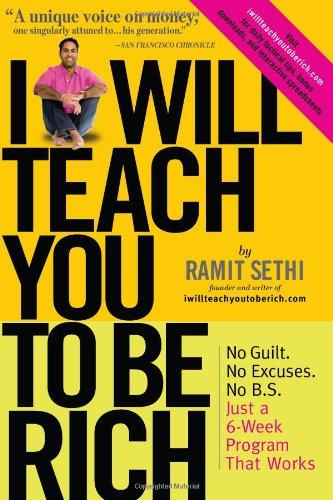
2. I Will Teach You to Be Rich: The Money Guide to Financial Freedom by RAMIT SETHI
Ramit Sethi | ⭐ 4.4/5
Who it’s for: Someone who wants a practical, no-excuses system for automating their finances without spending hours a week managing money
“Sethi doesn’t mess around. If you want a system that works, read this. If you want validation for doing nothing, read something else.” — Amazon reviewer
Real talk: Ramit Sethi’s approach is exactly right for the person who has lost a job and needs a system rather than inspiration. His “conscious spending” framework — spend lavishly on the things you care about, cut ruthlessly on the things you don’t — is the most practical financial framework I’ve found that doesn’t require you to live like a monk. After a job loss, this distinction matters. You are not trying to suffer your way to financial stability. You’re trying to be intentional about where money goes so that the money you have works for you.
His automation system is the most valuable part of the book for someone in a job transition. Sethi advocates for setting up automatic transfers, automatic bill payments, and automatic investments on a specific schedule — so that your financial system runs without requiring daily attention. When you’re between jobs and your cognitive bandwidth is occupied with interviews and applications and uncertainty, the last thing you need is to be making manual decisions about money every day. Sethi’s system keeps the fundamentals running while you focus on what’s next.
The book is also showing its age in places, and Sethi is writing for a particular audience: people with stable jobs and reasonable incomes. If you’re starting from a position of greater vulnerability — if your emergency fund is thin or your expenses are high relative to your likely next income — some of his advice assumes a cushion that doesn’t exist yet. Apply what resonates. The automation system alone is worth the price of the book.
My take: Best for people who are a few months into their job search and are ready to systematize what’s left of their finances. The automation system is valuable even if everything else feels overwhelming.

3. The Financial Diet: A Total Beginner’s Guide to Getting Good with Money by CHLOE CHEN and TRACY CHOW
Chloe Chen and Tracy Chow | ⭐ 4.3/5
Who it’s for: Someone who has never had a financial system and needs to start from absolute zero — especially after a job loss has exposed how little they actually know
“I’ve never had anyone explain money to me like this. Like a friend who actually gets it.” — Amazon reviewer
Here’s what most personal finance books don’t tell you: they assume a baseline of financial literacy that large portions of the population were never given. The Financial Diet was written for exactly this audience — people who are smart, capable, and genuinely interested in getting better with money, but who never had the kitchen-table conversation that other people had. After a job loss, this gap becomes impossible to ignore.
Chloe Chen and Tracy Chow’s book is structured around the idea that getting good with money is not primarily about math. It’s about identity. The “financial diet” of the title refers to a holistic approach: understanding your relationship with money, building awareness of your spending patterns, and creating systems that match your actual life rather than the aspirational life you’re supposed to be living.
What I appreciate about this book is its refusal to shame. Most personal finance content implies that if you’re bad with money, you’re stupid or irresponsible. Chen and Chow understand that financial literacy is a product of environment and access, not intelligence or character. If you didn’t grow up with someone explaining how credit cards work, you’re not stupid — you were just never taught. This book teaches.
My take: Best first book for someone who feels genuinely lost with money. Not the most sophisticated framework, but the most accessible. Sometimes you need to start before you can advance.

4. Set for Life: Financial Independence for the Busy Professional by SCOTT TRENCH
Scott Trench | ⭐ 4.4/5
Who it’s for: Someone on a moderate income who needs to understand that financial independence is possible even without a six-figure salary
“I was making $45,000 a year and thought financial independence was for people who already had money. This book showed me a path from where I actually am.” — Amazon reviewer
Here’s what makes this book different from most financial independence literature: Trench is not writing from a high-income perspective. He’s writing from the perspective of someone who started in real estate finance making a modest salary and built his path through a combination of aggressive saving, house hacking, and building a small real estate portfolio. He is very clear that his path is not the only path — but it is a path that is genuinely available to people who don’t have six figures to invest.
After a job loss, the question everyone asks is: how do I rebuild? Trench’s message is that rebuilding starts with the fundamentals — not with finding the perfect investment, but with getting your savings rate right, your spending under control, and your mindset shifted from “I need to replace this income” to “I need to build a system that works regardless of any single income source.”
His framework for thinking about your “enough” number — the amount you need to feel financially secure — is particularly useful after a job loss because it separates the math from the psychology. You might need less than you think. You might need more. Trench gives you a method for finding out.
My take: Best for people who are mid-career and earning a moderate income. The message that financial independence doesn’t require a six-figure salary is genuinely liberating after a job loss that felt like it destroyed your options.
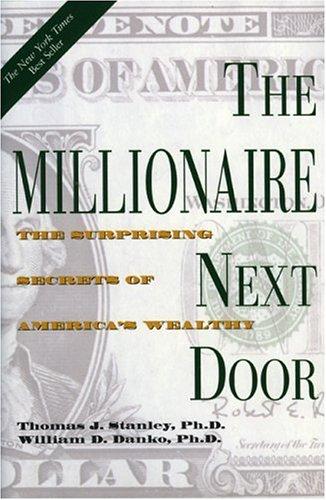
5. The Millionaire Next Door: The Surprising Secrets of America’s Wealthy by THOMAS J. STANLEY and WILLIAM D. DANKO
Thomas J. Stanley and William D. Danko | ⭐ 4.5/5
Who it’s for: Anyone who has internalized the wrong model of what wealthy people look like — and needs to understand how wealth actually works
“I grew up thinking rich people were the people on TV. This book showed me who actually has money. It’s not who you think.” — Goodreads reviewer
Here’s what this book actually says that most people refuse to believe: the person driving the modest car, living in the sensible house, and wearing the watch they bought twenty years ago is more likely to be a millionaire than the person in the leased BMW with the big house they can’t quite afford. Stanley and Danko spent decades studying actual wealthy people — not celebrities, not tech founders, but ordinary people who accumulated significant wealth through ordinary careers.
After a job loss, this book is valuable for a specific reason: it breaks the link between income and wealth that most people assume is causal. High earners are not necessarily wealthy. Wealthy people are people who save aggressively and invest consistently, regardless of income level. The job loss might have taken your income. It didn’t take your ability to save and invest whatever income comes next. That reframe matters when you’re trying to rebuild confidence.
The data is also quietly optimistic: the average millionaire in their study did not inherit their wealth. They built it through consistent behavior over decades. That means the game is not over. It means the game has rules, and the rules are learnable.
My take: Required reading before you make any financial plan after a job loss. It will save you from making expensive mistakes based on false models of what wealth requires.

6. Your Money or Your Life: 9 Steps to Transforming Your Relationship with Money and Achieving Financial Independence by VICKI ROBIN
Vicki Robin | ⭐ 4.4/5
Who it’s for: Anyone who wants to fundamentally rethink their relationship with money before they start optimizing their portfolio
“This book changed how I think about every pound I spend. Not in a ‘you should feel guilty’ way. In a ‘I finally understand what I’m actually buying’ way.” — Amazon reviewer
Your Money or Your Life was originally published in 1992, and it helped create the vocabulary the entire personal finance field now uses. “Your money or your life” was originally about trading time for money and understanding the true cost of purchases in hours of your life. It’s been updated several times, and the 2018 edition takes into account the gig economy, student debt, and the reality of modern work.
The core framework is about understanding what Robin calls your “real hourly wage” — not the number on your paycheque, but the actual value of an hour of your life when you factor in commute time, work-related expenses, and the psychological cost of your job. After a job loss, this calculation can be unexpectedly liberating. The job you lost might have been paying you less than you thought when you account for everything it cost you.
The nine steps are practical and systematic. But the most valuable part of the book is philosophical: the idea that money is not the goal. The goal is a life well-lived, and money is one tool among many for achieving that. After a job loss, that reframe prevents the common mistake of chasing the next paycheck as if it were a solution to a problem that might actually be about meaning.
My take: The system is solid. The tracking methodology is a bit labor-intensive for modern life — Robin is working from a 1990s mental model where you use paper spreadsheets. But the philosophy underneath is still the most honest framework I’ve found for understanding what money actually means in your life.

7. Broke: Fix Your finances in 30 days by TORI DUNLOP
Tori Dunlop | ⭐ 4.5/5
Who it’s for: Someone who is genuinely broke — not just between jobs, but actually without enough to cover basic expenses — and needs an immediate action plan
“I needed this book six months before I actually found it. Straight talk about what to do when you have nothing.” — Amazon reviewer
Here’s what most personal finance books don’t tell you: they assume you have enough to save. Tori Dunlop’s Broke is written for the person who doesn’t — who is living paycheck to paycheck or who has just experienced a job loss significant enough to wipe out their buffer. This is not a book about investing. It’s a book about survival and recovery.
Dunlop’s approach is direct and tactical. She gives you a 30-day plan that starts with understanding exactly where your money is going, moves through negotiating with creditors and reducing expenses to the minimum viable, and ends with a plan for stabilizing your situation. The goal is not financial independence in 30 days. The goal is to stop the bleeding and create a foundation you can build on.
What I respect about this book is that it doesn’t moralize. Dunlop doesn’t tell you that you should have saved more or made better choices. She tells you where you are and what to do about it. That non-judgmental clarity is exactly what people need when they’re in crisis mode and can’t afford to spend mental energy on guilt.
My take: Best for people in acute financial distress after a job loss. Not for everyone — if you still have a buffer, the other books on this list will serve you better. But if you’re genuinely broke and scared, this is the one.

8. The Psychology of Money: Timeless Lessons on Wealth, Greed, and Happiness by MORGAN HOUSEL
Morgan Housel | ⭐ 4.6/5
Who it’s for: Anyone who understands the math of personal finance but keeps making decisions that undermine their financial life — and wants to understand why
“I thought I understood money. This book showed me I was thinking about it completely wrong.” — Goodreads reviewer
Morgan Housel’s The Psychology of Money is not a how-to book. It’s a why-do-we-keep-making-the-same-mistakes book. And that distinction matters enormously after a job loss, because the question you’re likely asking is: why did this happen to me? Why didn’t I see it coming? Why wasn’t I more prepared?
Housel’s answer is that financial outcomes are not purely the result of financial decisions. They’re the result of psychological and behavioral factors that operate below conscious awareness. Two people with identical incomes and identical financial knowledge will make different decisions based on their experiences, their different fears, their different relationships with risk. Understanding this doesn’t fix the past. But it helps you understand why you made the choices you made, which is the first step to making different choices going forward.
The book is structured around 20 short essays, each of which illustrates a specific lesson about the relationship between money and human psychology. Housel is an excellent writer — the essays are engaging and often surprising. More importantly, they give you a framework for thinking about your own financial behavior that isn’t about willpower or discipline or being smarter. It’s about understanding the forces that actually drive financial decisions.
My take: Best book on this list for understanding why you weren’t prepared — not to assign blame, but to build genuine self-awareness. Financial confidence requires understanding yourself, not just the math.
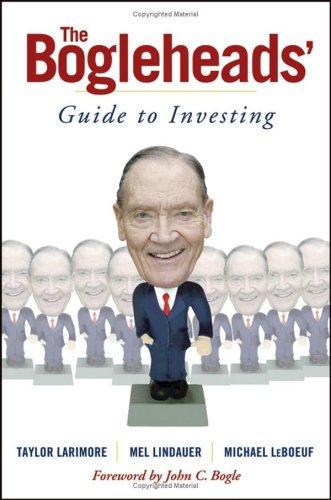
9. The Bogleheads’ Guide to Investing by TAYLOR LARIMORE, MEL LINDBERGER, and RICHARD FERRI
Taylor Larimore, Mel Lindberger, and Richard Ferri | ⭐ 4.5/5
Who it’s for: Someone who wants a complete investing education from people who believe the individual investor can win — without paying someone to manage their money
“If Collins gave you the framework and you want to go deeper on the investing mechanics, this is the book.” — Goodreads reviewer
The Bogleheads are the community built around Jack Bogle’s investment philosophy: low-cost index funds, diversification across asset classes, and a long-term perspective that ignores the noise of market volatility. This book is essentially the community’s training manual, written by three people who have spent decades implementing and teaching Bogle’s approach.
After a job loss, the question of what to do with your existing investments becomes acute. The Bogleheads approach is specifically designed for people who don’t want to spend their time thinking about the market — it assumes you will not beat the market consistently, so it doesn’t try to. It just gives you the market’s return, minus minimal fees.
What I appreciate about this book is its completeness. It covers asset allocation, tax-efficient investing, rebalancing, target-date funds, the mechanics of different account types, and how to structure your portfolio across taxable and tax-advantaged accounts. It’s not exciting. It is, however, exactly what you need if you want to understand what you’re actually doing when you click “buy” on an index fund.
My take: The most complete investing education you’ll get without going to business school. Not a job-loss-specific book — more of a foundational text on how to invest once you’ve stabilized your situation.
10. Lose Your Job in 30 Days: Turn Your Layoff into a Life-Changing Opportunity by KEVIN NG
Kevin Ng | ⭐ 4.2/5
Who it’s for: Someone who has just lost a job and needs an immediate, practical, no-nonsense guide for the first 30 days
“I’ve never been laid off before. This book gave me a plan when I didn’t have one.” — Amazon reviewer
Here’s what this book is not: it is not a comprehensive personal finance guide. It is a tactical manual for the first 30 days after a job loss, with specific, concrete steps for each day. The first week is about stabilization — filing for unemployment, cancelling unnecessary subscriptions, having the conversations you need to have with family and creditors. The second week is about financial triage — understanding exactly where you stand. The third and fourth weeks are about building momentum toward what’s next.
Kevin Ng’s approach is explicitly optimistic without being naive. He doesn’t tell you that the job loss is a gift or that it happened for a reason. He tells you that it’s a situation, that situations can be navigated, and that the specific actions in the first 30 days matter more than anything else you’ll do in the next year.
What I respect about this book is that it meets you where you are. You’re not going to read a comprehensive personal finance treatise in the first week after a layoff. You’re going to be stressed, probably scared, and not thinking at your best. Ng gives you a checklist. The checklist is the point.
My take: Best for the first 30 days after a job loss — especially the first week, when you need structure more than you need theory. Read the other books on this list once you’ve stopped spinning.
FREQUENTLY ASKED QUESTIONS
HOW DO I FILE FOR UNEMPLOYMENT AND WHAT SHOULD I EXPECT?
Filing for unemployment is the first practical step after a job loss, and the process varies significantly by country and state. In the United States, you file through your state’s unemployment insurance program, and the benefit amount is typically a percentage of your previous wages, up to a state maximum. The process requires documentation: your previous employer’s information, your Social Security number, and information about your employment history. Apply as soon as possible — there is typically a one-week waiting period before benefits begin. Broke by Tori Dunlop has a practical chapter on filing for unemployment and managing the administrative process without getting overwhelmed.
HOW MUCH SHOULD I HAVE IN AN EMERGENCY FUND?
The standard advice is three to six months of expenses. After a job loss, most people discover that their actual burn rate is different from what they assumed — often higher, sometimes lower. The first step is to calculate your actual monthly expenses, not your income. Then multiply by however many months you think you’ll need. Conservative advice says six months. After the disruption you’ve just experienced, that number probably doesn’t feel like enough. I Will Teach You to Be Rich by Ramit Sethi has a detailed framework for calculating your actual number, accounting for which expenses are fixed versus variable and which you can actually reduce.
SHOULD I TAP MY RETIREMENT SAVINGS TO COVER LIVING EXPENSES?
This is one of the most common questions after a job loss, and the answer is: it depends, but usually not as a first resort. Retirement accounts have specific protections and tax advantages that you’ll lose if you withdraw early. If you have a 401k, you may be able to borrow from it rather than withdraw. If you have an IRA, you can withdraw contributions without penalty (though you’ll owe taxes). The question is whether the disruption to your long-term plan is worth the short-term relief. Most financial advisors suggest exhausting other options first: unemployment benefits, reducing expenses, a bridge job. The Simple Path to Wealth by JL Collins has a clear-eyed analysis of when it makes sense to use retirement funds and when it doesn’t.
WHAT DO I DO IF I HAVE DEBT AND NO INCOME?
This is the acute crisis scenario, and it requires immediate action. The priority order is: first, file for unemployment benefits to establish any income stream. Second, contact your creditors — most have hardship programs that can reduce payments or pause interest temporarily. Third, identify which debts are priority (housing, utilities, food) and which are not (credit cards, personal loans). Fourth, consider a part-time job or gig work to create any income while you look for full-time work. Broke by Tori Dunlop is specifically written for this situation, with a practical day-by-day framework for the first 30 days of financial crisis.
HOW DO I REBUILD MY FINANCIAL CONFIDENCE AFTER A JOB LOSS?
Financial confidence is not the same as having money. It’s the belief that you understand the system well enough to navigate it, regardless of your current circumstances. Rebuilding it requires two things: a financial system that works (the practical part) and evidence that you can stick to it (the psychological part). Start with the practical: get your spending tracked, your debts organized, your emergency fund rebuilt. The evidence of following your own system is what builds genuine confidence over time. The Psychology of Money by Morgan Housel is the best book on this list for understanding why confidence and actual financial knowledge are different — and how to close the gap between them.
SHOULD I TRY TO REPLACE MY INCOME IMMEDIATELY OR FOCUS ON GETTING MY FINANCES IN ORDER FIRST?
Both, but not in the way you think. The first two weeks should prioritize stabilization — filing for unemployment, understanding your burn rate, making the calls you need to make to creditors and service providers. You cannot make good financial decisions while you’re in acute crisis mode and don’t know what your actual situation is. Once you have a clear picture — usually by week three — you can make a plan that includes both income replacement and financial organization. Lose Your Job in 30 Days by Kevin Ng gives you the day-by-day structure for exactly this: stabilization first, then planning, then action.
THE BOTTOM LINE
Let me tell you something that nobody taught my family: financial confidence is not about how much money you have. It is about understanding the system well enough to know what to do with whatever amount you have. The job loss didn’t make you bad with money. It exposed that nobody taught you this part. Now you’re learning it. That’s the whole difference.
The books on this list won’t make the job loss not have happened. They won’t replace the paycheck you lost or the security you felt you had. What they will do is give you the system that makes the next paycheck — whatever it is — work for you rather than disappearing into the same hole the last one did.
If you’re in the first 30 days: read Lose Your Job in 30 Days by Kevin Ng and Broke by Tori Dunlop. You need structure and you need it now. The theory can wait. The checklist is what keeps you from drowning.
If you’re past the first 30 days and ready to build: read The Simple Path to Wealth by JL Collins and I Will Teach You to Be Rich by Ramit Sethi. These give you the system that works whether you’re earning $40,000 or $140,000. The consistency of the system is the confidence.
And read The Psychology of Money by Morgan Housel whenever you can. Understanding why you make the financial decisions you make is more valuable than any specific piece of advice about what you should do with your money. The self-awareness is where real financial confidence starts.
Nobody taught my family this. That’s the whole point. You are now the person in the room.
Which book are you grabbing first?
Disclosure: This post contains affiliate links. If you purchase through these links, ReadPlug may earn a small commission at no extra cost to you. We only recommend books we’ve personally found valuable.