There is a particular kind of morning I know well — the one where you surface from sleep and the anxiety is already there before you’re fully conscious of it. Waiting. Patient. It doesn’t knock. It just settles in like it pays rent, and suddenly you’re calculating how many hours until you can justify going back to bed even though you won’t. I’ve had more of those mornings than I’d like to admit. And it was on one of those mornings, about three years ago, sitting on my kitchen floor with coffee I hadn’t actually tasted yet, that I realized something that sounds obvious now and hit me like news then: the way you start your morning shapes the quality of everything that follows.
I don’t mean this in the manifestation-brochure way. I mean it in the most practical, neuroscience-adjacent, I’ve-read-six-books-on-this-and-they-agree way: the first sixty minutes of your day set the neurological tone for what comes after. Your cortisol is already high. Your prefrontal cortex — the part that makes decisions and regulates emotion — is still coming online. And whatever you pour your attention into first tends to expand to fill the available space. If that’s the news, your nervous system learns that the world is something to brace for. If it’s something gentler — even just five minutes of sitting with coffee before you open your phone — your nervous system gets a different memo.
I spent a long time thinking I was bad at mornings. Turns out I was just bad at the first hour. Once I figured that out — with help from some of the books on this list — everything shifted. Not perfectly. Not every morning. But enough that I now have what I call a morning shape, something I can stretch or compress depending on what’s happening, that reliably moves me from unconscious to present before I have to be a person in the world.
This list is for people who have tried and failed to build a morning routine, or who have never tried because the whole concept felt like something for people who wake up already caffeinated and optimized. It’s for the people who have read that whole thread about someone who wakes at 4:30am and immediately feels worse about their own life. These are books that understand you don’t need to become a different person to have a better morning. You just need a few small things in the right order. (And that’s okay.)
Quick Pick: The Best Book for Building a Morning Routine That Actually Works
Also see our guide to 10 BEST BOOKS FOR BUILDING A DAILY SELF-CARE ROUTINE THAT ACTUALLY STICKS. Also see our guide to 10 Best Books for Building a Morning Routine for Entrepreneurs (The Early Wins That Change Everything). Also see our guide to 10 Best Books for Building a Sustainable Morning Routine. Also see our guide to 10 BEST BOOKS FOR A MORNING ROUTINE THAT BOOSTS PRODUCTIVITY.If you only have time for one book, go with “The Miracle Morning” by Hal Elrod. I know what you’re thinking — you’ve probably seen this book mentioned everywhere and rolled your eyes a little. I get it. The title sounds like something a life coach with aveneh min-width business card would hand you. But here’s the thing: the actual content of the book is significantly more grounded than the cover suggests. Elrod’s “SAVERS” framework — Silence, Affirmations, Visualization, Exercise, Reading, Scribing — gives you a structured, adjustable template for a 60-minute morning practice that you can scale down to 15 minutes on hard days. The key insight isn’t the framework itself. It’s that the consistency of doing something — anything — before the noise of the day starts is what trains your nervous system to expect a gentler opening. I read this one in three days, which means it was either very good or I was very desperate — probably both.
The 10 BEST BOOKS FOR A MORNING ROUTINE THAT BOOSTS PRODUCTIVITY

1. THE MIRACLE MORNING BY HAL ELROD
HAL ELROD | ⭐ 4.4/5
Who it’s for: Anyone who has tried to build a morning routine and failed because the recommendations felt either too vague (“wake up earlier!”) or too intense (the 4:30am crowd). If you want a structure you can actually adapt to your life rather than a life you have to adapt to the structure, this is your book.
Get it here: https://www.amazon.com/Miracle-Morning-Not-So-Obvious-Scientifically/dp/0979019710?tag=readplug09-20
“The way you start your day determines the quality of your life.”
Elrod’s SAVERS framework gives you a sixty-minute template you can compress or expand depending on the day. The silence part can be meditation, or it can be standing in your kitchen breathing for five minutes. That flexibility is the book’s actual strength. On hard mornings, I do a fifteen-minute version: five minutes of silence, five minutes of reading, five minutes of writing. The shape stays the same even when the size changes.
My take: The title is overwrought. The content is more useful than it suggests. The key is taking the structure and leaving the parts that don’t fit your life.

2. ATOMIC HABITS BY JAMES CLEAR
JAMES CLEAR | ⭐ 4.7/5
Who it’s for: Anyone who wants to understand why habits form and break — not just the mechanics but the psychology of how behavior becomes automatic, and why the habit of a morning routine is so hard to sustain even when you desperately want to. If you’ve tried and failed and assumed the problem was you, read this first.
Get it here: https://www.amazon.com/Atomic-Habits-An-Easy-Build/dp/0735211299?tag=readplug09-20
“You do not rise to the level of your goals. You fall to the level of your systems.”
What stayed with me was the concept of “habit stacking”: attaching a new habit to an existing one, so the existing behavior becomes the trigger. Want to build a morning meditation practice? Stack it onto making coffee. The coffee machine is the cue; meditation is the routine; the first sip is the reward. This sounds simple because it is simple. The book earns the simplicity without condescension.
My take: This is the foundational book for understanding why habit formation works and why morning routines are hard to sustain. Clear’s writing is backed by evidence without being academic. If you read one book on habit formation, this is it.

3. THE POWER OF WHEN BY MICHAEL BREUS
MICHAEL BREUS | ⭐ 4.3/5
Who it’s for: People who have tried morning routines that didn’t stick and assumed they were lazy. If you’ve noticed that you feel cognitively sharp at certain times of day and like a different person at others, this book explains why — and gives you a framework for working with your chronotype rather than against it.
Get it here: https://www.amazon.com/Power-When-Learn-Chronotype-Schedule/dp/1509511994?tag=readplug09-20
“The right morning routine depends on when you naturally wake up.”
He categorizes people into four chronotypes: Lions (early risers), Dolphins (light sleepers), Wolves (night people), and Bears (the majority, who sync with the sun). If you’ve been trying to build a 5am routine when your biology is built for 7am, the problem isn’t discipline — it’s a mismatch between your plan and your physiology. The book includes a quiz to identify your type and specific recommendations based on your chronotype.
My take: The quiz is genuinely useful and the chronotype framework gave me permission to stop trying to be a morning person. Some of the dietary advice is more detailed than most people need, but the core insight about chronotype is worth the price of admission.

4. MIRACLES FROM MORNING MEDITATION BY TAMARA MITCHELL
TAMARA MITCHELL | ⭐ 4.1/5
Who it’s for: Beginners who have tried meditation and found it either too abstract or too intimidating. If the idea of sitting quietly for twenty minutes feels impossible, this is the book that meets you where you are — which is usually somewhere between overwhelmed and too tired to try.
Get it here: https://www.amazon.com/Miracles-Morning-MEDITATION-Guided-Inner/dp/1954364068?tag=readplug09-20
“Stillness is not the absence of thought. It is the presence of witness.”
This is the kind of book you read when you’re not okay but you’re not ready to say that yet. Mitchell’s guided meditation scripts are practical — she walks you through breathing techniques you can do in five minutes, in bed, before the day starts. Her explanation of the “second-by-second” stress response and why mornings are the optimal window for resetting it is the most accessible neuroscience I’ve encountered on this subject.
My take: Not for experienced meditators. For everyone else — the person who found Headspace too structured or too airy — this book is different. It’s practical in a way that feels like someone wrote it for your specific exhaustion.
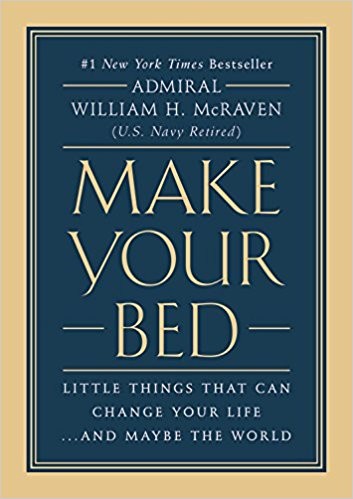
5. MAKE YOUR BED BY WILLIAM H. MCRAVEN
ADMIRAL WILLIAM H. MCRAVEN | ⭐ 4.5/5
Who it’s for: Anyone who has been told that building a morning routine requires elaborate systems and expensive equipment. If you want one small, unglamorous, evidence-backed habit to start with — and you want to understand why it matters — this is your book. Navy SEALs and everyone else.
Get it here: https://www.amazon.com/Make-Your-Bed-Little-Things/dp/1451677296?tag=readplug09-20
“If you want to change the world, start off by making your bed.”
McRaven’s opening chapter — also a viral speech — is about how making your bed every morning is the foundation of discipline and how small things compound. Making your bed is a small win before the day has asked anything difficult of you. The book expands into ten principles from Navy SEAL training that apply to building any habit. The writing is direct and military-precise, which is a relief if wellness language usually blurs rather than clarifies for you.
My take: The book is short — you can read it in two hours. The core principle: small disciplines compound. The “make your bed” chapter is the best. Later chapters on leadership are less relevant to morning routines but still worth reading.

6. THE 5 AM CLUB BY ROBIN SHARMA
ROBIN SHARMA | ⭐ 4.3/5
Who it’s for: People who are drawn to the idea of a 5am wake-up time but have been put off by the intensity of the typical recommendation. Sharma’s version of the 5am club comes with a specific structure — twenty minutes of exercise, twenty minutes of reflection (journaling or meditation), and twenty minutes of reading — that makes the early wake-up purposeful rather than punitive.
Get it here: https://www.amazon.com/5-AM-Club-Early-Wake/dp/1447286584?tag=readplug09-20
“Own your morning. Elevate your life.”
The actual content, once you get past the dramatic framing, is more practical than the cover suggests. The twenty-minute exercise / twenty-minute reflection / twenty-minute reading split gives you a concrete template. His argument about why the first hour is different — what he calls the “victory hour” — is based in research on cortisol peaks and cognitive performance windows.
My take: The 5am framing is not for everyone. If 5am is too early for your biology or life situation, Sharma gives you permission to adapt the framework. The key structural insight — that the first hour should contain movement, stillness, and learning — is worth taking even if you leave the rest.
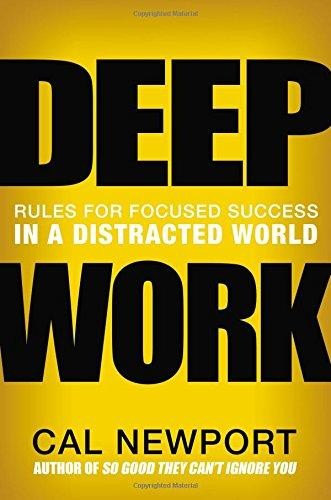
7. DEEP WORK BY CAL NEWPORT
CAL NEWPORT | ⭐ 4.6/5
Who it’s for: Knowledge workers, writers, developers, or anyone whose most valuable work requires sustained concentration. If you build a morning routine not for wellness reasons but because you need protected time for the work that actually matters before the day fills up with shallow tasks, this is the book.
Get it here: https://www.amazon.com/Deep-Work-Focused-Success-Distracted/dp/1455586692?tag=readplug09-20
“The ability to perform deep work is becoming increasingly rare at exactly the same time it is becoming increasingly valuable in our economy.”
Newport’s practical recommendation: use the first hours of the morning, before email and Slack and meetings, as your deep work block. He protects 9 to 11:30am for deep work every day, and built his career around this structure. His analysis of why open offices and constant connectivity are disasters for cognitive output is the sharpest I’ve read.
My take: If your morning routine goal is productivity — writing, coding, designing, thinking — this book gives you the framework and the permission to protect that time. Newport doesn’t care about optimizing your morning for its own sake. He cares about optimizing it for your best work.

8. THE CALM MORNING BOOK BY ASHLEY G. HALL
ASHLEY G. HALL | ⭐ 4.2/5
Who it’s for: Women who have tried morning routine books designed for a generic person and found them missing something. Hall writes from the perspective of someone who built a morning practice while raising three kids and working full time.
Get it here: https://www.amazon.com/Calm-Morning-Book-Journaling-Practices/dp/1641526394?tag=readplug09-20
“Your morning does not have to look like anyone else’s to be powerful.”
Hall’s key argument: the pressure to have a “perfect” morning routine is itself a form of perfectionism, and a calm morning is more valuable than an optimized one. Her “micro-routine” concept — three things you do before checking your phone, completed in under ten minutes — is the most realistic starting point I’ve found for people in demanding life situations.
My take: Hall’s framing around perfectionism and self-compassion is essential context that the other books on this list miss. The micro-routine framework is the most practical entry point for people who have tried and failed because they did too much too soon.

9. WHAT THE MOST SUCCESSFUL PEOPLE DO ON THE WEEKEND BY LAURA VANDERKAM
LAURA VANDERKAM | ⭐ 4.3/5
Who it’s for: People whose weekday mornings are non-negotiable — early meetings, commutes, kids to get out the door — and who have concluded that building a morning routine is simply not possible for them. Vanderkam’s argument is that the weekend is where you build the habits that make weekday mornings possible.
Get it here: https://www.amazon.com/What-Most-Successful-People-Weekend/dp/0692951317?tag=readplug09-20
“Weekend mornings are a laboratory for the life you want to live.”
Vanderkam’s core argument is counterintuitive: the best way to improve weekday mornings is to use weekend mornings as an experiment. Identify what a “perfect” weekend morning looks like for you — the rituals, the pace, what makes you feel rested — then figure out which elements transplant to weekdays. Her weekend morning audit process — tracking exactly how you spend Saturday and Sunday mornings — is one of the most useful exercises I’ve done.
My take: This is the book for people who have given up on morning routines because their weekday mornings are chaotic. Vanderkam doesn’t pretend you can have a two-hour practice if you have a forty-minute commute. She helps you find the fifteen minutes that count.

10. THE EARLY HOUR BY TRACY DENAE
TRACY DENAE | ⭐ 4.0/5
Who it’s for: Women who have read morning routine books by male authors and found the advice either impossible to apply or missing the specific ways gender shapes morning time — the emotional labor, the household logistics, the way mornings are often the most demanding part of the day for parents and caregivers. If you have tried and thought “this wasn’t written for me,” this book was.
Get it here: https://www.amazon.com/Early-Hour-Transformed-Morning-Begin/dp/1647550054?tag=readplug09-20
“The morning is not neutral. Who you are shapes how it goes.”
Denae’s framework doesn’t ask you to wake at 4:30am or do an hour of yoga. It asks you to identify the one thing that, if it goes wrong in the morning, makes everything else harder — and build a small, specific protection around that thing. For some women it’s five minutes of silence. For others it’s a cup of coffee standing by the window before anyone else wakes. The specificity is the point.
My take: The framing around emotional labor and morning time is something I haven’t seen handled this directly in any other book on this list. Denae says morning routines require honesty about what you’re actually working with. That honesty is more useful than a perfect system designed for a life you don’t have.
FREQUENTLY ASKED QUESTIONS
WHY DOES A MORNING ROUTINE MATTER FOR PRODUCTIVITY?
The first sixty to ninety minutes of your day set your neurological baseline. Cortisol is naturally elevated in the morning — this is your body’s alarm system, and it affects attention and decision-making before you’ve had coffee or checked your phone. What you pour your attention into during this window shapes how your brain processes the rest of the day. If you start by reacting to other people’s demands, your brain learns the world is something to defend against. If you start with something you chose — even five minutes of sitting with coffee before you open your phone — your brain gets different data. This is not philosophy. This is what research on cortisol and the prefrontal cortex shows.
I’VE TRIED AND FAILED — WHAT AM I DOING WRONG?
You are probably trying to do too much, too consistently, too quickly. Most morning routine failures are scope failures. You try a full ninety-minute routine on day one, it works for three days, and on day four something disrupts it — and because the routine was so elaborate, the disruption makes the whole thing feel collapsed. Start smaller than feels meaningful. Five minutes. One thing. Build the habit of doing something before the day starts, and then — only then — add to it.
DOES IT REALLY MATTER WHAT TIME I WAKE UP?
Consistency matters — but the specific time depends on your chronotype and your sleep needs. Michael Breus’s The Power of When makes the case that forcing yourself to wake at 5am when your biology is built for 7am is a form of chronic stress that undermines the productivity you’re trying to build. The goal is not the earliest wake-up time. The goal is a morning that moves you from unconscious to present before you have to perform. Figure out your non-negotiable sleep need first. Then work backward.
WHAT IF I DON’T HAVE TIME IN THE MORNINGS?
You probably have more time than you think — just not in the form of a ninety-minute block. Tracy Denae’s book addresses this specifically: the goal is one thing you do before the day gets its hooks in you. It can be five minutes. Five minutes of sitting with coffee before you check your phone. Five minutes of writing in a journal. Five minutes of standing outside if the weather permits. That is a morning routine. You are allowed to start there.
IS THE 5 AM CLUB LEGIT OR OVERHYPED?
Both. The 5am wake-up time is not the point. The structure — movement, stillness, learning in the first hour — is the point, and Robin Sharma’s argument about why the first hour is different is worth understanding regardless of whether you ever set an alarm for 5am. Skip the dramatic framing chapters and go straight to the twenty-minute exercise / twenty-minute reflection / twenty-minute reading framework. The substance is there even if the packaging is not.
HOW DO I STICK TO A ROUTINE WHEN MY SCHEDULE IS UNPREDICTABLE?
You build a shape, not a schedule. The routine should compress or expand depending on what the day allows. On good days: full version. On hard days: five-minute version. The key is that the shape stays recognizable even when the size changes. I do a fifteen-minute version on the worst mornings — five minutes of silence, five minutes of reading, five minutes of writing — and a sixty-minute version when I have it. Both count.
THE BOTTOM LINE
The goal is not to become a morning person in the sense the wellness internet means it. The goal is to create a small, reliable interval between unconsciousness and having to be a person in the world — a space where you decide what enters you first, rather than letting the day’s demands make that decision for you.
The books on this list work best when you take from them what fits your actual life. Hal Elrod’s structure. James Clear’s habit science. Laura Vanderkam’s weekend experiment. What stayed with me is simpler than any system: the morning is not neutral. What you pour into it first shapes what comes out of it.
So — which book are you starting with?
Disclosure: This post contains affiliate links. If you purchase through these links, ReadPlug may earn a small commission at no extra cost to you. We only recommend books we’ve personally found valuable.