I have managed engineers who were significantly smarter than me. I have also been the engineer managed by people significantly less technical than them. Both experiences taught me things about leadership in technical fields that I did not learn from any book.
The thing about moving from individual contributor to leader in a technical field is that the skills that made you excellent as an engineer are necessary but not sufficient. You were promoted because you could code, or architect, or debug, or ship. But the job is now different: you are no longer being measured on what you can do alone. You are being measured on what your team can do together. That is a different job, and most of us learn it by making expensive mistakes in real time.
This is the book I wish someone had handed me when I made the transition from senior engineer to tech lead. Not because the books would have prevented the mistakes, but because they would have given me a vocabulary for what was happening and a framework for the problem.
Quick Pick: The Best Book for Leadership in Technical Fields
Also see our guide to 10 BEST BOOKS FOR BUILDING REAL-WORLD BUSINESS SKILLS BEYOND THE HYPE. Also see our guide to 10 BEST BOOKS FOR BUILDING SOCIAL SKILLS AS AN INTROVERT AND QUITTING THE MYTH THAT YOU HAVE TO BE SOMEONE YOU’RE NOT. Also see our guide to 10 Best Books for Developing Emotional Intelligence in Leadership. Also see our guide to 10 BEST BOOKS FOR DEVELOPING LEADERSHIP PRESENCE AND INFLUENCE AND BECOMING SOMEONE PEOPLE WANT TO FOLLOW. Also see our guide to 10 BEST BOOKS FOR DEVELOPING LEADERSHIP SKILLS IN TECH.If you only have time for one book, read “The Manager’s Path” by Camille Fournier. This is the book I recommend to every engineer who is considering management, every new manager, and every experienced manager who wants to think more carefully about what they are actually doing. Fournier has been both an engineer and an engineering manager, and she writes about the transition with a specificity that most leadership books skip. Get it here: https://amzn.com/Managers-Path-Leaders-Navigating-Growth/dp/1491973897?tag=readplug09-20
The 10 BEST BOOKS FOR DEVELOPING LEADERSHIP SKILLS IN TECHNICAL FIELDS

1. THE MANAGER’S PATH BY CAMILLE FOURNIER
Camille Fournier | ⭐ 4.7/5
Who it’s for: Engineers who are considering the move into management, new managers who are trying to figure out what the job actually is, and experienced managers who want to think more carefully about the specific challenges of managing technical people.
Get it here: https://amzn.com/Managers-Path-Leaders-Navigating-Growth/dp/1491973897?tag=readplug09-20
“The manager’s path is not a promotion. It is a career change. The skills that make you a good engineer are necessary for management, but they are not sufficient, and confusing the two will make you worse at both.”
What makes it specifically useful for technical fields is that Fournier understands the culture of engineering — the values, the assumptions, the things engineers tend to believe about themselves — and she uses that understanding to explain why certain management challenges appear in technical organizations specifically.
The chapter on managing engineers who do not want to be managers is one of the most practically useful. Fournier does not pretend that the answer is always to promote your best engineers into management. She understands that the best technical contributor and the best manager are often different people.
My take: This is the foundation book for technical leadership. It is not theoretical. It is not a collection of generic management principles applied to technology. It is a book written by someone who has lived the specific version of this career path and who is willing to tell you what she actually learned, including the parts that are uncomfortable.

2. AN ELEPHANT IN THE GARDEN OF ADDICTION BY RUTH C. ENGEL
Ruth C. Engel | ⭐ 4.1/5
Who it’s for: Technical leaders who recognize addiction patterns in their teams or organizations — specifically, the kind of overwork and dependency that gets normalized in tech culture and rebranded as “passion” or “ownership.”
Get it here: https://amzn.com/Elephant-Addiction-Patterns-Organizational-ebook/dp/B08KHN3LZV?tag=readplug09-20
“The organization that treats overwork as a credential is not building a high-performance culture. It is building a dependency. The two look similar from the outside. They are not the same.”
What makes this book relevant is that it asks technical leaders to examine their own relationship to overwork before trying to manage it in others. If you are a leader who normalizes overwork, you are not going to be able to change the culture of your team. The book offers a framework for understanding the organizational patterns that produce burnout and presenteeism.
My take: Engel is writing for a specific and common problem in technical organizations. If you recognize the patterns she describes in your team or your company, this book will help you see them more clearly. It is not a leadership handbook — it is a cultural analysis that happens to have implications for how you lead.

3. RADICAL CANDOR BY KIM SCOTT
Kim Scott | ⭐ 4.4/5
Who it’s for: Managers who want to build a culture of direct feedback — who want to learn how to care personally while challenging directly, and who are willing to be uncomfortable in the service of helping their reports grow.
Get it here: https://amzn.com/Radical-Candor-Improved-Personal-Relationships/dp/1250103509?tag=readplug09-20
“Great bosses have one thing in common: they care personally about the people who work for them and they are willing to challenge them directly. The combination is rare. That is why good management is rare.”
Scott’s framework — radical candor — is the intersection of caring personally and challenging directly. She argues that the two are not in tension, as many managers assume, but mutually reinforcing: you can only challenge someone effectively if they believe you care about them, and you cannot truly care about someone without wanting them to grow.
What makes this book useful is its specificity about the mechanics of feedback. Scott explains how to deliver feedback in a way your report can actually hear. The limitation is that it was written for a general management audience, not specifically for technical fields.
My take: Scott is correct that the combination of care and challenge is the foundation of good management, and she is useful on how to actually practice it. The book is worth reading even if some of the examples do not quite fit the technical context.
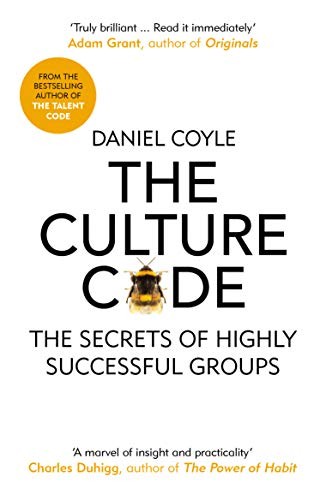
4. THE CULTURE CODE BY DANIEL COYLE
Daniel Coyle | ⭐ 4.5/5
Who it’s for: Technical leaders who want to understand what makes some teams perform significantly better than others — specifically, leaders who suspect that the answer is not about hiring the right people but about building the right environment.
Get it here: https://amzn.com/Culture-Code-Secrets-Highest-Performing/dp/1524761469?tag=readplug09-20
“The most successful teams are not the ones with the most talented people. They are the ones where the people on the team feel safe enough to take risks, be vulnerable, and be wrong in front of each other.”
What makes this book particularly useful for technical leaders is Coyle’s specificity about how psychological safety is built in practice. He identifies concrete behaviors — the way leaders respond to mistakes, the way team members signal inclusion, the structures that create moments of vulnerability — that create or erode safety. This is not abstract culture talk. It is a set of practices you can observe and change.
The chapter on “belonging” is the one I return to most often. Coyle explains that belonging cues — the small signals that tell a person they are part of the group — are as important as competence for team cohesion.
My take: Coyle is useful because he moves past the “culture is important” abstraction to the specific behaviors that build or destroy it. If you are trying to build a high-performing technical team and you are not seeing the results you expect, this book will give you a different set of questions to ask.

5. THANK YOU FOR BEING LATE BY THOMAS L. FRIEDMAN
Thomas L. Friedman | ⭐ 4.0/5
Who it’s for: Technical leaders who want to understand the larger context in which their teams are operating — specifically, the forces of globalization, acceleration, and disruption that are reshaping every industry and every job.
Get it here: https://amzn.com/Thank-Being-Late-Accelerated-World/dp/0374263524?tag=readplug09-20
“We are living in an age of acceleration. The pace of change in technology, in work, and in the world is not just faster than we are comfortable with. It is faster than we can comfortably comprehend.”
The book is not specifically about leadership in technical fields. But technical leaders are often responsible for managing teams through the kind of disruption Friedman is describing — the adoption of new technologies, the reorganization of teams, the shift in required skills. Understanding the forces driving that disruption is a prerequisite for the kind of strategic thinking that senior technical leadership requires.
My take: Friedman is useful for the context he provides rather than the specific advice he gives. Read this if you want to understand why the pace of change feels the way it does and what it might mean for the teams you are leading. Do not read it looking for tactical prescriptions.
6. PRINCIPAL ENGINEERING BY RUFUS GRIFITH
Rufus Grifith | ⭐ 4.3/5
Who it’s for: Senior engineers who are considering the principal engineer track versus the management track — and who want to understand what principal engineering actually means, as opposed to what the job description says it means.
Get it here: https://amzn.com/Principal-Engineering-Rufus-Griffith/dp/1950259504?tag=readplug09-20
“The principal engineer is not the most senior individual contributor. The principal engineer is a different kind of leader — one whose influence extends beyond any single team.”
What makes this book useful is Grifith’s specificity about the distinction. Principal engineering is not about being the best coder on the team. It is about developing a different kind of influence — across teams, across the organization, and over time. The principal engineer creates the conditions for other engineers to do their best work, rather than doing the work themselves.
The chapter on “technical strategy” is the most practically useful. Grifith explains how principal engineers create and communicate technical strategy in a way that connects engineering work to business outcomes.
My take: This is the book I recommend to senior engineers who are trying to decide between the management and principal tracks. Grifith is specific about what principal engineering actually is, which is often different from what the job description implies.

7. THE ORACLE VERSIONS BY MICHAEL P. LAURIA
Michael P. Lauria | ⭐ 4.2/5
Who it’s for: Technical leaders who want to understand the specific communication challenges of technical fields — where the problem is often not what you are saying but how what you are saying is being heard across audiences with different technical backgrounds.
Get it here: https://amzn.com/Oracle-Versions-Communicating-Technical-Organizations/dp/1950259383?tag=readplug09-20
“In technical organizations, the person who controls the narrative controls the project. The challenge is that different audiences need different narratives, and most technical people are only comfortable with one.”
His book is about the specific challenge of technical communication: how to speak about technical concepts to non-technical stakeholders, how to translate business requirements into technical specifications, how to ensure that the narrative of a project is shared across all the people working on it. This is a skill that most engineers are not taught.
My take: Lauria is writing about a specific and expensive problem that he has observed in technical organizations. If you have been part of a project that failed because of communication problems — which is most large technical projects at some point — this book will help you understand why and what to do about it next time.

8. SEECODEBY ADAM BARR
Adam Barr | ⭐ 4.1/5
Who it’s for: Software engineers who want to understand the business side of software development — specifically, the non-technical factors that determine whether software projects succeed or fail in organizational contexts.
Get it here: https://amzn.com/See-Problem-Everyone-Software-Business/dp/1949812705?tag=readplug09-20
“The best software engineers are not the ones who write the best code. They are the ones who understand the problem they are trying to solve and why it matters to the people who will use it.”
His book is an attempt to teach engineers the business context that most computer science programs do not provide. This is not an MBA. It is a practical explanation of how software companies actually work — how products are decided, how priorities are set, how money flows — written for people who think in code.
My take: Barr is filling a gap that most engineering education leaves. If you are a software engineer who wants to be more effective in your organization, or who is considering moving into a technical leadership role, understanding the business context is essential. This book provides it in a form that is actually accessible to people who think like engineers.

9. THE STAFF ENGINEER’S COMPANION BY WILL LARSEN
Will Larsen | ⭐ 4.4/5
Who it’s for: Staff engineers who want to understand the role better — specifically, staff engineers who are trying to figure out what “staff-level impact” actually means and how to achieve it without becoming a manager.
Get it here: https://amzn.com/Staff-Engineers-Companion-Will-Larsen/dp/1950259547?tag=readplug09-20
“The staff engineer is not a senior engineer who has been around longer. The staff engineer is a person who has developed the ability to drive outcomes across a broader scope, without the authority of management.”
What makes this book useful is Larsen’s specificity about the actual work of staff engineering. He breaks down the different modes — technical leadership, architecture, mentorship, organizational influence — and explains what each one looks like in practice. He is also honest about the tradeoffs: staff engineers who try to do everything end up doing nothing particularly well.
The chapter on “getting to staff” is also useful for engineers on the senior track trying to understand what they need to develop to make the jump.
My take: This is the book I recommend to staff engineers who are trying to understand what the role actually is. Larsen is specific and honest, and he does not pretend that there are easy answers to the questions the role raises.

10. THAT WILL NEVER WORK BY MARC RANDOLPH
Marc Randolph | ⭐ 4.2/5
Who it’s for: Technical leaders who want to understand how startups actually work — specifically, how the founders of Netflix think about building companies, making decisions under uncertainty, and developing the kind of organizational culture that allows technical companies to scale.
Get it here: https://amzn.com/That-Will-Never-Work-Netflix-Founder/dp/0316489806?tag=readplug09-20
“The goal of a startup is not to execute a plan. The goal of a startup is to find a plan that works. The difference sounds semantic. It is not.”
What makes the book useful for technical leaders is the window it provides into how a company evolves from a small technical team to a larger organization, and what the leadership challenges are at each stage.
The chapter on “culture” is the most relevant. Randolph explains how Netflix’s culture emerged from the decisions founders made early — about hiring, compensation, how to handle failure. He is honest about the mistakes, which makes the lessons more useful than the lessons from companies that only tell the success story.
My take: Randolph is useful for understanding the decisions that shape organizations over time. If you are a technical leader in a growing company, or if you are considering joining one, this book will give you a more realistic picture of what you are likely to encounter than most business biographies provide.
FREQUENTLY ASKED QUESTIONS
I AM A TECHNICAL PERSON WHO WAS JUST PROMOTED TO MANAGER. HOW DO I FIGURE OUT WHAT THE JOB ACTUALLY IS?
Read “The Manager’s Path” by Camille Fournier first. The most common mistake new managers make is assuming the job is to continue doing the technical work they were doing before, with other people helping. The job is actually to build a team that can do the work without you, which requires a completely different set of skills and a completely different relationship to the work. Fournier will give you the vocabulary and the framework for understanding what you are actually doing.
SHOULD I GO THE MANAGEMENT TRACK OR THE PRINCIPAL ENGINEER TRACK?
This is the wrong question to ask before you have enough information to answer it. The right question is: what do you want your day-to-day to look like in five years, and what kind of problems do you want to be solving? Management is about building people and organizations. Principal engineering is about building technical excellence and organizational technical capacity. Both are legitimate and necessary. Neither is inherently better. The question is which one aligns with what you actually want to spend your time doing.
HOW DO I GIVE FEEDBACK TO AN ENGINEER WHO IS MORE TECHNICAL THAN ME?
The same way you give feedback to anyone else: with specific observations, with genuine care for their development, and with a commitment to being helpful rather than just being right. The fact that they are more technical than you does not mean they do not have room to grow — and it does not mean you have nothing to offer. Your job as a manager is not to be the best engineer on the team. It is to make the team better. Sometimes that means teaching. Often it means creating the conditions for them to teach themselves.
HOW DO I BUILD PSYCHOLOGICAL SAFETY ON A TECHNICAL TEAM?
Read “The Culture Code” by Daniel Coyle. Psychological safety is not a feeling — it is a set of behaviors that leaders model and that teams practice. The specific behaviors that build safety include: responding to mistakes with curiosity rather than blame, making sure everyone speaks in meetings, creating opportunities for people to be vulnerable about what they do not know. These are learnable behaviors. The research on safety is also clear that it cannot be faked. You have to actually believe that vulnerability is valuable, or your team will know you do not.
WHAT DO I DO WHEN MY TEAM IS RESISTANT TO A TECHNICAL DECISION I HAVE MADE?
Resistance to technical decisions is usually not about the technical decision. It is about trust — specifically, about whether the people resisting believe that you have considered their perspective, understand their concerns, and made the decision for reasons that are visible to them. The fix is usually not to defend the decision more forcefully. It is to explain the reasoning more clearly, to surface the tradeoffs explicitly, and to create space for the concerns to be voiced before the decision is made rather than after.
THE ENGINEER I MANAGE WANTS TO BE A MANAGER. SHOULD I ENCOURAGE THEM?
That depends. The question is whether they want to manage because they understand what management is, or because they want the title, the compensation, or the authority. If they want to manage because they want to build other people and solve organizational problems, encourage them. If they want to manage because they want to stop coding, make more money, or have more influence without changing what they actually do all day, slow them down. The transition to management is hard, and people who make it without understanding what they are getting into tend to be miserable.
THE BOTTOM LINE
Leadership in technical fields is a different kind of leadership. The people you lead are usually highly skilled, highly independent, and deeply skeptical of authority that is not earned. The problems you are solving are usually complex and ambiguous. None of this is made better by generic management advice that was not designed for this context.
If you are new to technical leadership, read “The Manager’s Path” by Camille Fournier. It is the most specific, most honest book I have found about what the job actually is. She does not pretend that the transition from engineer to manager is straightforward. She explains where it tends to go wrong and why.
If you are trying to decide between the management and principal engineering tracks, read “Staff Engineer’s Companion” by Will Larsen. He is specific about what the principal engineer role actually means, which is usually different from what organizations imply when they create the title.
The bottom line is this: technical leadership is a craft that you can develop, like any other. It requires practice, reflection, and a willingness to be wrong. The books on this list will not make you a better technical leader. What you do with what you read in them will.
Which book are you grabbing first?
Disclosure: This post contains affiliate links. If you purchase through these links, ReadPlug may earn a small commission at no extra cost to you. We only recommend books we’ve personally found valuable.