I have a daughter named Nora, who is nine. She is at the exact age where she has started to notice things — not just what people say, but how they say it, what it means when someone doesn’t text back, why certain girls at school seem to move in groups like they’re choreographed. She is starting to understand social dynamics the way I understood them at thirty-six, after my divorce, which is to say: she is realizing for the first time that there are rules she doesn’t know, and that knowing them matters.
This is the age I think of as the tween cusp — when girls are still children in many ways but are beginning to operate in a social world that has expectations they haven’t learned yet. They’re building the foundations of their self-image, their friendships, their sense of where they fit. And they’re doing it at an age when their brains are particularly susceptible to social comparison, to the particular kind of anxiety that comes from not knowing if you belong.
I remember being eleven. I remember the specific feeling of being on the outside of a conversation I wanted to be part of, of wanting to say something but not being sure if it was the right thing, of figuring out who I was by figuring out who I wasn’t. I remember realizing, around that age, that I had been quietly making myself smaller to fit into spaces, and not knowing yet that I was doing it.
Nora is nine, and I can already see her starting to do the same thing. And so I’ve been reading — everything I can find about how to help girls build confidence at this age, how to help them navigate friendships that are complicated by new social demands, how to help them become who they’re going to be without losing the self they already are.
These are the books that helped me understand what Nora needs — and what I needed at her age, and what I still need.
Quick Pick: The Best Book for Tween Girls’ Confidence
Also see our guide to 10 Best Books for Building Confidence as a First-Time Manager. Also see our guide to 10 BEST BOOKS FOR BUILDING CONFIDENCE AS AN INTROVERT AND LEARNING TO THRIVE IN SOCIAL SITUATIONS. Also see our guide to 10 Best Books for Building Confidence in Your 40s. Also see our guide to 10 Best Books for Building Confidence and Friendship in Tween Girls. Also see our guide to 10 Best Books for Building Confidence and Friendship in Tween Girls.If you only have time for one, read “Untangled” by Lisa Damour. This book is about the science of teenage girls — what’s actually happening in their brains, why they do the things they do, why they seem to become different people overnight sometimes. Damour is a psychologist who actually works with teenage girls, and she explains the developmental psychology in ways that are useful without being reductive. I found myself constantly stopping to think about Nora at different ages and understanding, for the first time, what was actually happening. This isn’t a how-to manual. It’s a framework for understanding.
The 10 Best Books for Building Confidence and Friendship in Tween Girls

1. UNTANGLED by Lisa Damour
Lisa Damour | ⭐ 4.7/5
Who it’s for: Parents who want to understand what’s actually happening in their daughter’s brain during the tween and teen years.
Get it here: https://www.amazon.com/Untangled-Guiding-Teenage-Story/dp/0553445939?tag=readplug09-20
“Teenage girls are not behaving badly. They’re growing up.”
Damour’s central argument is that teenage behavior that seems baffling — mood swings, friend drama, risk-taking, the need for independence mixed with the need for parental support — all makes sense when you understand the brain development happening underneath. She’s not making excuses; she’s explaining. And once you understand why your daughter is doing something, you can respond more effectively.
For understanding the tween years specifically, the early chapters are essential. Damour explains the transition from childhood to adolescence in ways that helped me see Nora with new eyes. She’s not being difficult. She’s developing. And the things that seem frustrating — the drama, the sensitivity, the way she can be fine one moment and devastated the next — are all features, not bugs.
My take: This is the book I recommend to every parent of a tween girl I know. It won’t solve problems, but it’ll help you understand them.

2. IGEN by Jean M. Twenge
Jean M. Twenge | ⭐ 4.4/5
Who it’s for: Parents who want to understand how social media and digital culture are affecting their daughters’ friendships and self-image.
Get it here: https://www.amazon.com/iGen-Generations-Confident-Clueless/dp/1501152013?tag=readplug09-20
“iGen is the first generation to spend their entire adolescence with a smartphone.”
Twenge’s research on generational differences documents how smartphone and social media use has changed childhood dramatically. Her data on the mental health impacts on teen girls specifically is essential reading for any parent raising girls in the digital age. She doesn’t editorialize — she presents the data, and the data is alarming.
For tween girls specifically, the book is useful because it helps you understand what your daughter is navigating before she’s fully in it. My daughter is nine, and reading this book made me realize that the pressures Twenge describes are starting earlier than I thought. Knowing what’s coming helps me prepare.
My take: The research is longitudinal and extensive. The conclusions are sobering but important for any parent with a smartphone-toting child.

3. BRAVING THE WILDERNESS by Brené Brown
Brené Brown | ⭐ 4.6/5
Who it’s for: Parents who want to teach their daughters to be authentically themselves, even when it’s hard.
Get it here: https://www.amazon.com/Braving-Wilderness-Quest-Belonging/dp/0812995852?tag=readplug09-20
“True belonging is not something you negotiate. It’s something you practice.”
Brown’s research on belonging and authenticity applies to tween girls in specific ways. At this age, girls are learning the negotiation between belonging and being themselves — when to fit in, when to stand out, when the cost of belonging is too high. Brown offers a framework for thinking about authenticity as a practice rather than a destination.
For parents, the value of this book is in understanding what you’re trying to model. Your daughter isn’t going to learn authenticity from a book. She’s going to learn it from watching you practice it. This book helps you understand what you’re modeling.
My take: The concept of “fitting in vs. belonging” is one I come back to constantly. Nora is learning which one she wants.
4. THE CONFIDENT GIRL by Michelle I. Card
Michelle I. Card | ⭐ 4.4/5
Who it’s for: Parents who want practical strategies for building their daughter’s confidence before the teenage years hit.
Get it here: https://www.amazon.com/Confident-Girl-Developing-Daughters-Self/dp/0805755659?tag=readplug09-20
“Confidence is not about believing you’ll always succeed. It’s about believing you’ll always try.”
Card offers practical strategies for building confidence in girls — specific phrases to use, specific kinds of praise to give (and avoid), specific kinds of challenges to set. This isn’t about telling girls they’re amazing. It’s about helping them develop the skills that actual confidence is built on: trying, failing, trying again, asking for help, being comfortable with discomfort.
For tween girls specifically, the book is useful because it gives you language for conversations you might not know how to have. The chapter on “productive struggle” helped me understand why I was so often tempted to rescue Nora from difficult situations — and why that temptation was something I needed to resist.
My take: Practical and specific. Not everything applies, but enough does that I keep coming back.

5. FOR GIRLS ONLY by Shaunti Feldhahn
Shaunti Feldhahn | ⭐ 4.3/5
Who it’s for: Parents who want to understand what their daughter is actually thinking about socially.
Get it here: https://www.amazon.com/Girls-Only-Discover-Heart/dp/0307720400?tag=readplug09-20
“What girls say and what girls mean are often two different things.”
Feldhahn is a researcher who surveyed thousands of girls to find out what they’re actually thinking — about friendships, about school, about parents, about the pressures they face. The findings are illuminating: girls often say one thing when they mean another, and understanding the translation helps parents navigate the tween years more effectively.
For understanding friendship dynamics specifically, the chapter on “girl world” was clarifying. There are rules in girls’ friendships that aren’t explicit — and understanding that they’re real helps you help your daughter navigate them.
My take: The research is interesting even when the advice feels a bit simplistic. Worth reading for the data alone.

6. QUIET by Susan Cain
Susan Cain | ⭐ 4.7/5
Who it’s for: Parents of introverted tween girls who feel pressure to be something they’re not.
Get it here: https://www.amazon.com/Quiet-Power-Introverted-Girls/dp/0147509750?tag=readplug09-20
“There’s no such thing as a good personality type. There’s only the right fit between personality type and environment.”
Cain’s work on introversion is well-known, and this version applies it specifically to girls. For tween girls who are introverted — who find large social situations draining, who need time alone to recharge, who prefer depth to breadth in friendships — the pressure to be “normal” (read: extroverted) can be significant. Cain offers a reframing: introversion isn’t a problem to be solved. It’s a trait to be leveraged.
For parents, the value is in understanding that your daughter’s need for solitude isn’t a sign that something is wrong. It’s just how she’s wired. And helping her understand that about herself — and advocate for it — is one of the most valuable gifts you can give.
My take: Nora is more introverted than I was at her age. This book helped me see that as a strength rather than a problem.
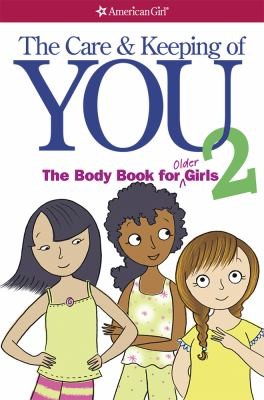
7. THE CARE AND KEEPING OF YOU by Valorie Schaefer
Valorie Schaefer | ⭐ 4.4/5
Who it’s for: Parents who want a practical guide to the physical and emotional changes happening at the tween age.
Get it here: https://www.amazon.com/Care-Keeping-You-Book-Journal/dp/1609581834?tag=readplug09-20
“Your body is changing. This is normal. This is healthy. This is something to be celebrated, not feared.”
Schaefer offers a practical guide to the changes — physical and emotional — that happen during the tween years. This isn’t a health textbook; it’s a guide written with warmth and humor that helps girls understand what’s happening to them and why. For parents, reading it alongside your daughter creates a shared vocabulary for conversations that might otherwise feel awkward.
The value here isn’t just in the content. It’s in the permission it gives you to have conversations you’ve been avoiding. If you’ve been wondering when to talk to your daughter about periods, about bras, about the feelings that are starting to come up — this book gives you a framework.
My take: Read this with Nora. Not because she needs it yet — she’s nine — but because I needed permission to start these conversations, and this book gave it to me.

8. THE TEENAGE BRAIN by Frances E. Jensen, MD
Frances E. Jensen, MD | ⭐ 4.5/5
Who it’s for: Parents who want to understand the science behind tween social dynamics and how digital technology affects brain development.
Get it here: https://www.amazon.com/Teenage-Brain-Strange-Making/dp/0147518406?tag=readplug09-20
“The adolescent brain is not just an adult brain with fewer miles on it. It’s a distinctively different brain.”
Jensen, a neuroscientist and mother of two sons, explains what we now know about the teenage brain — including how digital technology and social media affect its development. Her research on how the prefrontal cortex develops through adolescence helps parents understand why teenagers make the choices they do, and how their developing brains respond to social stimuli differently than adults.
For tween girls specifically, the book helps explain why social drama feels so intense and why rejection registers more painfully in the teenage brain. Understanding the neuroscience doesn’t fix the drama, but it helps parents respond with more patience and less frustration.
My take: Dense in places, but the core neuroscience is essential for understanding what your daughter is going through. The chapters on stress and emotional regulation are particularly useful.

9. THE ANXIOUS GENERATION by Jonathan Haidt
Jonathan Haidt | ⭐ 4.6/5
Who it’s for: Parents who want to understand the mental health crisis affecting young people and what they can do about it.
Get it here: https://www.amazon.com/Anxious-Generation-Overprotection-Childhood/dp/0465057861?tag=readplug09-20
“The rise in anxiety and depression among young people is real. The question is why. And the answer matters.”
Haidt’s book is about the mental health crisis affecting young people — particularly girls — and the role that phone use and social media may play in it. He’s careful to say that the causes are multiple and complex, and that no single factor explains everything. But the data is alarming, and the implications for parenting are significant.
For tween girls specifically, the book is important because it helps you understand what you’re potentially up against. Anxiety and depression are rising in this age group. Knowing the risk factors — and the protective factors — helps you make choices that might matter.
My take: The research is solid even when the conclusions are contested. Worth reading for the data on what’s happening, even if you don’t agree with all of Haidt’s prescriptions.

10. THE SELF-ESTEEM TOOLBOX by Lynne NAM
Lynne NAM | ⭐ 4.4/5
Who it’s for: Parents who want practical exercises to do with their daughter to build self-esteem.
Get it here: https://www.amazon.com/Self-Esteem-Toolbox-Practical-Exercises/dp/1646111976?tag=readplug09-20
“Self-esteem isn’t built by telling girls they’re special. It’s built by helping them develop competencies they can be proud of.”
NAM offers practical exercises for building self-esteem — specific activities to do with your daughter that actually work, grounded in research on what builds lasting confidence. The exercises are simple enough to do at home, with minimal preparation, and they don’t require you to be a perfect parent.
For tween girls specifically, the toolbox approach is useful because it gives you things to do together that aren’t about fixing problems. They’re about building strengths. If your daughter is struggling, these exercises won’t fix that. But if you do them before she’s struggling, they might help prevent it.
My take: Practical and actionable. Not every exercise works for every girl, but enough do that it’s worth having around.
FREQUENTLY ASKED QUESTIONS
WHEN SHOULD I START TALKING TO MY DAUGHTER ABOUT CONFIDENCE?
Now. Not when she hits the tween years. Not when you see problems emerging. The foundations of confidence are being built in the elementary years, which means the conversations should start early. That doesn’t mean sitting down for formal talks. It means noticing moments — when she succeeds at something, when she fails, when she’s frustrated, when she’s proud — and using those moments to build the vocabulary she’ll need later.
MY DAUGHTER IS ALREADY STRUGGLING WITH FRIENDSHIP DRAMA. IS IT TOO LATE?
It’s never too late, but the approach changes. If your daughter is already in the midst of friendship drama, she needs support first and advice second. Listen before you problem-solve. Ask questions before you offer solutions. The goal isn’t to fix the immediate problem. It’s to help her develop the skills she’ll need for the next one.
HOW DO I HELP MY DAUGHTER WITHOUT TAKING OVER?
This is the hard part. The instinct — especially as a parent who remembers being on the outside — is to rescue. But rescuing teaches her that she can’t handle it herself. The balance is to be available without being intrusive, to offer support without taking over, to let her struggle in ways that are safe while staying close enough to catch her if she falls. This is harder than it sounds, and it requires you to manage your own anxiety as much as anything else.
WHAT IF MY DAUGHTER IS AN INTROVERT?
Then help her understand that introversion is a trait, not a deficiency. Help her find the contexts where she thrives — usually small groups, one-on-one time, depth over breadth in friendships. Don’t force her into social situations that drain her. Help her advocate for her needs in a world that often assumes extroversion is the default.
SCREEN TIME AND SOCIAL MEDIA ARE OVERWHELMING. WHERE DO I START?
Start with the research. Read The Anxious Generation and The Girl Crush to understand what’s actually happening when your daughter uses social media and screens. Then make decisions based on that understanding rather than fear or guilt. The goal isn’t to eliminate screens — that’s not realistic. The goal is to make intentional choices about what role screens play in your family’s life.
HOW DO I TALK TO MY DAUGHTER ABOUT BODY IMAGE?
Start early and keep it ongoing. Use the vocabulary of function rather than appearance — talk about what bodies can do, not just how they look. Be careful about your own self-talk in front of her. And when she starts to become aware of appearance pressure — and she will — don’t dismiss it. Take it seriously. Ask questions. Listen more than you lecture.
THE BOTTOM LINE
Here’s what I’ve learned from reading these books and from watching Nora navigate being nine: the tween years are a critical period for developing the foundations of confidence. What happens now — the conversations you have, the frameworks you offer, the modeling you do — will shape how your daughter relates to herself for the rest of her life.
This isn’t about creating perfect confidence or perfect friendships. It’s about giving your daughter the tools she’ll need when things are hard — and things will be hard. Friendship drama is real. Social pressure is real. The internal voice that tells her she’s not enough is something she’ll probably fight her whole life. Your job isn’t to protect her from that. It’s to give her the resources to fight it herself.
If I had to pick three: Untangled for understanding what’s actually happening in your daughter’s brain, Braving the Wilderness for the framework of authenticity vs. belonging, and The Self-Esteem Toolbox for the practical exercises you can do together. These three give you understanding, values, and tools.
The work starts now. Not when she’s older. Now.
Which book are you grabbing first?
Disclosure: This post contains affiliate links. If you purchase through these links, ReadPlug may earn a small commission at no extra cost to you. We only recommend books we’ve personally found valuable.