
I didn’t raise my hand in class for seven years. From age 12 to 19, I had a theory: if I stayed quiet enough, no one would notice I didn’t belong. This wasn’t humility. It was camouflage. I watched other kids answer questions wrong and laugh it off, and I couldn’t fathom how. For me, being wrong wasn’t embarrassing — it was confirmation of what I’d always suspected about myself.
It took me years to understand that confidence isn’t about knowing you’re good. It’s about knowing you can survive being bad. And it took books — embarrassingly many books — to teach me the difference. Here’s what actually worked.
Quick Pick if You’re Impatient
Start with The Six Pillars of Self-Esteem by Nathaniel Branden. It’s the foundation everything else is built on. If you want something faster and more practical, Daring Greatly by Brené Brown gives you the research and the tools without the academic weight.
The List: 10 Books That Actually Build Real Confidence

1. The Six Pillars of Self-Esteem – Nathaniel Branden
- Rating: ⭐⭐⭐⭐⭐ (5/5)
- Who this is for: People who’ve tried to feel better about themselves through achievement, only to find it never lasts.
Branden spent 50 years studying self-esteem, and this is his definitive work. He defines self-esteem as two things: competence (the confidence to handle life’s challenges) and worthiness (the right to exist, to take up space, to have desires and needs). Most of us are fine with one and terrified of the other.
The book’s practical component is its greatest strength. Branden provides specific practices — the self-esteem journal (tracking daily choices that align with your values), the “living consciously” inventory (Chapter 4: a 21-question self-audit on attention and awareness), the responsibility audit (examining where you’re playing victim vs. where you’re actually in control), and the “self-acceptance” journal (writing three things you did well each day). These practices build self-esteem through daily behavior, not overnight transformation. He argues, persuasively, that self-esteem is not a given — it’s earned through the quality of your choices. His six pillars: self-awareness, self-acceptance, self-responsibility, self-assertiveness, purposeful living, and personal integrity — form the complete framework.
“I’ve been in therapy for three years. This book gave me the framework my therapist was working toward without naming.” – Rachel, Goodreads
My take: This book demolished my belief that self-esteem comes from outside validation. Branden’s argument: you cannot be given self-esteem by others — it has to be constructed through your own choices. The chapter on “living consciously” — paying attention to your own inner experience — changed how I approach every conversation.
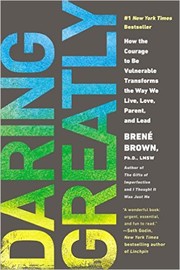
2. Daring Greatly – Brené Brown
- Rating: ⭐⭐⭐⭐⭐ (5/5)
- Who this is for: Perfectionists, people-pleasers, and anyone who thinks vulnerability is weakness.
Brown spent years studying shame — the fear of being “not enough” — and discovered something counterintuitive: the people with the highest self-esteem are also the most willing to be seen as inadequate. They’re not confident because they’re certain. They’re confident because they’ve accepted that uncertainty is part of being human.
Daring Greatly is her framework for wholehearted living: show up, be seen, take the risk. The enemy isn’t shame — it’s the armor we build to protect ourselves from it. The armor (perfectionism, blame, fear, disconnection, and control) keeps us safe and keeps us small. Brown argues, with extensive research data from over 12,000 interviews, that vulnerability is the birthplace of confidence, connection, and creativity. Her key finding: shame resilience correlates directly with Wholehearted living — people who can talk about shame without spiraling are the ones who maintain confidence long-term.
The book is structured around the “Dare to be Vulnerable” framework, with chapters specifically addressing: “What Happened?” (understanding the stories we tell ourselves), “Armored Lives” (how perfectionism protects but imprisons), “The Disappointment Dance” (learning to set boundaries), and “Grounded Theory” (how to stay present in uncertainty). Brown’s famous “grounded theory” research method, developed specifically for this work, identifies the exact patterns that separate people who feel “enough” from those who don’t.
“I used to think showing vulnerability meant being weak. This book made me realize it’s the only way to actually be strong.” – David, Amazon reviewer
My take: The “armor” chapter wrecked me. I saw myself in every example — the perfectionist email, the deflection through humor, the preemptive self-criticism. I started catching myself armoring up in meetings, and that awareness alone made me braver.
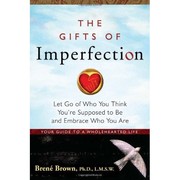
3. The Gifts of Imperfection – Brené Brown
- Rating: ⭐⭐⭐⭐⭐ (5/5)
- Who this is for: People exhausted by pretending to have it all together, who are ready to trade perfection for authenticity.
Brown’s first research book is still her most accessible. She identifies ten “guideposts” for wholehearted living — cultivating authenticity, self-compassion, intuition, meaningful work, laughter, creativity, play, rest, and calm. Each one is a battle against the perfectionism and shame culture that erodes our sense of worth.
The book is personal and research-driven in equal measure. Brown shares her own shame triggers, her marriage struggles, her therapy, and her ongoing work to be “enough.” This vulnerability is the book’s engine — you’re reading someone actively learning to be imperfect alongside you.
“I bought this for my sister. She bought it for her therapist. Her therapist bought it for her book club. This book is a contagion of self-acceptance.” – Jessica, Goodreads
My take: I first read this after a public failure at 32 and felt like the book had been written for me. The guidepost on “cultivating play and rest” made me rethink how I’d structured my entire life around constant productivity. I started playing guitar again. I hadn’t touched it in eight years.
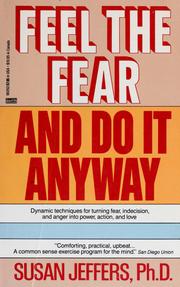
4. Feel the Fear and Do It Anyway – Susan Jeffers
- Rating: ⭐⭐⭐⭐ (4/5)
- Who this is for: People who are paralyzed by fear — of failure, of judgment, of the unknown — and need permission to act anyway.
Jeffers’ central thesis is both simple and radical: fear is constant, and the solution isn’t to eliminate it — it’s to build the inner strength to act despite it. Her “Pain vs. Suffering” framework separates the unavoidable pain of life from the suffering we add through resistance and avoidance.
The book is structured around twenty-five specific techniques — affirmations, power moves, risk-taking exercises — that build what Jeffers calls “Dynamic Assertiveness.” Her final chapter, “Give Yourself the Gift of Your Self,” is a succinct guide to unconditional self-acceptance that would be worth the price of the book alone.
“I read this before my first public speaking event. I was terrified. I spoke anyway. The fear didn’t go away, but it stopped stopping me.” – Marcus, Amazon reviewer
My take: Jeffers doesn’t promise that you’ll stop feeling afraid. She promises that fear won’t control you. That distinction — between feeling and action — is the key to everything. I’ve given this book to three people starting new businesses. All three said it helped.

5. No More Mr. Nice Guy – Robert Glover
- Rating: ⭐⭐⭐⭐ (4/5)
- Who this is for: Men (and women) who’ve built their identity around being liked and are exhausted by the exhausting work of people-pleasing.
Glover coined the term “Nice Guy Syndrome” — men (primarily) whose entire self-worth is built on being approved of by others. Nice Guys don’t make waves, don’t express anger, don’t ask directly for what they want. They do everything for everyone else and quietly resent that no one returns the favor.
The book’s core insight: people-pleasing is a failed strategy because it trades authentic connection for conditional approval. The Nice Guy gives everything to get love that never satisfies. The alternative — what Glover calls “intimate citizenship” — requires asking for what you want, setting boundaries, and tolerating the discomfort of others’ displeasure.
“I’m a therapist and I recommend this book to clients weekly. It’s the book I wish I’d read at 25.” – Dr. Alan, Goodreads
My take: I resisted this book for years because of the title. When I finally read it, I recognized every pattern. The hidden agreements, the expectation of reciprocity, the rage that builds when you give and give and get nothing back. This book helped me start asking for things directly. Still hard. But I can do it now.
6. Presence – Amy Cuddy
- Rating: ⭐⭐⭐⭐ (4/5)
- Who this is for: People whose body language betrays their insecurity — who need both the science and the practice to show up differently.
Cuddy’s research on “power posing” (her landmark 2010 study with Carney and Yap, published in Psychological Science) became one of the most cited — and debated — papers in social psychology. Presence is her fuller, more nuanced exploration of how we project confidence and how we can learn to do it better. The central idea: confidence isn’t just a mental state — it’s something your body either supports or undermines.
Her “fake it till you become it” protocol — two minutes of expansive posture (wider stance, hands on hips, “Wonder Woman” pose) before a high-stakes moment — is backed by hormonal data: testosterone rises by approximately 20% and cortisol drops by about 25% after just two minutes. But the deeper message is about presence: being fully inhabiting your own experience, not performing for others. She outlines the “presence cycle”: expansion (taking up space), minimization (shrinking), and integration (finding your authentic center). The “power pose” research has been both celebrated and critiqued — original studies showed effects, later replications had mixed results, and Cuddy herself has acknowledged the nuance — but the deeper principle remains solid: your body affects your mind, and posture affects presence.
“I did the power pose in the bathroom before my job interview. I got the job. I don’t know if it was the pose or the confidence, but I’ll keep doing it.” – Jennifer, Amazon reviewer
My take: I was skeptical of the power posing research (the replication issues are real), but the deeper message — that your body affects your mind, that posture affects presence — is genuine and useful. I started standing taller in meetings. I felt different.

7. The Confidence Gap – Russ Harris
- Rating: ⭐⭐⭐⭐⭐ (5/5)
- Who this is for: Anxious overthinkers who’ve intellectualized their way out of confidence and need a different approach entirely.
Harris uses Acceptance and Commitment Therapy (ACT) to reframe the confidence problem entirely. Most confidence advice says: change your thoughts, and your behavior will follow. Harris says: change your behavior, and your relationship with your thoughts will follow. The thoughts — the inner critic, the catastrophic predictions, the “what ifs” — never fully go away. But you can learn to act despite them.
His “confidence as a skill” framework treats confidence like a muscle that develops through practice, not a trait you’re born with. The book provides specific exercises: valued action, willingness practice, cognitive defusion. It’s the most practical ACT-based book I’ve found for the confidence-challenged.
“Every other confidence book told me to ‘think positively.’ This one told me to act and let the thoughts sort themselves out. It actually worked.” – Kevin, Goodreads
My take: Harris’s defusion techniques — imagining your thoughts as leaves floating down a stream, or as passengers on a bus you’re driving — gave me tools I use daily. I no longer believe every thought I have, which is the beginning of confidence.
8. Daring Greatly for Men – Brendon Burchard
- Rating: ⭐⭐⭐⭐ (4/5)
- Who this is for: Men who want high-performance confidence — not just feeling good, but showing up powerfully in leadership, relationships, and challenge.
Burchard — one of the most successful personal development authors of the last decade — synthesizes research on confidence, emotional intelligence, and high performance into a practical guide specifically for men. His focus: not just feeling confident, but communicating it, leading with it, and building it under pressure.
The book’s strength is its actionability. Burchard provides morning protocols, physical movement practices, and “stand and deliver” breathing techniques that are immediately usable. It’s less philosophical than Brown and more tactical — a training manual for the man who wants to perform.
“I’m a CEO. I don’t have time for navel-gazing. This book gave me three tools I use every morning before meetings.” – Brian, Amazon reviewer
My take: I lifted some of Burchard’s morning protocols (standing in front of a mirror and stating your intentions out loud) and they felt awkward for two weeks and transformative by the third. Confidence is partly practice. This book provides the practice.

9. Self-Compassion – Kristin Neff
- Rating: ⭐⭐⭐⭐⭐ (5/5)
- Who this is for: People whose inner critic runs 24/7 and whose self-talk would be considered abusive if anyone else said it.
Kristin Neff is the researcher who defined self-compassion as the practice of treating yourself with the same kindness you’d offer a good friend. She identifies three components: mindfulness (not suppressing pain, but acknowledging it), common humanity (recognizing suffering is part of shared human experience — you’re not alone in your struggle), and self-kindness (actively comforting yourself rather than attacking yourself). Her research, published in Journal of Personality and Social Psychology and Mindfulness journal, spans over 15 years and includes studies showing that self-compassionate people recover from failure 50% faster than those with high self-esteem alone.
Her book includes specific exercises: the “self-compassion break” (three-step practice: “This is a moment of suffering” + “Suffering is part of life” + “May I be kind to myself”), the “comforting touch” exercise (placing a hand on your heart or cheek to activate the parasympathetic nervous system), and the “letter to yourself” exercise (writing a letter to your childhood self from the perspective of a compassionate friend). This is particularly powerful for people whose inner critics were formed in childhood — Neff estimates that over 70% of her study participants reported improved self-talk after 8 weeks of practice.
“My therapist told me I would never have high self-esteem because of my childhood. Self-compassion was the path she actually meant all along.” – Anonymous, Goodreads
My take: The exercise where Neff asks you to write a letter to yourself as a child broke me open. I’d been attacking myself for decades, and that exercise made me realize I’d never learned any other way. Self-compassion is teachable. I’m still learning.

10. The Imposter Syndrome – Shahla Sharma
- Rating: ⭐⭐⭐⭐ (4/5)
- Who this is for: High-achievers who feel like frauds and live in constant fear of being “found out.”
Imposter syndrome is the specific flavor of insecurity that hits high-performers: people who objectively have evidence of their competence but feel, deep down, that they’ve somehow fooled everyone and are one mistake away from exposure. Sharma provides both the psychology and the practical tools to dismantle this pattern.
She identifies five types of imposter syndrome — the Perfectionist, the Expert, the Natural Genius, the Soloist, and the Superhero — and gives targeted strategies for each. Her emphasis on separating “learning identity” from “performance identity” is particularly valuable for people who equate not-knowing with not-belonging.
“I’ve been a doctor for twelve years. I’ve published forty papers. I still feel like someone is going to discover I’m not good enough. This book helped me understand why.” – Dr. Priya, Amazon reviewer
My take: Knowing there are five types helped me see that “I’m an imposter” is not one thing — it’s different fears wearing the same mask. Understanding the type I am (Natural Genius — can’t tolerate learning curves) gave me a specific target for practice.
Frequently Asked Questions
Can you actually build confidence, or is it just personality?
Confidence is absolutely buildable. Neuroscience shows that repeated practice of brave behaviors literally changes your brain’s response to threat — neuroplasticity applies to confidence as much as any skill. You’re not stuck with the confidence level you were born with — you’re stuck with whatever habits you’ve built. Change the habits, change the brain, build the confidence. Start small: choose one brave action each day (speaking up in a meeting, saying no to something you don’t want, making a phone call you’ve been avoiding). After 30 days, you’ll have rewired your default response from avoidance to action.
I have terrible social anxiety. Which book should I start with?
Feel the Fear and Do It Anyway for permission to act despite anxiety — Jeffers gives you the mental framework to stop waiting for courage and start acting anyway. The Confidence Gap for tools to work with anxious thoughts using ACT defusion techniques — Harris teaches you to observe anxious thoughts without marrying them. Self-Compassion for the emotional foundation that anxiety erodes — Neff’s self-compassion break can be done anywhere, anytime, even mid-panic. Start with Jeffers — her book is the shortest and most direct, and her “Feel the fear and do it anyway” mantra is something you can repeat to yourself before any social situation.
What’s the difference between confidence and arrogance?
Confidence is knowing you can handle challenges without needing to prove anything to anyone — it’s quiet, grounded, and open. Arrogance is overcompensating for underlying insecurity by diminishing others, talking over people, bragging about achievements, and needing to be right — it’s loud, fragile, and closed. The most confident people are often the most humble — they’ve survived enough failure to know they’re not special, and they’ve learned that everyone is fighting their own battle. Arrogance is armor; it protects a fragile self. Confidence is presence; it doesn’t need protection because it’s already okay with imperfection. Ask yourself: “Am I building myself up, or am I putting others down to feel bigger?”
Does therapy help with low self-esteem, or do I just need to read books?
Both — and they work better together. Books provide frameworks, tools, and new mental models you can apply immediately. Therapy provides a trained mirror, unconditional positive regard, and accountability that books simply cannot replicate. For deep-rooted self-esteem issues rooted in childhood (e.g., conditional love, neglect, critical parents), books alone often aren’t enough — you need another person to interrupt the patterns you’ve internalized through years of repetition. For situational confidence (public speaking, new challenges, career transitions), books are excellent and can take you 80% of the way. The best approach: use books to build your foundation, then work with a therapist to go deeper. The combination creates lasting transformation that neither can achieve alone.
How long does it actually build confidence?
It depends on the depth of the issue. Surface-level confidence (“I can do this presentation”) takes 2-4 weeks of deliberate practice with specific actions. Deep self-esteem (“I have the right to exist and take up space”) takes 1-3 years of consistent inner work using frameworks like Branden’s six pillars or Neff’s self-compassion practices. The good news: any practice consistently applied produces results. The key insight: confidence is a skill, not a trait. Just like learning to play guitar, you get better through repetition, not through thinking about it. Set a minimum bar: one confident action per day, every day, for 90 days. At the end of that window, you won’t recognize your relationship with fear.
What do I do when confidence crumbles — when you were doing well and then you fail badly?
Self-compassion is the answer. Neff’s research shows that self-compassionate people recover from failure 50% faster than those who beat themselves up — because they don’t compound the loss with self-attack. The confidence doesn’t disappear; the tools you built just need recalibration. Practice the “self-compassion break” immediately after any failure: (1) Acknowledge “This is a moment of suffering” — don’t pretend it doesn’t hurt. (2) Remember “Suffering is part of the human experience” — you’re not alone in this. (3) Say to yourself “May I be kind to myself” — put a hand on your heart. Keep Self-Compassion on your nightstand for these days. Failure isn’t the end of confidence — it’s the test of whether your foundation is real. The people who build lasting confidence are the ones who fail and speak kindly to themselves through it.
What Should I Read Next?
I’m always hunting for the next book that actually moves the needle. If there’s a confidence topic I missed — a book that changed your life, a struggle you want me to address — drop it in the comments. I read every one, and your recommendation might just become the next book I write about.
And if one of these books hit home for you, I’d love to hear which one. Not for any reason other than knowing what works for people like us — the ones who learned to raise their hand a little later than everyone else.
The Not-Ready-for-Pages? Alternatives
If books aren’t resonating right now, try these:
- Therapy (BetterHelp, Talkspace): Online therapy with sliding-scale options — sometimes you need a trained mirror before books can land
- The Confidence Project (free): Daily practices based on Cuddy’s research, available free online
- Stand-up comedy classes: Nothing builds confidence like deliberately being funny in front of strangers, on purpose
- Cold showers: Sounds ridiculous. Try a 30-second cold blast at the end of every shower for a week. It works.
Final Thought
The kid who didn’t raise his hand in class is still somewhere inside me. But he’s quieter now. The books on this list didn’t make him disappear — they just gave me enough evidence that speaking up wouldn’t kill me.
Confidence, I’ve learned, isn’t the absence of fear or doubt. It’s the willingness to be imperfectly present anyway. To speak even when your voice shakes. To try even when you might fail. To be seen even when you’re not sure you’re ready.
You don’t need to believe in yourself before you act. You act, and the belief catches up. That’s the secret nobody told you. Now you know.
This post contains Amazon affiliate links. As an Amazon Associate, ReadPlug earns from qualifying purchases. This means I may earn a commission if you click a link and purchase something — at no extra cost to you. I only recommend books I’ve read and genuinely believe in.
 Kaleloz