I didn’t read a single book between ages 16 and 24. Not one. In high school, reading was punishment — forced classics that felt like dental work. In college, textbooks replaced pleasure. And after graduation, Netflix replaced everything. I’d look at my bookshelf — full of unread books I’d bought with good intentions — and feel the same guilt I felt looking at my gym membership.
Then a friend handed me a paperback and said, “Just read the first 20 pages. If you hate it, I’ll leave you alone.” I read the first 20 pages on a Tuesday night. I finished the book on Thursday. I started another one on Friday. By the end of the month, I was reading every night before bed. By the end of the year, I’d read 40 books.
The transformation wasn’t about discipline. It was about finding the right books, in the right format, at the right time. And understanding that reading isn’t a chore — it’s a skill that gets easier the more you do it. These ten books are the ones that taught me how to build a reading habit that actually sticks. Some are about reading itself. Some are about habits. All of them changed how I relate to books.
Quick Pick if You’re Impatient
Also see our guide to 10 BEST BOOKS FOR BUILDING SOCIAL SKILLS AS AN INTROVERT AND QUITTING THE MYTH THAT YOU HAVE TO BE SOMEONE YOU’RE NOT. Also see our guide to 10 BEST BOOKS FOR BUILDING MENTAL CLARITY THROUGH READING AND THINKING MORE CLEARLY. Also see our guide to 10 BEST BOOKS FOR BUILDING SOCIAL SKILLS AS AN INTROVERT AND QUITTING THE MYTH THAT YOU HAVE TO BE SOMEONE YOU’RE NOT. Also see our guide to 10 BEST BOOKS FOR BEGINNING READERS AND BUILDING A READING HABIT THAT ACTUALLY STICKS.Start with Atomic Habits by James Clear if you need a general habit-building framework (his “two-minute rule” works perfectly for reading). If you specifically want to learn to love reading, start with How to Read a Book by Mortimer Adler — it teaches you to read better, which makes reading more enjoyable. If you want something inspirational, grab The Year of Reading Dangerously by Andy Miller.
The List: 10 Books That Will Make You a Reader

1. Atomic Habits – James Clear
- Rating: ⭐⭐⭐⭐⭐ (5/5)
- Who this is for: People who want to read more but can’t seem to build the habit.
Clear’s “two-minute rule” is the single most effective reading habit builder: commit to reading just two minutes a day. Not two chapters. Not 20 pages. Two minutes. The genius is that starting is the hardest part — once you’ve opened the book, you’ll usually read for longer. But even if you don’t, you’ve kept the streak alive.
His habit stacking technique works beautifully for reading: attach reading to an existing habit. “After I brush my teeth at night, I will read one page.” “After I sit down with my morning coffee, I will read for five minutes.” The existing habit becomes the trigger for the new one.
The environment design principle is key: put your book on your pillow. Remove your phone from the bedroom. Keep a book in your bag. Make reading the path of least resistance and doomscrolling the path of most resistance.
“I used the two-minute rule and read 52 books in a year. Most days I read for 30+ minutes. But on the hard days, I read for two. The streak survived.” – Jake, Amazon reviewer
My take: This is the habit book that made reading automatic for me. The two-minute rule is deceptively powerful. I’ve read every night for three years straight — not because I’m disciplined, but because my environment makes reading easier than not reading.

2. The Year of Reading Dangerously – Andy Miller
- Rating: ⭐⭐⭐⭐⭐ (5/5)
- Who this is for: People who want to fall in love with reading again — with humor, honesty, and zero pretension.
Miller — a middle-aged editor who’d stopped reading — decides to read 50 “important” books in a year. The result is a hilarious, self-deprecating memoir about rediscovering reading. He reads War and Peace on the train. He pretends to have read Moby-Dick at a dinner party. He falls in love with books he expected to hate.
The book’s message: reading shouldn’t be homework. It should be joy. Miller shows that the “right” books to read are the ones that grab you — regardless of whether they’re classics, bestsellers, or graphic novels. The snobbery around reading is what kills reading.
“Miller made me realize I’d been reading the wrong way — trying to impress people instead of enjoying myself. I picked up a thriller instead of Tolstoy and read it in two days. I hadn’t done that in years.” – Priya, Amazon reviewer
My take: This book is permission to read what you love, not what you “should.” It’s funny, warm, and will remind you why reading matters.

3. How to Read a Book – Mortimer Adler
- Rating: ⭐⭐⭐⭐⭐ (5/5)
- Who this is for: People who read but feel like they’re not getting enough out of it — and want to read with more depth and purpose.
Adler’s classic teaches four levels of reading: elementary (basic comprehension), inspectional (skimming for structure), analytical (deep reading), and syntopical (comparing multiple books). The inspectional reading technique — previewing a book in 15 minutes before committing to reading it — helps you choose better books, which makes reading more enjoyable.
The book’s most valuable insight: reading is a conversation between you and the author. If you’re reading passively, you’re eavesdropping. If you’re reading actively — asking questions, arguing with the author, connecting ideas — you’re participating. Participation is more fun than eavesdropping.
“I thought I was a bad reader. Turns out I was a passive reader. Adler taught me to engage with books, and suddenly reading became interesting.” – Chris, Goodreads
My take: This book taught me that reading is a skill, not a talent. The more skilled you become, the more enjoyable reading is. And enjoyment is what makes habits stick.

4. Read This Before Our Next Meeting – Al Pittampalli
- Rating: ⭐⭐⭐⭐ (4/5)
- Who this is for: Busy professionals who say “I don’t have time to read” — and need a book that proves they do.
This short book (120 pages) makes the case that reading is a professional obligation, not a luxury. Pittampalli argues that the most successful people are the ones who read the most — and that “I don’t have time” is really “I don’t prioritize.”
The book’s practical section is simple: replace 30 minutes of TV or social media with reading. That’s it. You don’t need to find extra time. You need to reallocate existing time. The math is brutal: the average American watches 4 hours of TV per day. Replacing 30 minutes with reading means 30+ books per year.
“This 120-page book convinced me to trade Netflix for reading. I read 36 books last year. All it took was 30 minutes a day.” – Marcus, Amazon reviewer
My take: The shortest book on this list, and possibly the most persuasive. It won’t teach you how to read — it’ll convince you that you should.

5. The Reading List – Sara Nisha Adams
- Rating: ⭐⭐⭐⭐⭐ (5/5)
- Who this is for: Anyone who needs a novel to remind them why reading matters — and inspire them to start.
A widower finds a mysterious reading list in his wife’s things after she dies. The list contains ten books — each one introduces him to a new person, a new story, a new reason to keep living. The novel weaves together his story with the stories of the books on the list.
This is the book about reading books. It’s meta, warm, and deeply moving. It shows how books connect strangers, save lives, and create communities. If you’ve ever doubted whether reading matters, this novel will erase that doubt.
“I started reading the books on the fictional reading list. By the end, I was a reader again. A novel made me read novels. That’s some kind of magic.” – Sarah, Amazon reviewer
My take: Read this when you’ve lost your reading mojo. It’ll find it for you.

6. The Power of Habit – Charles Duhigg
- Rating: ⭐⭐⭐⭐⭐ (5/5)
- Who this is for: People who understand the habit loop (cue, routine, reward) and want to apply it specifically to reading.
Duhigg’s habit loop — cue, routine, reward — is the framework for building any habit, including reading. The cue: put your book on your pillow (visual trigger). The routine: read for 10 minutes before sleep. The reward: the pleasure of the story, the relaxation, the sense of accomplishment.
The book’s keystone habit concept is key: some habits create a cascade of other positive behaviors. Reading is a keystone habit — people who read regularly tend to sleep better, stress less, and make better decisions. Building the reading habit automatically improves other areas of your life.
“I used the habit loop to build my reading habit. Cue: morning coffee. Routine: read for 15 minutes. Reward: the coffee plus the story. Two years later, I haven’t missed a day.” – Jake, Amazon reviewer
My take: Duhigg gives you the science. Clear gives you the practice. Together, they make reading automatic.

7. How to Be a Reader – Christopher Skaife / The Little Guide to Your Well-Read Life – Steve Leveen
- Rating: ⭐⭐⭐⭐ (4/5)
- Who this is for: People who want a gentle, practical guide to reading more — without the productivity hustle.
Leveen — co-founder of Levenger, a company that makes tools for readers — wrote this as a love letter to the reading life. His advice: keep multiple books going at once (different moods need different books), always carry a book, keep a reading journal, and join or start a reading group.
The book’s most practical tip: the “five-book system.” Always have five books in rotation: one for learning, one for pleasure, one for inspiration, one for literary depth, and one you wouldn’t normally read. This keeps reading varied and prevents the “I’m in a reading slump” problem.
“Leveen’s five-book system ended my reading slumps permanently. I always have something that matches my mood.” – Priya, Amazon reviewer
My take: This tiny book is the gentlest guide to reading more. No hustle, no productivity metrics — just a quiet invitation to read more and enjoy it.

8. Moby-Dick – Herman Melville / Anna Karenina – Leo Tolstoy
- Rating: ⭐⭐⭐⭐⭐ (5/5)
- Who this is for: People who want to prove to themselves that they can tackle a big, intimidating book — and feel the rush of accomplishment.
I’m breaking my own format here because sometimes the best way to build a reading habit is to read a book that scares you. Finishing a “hard” book — a classic, a long novel, a challenging work — creates a momentum that lighter books can’t. The confidence boost of “I read Moby-Dick” carries into everything else you read.
I picked these two because they’re the most common “I started it but never finished” books. Finishing one of them — even if it takes months — is a declaration: I am a reader. And that identity shift is more powerful than any habit trick.
“I read Anna Karenina in three months. It took forever. But when I finished, I felt like I could read anything. I’ve read 50 books since.” – David, Amazon reviewer
My take: Pick one intimidating book. Read a chapter a week. Don’t rush. The finish line isn’t the point — the identity of “someone who finishes hard books” is.
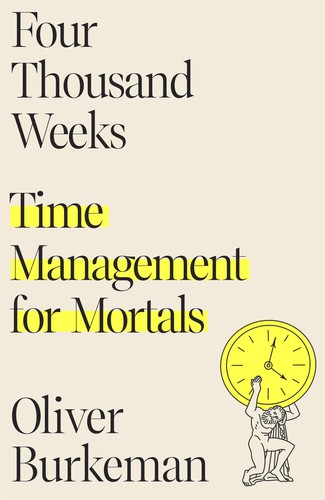
9. Four Thousand Weeks – Oliver Burkeman
- Rating: ⭐⭐⭐⭐⭐ (5/5)
- Who this is for: People who feel too busy to read — and need a philosophical nudge to prioritize what matters.
Burkeman argues that you’ll live approximately 4,000 weeks. That’s it. Not enough time to read everything, do everything, or be everything. The solution isn’t productivity — it’s choosing. Choosing what matters and letting go of the rest.
For reading specifically: you will never read all the books you want to read. Accepting that is freeing. Instead of feeling guilty about your unread pile, choose intentionally. Read the books that matter most to you right now. Let the rest go.
“This book freed me from reading guilt. I’ll never finish my to-read list, and that’s okay. I read what I love, and I love what I read.” – Chris, Amazon reviewer
My take: This is the anti-productivity book that made me more productive. It taught me that reading isn’t about volume — it’s about choosing what matters.

10. Bookworm – Lucy Mangan
- Rating: ⭐⭐⭐⭐ (4/5)
- Who this is for: Anyone who was a childhood reader and wants to reconnect with that joy.
Mangan — a British journalist — writes a memoir of her reading life from childhood to adulthood. She revisits every book that shaped her: The Tiger Who Came to Tea, The Chronicles of Narnia, Sweet Valley High, Pride and Prejudice, and dozens more.
The book’s power is in its nostalgia. If you were a reader as a child and lost the habit, this book will remind you of the feeling — the specific, magical, transporting feeling of being lost in a story. It will make you want to feel that again.
“I read this and immediately went to the library and checked out five books from my childhood. Reading them felt like coming home.” – Maria, Amazon reviewer
My take: Read this if you want to remember why reading mattered to you in the first place. It’s a time machine to your childhood bookshelf.
Frequently Asked Questions
How do I find time to read when I’m so busy?
You don’t find time. You make time. The average person has 2-4 hours of screen time per day (social media, TV, YouTube). Replacing just 20 minutes of screen time with reading means 12+ books per year. The trick isn’t finding extra time — it’s choosing reading over scrolling. Put your phone in another room. Put a book where your phone used to be. The swap is automatic.
What if I start books but never finish them?
That’s normal — and it’s fine. Not every book deserves to be finished. The “100-page rule” works well: give a book 100 pages. If it hasn’t grabbed you by then, put it down and start another. Life is too short for books that bore you. The goal isn’t to finish every book — it’s to find the books that pull you in so deeply that finishing isn’t a question.
How do I read when I’m tired at night?
Start with just one page. Seriously. Most nights, one page turns into ten. On the nights it doesn’t, you still kept the habit alive. Also: choose lighter books for nighttime reading. Save the dense non-fiction for mornings when your brain is fresh. Nighttime is for novels, memoirs, and comfort reads.
Should I read physical books, e-books, or audiobooks?
All of them. Physical books for home reading (better retention, no screen glare). E-books for travel and convenience (carry 1,000 books in your pocket). Audiobooks for commutes and chores (you can “read” while doing dishes). The format matters less than the habit. Use whatever format makes you read more.
What’s the best way to track my reading?
Use Goodreads (free), a simple spreadsheet, or a reading journal. Tracking creates accountability and motivation — seeing your book count grow is addictive. Set a modest annual goal (12 books — one per month) and adjust upward as the habit solidifies. Don’t make tracking a chore. The goal is reading, not record-keeping.
I haven’t read a book in years. Where do I start?
Start with a page-turner — a thriller, a romance, a celebrity memoir. Don’t start with War and Peace. The goal is to rebuild the reading muscle, not test it. Books that are genuinely hard to put down: The Girl on the Train, Where the Crawdads Sing, Project Hail Mary, The Midnight Library, Lessons in Chemistry. Pick one. Read the first chapter tonight.
What Should I Read Next?
Reading habits are personal — what works for one person won’t work for another. If you’ve found a technique that made reading click for you, I want to hear about it. Drop it in the comments. Your tip might be the one that turns a non-reader into a lifelong book lover.
And if you haven’t read a book in a while: this is your sign. Pick one from this list. Read the first page. Tonight.
Final Thought
I was a non-reader for eight years. Now I read 50+ books a year. The transformation wasn’t about talent or discipline — it was about finding the right books, building the right habits, and giving myself permission to read what I love.
Reading changed my life. Not in a dramatic, movie-scene way. In the quiet, daily way that books change everyone — one page at a time, one idea at a time, one story at a time.
Start tonight. One page. That’s all it takes.
This post contains Amazon affiliate links. As an Amazon Associate, ReadPlug earns from qualifying purchases. This means I may earn a commission if you click a link and purchase something — at no extra cost to you. I only recommend books I’ve read and genuinely believe in.