I bought a gym membership on January 2nd. By January 9th, I’d gone twice. By January 16th, I’d made three excuses. By February, I was paying $45 a month for a building I never entered. The membership lasted 14 months. I went a total of 11 times.
This pattern repeated in every area of my life. I’d start a diet on Monday and break it by Wednesday. I’d set a 5 AM alarm and snooze it until 7. I’d buy a journal, write in it for three days, and then use it as a coaster for the next six months. I had the ambition of a CEO and the follow-through of a goldfish.
For years, I thought discipline was a personality trait — something you were born with, like eye color. Some people were disciplined. I wasn’t. End of story.
Then I read a book that said discipline isn’t a trait. It’s a system. And like any system, it can be designed. You don’t need more willpower — you need better architecture. Better environments, better defaults, better rewards, and better reasons.
These ten books taught me how to build that system. I’m not a disciplined person. I’m a person with disciplined systems. There’s a difference.
Quick Pick if You’re Impatient
Also see our guide to 10 Personal Finance Books Every Young Adult Needs to Read (No Jargon, Just Practical Advice). Also see our guide to 10 BEST BOOKS FOR DEVELOPING LEADERSHIP PRESENCE AND INFLUENCE AND BECOMING SOMEONE PEOPLE WANT TO FOLLOW. Also see our guide to 10 BEST BOOKS FOR BUILDING UNSHAKEABLE SELF-CONFIDENCE (WITHOUT BECOMING AN ASSHOLE).Start with Atomic Habits by James Clear. His environment design approach makes discipline unnecessary — when the right behavior is the easy behavior, you don’t need willpower. If you want the neuroscience, grab The Willpower Instinct by Kelly McGonigal. If you want the philosophy, read Discipline Equals Freedom by Jocko Willink.
The List: 10 Books That Make Discipline Unnecessary

1. Atomic Habits – James Clear
- Rating: ⭐⭐⭐⭐⭐ (5/5)
- Who this is for: People who’ve realized that willpower doesn’t work — and want a system that does.
Clear’s central argument: discipline is overrated. Instead of relying on willpower, design your environment so the right behavior is the path of least resistance. Put your book on your pillow. Put your phone in another room. Remove the junk food from your kitchen. Make the bad behavior hard and the good behavior easy.
The “two-minute rule” eliminates the need for discipline entirely: scale any habit to two minutes. You don’t need discipline to read one page or do one pushup. You just need to start. And starting is the only part that requires willpower.
“I stopped trying to be disciplined and started designing my environment. My gym clothes are on my bed every night. My phone charges in the kitchen. I haven’t missed a workout in 8 months.” – Jake, Amazon reviewer
My take: This book killed my belief that I needed more discipline. I needed better systems. The systems are working.
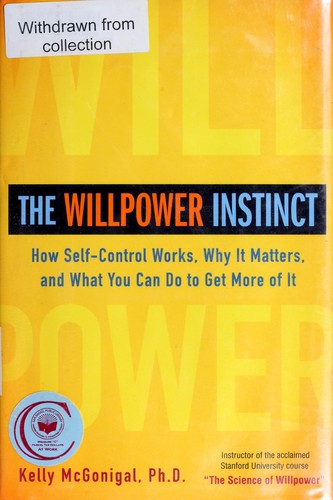
2. The Willpower Instinct – Kelly McGonigal
- Rating: ⭐⭐⭐⭐⭐ (5/5)
- Who this is for: People who want to understand the neuroscience of self-control — and use it to their advantage.
McGonigal — a Stanford psychologist — teaches a course on willpower that became one of the most popular classes in the university’s history. Her findings: willpower is a muscle that can be trained, but it’s also depleted by stress, poor sleep, and decision fatigue.
The most useful finding: willpower is highest in the morning and lowest in the evening. Schedule your most important (and most difficult) tasks for the morning. Save the easy stuff for when your willpower is depleted.
The “I will,” “I won’t,” and “I want” framework is the book’s core: “I will” is the power to do what you need to do. “I won’t” is the power to resist temptation. “I want” is the power to remember your long-term goals. Strengthen all three.
“McGonigal showed me that willpower isn’t infinite. It depletes throughout the day. I moved my hardest tasks to morning and my discipline improved overnight.” – Marcus, Amazon reviewer
My take: This book is the science of self-control. Read it to understand why willpower fails — and how to work around its limitations.

3. Discipline Equals Freedom – Jocko Willink
- Rating: ⭐⭐⭐⭐⭐ (5/5)
- Who this is for: People who need a kick in the pants — and the philosophy to back it up.
Willink — a retired Navy SEAL — argues that discipline is the path to freedom. Not discipline as punishment. Discipline as liberation. When you discipline yourself to wake up early, you gain the freedom of a productive morning. When you discipline yourself to save money, you gain the freedom of financial security.
The book is part manifesto, part manual. Each chapter covers a different domain: physical fitness, mental toughness, emotional control, relationships, and business. Willink’s tone is direct, intense, and motivational — like a drill sergeant who genuinely wants you to succeed.
“Willink’s ‘get after it’ philosophy is simple and effective. I wake up at 4:30 AM now. Not because I’m a morning person — because I decided to be.” – David, Amazon reviewer
My take: This book is the motivational fuel. Read it when you need fire.
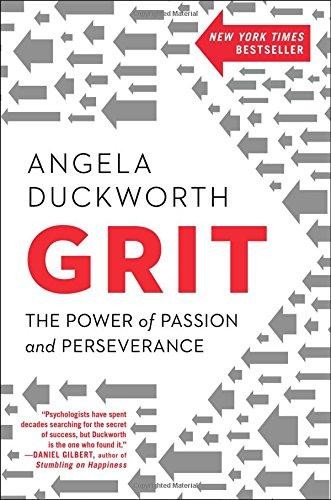
4. Grit – Angela Duckworth
- Rating: ⭐⭐⭐⭐⭐ (5/5)
- Who this is for: People who confuse talent with success — and need to understand that persistence matters more.
Duckworth’s research shows that grit — passion and perseverance for long-term goals — predicts success better than talent, IQ, or socioeconomic status. The grittiest people aren’t the most talented. They’re the ones who keep going when everyone else quits.
The “hard thing rule” is the book’s most practical tool: everyone in the family must do one hard thing — and they can’t quit until the season, session, or commitment is over. This builds the muscle of perseverance.
“Duckworth showed me that I wasn’t failing because I lacked talent. I was failing because I quit too soon. I committed to one year of writing. The book deal came at month 11.” – Priya, Amazon reviewer
My take: This book is the antidote to “I’m not talented enough.” Talent is overrated. Grit is everything.
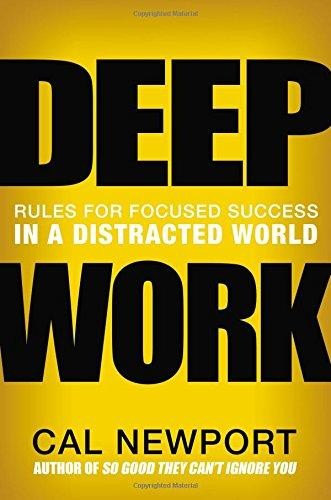
5. Deep Work – Cal Newport
- Rating: ⭐⭐⭐⭐⭐ (5/5)
- Who this is for: Knowledge workers who can’t focus and want to build the discipline of deep concentration.
Newport argues that the ability to focus deeply is the most valuable professional skill. His strategies: schedule deep work blocks, create rituals, embrace boredom, quit social media (or use intentionally).
“I blocked 9-12 for deep work. My output tripled in three focused hours compared to eight distracted ones.” – Chris, Amazon reviewer
My take: Focus is a form of discipline. This book teaches it.

6. The Power of Habit – Charles Duhigg
- Rating: ⭐⭐⭐⭐⭐ (5/5)
- Who this is for: People who want to understand the habit loop and use it to build automatic discipline.
Duhigg’s habit loop (cue → routine → reward) shows that discipline isn’t needed when habits are automatic. Build the right habits, and discipline becomes irrelevant — the behavior runs on autopilot.
“Once my morning routine became habitual, I stopped needing willpower. The routine runs itself.” – Jake, Amazon reviewer
My take: The goal isn’t more discipline. It’s more habits — so discipline isn’t necessary.

7. Can’t Hurt Me – David Goggins
- Rating: ⭐⭐⭐⭐⭐ (5/5)
- Who this is for: People who need proof that the human body and mind can endure far more than they think.
Goggins — a Navy SEAL, ultramarathon runner, and former 300-pound man — is the most extreme example of self-discipline on the planet. His “40% rule” — when your mind says you’re done, you’re only 40% done — is both inspiring and terrifying.
“Goggins is insane. But his 40% rule changed how I think about my limits. I’m capable of so much more than I thought.” – Marcus, Amazon reviewer
My take: Read this when you need to see what’s possible. Goggins is extreme, but his message is universal.
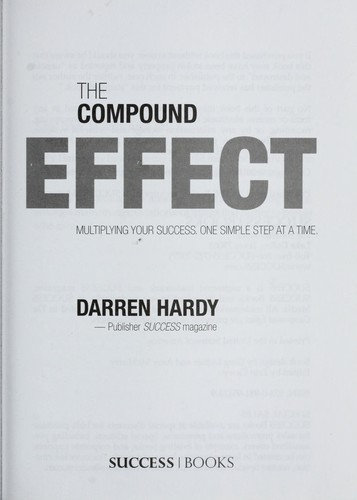
8. The Compound Effect – Darren Hardy
- Rating: ⭐⭐⭐⭐ (4/5)
- Who this is for: People who need to understand that small, consistent actions create massive results.
Hardy’s compound effect: tiny improvements × consistency × time = massive results. The math is simple. The execution requires discipline — but only for the first few weeks. After that, momentum takes over.
“I tracked my habits for 90 days. The results were invisible for 60 days. On day 90, I couldn’t believe the change.” – Chris, Amazon reviewer
My take: This book is the “why bother?” antidote. Small things compound. Trust the process.

9. Essentialism – Greg McKeown
- Rating: ⭐⭐⭐⭐⭐ (5/5)
- Who this is for: People who are disciplined about too many things — and exhausted by all of them.
McKeown argues that the disciplined pursuit of less is more effective than trying to do everything. Focus your discipline on the few things that matter most. Let everything else go.
“I stopped trying to be disciplined about 20 things. I focused on 3. My results in those 3 quadrupled.” – David, Amazon reviewer
My take: Less is more. This book proves it.
10. The War of Art – Steven Pressfield
- Rating: ⭐⭐⭐⭐⭐ (5/5)
- Who this is for: Creative people who can’t get themselves to do the work.
Pressfield names the enemy: Resistance. The force that stops you from writing, painting, starting the business, doing the work. His solution: show up every day regardless of how you feel. The professional doesn’t wait for inspiration. They sit down and work.
“I read this book in one sitting and wrote 3,000 words. Pressfield didn’t unblock me — he showed me that being blocked was a choice.” – Jake, Amazon reviewer
My take: This is the creative discipline book. Short, angry, and perfect.
Frequently Asked Questions
Is discipline a skill or a personality trait?
A skill. Research shows that self-control can be strengthened through practice — like a muscle. But it’s also limited — like a battery. The key is not relying on discipline alone. Design your environment, build habits, and create systems that make discipline unnecessary.
What’s the single most important thing I can do to be more disciplined?
Change your environment. Remove temptations, create visual cues, and make the right behavior the easy behavior. Discipline is for moments of weakness. Environment design prevents those moments from happening.
How do I stay disciplined when I don’t feel motivated?
Don’t wait for motivation. Act first, motivation follows. The “two-minute rule” helps: commit to just two minutes of the behavior. Once you’ve started, momentum usually carries you forward.
Can I build discipline in one area and transfer it to others?
Yes — partially. Research shows that practicing self-control in one domain (exercise) can improve self-control in other domains (diet, work). But the transfer is limited. It’s better to build discipline specifically in the areas that matter most to you.
What if I keep failing?
Failure is data, not identity. Each failure shows you what doesn’t work. Adjust your approach, reduce the difficulty, change the environment, and try again. The only true failure is permanent quitting.
How long does it take to become disciplined?
There’s no finish line. Discipline is a practice, not an achievement. But after 60-90 days of consistent effort, the behavior becomes habitual — and discipline is no longer required. The goal is to build habits so strong that discipline becomes irrelevant.
What Should I Read Next?
Discipline isn’t about suffering. It’s about freedom. If you’ve read a book that helped you become more disciplined — one I missed — I want to hear about it.
And if you’ve been struggling: you’re not weak. You’re just using the wrong system. Change the system. The discipline will follow.
Final Thought
I’m not a disciplined person. I’m a person who’s built systems that make discipline unnecessary. My environment is designed. My habits are automatic. My defaults are healthy.
That’s not discipline. That’s architecture.
Build the architecture. The discipline takes care of itself.
This post contains Amazon affiliate links. As an Amazon Associate, ReadPlug earns from qualifying purchases. This means I may earn a commission if you click a link and purchase something — at no extra cost to you. I only recommend books I’ve read and genuinely believe in.
Enjoyed this list?
Get our best book picks delivered to your inbox — no spam, just great reads.