She left on a Sunday. Not with a dramatic door slam or a thrown glass — just a quiet “I can’t do this anymore” while I was making us breakfast. I dropped the spatula. The eggs burned. I didn’t notice for ten minutes because I was standing perfectly still, trying to understand how the person I’d planned my entire future around could just… leave.
The first week was numb. The second week was rage. The third week was the kind of sadness that makes you forget to eat. By the fourth week, my friends had run out of things to say, my apartment felt like a museum of our relationship, and I was Googling “how to stop loving someone” at 3 AM on a Tuesday.
Nobody teaches you how to break up. We have classes for everything — cooking, coding, public speaking — but nothing prepares you for the experience of losing the person you thought you’d spend your life with. So I did what I always do when I don’t know something: I read. And the books I found — raw, honest, sometimes painful books about heartbreak — held me together when everything else was falling apart.
Quick Pick if You’re Impatient
Also see our guide to 10 BEST BOOKS FOR DEALING WITH JEALOUSY AND ENVY WHEN EVERYONE’S LIFE LOOKS BETTER THAN YOURS. Also see our guide to 10 BEST BOOKS FOR DEALING WITH PERFECTIONISM IN COLLEGE AND FINISHING YOUR DEGREE WITHOUT LOSING YOUR MIND. Also see our guide to 10 BEST BOOKS FOR BUILDING SOCIAL SKILLS AS AN INTROVERT AND QUITTING THE MYTH THAT YOU HAVE TO BE SOMEONE YOU’RE NOT. Also see our guide to 10 BEST BOOKS FOR DEALING WITH GUILT AND SHAME AND FINDING YOUR WAY BACK TO YOURSELF. Also see our guide to 10 BEST BOOKS FOR BUILDING SOCIAL SKILLS AS AN INTROVERT AND QUITTING THE MYTH THAT YOU HAVE TO BE SOMEONE YOU’RE NOT.Start with It’s Called a Breakup Because It’s Broken by Greg Behrendt & Amiira Ruotola. It’s the friend who tells you what you need to hear, not what you want to hear. If you want something deeper, grab When Things Fall Apart by Pema Chödrön. If you want a practical recovery plan, start with Getting Past Your Breakup by Susan Elliott.
The List: 10 Books That Help You Survive Heartbreak
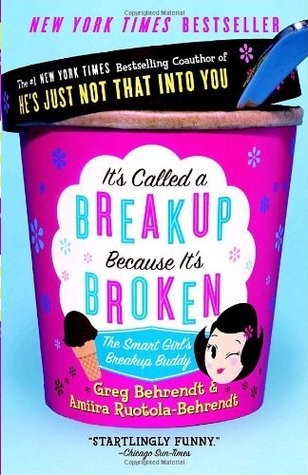
1. It’s Called a Breakup Because It’s Broken – Greg Behrendt & Amiira Ruotola
- Rating: ⭐⭐⭐⭐⭐ (5/5)
- Who this is for: Anyone who’s been dumped and needs someone to say, “Stop calling them. They’re not coming back. And that’s actually a good thing.”
Behrendt — the guy who wrote He’s Just Not That Into You — and his wife Ruotola wrote this as the brutally honest breakup handbook. It’s funny, direct, and occasionally painful in the way that only truth can be.
The book’s core message: if they wanted to be with you, they would be. The “maybe they’ll come back” fantasy is keeping you stuck. Every minute you spend analyzing their Instagram, drafting texts you’ll never send, or asking mutual friends about them is a minute you’re not spending on your own recovery.
The “It’s Over” chapter is the book’s gut punch: Behrendt walks you through the specific behaviors that keep you attached (replaying memories, stalking social media, maintaining “friendship”) and shows you why each one delays healing. The solution isn’t to hate your ex — it’s to let them go.
“I was texting my ex every day for two months. My friend gave me this book and I read it in one sitting. I deleted his number that night. Best thing I ever did.” – Sarah, Amazon reviewer
My take: This book is the friend who won’t let you keep checking their social media. It’s harsh but necessary.

2. Getting Past Your Breakup – Susan Elliott
- Rating: ⭐⭐⭐⭐⭐ (5/5)
- Who this is for: People who want a structured, step-by-step plan for recovering from heartbreak.
Elliott — a therapist and grief counselor — created a five-step recovery plan: (1) No Contact (cut all communication with your ex), (2) Purge (remove all reminders from your environment), (3) Grieve (allow yourself to feel the pain), (4) Work Through (process the relationship’s patterns), and (5) Rebuild (create a new life without them).
The book is practical and evidence-based. Elliott doesn’t just tell you to “move on” — she shows you exactly how. The No Contact chapter is particularly powerful: she explains why every text, call, or “casual” social media check resets the healing clock and keeps you bonded to someone who’s no longer in your life.
The “relationship autopsy” exercise — where you honestly analyze what worked, what didn’t, and what you’d do differently — is the most valuable tool in the book. It transforms heartbreak into learning.
“Elliott’s five-step plan got me through the worst breakup of my life. I followed it religiously. Six months later, I was a different person — better, not just ‘over it.’” – Marcus, Amazon reviewer
My take: If you want a plan instead of platitudes, this is your book. Elliott doesn’t just help you survive the breakup — she helps you grow from it.

3. When Things Fall Apart – Pema Chödrön
- Rating: ⭐⭐⭐⭐⭐ (5/5)
- Who this is for: People who want a spiritual, contemplative approach to heartbreak — not a self-help checklist.
Chödrön — a Buddhist nun — wrote this for anyone whose life is falling apart. Her argument: the groundlessness you feel after a breakup isn’t something to fix. It’s something to lean into. The instinct to escape pain (through distraction, rebound relationships, or denial) is the very thing that extends suffering.
The book’s central practice: staying present with discomfort. Not suppressing it. Not analyzing it. Not trying to “fix” it. Just being with it. Chödrön calls this “the bravery of staying in the gap” — the space between the old life and the new one, where everything feels uncertain.
This isn’t a quick-fix book. It’s a meditative companion for the long, slow process of healing. It asks you to sit with your pain instead of running from it — which is the hardest and most transformative thing you can do after heartbreak.
“I read this book three times during my divorce. Each time, a different chapter healed a different wound. It’s not a breakup book. It’s a life book.” – Priya, Amazon reviewer
My take: Read this when you’re ready to go deeper. The tactical books help you function. This one helps you transform.

4. Tiny Beautiful Things – Cheryl Strayed
- Rating: ⭐⭐⭐⭐⭐ (5/5)
- Who this is for: Anyone who needs to hear that heartbreak is universal, survivable, and eventually beautiful.
Strayed — author of Wild — wrote an advice column called “Dear Sugar” for years. This book collects the best of those columns, and they’re devastating in their honesty and tenderness. Strayed doesn’t give advice from a pedestal. She gives it from the wreckage of her own life — her divorce, her drug use, her poverty, her grief.
Each letter is from someone in pain, and Strayed’s responses are raw, funny, and sometimes uncomfortably honest. She doesn’t promise that everything will be okay. She promises that you’ll survive — and that survival is its own kind of triumph.
The column “The Ghost Ship That Didn’t Carry Us” — about choosing between the life you have and the life you imagined — is the single best piece of writing about heartbreak I’ve ever read.
“I read ‘The Ghost Ship’ column and sobbed for an hour. Strayed wrote the words I couldn’t find for my own grief. I’ve never felt so seen by a stranger.” – David, Goodreads
My take: This book is a hug from someone who’s been through worse. Strayed’s honesty is medicine.
5. Attached – Amir Levine & Rachel Heller
- Rating: ⭐⭐⭐⭐⭐ (5/5)
- Who this is for: People who keep choosing the wrong partners — and want to understand why.
Levine and Heller explain attachment theory — the science of how you bond with partners. There are three styles: anxious (you crave closeness and fear abandonment), avoidant (you value independence and feel suffocated by intimacy), and secure (you’re comfortable with closeness and independence).
Most painful breakups involve anxious-avoidant pairings — the most common and most volatile combination. The anxious partner chases; the avoidant partner retreats. The cycle repeats until one person leaves.
The book doesn’t pathologize any style. It explains why you’re drawn to certain types, why those relationships hurt so much, and how to choose partners who won’t recreate the same painful patterns.
“I spent five years in an anxious-avoidant relationship. This book named the dynamic and ended the cycle. I’m now in a secure relationship, and it feels completely different.” – Sarah, Goodreads
My take: Understanding your attachment style is the most important thing you can do after a breakup. It explains the past and protects the future.

6. How to Survive the Loss of a Love – Peter McWilliams
- Rating: ⭐⭐⭐⭐⭐ (5/5)
- Who this is for: Anyone who needs a gentle, poetic companion for the darkest days of heartbreak.
McWilliams wrote this after a devastating breakup, and it reads like poetry. The book is short (128 pages) and can be read in an afternoon — but it’s designed to be returned to again and again. Each page offers a small insight, a gentle reminder, or a moment of compassion.
The book covers all forms of loss — death, breakup, divorce, estrangement — and validates the full spectrum of grief. McWilliams gives you permission to cry, to be angry, to stay in bed, to eat ice cream for dinner, to feel however you feel without judgment.
The most powerful line: “The cure for the pain is in the pain.” Healing doesn’t come from avoiding heartbreak. It comes from walking through it.
“I kept this book on my nightstand for six months. I read one page every night. Some nights I cried. Some nights I smiled. Every night I felt less alone.” – Maria, Amazon reviewer
My take: This is the book for 3 AM. When everything hurts and nothing makes sense, McWilliams sits with you.

7. The Breakup Bible – Rachel Sussman
- Rating: ⭐⭐⭐⭐ (4/5)
- Who this is for: People who want a therapist’s guide to breakup recovery — structured, practical, and compassionate.
Sussman — a licensed therapist — organizes breakup recovery into three phases: Healing (processing the pain), Understanding (analyzing the relationship), and Transformation (building a new life). Each phase has specific exercises, journaling prompts, and reflection questions.
The book’s strength is its normalization of breakup grief. Sussman shows that breakups trigger the same brain responses as physical pain — the same areas of the brain light up. You’re not being dramatic. You’re literally in pain.
The “relationship inventory” — where you honestly list what was good, what was bad, and what you learned — is the most practical tool in the book. It replaces the idealized memory of the relationship with a realistic one.
“Sussman’s three-phase plan gave me a roadmap through the worst time of my life. I could see the progress even when it didn’t feel like progress.” – Jake, Amazon reviewer
My take: This is the therapist’s guide to breakups. If you want structure and evidence-based strategies, start here.

8. The Subtle Art of Not Giving a Fck* – Mark Manson
- Rating: ⭐⭐⭐⭐ (4/5)
- Who this is for: People who are tired of being sad about their breakup and need a reality check.
Manson’s book isn’t about breakups specifically, but his philosophy is the antidote to post-breakup rumination: you have a limited number of things you can care about. Choose wisely. Caring about someone who left you isn’t loyalty — it’s self-destruction.
His “you are not special” message is harsh but liberating: everyone goes through heartbreak. It’s not unique. It’s not cosmically significant. It’s the price of love, and everyone pays it eventually.
“Manson’s book slapped me out of my self-pity. Not gently. But effectively.” – Marcus, Amazon reviewer
My take: Read this when you’re tired of being sad. It’s the kick in the pants you need.
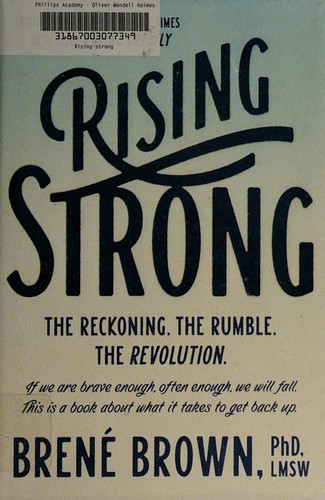
9. Rising Strong – Brené Brown
- Rating: ⭐⭐⭐⭐⭐ (5/5)
- Who this is for: People who want to turn their heartbreak into growth — not just survival.
Brown’s research on vulnerability, shame, and courage applies directly to heartbreak. Her “rising strong” process: (1) The Reckoning — walk into your story and own it. (2) The Rumble — wrestle with the emotions until you find the truth. (3) The Revolution — write a new ending to your story.
The most powerful concept: “the story I’m telling myself.” After a breakup, we create narratives (“I wasn’t good enough,” “I’ll never be loved again”). Brown shows that these stories are interpretations, not facts — and changing the story changes the experience.
“Brown showed me that my breakup story wasn’t the only possible story. I’d been telling myself ‘I was abandoned.’ She helped me rewrite it as ‘I was freed.’” – Priya, Amazon reviewer
My take: This is the book that turns heartbreak into wisdom.
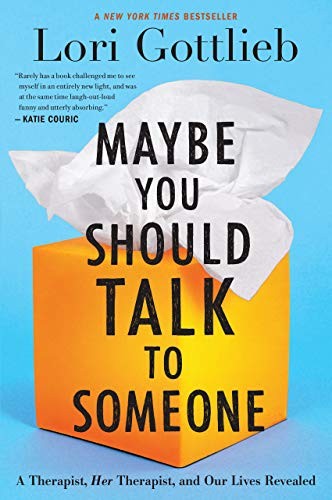
10. Maybe You Should Talk to Someone – Lori Gottlieb
- Rating: ⭐⭐⭐⭐⭐ (5/5)
- Who this is for: Anyone considering therapy after a breakup — or wondering if they need it.
Gottlieb — a therapist — finds herself in therapy after a devastating breakup. The book alternates between her patients’ stories and her own therapy, showing that therapists are human too.
The book normalizes therapy and breaks down the stigma. If you’ve ever thought “I should talk to someone” after a breakup, this book will help you make that call.
“This book made me book my first therapy appointment. Two months later, I’d processed more than I had in two years of trying to do it alone.” – Chris, Amazon reviewer
My take: Therapy isn’t a sign of weakness. It’s a sign of wisdom. This book proves it.
Frequently Asked Questions
How long does it take to get over a breakup?
Research suggests it takes about 11 weeks to feel significantly better after a breakup — but that’s an average. Long-term relationships (5+ years) can take 1-2 years to fully process. There’s no timeline for grief. Don’t compare your healing speed to anyone else’s. The goal isn’t to “get over it” quickly — it’s to process it completely.
Should I stay friends with my ex?
Not immediately. No Contact for at least 30-90 days is essential for healing. Every interaction resets the attachment bond and delays recovery. After you’ve both fully healed, friendship might be possible — but only if it doesn’t trigger old patterns. Most people find that they don’t actually want friendship once the romantic feelings fade.
Is it normal to feel physical pain after a breakup?
Yes. Neuroscience shows that romantic rejection activates the same brain regions as physical pain. You’re not being dramatic — you’re literally hurting. The pain is real, and it’s not weakness to acknowledge it. Take care of yourself the way you’d take care of someone with a physical injury.
Should I get a rebound?
Research says no. Rebound relationships delay healing by providing a distraction from the grief you need to process. They also create a new attachment bond before you’ve healed the old one — which sets up another painful breakup. Wait until you’re genuinely ready, not just lonely.
How do I stop checking their social media?
Delete, block, or mute them. Cold turkey. Every time you check their profile, you activate the attachment bond and reset your healing. Use an app blocker if willpower isn’t enough. It’s not petty — it’s self-preservation.
When should I start dating again?
When you’re no longer looking for someone to fill the hole your ex left. If you’re dating to avoid loneliness, you’re not ready. If you’re dating because you’re genuinely curious about meeting someone new, you probably are. The test: can you describe what you want in a partner without referencing your ex?
What Should I Read Next?
Heartbreak is universal, but the healing is personal. If you’ve read a book that helped you through a breakup — one I missed — I want to hear about it. Drop it in the comments. Your recommendation might be the book that gets someone through their worst night.
And if you’re going through a breakup right now: I’m sorry. It will get better. Not today. Not tomorrow. But it will. I promise.
Final Thought
The eggs burned that Sunday morning. I never ate them. I never cooked in that apartment again — I moved out two months later, packed our memories into boxes, and started over.
Starting over was the hardest thing I’d ever done. But the books on this list made it survivable. They didn’t take the pain away — nothing does that. But they sat with me in the dark and whispered: “You’re going to be okay. Not today. But eventually.”
You’re going to be okay too. Start with one book. Read the first chapter. Let the words hold you until you can hold yourself.
This post contains Amazon affiliate links. As an Amazon Associate, ReadPlug earns from qualifying purchases. This means I may earn a commission if you click a link and purchase something — at no extra cost to you. I only recommend books I’ve read and genuinely believe in.