I used to think people were unpredictable. My boss would praise my work on Monday and criticize it on Wednesday for what seemed like the exact same thing. My friend would cancel plans at the last minute with no explanation, then act like nothing happened. My partner would get quietly angry about something that seemed completely trivial, and when I asked what was wrong, they’d say “nothing” — and mean something. My mother would send a text that, read one way, was perfectly pleasant, and read another way, was a weapon. Everyone around me seemed to operate according to rules I couldn’t see — rules that seemed to change without warning, depending on the day, their mood, or something I’d done (or failed to do) that I couldn’t identify.
For years, I thought I was just bad at reading people. That some people had an instinct for this stuff and I simply didn’t. I was, I assumed, constitutionally unsuited to understanding other humans.
Then I started reading psychology, and something shifted. The world didn’t stop being complicated, but it stopped being random. People weren’t unpredictable — they were following patterns. Deeply embedded, often unconscious patterns driven by cognitive biases, emotional needs, social pressures, evolutionary wiring, and childhood experiences they couldn’t articulate. Once you learn to see these patterns, human behavior becomes not just comprehensible but genuinely predictable.
Understanding psychology didn’t just make me better at reading other people. It made me infinitely better at understanding myself — why I procrastinate on things that matter, why I get defensive when I’m wrong, why I seek external validation even when I know I shouldn’t, why I avoid difficult conversations even when I know they’re necessary. All of it is psychology. All of it is knowable. And knowing it changes everything.
These ten books are the ones that unlocked human behavior for me. If you’ve ever lain awake wondering why someone did what they did — or why you did what you did — start here.
Quick Pick if You’re Impatient
Also see our guide to 10 BEST BOOKS FOR BUILDING EMOTIONAL INTELLIGENCE AND SELF-AWARENESS AND FINALLY UNDERSTANDING HOW YOU FEEL. Also see our guide to 10 BEST BOOKS FOR AUTISM UNDERSTANDING AND MENTAL HEALTH SUPPORT. Also see our guide to 10 BEST BOOKS FOR BROADENING YOUR UNDERSTANDING OF THE WORLD AND SEEING WHAT YOU’VE BEEN MISSING.Start with Thinking, Fast and Slow by Daniel Kahneman. It’s the foundational book on how the human brain actually works — and why it so often leads us astray. If you want something more immediately practical (with techniques you can use this week), grab Influence by Robert Cialdini. If you want something more personal and emotionally resonant, start with Man’s Search for Meaning by Viktor Frankl.
The List: 10 Books That Decode Human Behavior

1. Thinking, Fast and Slow – Daniel Kahneman
- Rating: ⭐⭐⭐⭐⭐ (5/5)
- Who this is for: Anyone who wants to understand exactly how the human brain makes decisions — and why it so often makes bad ones.
Daniel Kahneman won the Nobel Prize in Economics for work that, technically, wasn’t economics at all — it was psychology. Together with his longtime collaborator Amos Tversky (who died before the Nobel was awarded), Kahneman revolutionized our understanding of human decision-making. Their central insight: the human brain has two systems. System 1 is fast, intuitive, and emotional — it operates on autopilot, making snap judgments, recognizing patterns, and generating gut feelings. System 2 is slow, deliberate, and logical — it analyzes, calculates, and plans, but it hates to be bothered and mostly lets System 1 run the show.
The implications are staggering. Because System 1 makes most of our decisions, we’re far more susceptible to cognitive biases than we realize. Kahneman catalogs dozens of them: anchoring (your first impression sets the reference point for everything that follows), availability bias (you overestimate the likelihood of things that are easy to recall, which is why plane crashes feel more dangerous than car accidents even though cars are far deadlier), loss aversion (losing $50 feels roughly twice as painful as gaining $50 feels good), the planning fallacy (you consistently underestimate how long tasks will take), and overconfidence bias (you think you know more than you do). These aren’t character flaws. They’re features of how the brain evolved.
“This book explained why I keep making the same mistakes. My System 1 is running the show, and it’s not as smart as I thought. Now when I catch myself making a snap judgment, I try to engage System 2. It doesn’t always work — but at least I know what’s happening.” – Marcus, Amazon reviewer
My take: This is the psychology book. Everything else on this list builds on it. If you read only one, make it this one.

2. Influence: The Psychology of Persuasion – Robert Cialdini
- Rating: ⭐⭐⭐⭐⭐ (5/5)
- Who this is for: Anyone who wants to understand persuasion — and equally important, defend themselves against manipulation.
Robert Cialdini spent years working as a door-to-door salesman, a fundraising director, and a consultant before writing this book — and you can feel that hands-on experience on every page. His research into the psychology of influence led him to identify six core principles that drive human compliance: reciprocity (we feel obligated to return favors), commitment (once we make a small yes, we’re more likely to make a larger one), social proof (we look to what others are doing to determine our own behavior), authority (we defer to experts), liking (we say yes to people we like and trust), and scarcity (we want what’s rare or vanishing).
What makes this book invaluable isn’t just understanding how persuasion works — it’s recognizing it when it’s being used on you. Every day, advertisers, politicians, coworkers, and family members deploy these principles, often without conscious intent. Once you see them, you can’t unsee them. You’ll notice the “limited time offer” that never expires, the sales associate who starts with a small request, the social media post designed to trigger FOMO. This isn’t a cynical book — it’s an illuminating one.
“I used to wonder why I bought things I didn’t need, donated to causes I didn’t care about, and said yes when I meant no. Cialdini showed me I was being manipulated — often by people who didn’t even know they were manipulating me. Now I see the six principles everywhere.” – Priya, Amazon reviewer
My take: Read this to understand how you’re being influenced every single day — and how to influence ethically.
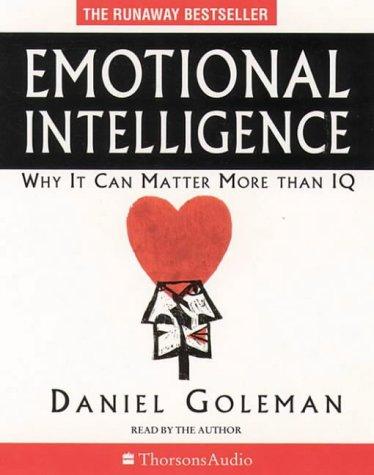
3. Emotional Intelligence: Why It Can Matter More Than IQ – Daniel Goleman
- Rating: ⭐⭐⭐⭐⭐ (5/5)
- Who this is for: People who have brilliant minds but struggle to navigate relationships, manage stress, or understand their own feelings.
When Daniel Goleman’s book was published in 1995, it did something remarkable: it made the concept of emotional intelligence — EQ — part of the mainstream vocabulary. Goleman argues that traditional IQ, while important, is a surprisingly weak predictor of life outcomes. What actually determines whether you thrive in relationships, leadership, and personal wellbeing is your emotional intelligence: your ability to recognize and regulate your own emotions, to stay motivated in the face of setbacks, to empathize with others, and to navigate social dynamics effectively.
Goleman breaks EQ down into five components: self-awareness (knowing your own emotional states), self-regulation (managing those states), motivation (channeling emotions toward goals), empathy (recognizing emotions in others), and social skills (building relationships and managing interactions). He then connects each component to concrete brain science — neurochemistry, amygdala hijacks, pre-frontal cortex function — making the case that emotions aren’t a distraction from rationality; they’re a substrate of it.
“I had a high IQ and low EQ. I was brilliant in school and terrible in relationships. Goleman showed me that emotional skills aren’t soft — they’re neurological. I’ve been practicing the techniques ever since, and my relationships have transformed.” – Chris, Amazon reviewer
My take: The book that proves emotions are a skill, not a weakness.
4. The Social Animal: The Hidden Sources of Love, Character, and Achievement – Elliot Aronson
- Rating: ⭐⭐⭐⭐⭐ (5/5)
- Who this is for: Anyone who wants to understand how profoundly social context shapes who we are and what we do.
Elliot Aronson is one of the most cited psychologists in history, and The Social Animal is his masterwork — a book that reads like a novel while delivering the insights of decades of social psychology research. Aronson takes you through the life of a fictional character named Harold to illustrate how social forces shape everything from our self-esteem to our political beliefs to our career success.
The book covers the major experiments and findings that define social psychology: the Milgram experiment (how authority figures can get ordinary people to obey shocking commands), the Stanford Prison Experiment (how social roles can transform ordinary students into guards and prisoners in days), cognitive dissonance (the uncomfortable tension we feel when our actions contradict our beliefs — and how we resolve it), conformity, prejudice, persuasion, and the science of attraction. Aronson writes with warmth and wit, making dense research accessible without dumbing it down.
“This book showed me that I’m not as independent-minded as I think I am. My behavior, my preferences, my self-image — they’re all shaped by social forces I wasn’t even aware of. That was humbling and liberating at the same time.” – David, Amazon reviewer
My take: The most engaging introduction to social psychology ever written.
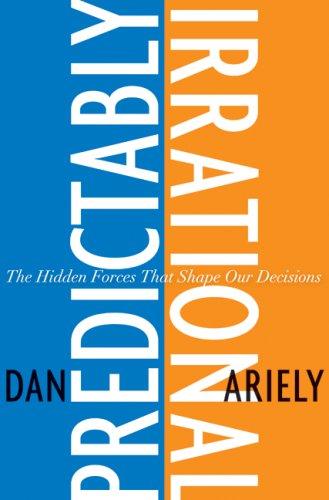
5. Predictably Irrational: The Hidden Forces That Shape Our Decisions – Dan Ariely
- Rating: ⭐⭐⭐⭐⭐ (5/5)
- Who this is for: People who are convinced they make rational decisions — and want to understand why that confidence is misplaced.
Dan Ariely is a behavioral economist who spent years running fascinating, often bizarre experiments to test how humans actually make decisions versus how they think they make them. The findings are consistently humbling. We overvalue what we own (the endowment effect — your coffee mug is worth more to you than a functionally identical one that isn’t yours). We follow arbitrary anchors (if you see a $100 shirt marked down to $60, you feel good about the deal, even if you’d never pay $100 for a shirt). We consistently choose the middle option when given three choices. And we behave far more dishonestly when we’re one step removed from cash — willing to cheat on expense reports while refusing to steal from a wallet.
What makes Ariely’s book so compelling is his storytelling. He recounts his own experience as a burn patient — three years in a hospital, daily wound cleanings that were excruciating — and how his experience with pain shaped his understanding of irrational behavior. He makes complex findings relatable through personal anecdote and clever experiment design.
“Ariely’s experiments are fascinating and humbling. I thought I was rational. I’m predictably irrational. But at least now I know why.” – Jake, Amazon reviewer
My take: This book will make you question every decision you’ve ever made — and that’s exactly the point.

6. Man’s Search for Meaning – Viktor Frankl
- Rating: ⭐⭐⭐⭐⭐ (5/5)
- Who this is for: Anyone who has ever asked whether suffering has purpose — or whether a meaningful life is possible in difficult circumstances.
This is the most important psychology book of the twentieth century, and one of the most important books of any genre. Viktor Frankl was a psychiatrist living in Vienna when he and his family were deported to concentration camps — including Auschwitz — where he spent three years. His parents, brother, and pregnant wife all died in the camps. What saved Frankl, and what he wrote about in this book, was his theory of logotherapy: the idea that the primary human drive is not pleasure (Freud) or power (Adler), but meaning. That human beings can endure almost any suffering if they can find a purpose in it.
Frankl’s insight is simple but profound: everything can be taken from a person except the last of their freedoms — the ability to choose their attitude toward their circumstances. This isn’t inspirational platitude; it’s documented observation from the worst circumstances imaginable. The prisoners who survived weren’t the strongest or the luckiest — they were the ones who found meaning, whether in a future they were working toward, a person they loved, or a task that needed to be done.
“Frankl taught me that finding meaning isn’t a luxury — it’s a survival mechanism. I’ve applied this to everything from job loss to grief. It’s not about being positive. It’s about being purposeful.” – Maria, Amazon reviewer
My take: Read this book. Then read it again. It will change how you think about suffering.

7. Stumbling on Happiness – Daniel Gilbert
- Rating: ⭐⭐⭐⭐⭐ (5/5)
- Who this is for: Anyone who believes they’ll be happier when they get what they want — and wants to understand why that belief is usually wrong.
Daniel Gilbert, a professor at Harvard and one of the most cited psychologists alive, asks a deceptively simple question: why are humans so bad at predicting what will make them happy? The answer involves some genuinely surprising findings: we overestimate how much impact major life events (good or bad) will have on our long-term happiness (the “impact bias”). We underestimate our resilience — we think we’ll never recover from a breakup or a job loss, and then we do, often faster than we expected. And we consistently choose things that don’t actually make us happy, based on flawed predictions about what will.
Gilbert’s research is rigorous but his writing is genuinely funny — this is one of the most entertaining psychology books you’ll ever read. He uses clever experiments, vivid examples, and self-deprecating humor to make points that are both scientifically important and personally transformative. If you’ve ever thought “I’ll be happy when…” — when I get the promotion, when I lose the weight, when I find the relationship — this book will cure that way of thinking without making you feel foolish.
“Gilbert showed me that my ‘dream life’ wouldn’t make me as happy as I think it would. That’s both depressing and incredibly liberating. I’ve stopped chasing hypothetical futures and started paying attention to what’s actually working right now.” – Chris, Amazon reviewer
My take: This book cured my “I’ll be happy when…” syndrome.
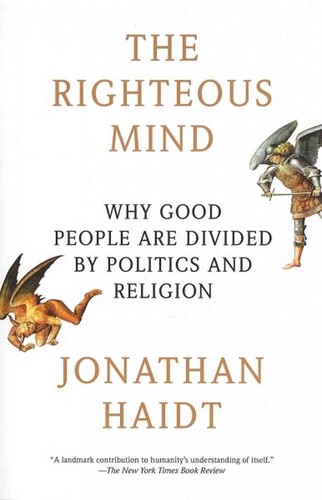
8. The Righteous Mind: Why Good People Are Divided by Politics and Religion – Jonathan Haidt
- Rating: ⭐⭐⭐⭐⭐ (5/5)
- Who this is for: Anyone who has ever been baffled — or enraged — by someone else’s moral or political beliefs.
Jonathan Haidt is a social psychologist who spent decades studying moral psychology, and The Righteous Mind is his attempt to answer one of the most contentious questions of our time: why can’t good people from different political and religious backgrounds agree? Why do debates about politics and religion seem impossible to resolve, even when everyone involved is arguing in good faith?
Haidt’s answer is based on his research into what he calls the six moral foundations: care (avoiding harm), fairness (justice and rights), loyalty (to one’s group), authority (respect for traditions and hierarchy), sanctity (reverence for the sacred), and liberty (opposition to oppression). His key finding: people across the political spectrum share these foundations, but weight them very differently. Liberals prioritize care and fairness; conservatives balance all six roughly equally. Neither side is simply wrong — they’re responding to different moral intuitions.
“Haidt made me understand why I can’t change my uncle’s political views — and why I shouldn’t waste my energy trying. We’re not arguing about facts. We’re responding to different moral intuitions. That insight alone has saved me countless arguments.” – David, Amazon reviewer
My take: The book that will make you more compassionate toward people you disagree with — without requiring you to agree with them.

9. Attached: The New Science of Adult Attachment and How It Can Help You Find — and Keep — Love – Amir Levine & Rachel Heller
- Rating: ⭐⭐⭐⭐⭐ (5/5)
- Who this is for: Anyone who notices that their relationships follow certain patterns — and wants to understand why.
Attachment theory was originally developed by John Bowlby and Mary Ainsworth to explain the bond between infants and caregivers. But in recent decades, researchers like Levine and Heller have applied the same framework to adult romantic relationships — and the findings are eye-opening. Adults, it turns out, display the same three attachment styles in relationships that infants display with their caregivers: anxious (craving closeness but terrified of abandonment), avoidant (valuing independence but lonely from it), and secure (comfortable with intimacy and trusting of partners).
Understanding your attachment style doesn’t just explain your past relationships — it gives you a framework for understanding what you need in a partner, why certain dynamics repeat themselves, and how to move toward a more secure way of relating. For anxious attachers who find themselves repeatedly drawn to unavailable partners, or avoidant attachers who push away anyone who gets too close, this book provides both the explanation and the roadmap.
“I finally understood why I always fall for emotionally unavailable people. It’s not bad luck — it’s anxious attachment. Knowing this hasn’t automatically fixed my patterns, but it’s given me a framework for recognizing them and choosing differently.” – Sarah, Amazon reviewer
My take: The relationship psychology book that explains why love feels so complicated.

10. The Paradox of Choice: Why More Is Less – Barry Schwartz
- Rating: ⭐⭐⭐⭐ (4/5)
- Who this is for: People who spend too much time agonizing over decisions — and end up less happy as a result.
Barry Schwartz opens this book with a simple observation: in the modern developed world, we have more choices than any humans in history. More career paths, more products, more religions, more ways to live. And yet, paradoxically, we’re not happier for it. In fact, study after study suggests that more choice creates more anxiety, more regret, and less satisfaction with the decisions we do make.
The reason, Schwartz argues, is that each additional option we consider increases the complexity of our decision-making and raises the possibility of regret. When there were three options, picking one felt manageable. When there are thirty, we agonize over whether we picked correctly. Schwartz distinguishes between two types of people: “maximizers” (who seek the absolute best option and are never satisfied) and “satisficers” (who seek “good enough” and are more consistently content). His argument isn’t for settling — it’s for the quiet liberation of letting go of perfectionism in decision-making.
“I used to spend 30 minutes choosing a restaurant and still feel vaguely dissatisfied. Schwartz showed me that ‘good enough’ is better than ‘perfect’ — and that chasing perfect is actually a trap. My decision anxiety has genuinely decreased.” – Jake, Amazon reviewer
My take: The antidote to overthinking — and a surprisingly practical guide to living with more peace.
Frequently Asked Questions
Is psychology actually a science?
Yes — and a rigorous one. Modern psychology relies on experimental methods, controlled studies, statistical analysis, peer review, and replication. The books on this list are grounded in published research conducted by credentialed scientists. Some of the popularizations take liberties with the underlying science, but the core findings have been extensively replicated. Be wary of pop psychology that makes grand claims without citing research.
Can understanding psychology make me manipulative?
The knowledge cuts both ways. The same understanding that helps you persuade also helps you recognize when you’re being persuaded. Cialdini’s principles can be used to sell ethically or to exploit; Kahneman’s biases can inform better policy or to rig systems. Understanding how influence works gives you both a shield and a sword — what you do with it is a choice.
What’s the single most important concept in psychology?
For most people, it’s cognitive biases — the systematic ways our brains distort reality. Once you understand that your brain doesn’t perceive the world accurately (it takes shortcuts, relies on heuristics, and is easily fooled), you gain the ability to compensate for those distortions. Start with Kahneman’s work, and you’ll never trust your own intuition quite the same way again.
How do I apply psychology to my everyday life?
Start with one concept and apply it deliberately. Use Cialdini’s reciprocity principle in your next negotiation. Use Kahneman’s anchoring insight when you’re shopping for anything expensive. Use attachment theory to understand why a relationship feels the way it does. Small, deliberate applications build into genuine fluency over time.
Isn’t psychology kind of depressing?
Some findings are genuinely uncomfortable. We are less rational than we think, more influenced by social forces than we realize, worse at predicting our own happiness than we believe, and deeply shaped by forces we can’t see. But the overall effect isn’t depression — it’s liberation. When you understand why you do what you do, you gain the power to do something different. That’s not bleak. That’s empowering.
What’s the difference between psychology and self-help?
Psychology explains behavior through research and theory. Self-help prescribes behavior change based on those explanations. The best books on this list do both — they explain the science behind why we behave the way we do, and they give you concrete tools to apply that understanding. Read the psychology first, then apply the self-help.
What Should I Read Next?
Understanding human behavior is the meta-skill that makes everything else easier — relationships, career, health, creativity, and resilience all improve when you understand what’s actually driving you and the people around you.
If you’ve read a psychology book that genuinely changed how you see people — one I missed — I want to hear about it. Drop it in the comments. And if you’ve spent years feeling like people are random and unpredictable: they aren’t. The patterns are there. These books will help you see them.
This post contains Amazon affiliate links. As an Amazon Associate, ReadPlug earns from qualifying purchases. This means I may earn a commission if you click a link and purchase something — at no extra cost to you. I only recommend books I’ve read and genuinely believe in.
Enjoyed this list?
Get our best book picks delivered to your inbox — no spam, just great reads.