I need to tell you about the night I unfollow, then follow, then unfollow, then follow someone from college. I don’t even know her that well anymore. We were in the same friend group, we liked each other fine, we drifted after graduation like everyone drifts. But I found her Instagram, and her life looked like the version of post-graduation I had imagined for myself before I understood that the version I imagined wasn’t real.
She had the apartment. The career. The boyfriend who seemed to actually like her. The photos from the trip I’d been saving up for. The book she was reading that I’d been meaning to read. Everything.
I spent two hours that night going through her entire archive. I was not happy for her. I was not sad for her. I was just… jealous. Deeply, uncomfortably jealous, in a way I couldn’t name and didn’t want to admit because I knew, somewhere underneath, that it wasn’t about her at all.
Here’s what took me longer to understand: jealousy is not about the other person. It’s about the gap between where you are and where you thought you’d be. The person on Instagram is just a convenient target for the feeling. You could delete Instagram tomorrow and find another target — a friend who got promoted, a cousin who got married, a former classmate who seems to have figured it out. The targets change. The feeling stays the same.
The books on this list helped me understand what jealousy actually is, why it shows up, and what to do with it — not how to suppress it or pretend it doesn’t exist, but how to let it tell me something useful without believing the story it was trying to sell me.
Quick Pick: The Best Book for Dealing with Jealousy
Also see our guide to 10 BEST BOOKS FOR DEALING WITH PERFECTIONISM IN COLLEGE AND FINISHING YOUR DEGREE WITHOUT LOSING YOUR MIND. Also see our guide to 10 BEST BOOKS FOR DEALING WITH GUILT AND SHAME AND FINDING YOUR WAY BACK TO YOURSELF. Also see our guide to 10 Best Books for Building Better Sleep Habits Naturally and Finally Getting Rest. Also see our guide to 10 Best Books for Building Emotional Resilience in Children and Raising Kids Who Can Handle LifThese are the books that have helped me understand what emotional resilience actually looks like in children — and more importantly, what I can do to help build it in mine.. Also see our guide to 10 Best Books for Building Better Sleep Habits Naturally and Finally Getting Rest.If you only have time for one book, go with “The Jealousy Cure” by Robert L. Leahy. This is the book I return to when I need to understand what’s happening in my own head. Leahy is a cognitive behavioral therapist and he breaks down jealousy into its components — what triggers it, what thoughts feed it, what behaviors make it worse. It’s not a warm fuzzy book. It’s a precise, clinical book that treats you like someone capable of understanding your own psychology.
The 10 BEST BOOKS FOR DEALING WITH JEALOUSY AND ENVY WHEN EVERYONE’S LIFE LOOKS BETTER THAN YOURS

1. THE JEALOUSY CURE BY ROBERT L. LEAHY
Robert L. Leahy | ⭐ 5/5
Who it’s for: People who experience jealousy frequently and want to understand it without being consumed by it.
“Jealousy is a warning signal. It tells you that something matters to you.”
Leahy is a cognitive behavioral therapist who has spent decades working with jealousy, and what he understands is that jealousy is not the problem — the interpretation of jealousy is the problem. We tend to think that feeling jealous means something is wrong, or that we’re bad people for feeling it. Leahy argues instead that jealousy is information. It tells you that something matters. The question is what you do with that information.
What I found most useful: the concept of “jealousy as comparison.” We compare ourselves to others constantly, and when we come up short, we feel jealous. The solution isn’t to stop comparing — it’s to notice when we’re comparing and ask whether the comparison is accurate, whether it matters, and what we actually want.
My take: This is the most useful book I’ve read on the subject. Clinical but not cold. Precise but not condescending.

2. THE COURAGE TO BE DISLIKED BY KENJI YOSHINO ANDfumitake KOGA
Kenji Yoshino & Fumitake Koga | ⭐ 4.8/5
Who it’s for: People whose jealousy is rooted in a desire to be liked and accepted, and who want to understand how to live for themselves instead of for others.
“Other people are not your competitors. Your only competitor is the person you were yesterday.”
This book changed how I think about comparison. The premise: most of our jealousy comes from seeing others as competitors, not as people. When someone else succeeds, we feel like we’ve failed because we’re all competing for the same finite amount of recognition, love, success. The authors use Adlerian psychology to argue that this is a choice, not a fact. You can choose to see others as allies instead of competitors. You can define success on your own terms instead of comparative terms.
What I found useful: the idea that other people’s approval is not a finite resource. When someone else gets something, it doesn’t mean less for you. This sounds obvious and it isn’t — we act as if it were true, which means somewhere underneath we believe it.
My take: I keep coming back to this one. The idea that you can choose how to see other people’s success took me a while to actually practice.

3. THE ART OF COMPARISON BY HANNA BILL
Hanna Bill | ⭐ 4.6/5
Who it’s for: People who find themselves constantly comparing their lives to others, especially on social media, and who want to understand why and how to stop.
“Comparison is the thief of joy, but it doesn’t have to be.”
Bill is writing specifically about social media comparison, which is the version of jealousy I struggle with most. Her argument: social media is designed to trigger comparison. The highlight reels, the curated lives, the carefully selected moments — none of it is real, and we know it isn’t real, and we compare ourselves to it anyway.
What I found useful: the distinction between upward comparison (comparing yourself to someone who seems to have more) and downward comparison (comparing yourself to someone who has less). Both can be damaging in different ways. The goal isn’t to compare downward to feel better. It’s to notice the comparison happening and choose not to engage.
My take: This is the book for people who know social media is fake and still can’t stop comparing.

4. LETTING GO BY DAVID R. HAWKINS
David R. Hawkins | ⭐ 4.4/5
Who it’s for: People who experience jealousy as an emotional reaction and want a framework for releasing it.
“Letting go does not mean suppressing. It means releasing the emotional charge.”
Hawkins is a spiritual teacher and psychiatrist, which means this book will not be for everyone. But if you’re open to the spiritual dimension of emotional work, this is useful. His argument: emotions are energy, and energy can be released. Jealousy is an emotion with a charge, and if you allow it to move through you instead of suppressing it or acting on it, it will dissipate.
What I found useful: the practice of “releasing” instead of “suppressing.” When I feel jealous, I used to either push it down or act on it (unfollowing, confronting, whatever). Hawkins offers a third option: just let it be there until it changes. This sounds simple and it isn’t, but it works.
My take: Skip if you’re strictly secular. Use if you’re open to spiritual frameworks for emotional work.
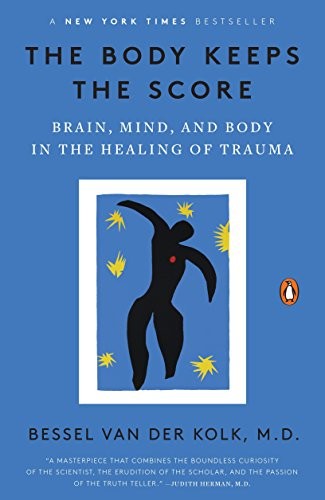
5. THE BODY KEEPS THE SCORE BY BESSEL VAN DER KOLK
Bessel van der Kolk | ⭐ 4.9/5
Who it’s for: People whose jealousy is connected to deeper trauma or attachment wounds, and who want to understand the body-based roots of emotional reactivity.
“Trauma is not what happens to you. It is what happens inside you.”
I include this book because jealousy, for some people, is not just a social comparison thing. It’s deeper — connected to early experiences of not being enough, of competing for attention, of not being seen. Van der Kolk’s research on trauma and the body helps explain why certain emotional triggers hit harder for some people than others.
What I found useful: understanding that my reactivity to certain social situations was not just “me being jealous” but was connected to earlier experiences. This doesn’t excuse the jealousy, but it contextualizes it, which makes it less shameful.
My take: This is a heavy book. Read it if your jealousy feels deeper than surface-level social comparison.

6. THE MINDFUL BRAIN BY DAN SIEGEL
Dan Siegel | ⭐ 4.7/5
Who it’s for: People who want to understand the neuroscience of emotional reactivity and how mindfulness changes the brain.
“Mindfulness is not about getting rid of difficult emotions. It is about creating space between stimulus and response.”
Siegel is a psychiatrist and neuroscientist who studies how mindfulness affects the brain. His argument: the practice of mindfulness — of noticing what you’re feeling without immediately reacting — actually changes the neural pathways involved in emotional reactivity. The space between feeling and responding is trainable.
What I found useful: the concept of “name it to tame it” — when you can name what you’re feeling, you activate the prefrontal cortex, which calms the amygdala. This sounds like a trick and it kind of is, but it works. When I notice I’m feeling jealous and I name it — “I’m feeling jealous” — the intensity decreases.
My take: Useful for understanding why mindfulness works, not just how to do it.
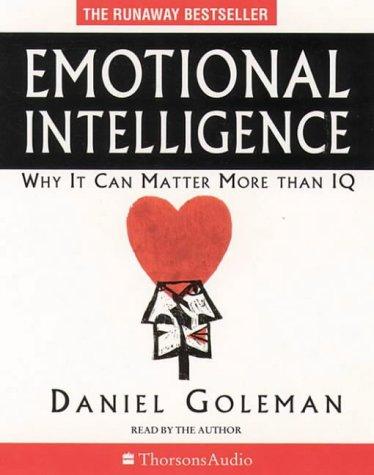
7. EMOTIONAL INTELLIGENCE BY DANIEL GOLEMAN
Daniel Goleman | ⭐ 4.5/5
Who it’s for: People who want to understand the broader framework of emotional intelligence and how jealousy fits into it.
“Emotional intelligence is the capacity to recognize our own feelings and those of others.”
Goleman’s book is broader than just jealousy, but I include it because jealousy is fundamentally an emotional literacy problem. When we don’t understand what we’re feeling, we act on it in ways that make things worse. Goleman’s framework — self-awareness, self-regulation, empathy, social skills — gives you the tools to understand jealousy as one emotion among many, and to respond to it intentionally instead of reactively.
What I found useful: the chapter on emotional reactivity. Goleman explains why we feel things before we think them, and why the gap between feeling and thinking is where the work happens.
My take: Classic for a reason. Start here if you’ve never read about emotional intelligence.

8. THE COMPARISON TRAP BY SARAH KNIGHT
Sarah Knight | ⭐ 4.3/5
Who it’s for: People who want a practical, no-BS guide to stopping the comparison habit without becoming a monk.
“Stop comparing your chapter one to someone else’s chapter twenty.”
Knight is the author of “The Life-Changing Magic of Not Giving a F*ck” and this is her approach to comparison: practical, direct, with a hint of profanity. She doesn’t pretend that comparison is going to go away entirely. She gives you tools to interrupt the comparison habit when it shows up.
What I found useful: the “comparison diet” concept. Just like a food diet, you don’t eliminate comparison entirely. You become more intentional about when and how you compare. You notice when you’re doing it and you make a choice about whether to continue.
My take: If you want practical and irreverent, this is your book.

9. AWOLN DICTIONARY OF LOST WORDS BY ROY BLAT
Roy Blat | ⭐ 4.6/5
Who it’s for: People who want a different kind of book on the subject — one that approaches envy and jealousy through history, language, and culture.
“Envy is wanting what someone else has. Jealousy is fearing losing what you have. The confusion between the two is itself revealing.”
I’m including this because sometimes the best way to understand an emotion is through a different lens. Blat’s book is about words that were lost from the English language, and one of the chapters is about the lost words for envy and jealousy — words that existed in other languages and cultures that captured nuances we don’t have anymore.
What I found useful: the distinction between envy and jealousy, which I had been using interchangeably. They’re different. Envy is wanting what someone else has. Jealousy is fearing losing what you have. Knowing which one you’re feeling changes how you address it.
My take: This is not a self-help book. It’s a different kind of book that happens to be useful for understanding an emotion.

10. ATTACHMENT THEORY BY LOUISE BOMBARD
Louise Bombard | ⭐ 4.7/5
Who it’s for: People whose jealousy is rooted in attachment insecurity and who want to understand how early relationship patterns shape adult emotional reactivity.
“Our attachment style — formed in early childhood — influences how we respond to perceived threats in relationships, including the threat of not being enough.”
Bombard’s book is about attachment theory and relationships, but what I found most useful was the framework for understanding why certain situations trigger jealousy more than others. People with anxious attachment styles tend to experience more jealousy because they have a deeper fear of abandonment or inadequacy that’s always running in the background.
What I found useful: understanding that my jealousy in relationships is not just about the present situation. It’s connected to attachment patterns formed earlier in life. This doesn’t mean I’m stuck with it — it means I can understand it and work with it.
My take: Read this if your jealousy shows up most intensely in relationships.
FREQUENTLY ASKED QUESTIONS
WHY AM I SO JEALOUS ALL THE TIME?
There are many possible reasons. Sometimes it’s situational — you’re going through a hard period and everyone’s life looks better than yours because yours is hard right now. Sometimes it’s habitual — you’ve developed a pattern of comparing yourself to others that runs automatically. Sometimes it’s deeper — connected to attachment patterns, early experiences of not being enough, or unprocessed shame. The books on this list will help you identify which kind of jealousy you’re experiencing.
DOES SOCIAL MEDIA MAKE JEALOUSY WORSE?
Yes, but not in the way people usually mean. Social media doesn’t create jealousy — it amplifies it. You could delete Instagram tomorrow and you’d still compare yourself to the people around you. But social media gives you a constant supply of content designed to trigger comparison, and it removes the context that would normally buffer the comparison. When you see someone’s highlight reel without their context, it’s easier to feel inadequate.
IS IT NORMAL TO FEEL JEALOUS OF FRIENDS AND FAMILY?
Yes. Jealousy is a normal human emotion. It doesn’t mean you’re a bad person or a bad friend. It means you’re human and you’re comparing, and the comparison came up short. The question is not whether you feel jealous. The question is what you do with the feeling.
HOW DO I STOP COMPARING MYSELF TO OTHER PEOPLE?
You don’t stop entirely. Comparison is a cognitive pattern that humans developed for survival reasons — you compare yourself to others to understand where you stand in a social hierarchy. What you can change is how much weight you give the comparison. The practice is: notice when you’re comparing, notice what the comparison is doing to your mood, and ask whether the comparison is accurate, relevant, and useful.
WHAT IF THE JEALOUSY IS POINTING AT SOMETHING I ACTUALLY WANT?
Sometimes jealousy is information. If you’re jealous of someone’s career, it might mean you want something different in your own career. The question is whether acting on that feeling — in a healthy way — moves you toward what you want, or whether the jealousy is just making you feel worse about where you are.
IS THERAPY HELPFUL FOR JEALOUSY?
It can be, especially if the jealousy is connected to deeper patterns — attachment wounds, early experiences of inadequacy, trauma. A therapist can help you understand the root of the jealousy and develop personalized strategies for working with it. If the jealousy is situational and mild, the books on this list might be sufficient.
WHAT IF MY JEALOUSY IS RUINING MY RELATIONSHIPS?
This is a more serious version that requires attention. If you’re acting on jealousy in ways that damage relationships — checking your partner’s messages, isolating yourself from friends, starting conflicts over perceived slights — this is beyond what books can address alone. Consider reaching out to a therapist or counselor who can help you develop healthier patterns.
THE BOTTOM LINE
Here’s what I’ve learned about jealousy: it never fully goes away. You get better at noticing it, naming it, and not acting on it in destructive ways. You get better at using it as information instead of letting it run your emotional state. You get better at recognizing when the comparison is fair and when it’s distorted.
The books on this list gave me tools for all of that. Some of them are clinical. Some of them are spiritual. Some of them are just practical. Take what works, leave what doesn’t.
If I had to pick three: “The Jealousy Cure” for understanding the mechanism. “The Courage to Be Disliked” for changing how I see others’ success. “The Art of Comparison” for the social media specific angle.
The goal is not to never feel jealous. The goal is to feel jealous without being controlled by it.
Which book are you starting with?
Disclosure: This post contains affiliate links. If you purchase through these links, ReadPlug may earn a small commission at no extra cost to you. We only recommend books we’ve personally found valuable.