The worst fight I ever had with my ex-husband was about a dishwasher. I want to be clear about that upfront, because the story is ridiculous and I am not proud of it. We had been married for six years at that point, and the fight wasn’t really about the dishwasher. It was about the fact that he would load the dishwasher wrong, every single time, despite my asking him to do it differently, despite the fact that I had explained, at what I thought was a reasonable volume, why the way he was loading it meant the clean dishes came out dirty. And I had asked him. I had asked him multiple times. And each time I asked, I felt something shift in the room — a defensiveness, a withdrawal — and I felt myself getting more frustrated, more pointed, more convinced that I was right and he was wrong, which was the least useful possible thing to feel in that moment.
We didn’t divorce because of the dishwasher. We divorced because of a thousand dishwasher-sized failures to understand each other — a thousand moments where I felt like I was talking into a wall, where I couldn’t figure out if he wasn’t hearing me or if he was hearing me and choosing to ignore me, and not knowing which was worse. That’s the thing about communication in relationships: the breakdown usually isn’t dramatic. It’s not a single enormous fight that ends things. It’s the slow accumulation of all the times you reached for someone and they didn’t reach back.
This list is for the people who are living inside that slow accumulation. For the people who love their partners, who want to make things work, but who feel like they’re speaking different languages in the same house. These are the books that helped me understand that communication isn’t a skill you either have or don’t — it’s a practice, one that requires both people to be willing to do it differently. And if you’re the only one in your relationship willing to try, these books will still help. They’ll help you understand what’s happening, and they’ll give you tools to change your part of it, which is the only part you actually can change.
Quick Pick: The Best Book for Improving Communication in Relationships
If you only have time for one book, go with “The 5 Love Languages” by Gary Chapman. I know this is an extremely popular recommendation and I almost didn’t include it because of that, but here’s the thing: it’s popular because it works. Chapman’s core insight — that people give and receive love in different modes, and that most relationship conflict is two people speaking different love languages at each other — changed how I think about every relationship I’ve been in since I read it. Understanding that my ex-husband wasn’t trying to hurt me by not doing things the way I asked was the beginning of actually being able to talk to him about it.
The 10 BEST BOOKS FOR IMPROVING COMMUNICATION IN RELATIONSHIPS AND FINALLY BEING HEARD

1. THE 5 LOVE LANGUAGES BY GARY CHAPMAN
Gary Chapman | ⭐ 4.8/5
Who it’s for: People in relationships who feel like they’re giving their all and not getting anything back — or who feel like their partner doesn’t notice their efforts.
Get it here: https://www.amazon.com/5-Love-Languages-Secret-Lasts/dp/080241270X?tag=readplug09-20
“Love is something you do for someone else. And then you do it again.”
Chapman has been writing about the five love languages for decades and the framework has become something of a cliche, which is unfortunate because it genuinely works. His basic insight is this: people express and experience love in five different modes — words of affirmation, acts of service, receiving gifts, quality time, and physical touch — and most of us have a primary language that differs from our partner’s. When you’re speaking your partner’s love language and they’re speaking yours, things flow. When you’re speaking your own language at each other — which is what most couples do — you end up with two people who feel unappreciated despite loving each other intensely.
What I find useful about Chapman isn’t just the love language framework; it’s his insistence that love is a choice, not a feeling. You choose to speak your partner’s love language even when you don’t feel like it, even when you’re angry, even when you’re convinced they’re wrong. That choice, made consistently over time, creates safety. And safety is the prerequisite for everything else.
I read this book during my divorce and I wish I’d read it at the beginning. Not because it would have saved things — I’m not sure anything could have — but because it would have given me language for what was happening before it became catastrophic.
My take: Read this even if you think you know it already. The specifics are more nuanced than the pop-psychology summary suggests.

2. NONVIOLENT COMMUNICATION BY MARSHALL ROSENBERG
Marshall Rosenberg | ⭐ 4.6/5
Who it’s for: People who find themselves in arguments that escalate quickly, or who want to learn how to express difficult emotions without triggering defensiveness.
Get it here: https://www.amazon.com/Nonviolent-Communication-Language-Life-Changing-Relationships/dp/189353519X?tag=readplug09-20
“The violence comes from the strategies that we use to try to get our needs met.”
Marshall Rosenberg developed Nonviolent Communication out of his work in conflict resolution, and the book outlines a communication method designed to reduce defensiveness and increase genuine understanding. The core structure is simple: when you make a request, express it as an observation (not a judgment), identify the feeling you’re having, name the need behind the feeling, and make a request. This sounds mechanical at first, but Rosenberg’s insight is that most of our communication is actually masked demands — we express our needs as criticisms, which triggers defensiveness, which prevents our needs from being met.
What I appreciate about NVC is that it works even when only one person uses it. You can change your end of the communication and see results, even if your partner never reads the book. That’s not nothing. That’s actually the whole ballgame.
I’ve used NVC in conversations with my ex-husband that would have previously ended in silence and resentment. I’ve also completely failed to use it in moments when I was too activated to remember any of it. The practice is lifelong. But the framework is worth having.
My take: This is the book to read when you keep having the same fight and getting the same result.

3. CRUCIAL CONVERSATIONS BY KERRY PATTERSON
Kerry Patterson | ⭐ 4.5/5
Who it’s for: People who need to have difficult conversations at work or at home and want a practical framework for doing so without disaster.
Get it here: https://www.amazon.com/Crucial-Conversations-Tools-Talking-Stakes/dp/1469266822?tag=readplug09-20
“The purpose of crucial conversations is to improve the relationship and the situation.”
Patterson and his co-authors wrote “Crucial Conversations” based on research into how people handle high-stakes discussions — the conversations where opinions vary, stakes are high, and emotions run strong. Their central insight is that most people handle crucial conversations badly because they fall into one of two ineffective patterns: they either go silent (withdrawing, hoping the problem will resolve itself) or they go violent (trying to force their viewpoint). Both prevent actual dialogue.
What I find most useful about this book is the concept of “shared meaning pools” — the idea that relationships function better when everyone has access to the same pool of meaning, when everyone’s views are represented, when the conversation creates shared understanding rather than just competing positions. The book gives you a toolkit for building that shared pool even in difficult conversations.
I used the framework from this book in a conversation with my ex about custody arrangements that I had been dreading for months. I went in expecting disaster. It wasn’t easy, but it wasn’t the disaster I’d braced for.
My take: This is the most practically useful book on this list. Keep it on your shelf.

4. ATTACHED BY AMIR LEVINE
Amir Levine | ⭐ 4.7/5
Who it’s for: People who find themselves in relationships that feel insecure, or who keep choosing partners who are emotionally unavailable.
Get it here: https://www.amazon.com/Attached-Science-Find-Keep-Love/dp/1585429137?tag=readplug09-20
“The attachment theory suggests that our early experiences with caregivers create an internal working model.”
Levine applies attachment theory to adult romantic relationships, and what he shows is that most of us have a consistent attachment style (secure, anxious, or avoidant) that shows up in how we relate to romantic partners. The insight that most changed my thinking: anxious and avoidant attachment styles are actually complementary, which is why anxious people so often end up with avoidants. They find each other, trigger each other’s wounds, and produce a relationship that feels intense but unstable.
What I appreciate about this book is that it doesn’t pathologize — it explains. Understanding that your partner’s distance isn’t personal, that it’s their attachment system acting out, gives you the ability to respond rather than react.
My take: If you’ve been in multiple relationships that felt unstable, read this before your next one.
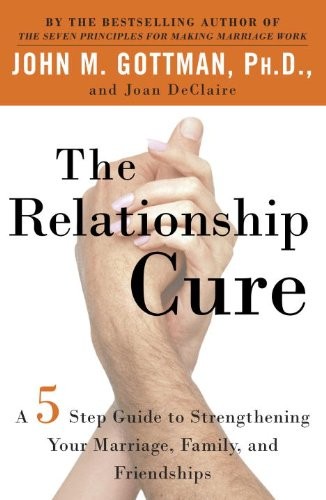
5. THE RELATIONSHIP CURE BY JOHN GOTTMAN
John Gottman | ⭐ 4.6/5
Who it’s for: People who want to understand the research behind what makes relationships work, and who want specific tools for building connection.
Get it here: https://www.amazon.com/Relationship-Cure-Breakthrough-Connections/dp/0609810000?tag=readplug09-20
“The key to connection is learning to send emotional bids.”
Gottman has spent decades studying couples, and “The Relationship Cure” distills his research into a practical guide. What makes Gottman’s work different is that it’s based on observation of actual couples over time — he can predict with shocking accuracy which couples will stay together based on how they communicate during a fifteen-minute conversation.
What I find most useful is Gottman’s concept of “emotional bids” — the small moments where one partner reaches out emotionally and the other either turns toward, turns away, or turns against. These bids happen constantly, and the pattern of turning toward or away from bids either builds connection or erodes it.
My take: Gottman is the most evidence-based relationship researcher working today. This is the book to read when you want the science.

6. WIRED FOR LOVE BY STAN TATKOV
Stan Tatkov | ⭐ 4.5/5
Who it’s for: People who are in relationships with partners who have anxious or avoidant attachment patterns, and who want to build connection despite those differences.
Get it here: https://www.amazon.com/Wired-Love-Understanding-Create-Romantic/dp/1938289389?tag=readplug09-20
“The attachment system is like a smoke detector. It gets activated by perceived threats to connection.”
Tatkov combines attachment theory with neuroscience to help couples understand why their relationship triggers such strong emotions. His central insight is that your partner’s emotional reactions often aren’t about you — they’re about the activation of old attachment patterns, about nervous system responses that were adaptive in childhood but show up maladaptively in adult relationships.
What I appreciate about Tatkov is that he doesn’t ask you to fix your partner. He asks you to understand your partner’s nervous system, and to use that understanding to respond in ways that de-escalate rather than escalate.
My take: Read this if your partner’s emotional reactions seem disproportionate to what you’re saying.

7. THE DAILY SEX BY KATE TAYLOR
Kate Taylor | ⭐ 4.3/5
Who it’s for: People in long-term relationships who want to understand how desire works differently and how to keep passion alive over time.
Get it here: https://www.amazon.com/Daily-Sex-Manual-Kate-Taylor/dp/0399173429?tag=readplug09-20
“The most important sexual organ isn’t between your legs. It’s between your ears.”
Kate Taylor writes about sexuality with frankness and humor. Her core argument is that for most women in long-term relationships, desire is responsive rather than spontaneous — it shows up in response to arousal rather than before it. This is different from how most people expect desire to work, which creates frustration and misunderstanding.
What I appreciate about Taylor is that she’s not moralistic. She explains how desire actually works over time, and gives practical advice based on that understanding.
My take: Read this if you’ve been together more than a few years and you’re both pretending everything is fine when it’s not.

8. MARS AND VENUS ON A DATE BY JOHN GRAY
John Gray | ⭐ 4.2/5
Who it’s for: People who want to understand gender differences in dating and relating, and how to navigate those differences without resentment.
Get it here: https://www.amazon.com/Mars-Venus-Dating-Guide/dp/0060932852?tag=readplug09-20
“Understanding our differences is the key to unlocking our connection.”
Gray’s Mars and Venus books have been criticized for being overly simplistic, and some of that criticism is fair. But “On a Date” gets at something the other books don’t: the particular challenge of navigating gender differences in the early stages of relationships.
What I find useful about Gray is his concept of emotional “urging” — the idea that men and women often have different default responses to stress and connection. He’s not saying men are from Mars literally. He’s saying that these differences show up most clearly in dating and early relationship stages.
My take: Take the gender essentialism with a grain of salt, but don’t throw out the useful parts.

9. HOW TO TALK SO LITTLE KIDS WILL LISTEN BY JOANNA FABER
Joanna Faber | ⭐ 4.7/5
Who it’s for: Parents who want to improve communication with their children, or anyone who wants to learn communication strategies that work without punishment or rewards.
Get it here: https://www.amazon.com/Talk-Little-Kids-Will-Listen/dp/1501141630?tag=readplug09-20
“Children don’t need to be punished for misbehaving. They need to be shown a better way.”
I know this is a parenting book, but the communication strategies Faber teaches work on adults too. Faber’s approach is about how to connect with children emotionally, how to validate feelings without agreeing with conclusions, how to solve problems collaboratively.
What I find most useful is the concept of engaging cooperation rather than demanding it. Faber shows how to get cooperation by making people partners in the process rather than targets of frustration. I’ve used these techniques on my kids, on my ex-husband, and on my students. They work.
My take: This is the book I recommend to every new parent I know.

10. AFTER THE FIRST YEAR BY LYDIA MARK
Lydia Mark | ⭐ 4.4/5
Who it’s for: Couples who have been together a few years and are wondering why the initial excitement has faded and whether that’s normal.
Get it here: https://www.amazon.com/After-First-Year-Relationship-Complicated/dp/1989275362?tag=readplug09-20
“The crisis of the second year is really a crisis of expectations.”
Mark writes about the particular challenges that emerge after the first year — what she calls the “complicated” phase. The initial rush of new love has faded, you’re learning who each other actually are, and you’re figuring out whether this is the person you want to build a life with.
What I appreciate about Mark is that she doesn’t pretend the complicated phase is avoidable. She offers a framework for understanding what’s happening and tools for navigating it without making permanent decisions based on temporary feelings.
My take: Read this if you’ve been together more than a year and you’re wondering if the fade is normal.
FREQUENTLY ASKED QUESTIONS
WHY DO I ALWAYS END UP IN THE SAME ARGUMENTS WITH MY PARTNER?
Most couples have recurring conflicts rooted in fundamental differences — what Gottman calls “perpetual issues.” If you’re having the same argument repeatedly, it’s likely a perpetual issue, which means trying to win is futile. What works is changing how you discuss it. The books on this list will help with that.
MY PARTNER REFUSES TO READ BOOKS ABOUT COMMUNICATION. IS THERE ANY POINT IN ME READING THEM ALONE?
Yes. Communication changes when even one person changes their patterns. If you learn to respond rather than react, to listen to understand rather than to reply, to make requests instead of demands — those changes will affect your relationship even without your partner’s participation.
WE’VE BEEN TOGETHER FOR YEARS AND CAN BARELY HAVE A CONVERSATION WITHOUT IT GOING BADLY. IS IT TOO LATE?
It’s not too late, but it will take work. The patterns you’ve built over years won’t change overnight, but they can change if you commit to doing things differently. Start with one book and start practicing. If your partner still refuses after you’ve genuinely tried for several months, you’ll at least understand what’s happening.
HOW DO I BRING UP A DIFFICULT TOPIC WITHOUT MY PARTNER GETTING DEFENSIVE?
The way you frame the conversation matters more than the content. Avoid accusations — starting with “you” tends to trigger defensiveness. Start with your own experience and feelings. Pick the right moment — don’t try to have a difficult conversation when either of you is hungry, tired, stressed, or distracted.
CAN COMMUNICATION SKILLS FIX A RELATIONSHIP THAT’S FUNDAMENTALLY BROKEN?
Communication skills can improve any relationship, but they can’t fix fundamental incompatibilities. If you’re with someone who is abusive, who refuses to take responsibility, who isn’t willing to change — better communication will help you understand what’s happening, but it won’t make the relationship healthy. Trust your gut on this one.
HOW DO I KNOW IF MY COMMUNICATION PROBLEMS ARE ACTUALLY MY PARTNER’S FAULT OR MINE?
Almost always, the answer is both — but fault is the wrong framework. Communication is a system. Both people contribute to how it functions. If you focus on your part — what you can change — you’ll make more progress than if you focus on blame.
THE BOTTOM LINE
Communication in relationships is one of those skills that looks simple — we all know how to talk, right? — but turns out to be extraordinarily complex when you’re doing it with someone whose history, patterns, and nervous system are all different from yours. The books on this list won’t make communication easy. But they will make it possible.
What I’ve learned is that the work is never finished. You don’t arrive. You just keep practicing, and every conversation is an opportunity to practice differently than you did before.
The three books I’d start with: “Nonviolent Communication” for a framework that works even when only one person uses it. “Attached” for understanding why your patterns are what they are. And “The Relationship Cure” because Gottman’s research is the most evidence-based thing out there.
You already know how to talk. Now you get to learn how to talk to this specific person, in this specific relationship, for as long as you’re in it.
Which book are you grabbing first?
Disclosure: This post contains affiliate links. If you purchase through these links, ReadPlug may earn a small commission at no extra cost to you. We only recommend books we’ve personally found valuable.
Never miss a life-changing book.
Get our spoiler-free book picks every Tuesday.