There’s a specific kind of anxiety that lives in the future. It’s not about anything happening right now. It’s about everything that could happen — the job you might lose, the diagnosis you might get, the way your kids might turn out, the economy, the world, the version of your life that exists three years from now in your worst-case-scenario imagination. It doesn’t respond to logic. You can tell yourself a hundred times that the thing you’re afraid of probably won’t happen, and the anxiety just nods politely and says, but what if it does.
I know this anxiety well. It moved in after the divorce — not right away, but quietly, a few months later, when the immediate crisis was over and I was standing in my new apartment with two kids and eight boxes and a mattress I’d cried on, and the thought hit me: Now what. Not “what do I do today” — I had that figured out, mostly — but “what happens next, what happens in five years, what if I can’t do this, what if they need something I can’t give them, what if this is just how it is now.”
The what-ifs. That’s what my therapist calls them. Dr. Nair drew a diagram once — two columns, “what I can control” and “what I can’t” — and the right column was so much longer than the left that I laughed. She didn’t laugh. She said, “That’s the whole problem, isn’t it.”
These ten books are the ones that helped me learn to live in the gap between what I can control and what I can’t. Not to close it. Not to pretend it isn’t there. Just to stop falling into it every time the future gets loud.
You May Also Enjoy
- 10 Best Books for Managing Anxiety as a High Achiever
- 10 Best Books for Managing Social Anxiety at Work Events
- 10 Best Books for Managing ADHD in Relationships
- 10 Best Books for Managing Grief After Losing a Parent
Quick Pick: In a Hurry?
| Book | Best For | Rating | |——|———-|——–| | The Wisdom of Insecurity by Alan Watts | Understanding why chasing certainty makes anxiety worse | ⭐⭐⭐⭐⭐ | | When Things Fall Apart by Pema Chodron | Finding ground when there is no ground | ⭐⭐⭐⭐⭐ | | Unwinding Anxiety by Judson Brewer | Breaking the anxiety habit loop with science | ⭐⭐⭐⭐⭐ |
10 Best Books for Managing Anxiety About the Future

1. The Wisdom of Insecurity: A Message for an Age of Anxiety by Alan Watts
⭐⭐⭐⭐⭐
Who it’s for: Someone who’s been trying to think their way out of anxiety and keeps making it worse.
Alan Watts wrote this book in 1951, and the fact that it still feels like it was written last week tells you something about how little we’ve actually figured out about anxiety. His core argument is simple and devastating: the more you try to secure yourself against the future, the more anxious you become. Because the future doesn’t exist. It’s a concept. You’re having a panic attack about something your brain invented.
That sounds dismissive when I write it out, and I want to be clear — Watts isn’t dismissing the anxiety. He’s redirecting it. He says: the anxiety is real, but the object of the anxiety is not. You’re not afraid of the future. You’re afraid of the feeling you imagine you’ll have in the future. And that feeling — that projected, hypothetical, not-yet-real feeling — is what’s driving the loop.
I read this book in my car, in the school parking lot, after drop-off. The same car, the same parking lot where I read Attached two years earlier. I sat there for forty minutes after I finished because my brain was doing something it hadn’t done in a long time: it was quiet. Not calm, exactly. Just… stopped running ahead. The present was right there — the steering wheel under my hands, the gray sky through the windshield, the smell of Eli’s granola bar on the back seat. And it was enough. For a few minutes, it was enough.
My take: “I’ve read dozens of anxiety books. This is the only one that made me understand why I’m anxious in the first place.”

2. When Things Fall Apart: Heart Advice for Difficult Times by Pema Chodron
⭐⭐⭐⭐⭐
Who it’s for: Someone whose future anxiety is tangled up with a specific loss or life disruption.
I’ve recommended this book in another post and I’ll recommend it again, because some books are like that — they show up in multiple chapters of your life because the lesson keeps being relevant. Pema Chodron is a Buddhist nun who writes about groundlessness — the feeling that nothing is solid, nothing is certain, and the ground you thought you were standing on was never really there.
For future anxiety specifically, her approach is radical: don’t try to get the ground back. Don’t try to rebuild certainty. Instead, learn to stand in the uncertainty. She calls it “leaning in” — not in the corporate buzzword way, but in the physical, visceral way of leaning toward the thing that scares you instead of away from it.
I read this after the divorce, when the future felt like a cliff I was standing at the edge of. I didn’t want to lean in. I wanted to build a fence. But the fence was never going to be tall enough, and the leaning, paradoxically, made the cliff feel less sharp. The fall I was imagining didn’t happen. Mostly because the future I was afraid of didn’t exist either. What existed was this: two kids who needed dinner, a kitchen table with dry-erase marker stains, and the quiet after bedtime.
My take: “She writes about fear like she’s lived inside it. Because she has.”

3. Unwinding Anxiety: New Science Shows How to Break the Cycles of Worry and Fear to Heal Your Mind by Judson Brewer
⭐⭐⭐⭐⭐
Who it’s for: Someone who wants a practical, science-backed way to interrupt the anxiety loop.
Judson Brewer is a neuroscientist and psychiatrist who studies habit loops — the cycle of trigger, behavior, reward that drives everything from nail-biting to smoking to, yes, anxiety. His argument is that anxiety itself becomes a habit. Your brain gets anxious about the future, then “solves” the anxiety by worrying (which feels like doing something), and the worrying temporarily reduces the uncertainty, which rewards the brain, which does it again. It’s a loop, and it’s self-reinforcing.
The solution he proposes is mindfulness-based, but it’s not the “sit quietly and breathe” kind that makes me want to scream. It’s curiosity-based. When you feel anxiety rising, instead of fighting it or feeding it, you get curious about it. What does it actually feel like in your body? Where is it? What happens if you just… watch it? The curiosity interrupts the habit loop because your brain can’t simultaneously worry and be curious. It’s one or the other.
I used his method last December when I was spiraling about whether I’d be able to afford Nora’s summer camp. The spiral was familiar: what if I can’t, what if she misses out, what if she resents me, what if this is evidence that I can’t provide for my kids. And then I caught it. I said to myself, out loud, in the kitchen, while stirring pasta: “Huh. That’s interesting. My jaw is tight and my chest feels like it’s wearing a seatbelt.” The naming didn’t fix the money problem. But it broke the spiral. And the broken spiral let me think clearly about what I could actually do about the camp fee, which turned out to be a payment plan I didn’t know existed.
My take: “This book made me realize I’ve been treating anxiety like a problem to solve when it’s actually a habit to break.”

4. The Worry Cure: Seven Steps to Stop Worry from Stopping You by Robert L. Leahy
⭐⭐⭐⭐
Who it’s for: Someone who wants a structured, CBT-based approach to chronic worrying.
Robert Leahy is a cognitive behavioral therapist, and this book is the most methodical thing on this list. He identifies seven types of worry and gives you specific tools for each one. The chapter that hit me hardest was about positive beliefs about worry — the idea that if you worry enough, you can prevent bad things from happening.
He calls this “worry as magical thinking,” and when he said it, I thought about my mom — who never worried out loud, who came home from twelve-hour shifts and watered her plants and went to bed — and I realized she wasn’t less anxious than me. She just didn’t believe that anxiety would protect her. That was the difference.
My take: “I didn’t think a practical, step-by-step book would make me emotional. Chapter five proved me wrong.”

5. Radical Acceptance: Embracing Your Life with the Heart of a Buddha by Tara Brach
⭐⭐⭐⭐
Who it’s for: Someone whose future anxiety is tangled with shame.
Tara Brach’s approach is to meet the belief that you shouldn’t be struggling with compassion instead of evidence. I used her method during the months after the divorce when every decision felt like it might ruin the kids’ lives. The anxiety made every choice feel permanent and irreversible, and Brach’s framework helped me understand that the weight I was putting on each decision wasn’t about the decision itself. It was about the story I was telling myself about my worthiness as a parent.
My take: “I underlined so much the book looks like a textbook now. The good kind.”
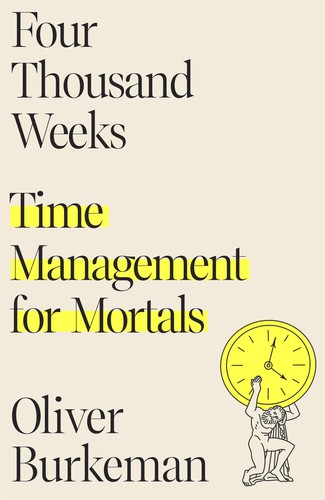
6. Four Thousand Weeks: Time Management for Mortals by Oliver Burkeman
⭐⭐⭐⭐⭐
Who it’s for: Someone whose future anxiety is really about running out of time.
The title comes from the average human lifespan: four thousand weeks. Burkeman’s argument is that the anxiety about the future is really anxiety about this limitation. His solution isn’t to optimize. It’s to accept. To choose what matters and let the rest go. This book changed how I think about my time with the kids. The guilt wasn’t about them — it was about my refusal to accept that I couldn’t do everything.
My take: “I went in expecting productivity advice. I got a philosophical reckoning with my own mortality. Five stars.”

7. Anxious: Using the Brain to Understand and Treat Fear and Anxiety by Joseph LeDoux
⭐⭐⭐⭐
Who it’s for: Someone who needs to understand the neuroscience of anxiety before they can accept the philosophy.
LeDoux is the neuroscientist who mapped the fear circuit in the brain. His core insight: anxiety and fear are not the same thing. Fear responds to a present threat. Anxiety responds to a potential future threat using different brain circuits involving memory and imagination. Your brain is literally building the thing you’re afraid of out of parts of your past.
My take: “It reads like a textbook in places, but the parts that land are life-changing.”

8. The Comfort Book by Matt Haig
⭐⭐⭐⭐
Who it’s for: Someone who needs something gentle to reach for during the 3am spiral.
My take: A collection of short essays, lists, and observations you can open to any page. He writes about the ocean being older than the trees. About how a bad day is one day, not every day. About “comfort” coming from the Latin “com fortis” — “with strength.” Sometimes you don’t need a strategy. You just need someone to sit with you in the dark.
“It’s like a weighted blanket in book form.”

9. Feel the Fear and Do It Anyway by Susan Jeffers
⭐⭐⭐⭐
Who it’s for: Someone who knows what they want to do but anxiety keeps stopping them.
The core message: the fear doesn’t go away before you act. You act, and the fear comes with you. I read this the week before my first date after the divorce. The date was mediocre — he talked about cryptocurrency for twenty minutes. But I went. And the going was the thing that mattered.
My take: “I bought this book in 1995 and I still open it when I need a push.”

10. Staring at the Sun: Overcoming the Terror of Death by Irvin D. Yalom
⭐⭐⭐⭐⭐
Who it’s for: Someone whose anxiety about the future is really about the biggest future of all.
Yalom’s argument is that most surface anxieties are disguises for the deeper anxiety: the knowledge that we will die. He writes about “rippling” — the idea that we send out invisible waves of influence that continue after we’re gone. I read that chapter on a Sunday while Nora did homework and Eli built something with Legos. And I thought: this is it. The rippling. Not the grand legacy. Just the ordinary afternoon.
The future will come. It will contain things I can’t predict and don’t want. But it will also contain this — the specific, irreplaceable present tense of being alive. And that is not a small thing.
My take: “I expected this book to make me more afraid. It made me less afraid. I still don’t understand how.”
Frequently Asked Questions
1. Is anxiety about the future normal, or is it a disorder?
It’s normal to a point. It becomes a disorder when the worry is persistent, difficult to control, and interfering with your daily life. If it’s keeping you up at night or causing physical symptoms, talk to a professional.
2. Can books really help with anxiety, or do I need therapy?
Both. Books are not a replacement for therapy, but they can give you language for what you’re feeling and introduce frameworks you can practice on your own. I use books as homework between therapy sessions.
3. Which book should I start with?
Start with The Wisdom of Insecurity (#1) if you’re a thinker. Start with Unwinding Anxiety (#3) if you’re a doer. Start with The Comfort Book (#8) if you need something gentle right now.
4. I can’t stop catastrophizing. What do I do?
Read The Worry Cure (#4). Ask “What’s the probability this actually happens?” and “If it does, what would I actually do?” The first question brings you back to reality. The second restores your sense of agency.
5. Is it possible to stop being anxious about the future entirely?
No. Some anxiety is useful. The goal isn’t to eliminate it. It’s to stop letting it run your life.
6. How do I manage anxiety about my children’s future?
Limit catastrophic thinking to scheduled windows, practice self-compassion, remember your kids need a present parent more than a perfect one, and talk to someone who won’t tell you to “just relax.”
7. When should I seek professional help?
If your anxiety is persistent, hard to control, and interfering with your work, relationships, or sleep, it’s time. You don’t need to be in crisis to benefit from therapy.
A Final Thought
It’s 11pm. The kids are asleep. The apartment is doing its quiet thing — the fridge humming, the radiator ticking. Nora’s going to middle school next year. Eli still sleeps with the hallway light on. The future is a long hallway and I can’t see the end of it.
But I’ve been in this hallway before. And these ten books are the lights I’ve left on — small, imperfect, not enough to illuminate everything, but enough to keep me from stumbling. Enough to get me to the next room.
Which book are you grabbing first?
Disclosure: This article contains affiliate links. If you purchase through these links, ReadPlug may earn a small commission at no additional cost to you. We only recommend books we genuinely believe in.
Never miss a life-changing book.
Get our spoiler-free book picks every Tuesday.