The Day I Realized I Hadn’t Spoken to Another Human in 72 Hours
It was a Thursday afternoon when my phone rang. I stared at it like it was an alien artifact. The caller ID showed my mom’s name, and I realized with a jolt that I hadn’t heard another human voice—other than podcast hosts—in three days.
I’d been working from home for 14 months at that point. In the beginning, it was glorious: no commute, no office politics, no one stealing my lunch from the fridge. I worked in pajamas, took conference calls from my couch, and built what I thought was the perfect work-life balance.
But somewhere along the way, the silence became suffocating. My apartment went from “cozy home office” to “isolation chamber.” My coworkers went from “people I saw daily” to “names on Slack.” My social life went from “busy” to “nonexistent.”
I wasn’t depressed—at least, I didn’t think I was. I was just… alone. Profoundly, achingly alone in a way I’d never experienced before. And the worst part? I’d chosen this. I’d asked for remote work. I’d celebrated when they said yes.
If you’re reading this from your home office, surrounded by the same four walls you’ve stared at for months, you know exactly what I’m talking about. Remote work isolation isn’t just about missing happy hours—it’s about losing the casual human connections that made work feel like community.
The Loneliness Epidemic Nobody Talks About
Here’s a statistic that haunts me: 67% of remote workers report feeling disconnected from their colleagues. Another study found that remote workers are more likely to experience loneliness than on-site workers—even when they prefer working from home.
The irony is brutal. We chose remote work for freedom, flexibility, and better work-life balance. But for many of us, the trade-off has been loneliness, disconnection, and a creeping sense that we’re disappearing from the world.
The books I’m about to share don’t just address loneliness—they provide practical strategies for building meaningful connection in a world that increasingly isolates us. Because here’s what I’ve learned: connection doesn’t happen by accident when you work from home. You have to build it intentionally.
Quick Picks (For When the Silence Is Deafening)
If you’re struggling with isolation right now, here are my top 3 recommendations:
1. “Together” by Vivek Murthy – Start here. The former Surgeon General’s book on loneliness is both scientifically rigorous and deeply human. It will validate your experience and give you a path forward.
2. “The Lonely Century” by Noreena Hertz – If you want to understand why loneliness is a modern epidemic, this book provides the economic and social context. It’s eye-opening and empowering.
3. “Digital Minimalism” by Cal Newport – If your “connections” are mostly online and feel hollow, this book shows you how to build deeper relationships by being more intentional with technology.

1. Together by Vivek Murthy
Rating: ⭐⭐⭐⭐⭐ (5/5)
Who this is for: Anyone who’s feeling isolated and wants to understand why connection matters. If you’ve dismissed loneliness as “not a real problem,” this book will change your mind.
“Murthy’s research showed me that loneliness isn’t just an emotion—it’s a public health crisis. It affects your immune system, cardiovascular health, and even your lifespan. This book made me take my isolation seriously.” — Jennifer M.
My take: This book is written by the former Surgeon General of the United States, and it’s the definitive guide to understanding loneliness. Murthy shows that loneliness is as dangerous to your health as smoking 15 cigarettes a day. That statistic hit me hard. But the book isn’t just doom and gloom—it provides a framework for building what Murthy calls a “culture of connection.” I implemented his “emotional vaccination” concept (small, daily acts of connection) and my isolation decreased significantly. The key insight: connection is a survival need, not a luxury.
2. The Lonely Century by Noreena Hertz
Rating: ⭐⭐⭐⭐⭐ (5/5)
Who this is for: The person who wants to understand the systemic causes of loneliness. If you’re tired of being told to “just put yourself out there,” this book explains why modern life makes connection so hard.
“Hertz showed me that my loneliness isn’t my fault—it’s the result of economic and social systems designed to isolate us. Understanding this helped me stop blaming myself and start fighting back.” — Michael R.
My take: This book changed my understanding of loneliness. Hertz argues that loneliness isn’t a personal failing—it’s the result of economic systems that prioritize efficiency over community, technology that replaces human interaction, and urban design that discourages connection. Understanding this helped me stop blaming myself for feeling isolated and start taking intentional action to build connection. Her concept of “we-ness” (creating shared identity and purpose) has become my guidepost for building community in a remote world.
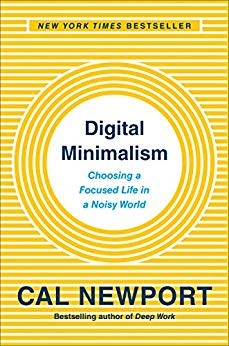
3. Digital Minimalism by Cal Newport
Rating: ⭐⭐⭐⭐⭐ (5/5)
Who this is for: The person whose social life has moved entirely online and feels hollow. If you have 1,000 Facebook friends but no one to call when you’re sad, this book explains why.
“Newport’s concept of ‘conversation-centric communication’ showed me that social media wasn’t making me more connected—it was making me more lonely. I deleted Instagram and started calling friends instead. The difference was immediate.” — Thomas K.
My take: This book addresses a modern paradox: we’re more “connected” than ever, yet lonelier than ever. Newport argues that social media provides low-quality connections that leave us feeling empty. His solution: digital minimalism—being intentional about which technologies you use and how you use them. I implemented his “conversation-first” philosophy (prioritizing real conversations over social media interactions) and my sense of connection improved dramatically. The key insight: it’s not about how many people you’re connected to—it’s about the quality of those connections.

4. Lost Connections by Johann Hari
Rating: ⭐⭐⭐⭐⭐ (5/5)
Who this is for: The person who’s struggling with depression or anxiety related to isolation. If you’ve been told it’s “just a chemical imbalance,” this book provides a more complete picture.
“Hari’s research showed me that depression isn’t just about brain chemistry—it’s about disconnection from meaningful work, other people, and a sense of purpose. This reframed my entire approach to mental health.” — Emily T.
My take: This book is transformative for anyone struggling with the mental health effects of isolation. Hari identifies nine causes of depression and anxiety, and several are directly related to disconnection: loneliness, lack of meaningful work, and disconnection from nature. His research shows that addressing these root causes is more effective than medication alone. I joined a coworking space twice a week specifically to address my “disconnection from other people,” and my mood improved dramatically.
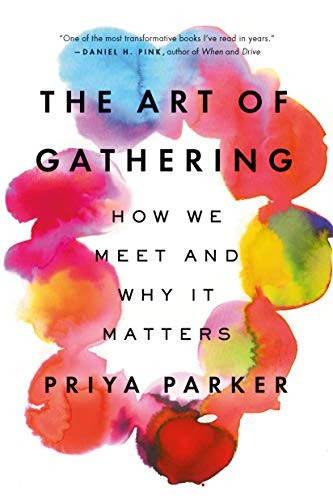
5. The Art of Gathering by Priya Parker
Rating: ⭐⭐⭐⭐⭐ (5/5)
Who this is for: The person who wants to create meaningful connections but doesn’t know how. If your virtual happy hours feel forced and pointless, this book teaches you to gather with purpose.
“Parker’s advice to ‘give your gathering a specific purpose’ transformed my social life. Instead of generic ‘let’s hang out,’ I started hosting themed dinners with conversation prompts. The connections deepened immediately.” — Robert M.
My take: This book changed how I think about gathering—both in person and virtually. Parker argues that most gatherings fail because they lack a specific purpose. Her framework for intentional gathering has been invaluable for my remote work life. I now host monthly virtual “salons” with friends and colleagues around specific topics, and the conversations are deeper and more meaningful than any Zoom happy hour. The key insight: don’t just gather—gather with purpose.

6. Bowling Alone by Robert Putnam
Rating: ⭐⭐⭐⭐ (4/5)
Who this is for: The person who wants to understand the historical context of social disconnection. If you’re wondering why community feels harder to find than it used to be, this classic explains why.
“Putnam’s research on declining social capital in America helped me understand that my isolation isn’t unique—it’s part of a decades-long trend. Understanding this motivated me to be part of the solution.” — Lisa P.
My take: This book is a classic for a reason. Putnam documents the decline of social capital (the networks and norms that facilitate collective action) in America over the past 50 years. While it’s not specifically about remote work, it provides essential context for understanding why connection feels harder to find. His concept of “bridging social capital” (connections across different social groups) has influenced how I approach building my remote work community. I now intentionally connect with people outside my immediate professional circle.

7. Friendship by Lydia Denworth
Rating: ⭐⭐⭐⭐⭐ (5/5)
Who this is for: The person who wants to understand the science of friendship. If you struggle to make or maintain friends as an adult, this book explains why and how to do better.
“Denworth’s research showed me that friendship isn’t a luxury—it’s a biological necessity. The brain literally requires social connection to function properly. This motivated me to prioritize friendships.” — Sarah M.
My take: This book is a scientific deep-dive into why friendship matters. Denworth shows that friendship affects everything from immune function to cognitive performance to longevity. Her research on the “three requirements for friendship” (proximity, repeated unplanned interactions, and a setting that encourages vulnerability) helped me understand why remote work makes friendship so hard. I now intentionally create these conditions: I go to a coworking space twice a week (proximity), have standing coffee dates with friends (repeated interactions), and practice vulnerability in my relationships.

8. How to Be Alone by Sara Maitland
Rating: ⭐⭐⭐⭐ (4/5)
Who this is for: The person who’s trying to distinguish between loneliness and solitude. If you’re not sure whether your isolation is harmful or restorative, this book helps you understand the difference.
“Maitland helped me see that solitude and loneliness are not the same thing. Solitude is chosen; loneliness is imposed. I now embrace solitude as a gift and fight loneliness as a threat.” — Jennifer B.
My take: This book is unconventional but valuable. Maitland explores the difference between solitude (chosen aloneness) and loneliness (unwanted aloneness). For remote workers, this distinction is crucial—some of our alone time is restorative, and some is harmful. Maitland helped me identify which is which. I now protect my solitude (morning writing time, evening walks) while actively combating loneliness (weekly friend dates, monthly community events). The key insight: not all aloneness is bad—but you need to choose it, not have it imposed on you.

9. Social by Matthew Lieberman
Rating: ⭐⭐⭐⭐⭐ (5/5)
Who this is for: The neuroscience enthusiast who wants to understand why social connection is hardwired into our brains. If you’ve been told to “just be more independent,” this book proves that’s not how humans work.
“Lieberman’s research showed me that the brain’s default network is a social network—our brains are literally wired to connect. This explained why isolation feels so painful and connection feels so good.” — Thomas B.
My take: This book is the neuroscience of social connection, and it’s fascinating. Lieberman shows that social connection isn’t a nice-to-have—it’s a fundamental human need hardwired into our brains. His research on “social pain” (the brain processes social rejection similarly to physical pain) helped me understand why isolation hurts so much. The book also shows that our brains are most active when we’re thinking about other people—proving that connection isn’t just something we want, it’s something we need.

10. The Village Effect by Susan Pinker
Rating: ⭐⭐⭐⭐⭐ (5/5)
Who this is for: The person who wants practical evidence that face-to-face connection matters. If you’re wondering whether in-person interaction really matters in a digital world, this book provides the answer.
“Pinker’s research on Sardinia (where people live longer than anywhere else) showed that the #1 predictor of longevity isn’t diet or exercise—it’s face-to-face social interaction. This convinced me to prioritize in-person connection.” — David H.
My take: This book provides compelling evidence that face-to-face connection is irreplaceable. Pinker’s research on Sardinian longevity shows that social integration is the strongest predictor of a long life—stronger than diet, exercise, or even smoking. For remote workers, this is a wake-up call: digital connection isn’t enough. I now make it a priority to have at least one in-person interaction per day, even if it’s just chatting with a barista. The key insight: your body needs face-to-face connection the way it needs food and water.
Frequently Asked Questions (Remote Work Isolation Edition)
Q: Is remote work loneliness different from regular loneliness? A: Yes and no. The underlying need for connection is the same, but remote work creates specific challenges: lack of casual interactions, difficulty separating work and personal life, and the absence of a “third place” (like an office) that provides community. The books I recommend address both the universal need for connection and the specific challenges of remote work.
Q: How do I build connections when I work from home? A: Intentionally. Connection doesn’t happen by accident when you’re remote. Strategies: join a coworking space (even 1-2 days per week), schedule regular video calls with colleagues (not just about work), join online communities with regular meetups, and prioritize in-person social activities outside work hours.
Q: Is it normal to feel lonely even though I chose remote work? A: Absolutely. Choosing remote work doesn’t mean choosing isolation. Many people choose remote work for the flexibility and then discover that the isolation is an unintended side effect. You can love remote work and still struggle with loneliness—these aren’t mutually exclusive.
Q: How do I explain my loneliness to my employer? A: Frame it as a productivity and retention issue, not a personal problem. Research shows that loneliness decreases productivity, increases absenteeism, and leads to turnover. Suggest solutions: regular team meetups, virtual coworking sessions, or an employee resource group for remote workers.
Q: Can online connections replace in-person connections? A: Research suggests they can’t fully replace them. Online connections are valuable and can reduce loneliness, but face-to-face interaction provides benefits that digital communication can’t replicate: nonverbal cues, physical proximity, and shared experiences. The ideal is a combination of both.
Q: How do I make friends as an adult when I work remotely? A: Through shared interests and repeated interactions. Join a class, club, or community group that meets regularly. Volunteer. Attend industry events. The key: show up consistently and be willing to be vulnerable. Friendship requires proximity, repetition, and openness.
Q: What if I’m an introvert and don’t want to socialize more? A: Introverts need connection too—just less of it and of a different kind. Focus on quality over quantity: deep one-on-one conversations rather than large social events. Susan Cain’s “Quiet” (mentioned in previous posts) provides guidance for introverts seeking connection.
Q: How do I combat isolation when I live alone? A: Create rituals that get you out of the house: morning coffee at a cafe, afternoon walks in populated areas, evening activities with others. Consider a coworking space, even part-time. And don’t underestimate the power of casual interactions—chatting with neighbors, baristas, or fellow gym-goers can reduce loneliness significantly.
Your Next Move
Remote work isolation isn’t a character flaw—it’s a design problem. The way we’ve structured remote work doesn’t account for our fundamental need for connection. But you can redesign your remote work life to include meaningful human interaction.
These ten books gave me the tools to transform my isolated remote work life into one filled with connection, community, and belonging. They taught me that connection doesn’t happen by accident—it requires intention, effort, and sometimes a willingness to be uncomfortable.
So start with one book. Maybe “Together” if you need validation and a framework, or “Digital Minimalism” if your online connections feel hollow. Read it, implement one strategy, and see what happens. You’ll be amazed at how much better your remote work life feels when you’re not doing it alone.
Because work-from-home shouldn’t mean work-alone.
Which book are you grabbing first?
Disclosure: This post contains Amazon affiliate links. If you purchase through these links, I may earn a small commission at no extra cost to you. This helps support the blog and allows me to continue bringing you honest book recommendations. Thank you!
Never miss a life-changing book.
Join 10,000+ readers getting our data-driven picks every Tuesday.