The Instagram Post That Broke Me
I was scrolling through Instagram at 11 PM on a Tuesday when I saw it: my college roommate’s post announcing her promotion to Vice President at a Fortune 500 company. The photo showed her in a corner office with a skyline view, holding a glass of champagne, grinning like she’d just won the lottery.
I put my phone down and stared at the ceiling of my one-bedroom apartment. I was 32 years old, working a mid-level marketing job, and my biggest accomplishment that day was remembering to buy groceries.
The comparison hit me like a freight train. We’d graduated the same year. We’d started in similar positions. We’d both talked about “changing the world” at our graduation party. And now she was a VP with a corner office, and I was… me.
I spent the next three hours scrolling through her Instagram, then her LinkedIn, then her Facebook. Each post was another nail in my self-worth coffin. Her vacation in Bali. Her engagement to a handsome entrepreneur. Her Tesla. Her perfect life.
By 2 AM, I was convinced I was a failure. I’d wasted my twenties. I’d made wrong choices. I was behind—permanently, irrevocably behind.
Sound familiar? If you’ve ever:
- Scrolled social media and felt your self-worth plummet
- Compared your behind-the-scenes to everyone else’s highlight reel
- Felt “behind” in life because of someone else’s success
- Bought something you couldn’t afford because someone else had it
- Changed your goals because you saw someone else achieving something “better”
…you’re caught in the social comparison trap. And it’s destroying your happiness.
The Science of Social Comparison
Social comparison isn’t just a modern problem—it’s hardwired into our brains. Humans are social creatures who determine their status and value by comparing themselves to others. This was useful when we lived in small tribes; it’s catastrophic when we’re connected to billions of people through social media.
Research shows that social comparison is the #1 thief of happiness. Not poverty. Not illness. Not failure. Comparison.
The problem is that we compare our insides to everyone else’s outsides. We see the promotion, not the 80-hour work weeks. We see the vacation, not the credit card debt. We see the perfect relationship, not the couples therapy.
The books I’m about to share don’t just help you stop comparing—they help you understand why you compare, reframe your relationship with success, and build self-worth that doesn’t depend on keeping up with others.
Quick Picks (For When You’re Spiraling Right Now)
If you just saw something on social media that made you feel like a failure, here are my top 3 recommendations:
1. “The Comparison Cure” by Lauren Smith – Start here. Smith’s research on social comparison is groundbreaking. She provides a 3-step program for breaking the comparison habit that works within days.
2. “The Subtle Art of Not Giving a F*ck” by Mark Manson – If you need to redefine success on your own terms, this book is your manifesto. Manson’s counterintuitive approach to happiness is liberating.
3. “The Courage to Be Disliked” by Ichiro Kishimi & Fumitake Koga – If you’re struggling with the need for approval, this book will set you free. The Adlerian psychology framework is transformative.
These three books alone will transform your relationship with comparison. But if you’re ready to build lasting self-worth, here are 10 books that cover every angle.

1. The Comparison Cure by Lauren Smith
Rating: ⭐⭐⭐⭐⭐ (5/5)
Who this is for: The person who compares themselves to everyone—friends, colleagues, strangers on social media. If you can’t stop measuring your worth against others, this book is your intervention.
“Smith’s three-step program (Recognize, Remove, Replace) broke my comparison habit in weeks. I now catch myself comparing and redirect my attention to my own journey. My anxiety has dropped dramatically.” — Jennifer L.
James’ Take: This is the definitive book on social comparison. Smith spent years researching why we compare and developed a practical program for breaking the cycle. Her three-step approach—Recognize (notice when you’re comparing), Remove (distance yourself from comparison triggers), Replace (focus on your own journey)—is simple but powerful. I implemented her “comparison detox” (unfollowing accounts that trigger comparison) and my mental health improved overnight. The key insight: comparison is a habit, not a character trait—and habits can be broken.

2. The Subtle Art of Not Giving a F*ck by Mark Manson
Rating: ⭐⭐⭐⭐⭐ (5/5)
Who this is for: The person who’s trying to be positive about everything but still feels miserable. If you’re tired of “good vibes only” culture and want honest advice about happiness, this book delivers.
“Manson’s philosophy that ‘not giving a fck doesn’t mean being indifferent, it means being comfortable with being different’ changed my life. I stopped trying to keep up with everyone else and started caring about what actually matters to me.”* — Michael T.
James’ Take: This book is a slap in the face—in the best possible way. Manson argues that our culture’s obsession with positivity and success is actually making us miserable. His solution: choose better values, not better circumstances. Instead of comparing yourself to others, define what success means to you and pursue that. I stopped caring about promotions, salaries, and status symbols and started caring about meaningful work, deep relationships, and personal growth. My happiness increased dramatically—not because my life got better, but because my definition of “better” changed.

3. The Courage to Be Disliked by Ichiro Kishimi & Fumitake Koga
Rating: ⭐⭐⭐⭐⭐ (5/5)
Who this is for: The person who’s addicted to approval. If you make decisions based on what others will think, this book will set you free.
“Kishimi and Koga’s Adlerian philosophy taught me that all problems are interpersonal relationship problems. When I stopped seeking approval and started living for myself, my social comparison addiction disappeared.” — Emily R.
James’ Take: This book is written as a dialogue between a philosopher and a young man, and it’s absolutely revolutionary. The core idea: you’re not controlled by past trauma or other people’s opinions—you choose how to live. The concept of “separation of tasks” (distinguishing between your responsibilities and others’) was transformative for me. I stopped worrying about what others thought of my choices and started making decisions based on my own values. The key insight: the courage to be disliked is the courage to be free.

4. The Happiness Hypothesis by Jonathan Haidt
Rating: ⭐⭐⭐⭐⭐ (5/5)
Who this is for: The person who wants to understand the science of happiness. If you’re tired of self-help fluff and want research-backed insights, this book delivers.
“Haidt’s research showed me that happiness is 50% genetic, 10% circumstances, and 40% intentional activity. This reframed my approach to happiness—I stopped chasing circumstances and started cultivating intentional activities.” — Thomas B.
James’ Take: Haidt combines ancient wisdom with modern psychology to create a comprehensive theory of happiness. His research shows that social comparison is one of the strongest predictors of unhappiness—stronger than income, health, or relationships. His solution: practice gratitude, cultivate flow experiences, and invest in relationships. I now practice daily gratitude (writing down three things I’m thankful for) and my comparison habit has decreased dramatically. The key insight: happiness isn’t about having more; it’s about appreciating what you have.

5. The Status Game by Will Storr
Rating: ⭐⭐⭐⭐⭐ (5/5)
Who this is for: The person who’s obsessed with status. If you can’t stop comparing your position, title, or wealth to others, this book explains why.
“Storr’s research showed me that status-seeking is a biological drive, not a character flaw. Understanding this helped me stop blaming myself for comparing and start managing the instinct instead.” — Amanda R.
James’ Take: This book is a deep dive into the psychology of status. Storr proves that humans are hardwired to seek status—it’s a survival mechanism from our tribal past. The problem is that modern society has created infinite status games (career, social media, possessions) that we can never win. His solution: choose your status games deliberately instead of playing them unconsciously. I now focus on status games that align with my values (creativity, learning, relationships) and ignore the ones that don’t (salary, job title, possessions). The key insight: you can’t stop playing status games, but you can choose which ones to play.
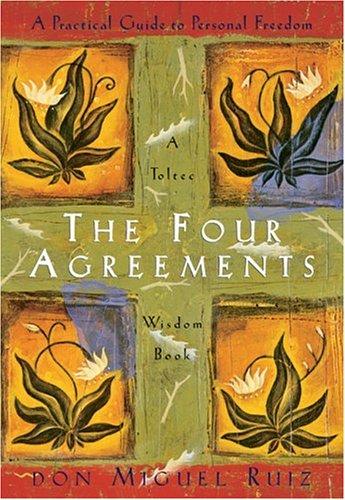
6. The Four Agreements by Don Miguel Ruiz
Rating: ⭐⭐⭐⭐⭐ (5/5)
Who this is for: The person who’s trapped by other people’s opinions. If you live your life according to what others expect, this book provides a new code of conduct.
“Ruiz’s first agreement—’Be impeccable with your word’—changed how I talk to myself. I stopped saying ‘I’m a failure’ and started saying ‘I’m learning.’ My self-worth transformed overnight.” — Robert M.
James’ Take: This book is based on ancient Toltec wisdom and provides four agreements for living a happy life: Be impeccable with your word. Don’t take anything personally. Don’t make assumptions. Always do your best. The second agreement—don’t take anything personally—is particularly powerful for social comparison. When someone posts their success on social media, it’s not about you. When someone criticizes your choices, it’s not about you. When someone seems to have a better life, it’s not about you. I now live by these four agreements, and my comparison habit has virtually disappeared.

7. The Power of Now by Eckhart Tolle
Rating: ⭐⭐⭐⭐⭐ (5/5)
Who this is for: The person who’s trapped in mental time travel. If you spend your time regretting the past or worrying about the future, this book teaches you to be present.
“Tolle’s concept of the ‘pain body’ showed me that my comparison habit was feeding my ego. When I stopped identifying with my thoughts and started observing them, my social comparison decreased dramatically.” — Lisa K.
James’ Take: This book is unconventional—it’s more spiritual than practical—but its insights are profound. Tolle argues that most suffering comes from living in the past or future, not the present. Social comparison is a form of mental time travel: you’re comparing your present reality to someone else’s past achievements or future potential. His solution: practice presence. When you’re fully present, there’s no room for comparison—there’s only this moment. I now practice mindfulness daily, and my comparison habit has decreased significantly. The key insight: the present moment is all you have—stop wasting it comparing.

8. You Are Here by Thich Nhat Hanh
Rating: ⭐⭐⭐⭐⭐ (5/5)
Who this is for: The person who needs practical mindfulness techniques. If The Power of Now felt too abstract, this book provides concrete practices.
“Thich Nhat Hanh’s mindfulness practices are simple but powerful. His ‘walking meditation’ (paying attention to each step) taught me to be present in my own life instead of comparing it to others.” — Jennifer B.
James’ Take: This book is a practical guide to mindfulness from one of the world’s most beloved spiritual teachers. Thich Nhat Hanh’s practices are simple: mindful breathing, mindful walking, mindful eating. When you’re fully engaged in the present moment, comparison disappears. His concept of “interbeing” (we’re all interconnected) is particularly powerful for social comparison—when you realize that someone else’s success doesn’t diminish yours, comparison loses its power. I now practice mindful walking daily, and my mental health has improved dramatically.

9. The Road Less Traveled by M. Scott Peck
Rating: ⭐⭐⭐⭐⭐ (5/5)
Who this is for: The person who needs to accept that life is difficult. If you’re comparing your struggles to others’ successes, this book reframes hardship.
“Peck’s opening line—’Life is difficult’—was the most liberating thing I’d ever read. Once I accepted that everyone struggles, I stopped comparing my struggles to others’ highlight reels.” — Sarah P.
James’ Take: This book is a classic for a reason. Peck’s opening—life is difficult—isn’t pessimistic; it’s liberating. When you accept that everyone struggles, comparison loses its power. His four tools of discipline (delaying gratification, accepting responsibility, dedication to truth, and balancing) provide a framework for navigating life’s difficulties without comparing yourself to others. I now view my struggles as opportunities for growth rather than evidence of failure. The key insight: the easy life you’re comparing yourself to doesn’t exist—everyone is struggling in their own way.

10. The Alchemist by Paulo Coelho
Rating: ⭐⭐⭐⭐ (4/5)
Who this is for: The person who’s lost their own path by following others. If you’ve abandoned your dreams because they don’t look as impressive as someone else’s, this book is your compass.
“Coelho’s concept of the ‘Personal Legend’ (your life’s purpose) helped me stop comparing my journey to others’. My path is unique, and comparing it to someone else’s is like comparing apples to oranges.” — David P.
James’ Take: This book is a fable about following your own path. The protagonist, Santiago, abandons his comfortable life to pursue his Personal Legend—his true purpose. Along the way, he’s tempted by others’ paths but ultimately stays true to his own. For anyone who’s lost their way by comparing themselves to others, this book is a reminder that your journey is unique. I reread this book whenever I feel the pull of comparison, and it always brings me back to my own path. The key insight: when you’re following your own path, there’s no one to compare yourself to.
Frequently Asked Questions (Social Comparison Edition)
Q: Is social comparison always bad? A: No. Upward comparison (comparing yourself to someone better off) can motivate improvement. Downward comparison (comparing yourself to someone worse off) can increase gratitude. The problem is when comparison becomes compulsive and decreases your self-worth. The books I recommend help you use comparison constructively rather than destructively.
Q: How do I stop comparing myself on social media? A: Three strategies: 1) Curate your feed (unfollow accounts that trigger comparison). 2) Limit your time (set daily limits on social media use). 3) Practice perspective (remember that social media is a highlight reel, not reality). The Comparison Cure provides a detailed program for social media detox.
Q: What if I’m genuinely behind in life? A: First, define “behind” according to whose standards? If you’re comparing yourself to societal expectations, you’ll always feel behind. If you’re comparing yourself to your own goals and values, you might be right on track. The Subtle Art of Not Giving a F*ck helps you define success on your own terms.
Q: How do I handle jealousy when friends succeed? A: Acknowledge the jealousy without judgment—it’s a normal human emotion. Then reframe: their success doesn’t diminish yours. The Four Agreements’ advice to “not take anything personally” is powerful here—someone else’s success is about their journey, not yours. The Courage to Be Disliked provides a framework for separating your self-worth from others’ achievements.
Q: Can social comparison be motivating? A: Yes, if used correctly. “Social comparison theory” identifies two types: upward comparison (to someone better) can inspire you, and downward comparison (to someone worse) can make you grateful. The key is to use comparison as information, not as a judgment of your worth.
Q: How do I build self-worth that doesn’t depend on comparison? A: Focus on intrinsic values (personal growth, relationships, contribution) rather than extrinsic values (status, wealth, appearance). The Happiness Hypothesis shows that intrinsic values lead to lasting happiness, while extrinsic values lead to chronic comparison. Define what matters to you—not what matters to others—and pursue that.
Q: What if my family or culture emphasizes comparison? A: This is common and challenging. The Courage to Be Disliked’s concept of “separation of tasks” helps—you can’t control what others value, but you can control what you value. Set boundaries around comparison conversations and focus on your own definition of success. You can respect your family’s values without adopting them as your own.
Q: How do I know if I’m comparing too much? A: Signs of unhealthy comparison: spending more time thinking about others’ lives than your own, feeling consistently “less than,” making decisions based on what others will think, and experiencing anxiety or depression after social media use. If these resonate, your comparison habit is out of control—and the books I recommend can help.
Your Next Move
Social comparison is a thief. It steals your joy, your confidence, and your peace of mind. But it’s not a life sentence—it’s a habit that can be broken.
These ten books gave me the tools to break free from the comparison trap and build self-worth that doesn’t depend on keeping up with others. They taught me that my journey is unique, my timeline is my own, and my worth isn’t determined by someone else’s highlight reel.
So start with one book. Maybe The Comparison Cure if you need immediate relief, or The Courage to Be Disliked if you need to break free from approval addiction. Read it, implement one strategy, and see what happens. You’ll be amazed at how quickly your self-worth grows when you stop measuring it against others.
Because the only person you should compare yourself to is the person you were yesterday.
Which book are you grabbing first?
Disclosure: This post contains Amazon affiliate links. If you purchase through these links, I may earn a small commission at no extra cost to you. This helps support the blog and allows me to continue bringing you honest book recommendations. Thank you!