The Promotion That Taught Me I Wasn’t Ready
I got promoted to Director of Engineering on a Tuesday. By Friday, three of my best engineers had resigned.
I was stunned. I was the best engineer on the team—I’d designed the architecture for our most successful product, solved the hardest technical problems, and mentored junior developers. How could things go so wrong so fast?
The exit interviews told the truth. My team didn’t leave because of the work. They left because of me.
“She doesn’t listen,” one said. “She makes decisions without consulting us.”
“He criticizes in public,” another said. “I stopped contributing ideas because I was tired of being shut down.”
“She micromanages everything,” the third said. “I’m a senior engineer and she checks my code like I’m an intern.”
I was devastated. I’d been so focused on being the best engineer that I never learned how to lead engineers. I could write elegant code, but I couldn’t have a difficult conversation. I could architect systems, but I couldn’t build trust. I could solve technical problems, but I couldn’t read a room.
That Friday night, sitting in my empty office, I Googled “why do good engineers make bad managers.” The answer was one word: EQ. Emotional intelligence. The thing I’d dismissed as “soft skills” turned out to be the hardest skill of all.
The EQ Gap in Leadership
Here’s what I wish someone had told me before my promotion: technical skills get you promoted, but emotional intelligence keeps you there.
Research shows that 58% of job performance is determined by emotional intelligence. Leaders with high EQ have teams that are 20% more productive, 30% more engaged, and 87% less likely to leave. Meanwhile, leaders with low EQ create toxic cultures, drive away talent, and ultimately fail—not because they lack intelligence, but because they lack the skills to manage humans.
The books I’m about to share taught me the emotional intelligence skills that engineering school never covered. They taught me how to listen, how to empathize, how to give feedback that builds people up instead of tearing them down, and how to create an environment where people actually want to work.
Quick Picks (For When You Need Help Now)
If you’re struggling as a new leader, here are my top 3 recommendations:
1. “Emotional Intelligence 2.0” by Travis Bradberry & Jean Greaves – Start here. This book includes an EQ assessment and provides specific strategies for improving each component of emotional intelligence.
2. “Leaders Eat Last” by Simon Sinek – If you want to understand why some teams thrive and others don’t, Sinek’s research on trust and safety will transform your leadership.
3. “The Coaching Habit” by Michael Bungay Stanier – If you’re exhausted from solving everyone’s problems, this book teaches you to coach instead of tell.
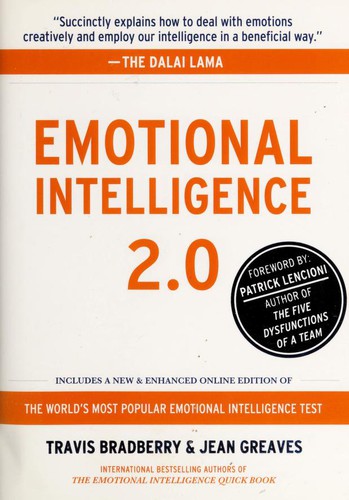
1. Emotional Intelligence 2.0 by Travis Bradberry & Jean Greaves
Rating: ⭐⭐⭐⭐⭐ (5/5)
Who this is for: The leader who wants to measure and improve their EQ. If you’re not sure where you stand emotionally, this book provides an assessment and a roadmap.
“The online EQ assessment showed me my weakest areas (self-awareness and empathy), and the strategies helped me improve them. My team noticed the change within weeks.” — Jennifer M.
My take: This book includes an online EQ assessment that gives you a baseline score across four domains: self-awareness, self-management, social awareness, and relationship management. My score revealed that my social awareness was abysmally low—I had no idea how others perceived me. The specific strategies for each domain (66 total) gave me a clear path forward. I now check in with my emotional state multiple times a day, and my interactions with my team have transformed.

2. Leaders Eat Last by Simon Sinek
Rating: ⭐⭐⭐⭐⭐ (5/5)
Who this is for: The leader who wants to create a culture of trust and safety. If your team is disengaged or fearful, this book explains why and shows you how to fix it.
“Sinek’s concept of the ‘circle of safety’ (creating an environment where people feel safe to take risks) completely changed my approach to leadership. My team now takes initiative instead of waiting for permission.” — Michael R.
My take: This book changed my understanding of what leadership actually is. Sinek shows that great leaders create environments of trust and safety—not through policies, but through consistent behavior. His research on the biology of trust (oxytocin, cortisol, and their effects on team dynamics) was eye-opening. I implemented his “circle of safety” concept—making it clear that mistakes are learning opportunities, not career-ending events—and my team’s innovation increased dramatically.

3. The Coaching Habit by Michael Bungay Stanier
Rating: ⭐⭐⭐⭐⭐ (5/5)
Who this is for: The leader who gives too much advice. If you’re exhausted from solving everyone’s problems, this book teaches you to coach instead of tell.
“Stanier’s seven coaching questions transformed my 1:1s. Instead of telling my team members what to do, I ask questions and let them find their own solutions. They’re more engaged and I’m less exhausted.” — Thomas K.
My take: This book freed me from the trap of being the “answer person.” Stanier’s seven questions (especially “What’s the real challenge here for you?” and “How can I help?”) taught me to coach rather than solve. My team now comes to me with solutions, not just problems. The key insight: your job isn’t to have the best answers—it’s to ask the best questions.

4. Dare to Lead by Bren Brown
Rating: ⭐⭐⭐⭐⭐ (5/5)
Who this is for: The leader who wants to lead with vulnerability. If you think leadership means having all the answers and showing no weakness, this book will transform your perspective.
“Brown’s research on vulnerability in leadership showed me that admitting I don’t know something actually increases trust, not decreases it. I stopped pretending to be perfect and started being real.” — Amanda L.
My take: This book redefined leadership for me. Brown proves that vulnerability isn’t weakness—it’s the foundation of brave leadership. Her framework for “rumbling with vulnerability” (having difficult conversations with courage and empathy) has transformed how I lead. I now start team meetings by sharing my own challenges, and the response has been remarkable—my team is more open, more creative, and more willing to take risks.

5. Primal Leadership by Daniel Goleman
Rating: ⭐⭐⭐⭐⭐ (5/5)
Who this is for: The leader who wants the definitive guide to emotional intelligence in leadership. If you want the research and science behind EQ, this book provides it.
“Goleman’s research showing that EQ accounts for 85% of leadership effectiveness changed how I evaluate leaders. I now hire for EQ as much as technical skill.” — Robert M.
My take: This is the definitive book on emotional intelligence and leadership. Goleman, who popularized the concept of EQ, shows how leaders’ emotional states directly affect their teams’ performance. His six leadership styles (visionary, coaching, affiliative, democratic, pacesetting, commanding) helped me understand that different situations require different approaches. I now consciously choose my leadership style based on the situation, rather than defaulting to the same approach every time.

6. Crucial Conversations by Kerry Patterson et al.
Rating: ⭐⭐⭐⭐⭐ (5/5)
Who this is for: The leader who avoids difficult conversations. If you dread giving negative feedback or addressing conflicts, this book provides the framework.
“Patterson’s framework for having high-stakes conversations completely changed how I handle conflict. I now address issues directly without damaging relationships.” — Jennifer B.
My take: This book gave me the tools for the conversations I used to avoid. Patterson’s framework—start with heart, make it safe, master my stories, state my path, explore others’ paths—provides a clear structure for difficult discussions. I used to avoid conflict at all costs; now I address issues as they arise, and my team respects me more for it. The key insight: avoiding conflict doesn’t make it go away—it makes it worse.

7. Multipliers by Liz Wiseman
Rating: ⭐⭐⭐⭐⭐ (5/5)
Who this is for: The leader who wants to amplify their team’s intelligence. If you’re a “diminisher” (unintentionally making your team less effective), this book shows you how to become a “multiplier.”
“Wiseman’s research showed me that my ‘helpful’ micromanagement was actually diminishing my team’s intelligence. When I started trusting them to solve problems, their performance tripled.” — Lisa P.
My take: This book is about the difference between leaders who amplify their team’s intelligence (Multipliers) and those who diminish it (Diminishers). Wiseman’s research shows that Multipliers get 2x more capability from their teams than Diminishers. Her five disciplines of Multipliers (attracting talent, creating intensity, extending challenges, debating decisions, instilling ownership) helped me see how I was unintentionally diminishing my team. I now consciously create space for my team to think, challenge, and lead.

8. Thanks for the Feedback by Douglas Stone & Sheila Heen
Rating: ⭐⭐⭐⭐⭐ (5/5)
Who this is for: The leader who struggles to receive feedback. If you get defensive when receiving criticism, this book shows you how to learn from it.
“Stone and Heen’s research on why feedback is so hard to receive changed everything. I now separate the feedback from my identity and can actually learn from criticism.” — Thomas B.
My take: This book addresses the other side of feedback: receiving it. Stone and Heen show that our brains are wired to reject feedback—it triggers the same neurological response as physical threat. Their strategies for “decoupling” (separating feedback from identity) helped me stop getting defensive and start getting curious. I now actively seek feedback from my team, and they’re more willing to give it because they see me actually using it.

9. The 5 Dysfunctions of a Team by Patrick Lencioni
Rating: ⭐⭐⭐⭐ (4/5)
Who this is for: The leader whose team isn’t working well together. If your team lacks trust, avoids conflict, or doesn’t commit to decisions, this book diagnoses and treats the problem.
“Lencioni’s model showed me that my team’s lack of trust was causing every other dysfunction. I implemented his trust-building exercises, and within a month, our team dynamics transformed.” — David H.
My take: This book is a fable about team dysfunction, and it’s incredibly practical. Lencioni identifies five dysfunctions: absence of trust, fear of conflict, lack of commitment, avoidance of accountability, and inattention to results. My team had all five. His step-by-step approach to building trust (starting with personal histories exercise) helped me break through the dysfunction and build a cohesive team.

10. Emotional Agility by Susan David
Rating: ⭐⭐⭐⭐⭐ (5/5)
Who this is for: The leader who needs to manage their own emotions effectively. If you’re reactive, stressed, or emotionally exhausted, this book teaches you emotional flexibility.
“David’s concept of ’emotional agility’ (being flexible with your emotions rather than rigid) helped me stop being controlled by my anxiety. I now observe my emotions without being consumed by them.” — Sarah M.
My take: This book addresses the leader’s internal emotional landscape. David shows that emotional health isn’t about being positive all the time—it’s about being flexible with your emotions. Her four-step process (showing up, stepping out, walking your why, moving on) helped me manage the emotional demands of leadership. I no longer let stress, frustration, or self-doubt control my decisions. I observe these emotions, learn from them, and choose my response.
Frequently Asked Questions (Emotional Intelligence in Leadership)
Q: Can emotional intelligence be learned? A: Yes. Unlike IQ, which is relatively fixed, EQ can be developed at any age. The books I recommend provide specific, practical strategies for improving each component of EQ.
Q: How long does it take to improve EQ? A: Research shows that with focused practice, you can improve your EQ within 2-6 months. The key is consistent practice—small daily improvements lead to significant changes over time.
Q: Is EQ more important than IQ for leaders? A: For leadership effectiveness, yes. Research shows that EQ accounts for 58% of job performance in all types of jobs, and up to 85% in leadership roles. Technical skills get you promoted; EQ keeps you there.
Q: How do I measure my EQ? A: Take an EQ assessment. Emotional Intelligence 2.0 includes one. You can also ask for 360-degree feedback from colleagues, direct reports, and your manager.
Q: What if my organization doesn’t value EQ? A: Model it. Even if your organization prioritizes results over relationships, you can create pockets of high-EQ leadership within your team. The results will speak for themselves.
Q: How do I develop empathy as a leader? A: Practice active listening. Ask questions instead of giving advice. Try to understand situations from others’ perspectives. Read fiction (research shows it improves empathy). And be genuinely curious about your team members as people.
Q: Can I be both technically excellent and emotionally intelligent? A: Absolutely. The best leaders combine technical expertise with emotional intelligence. You don’t have to choose—you can be both.
Q: How do I handle emotional team members? A: First, acknowledge their emotions (“I can see this is frustrating”). Then help them problem-solve. Don’t dismiss their feelings or rush to solutions. Often, people just need to feel heard before they can think clearly.
Your Next Move
Emotional intelligence isn’t soft—it’s the hardest skill you’ll ever develop. And it’s the most important one for leadership success.
These ten books taught me the EQ skills that engineering school never covered. They taught me that leading people isn’t about having the best technical skills—it’s about understanding humans. And understanding humans starts with understanding yourself.
So start with one book. Maybe Emotional Intelligence 2.0 if you need an assessment, or Dare to Lead if you need to learn vulnerability. Read it, practice one technique, and see what happens.
Because the best leaders aren’t the smartest people in the room. They’re the most emotionally intelligent.
Which book are you grabbing first?
Disclosure: This post contains Amazon affiliate links. If you purchase through these links, I may earn a small commission at no extra cost to you. This helps support the blog and allows me to continue bringing you honest book recommendations. Thank you!