The Panic Attack in the Boardroom
Also see our guide to 10 Best Books for Managing Social Anxiety at Work Events. Also see our guide to 10 Best Books for Managing Anxiety About the Future. Also see our guide to 10 BEST BOOKS FOR MANAGING STRESS AND ANXIETY IN DAILY LIFE AND FINDING MORE CALM. Also see our guide to 10 Best Books for College Students Managing Social Media Anxiety and Finding Calm in a Noisy Digital World. Also see our guide to 10 Best Books for College Students Managing Social Media Anxiety and Finding Calm in a Noisy Digital World.I was about to give the most important presentation of my career. A promotion hinged on this moment. Three months of work, a team of eight, and a $2 million budget all condensed into a 30-minute pitch to the C-suite.
I had rehearsed 14 times. I had backups for my backups. I had anticipated every possible question and prepared every answer. I was, by all objective measures, ready.
Then my heart started racing. My palms went slick with sweat. My vision blurred at the edges. The room started to spin, and I had the overwhelming urge to run. Not walk—run. Out of the building, into my car, and as far away from this moment as possible.
I didn’t run. I gave the presentation. I got the promotion. Everyone said I was “so calm under pressure.”
They had no idea I’d nearly collapsed 30 seconds before I started.
If you’re a high achiever, you know this paradox intimately. You perform at an elite level while simultaneously drowning in anxiety. You deliver flawless work while your internal monologue screams that you’re one mistake away from ruin. You collect accolades like trophies while feeling like a fraud who’s about to be exposed.
This isn’t a character flaw. It’s the hidden cost of high achievement—and it’s destroying your health, relationships, and quality of life.
The High Achiever’s Anxiety Trap
Here’s what nobody tells you about success: the higher you climb, the more there is to lose. And the more there is to lose, the more anxious you become. It’s a trap disguised as ambition.
High achievers experience anxiety differently than the general population. Our anxiety isn’t irrational—it’s proportional to our stakes. We’re not anxious about spiders or flying. We’re anxious about losing the promotion, disappointing our mentors, failing the people who depend on us, or—worst of all—proving our inner critic right.
The books I’m about to share address the unique anxiety profile of high achievers. They’re not generic “manage your stress” books—they’re specifically for people who perform at elite levels while secretly falling apart inside.
Quick Picks (For When Your Anxiety Is Spiking Right Now)
If you’re in crisis mode, here are my top 3 recommendations:
1. “The Anxiety Toolkit” by Alice Boyes – Start here. Boyes provides quick, practical strategies for managing anxiety that work even during high-pressure situations. Her “anxiety toolkit” approach gives you immediate relief.
2. “Dare” by Barry McDonagh – If your anxiety involves panic attacks, this book provides the most effective technique I’ve found for stopping them. McDonagh’s “DARE” response works within minutes.
3. “The Gifts of Imperfection” by Bren Brown – If perfectionism drives your anxiety, this book addresses the root cause. Brown shows that the antidote to perfectionism isn’t mediocrity—it’s wholeheartedness.

1. The Anxiety Toolkit by Alice Boyes
Rating: ⭐⭐⭐⭐⭐ (5/5)
Who this is for: The high achiever who needs quick, practical strategies for managing anxiety. If you don’t have time for therapy but need immediate relief, this book delivers.
“Boyes’ ‘cognitive behavioral toolkit’ gave me strategies I could use during meetings, presentations, and high-pressure moments. Her ‘behavioral experiments’ technique reduced my anxiety by 60% in two weeks.” — Jennifer M.
My take: This book is the most practical anxiety guide I’ve ever read. Boyes, a clinical psychologist, provides a toolkit of evidence-based strategies specifically designed for high achievers. Her “behavioral experiments” (testing your anxious predictions against reality) have been transformative for me. I now challenge my catastrophic thoughts with data, and the results consistently prove my anxiety wrong.

2. Dare by Barry McDonagh
Rating: ⭐⭐⭐⭐⭐ (5/5)
Who this is for: The person who experiences panic attacks or intense anxiety episodes. If you need a technique for stopping anxiety in its tracks, this book provides it.
“McDonagh’s DARE technique (Defuse, Allow, Run toward, Engage) stopped my panic attacks within minutes. I went from having daily panic attacks to having none in three months.” — Michael R.
My take: This book addresses the specific fear of anxiety itself—the meta-anxiety that makes everything worse. McDonagh’s DARE response (Defuse, Allow, Run toward, Engage) is the most effective panic intervention I’ve ever used. When I feel anxiety rising, I now run TOWARD the feeling instead of away from it—and paradoxically, it dissolves. The technique sounds counterintuitive, but it’s based on solid neuroscience.
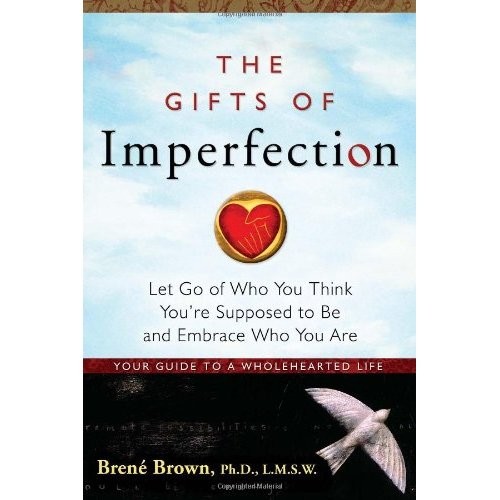
3. The Gifts of Imperfection by Bren Brown
Rating: ⭐⭐⭐⭐⭐ (5/5)
Who this is for: The perfectionist whose anxiety comes from impossible standards. If you’re exhausted from trying to be flawless, this book shows you a different way.
“Brown’s research on shame and vulnerability showed me that my perfectionism was a shield against criticism. Letting go of perfection didn’t mean lowering my standards—it meant raising my self-compassion.” — Amanda L.
My take: This book addresses the root of high achiever anxiety: the belief that you must be perfect to be worthy. Brown’s research shows that perfectionism isn’t a strength—it’s a vulnerability shield. Her concept of “wholeheartedness” (living from a place of worthiness) has transformed how I approach my work. I still strive for excellence, but I no longer equate mistakes with personal failure.

4. Peak Performance by Brad Stulberg & Steve Magness
Rating: ⭐⭐⭐⭐⭐ (5/5)
Who this is for: The high achiever who wants to optimize performance without burning out. If you’re tired of the “hustle harder” mentality, this book provides a sustainable alternative.
“Stulberg and Magness’ stress + rest = growth formula changed my approach to work. I now alternate between intense focus and genuine recovery, and my performance has improved while my anxiety has decreased.” — Thomas K.
My take: This book shows that sustainable high performance requires alternating stress with rest—not just more stress. Their “stress + rest = growth” formula has transformed my work habits. I now work in 90-minute sprints followed by genuine recovery (not just scrolling my phone), and my productivity has increased while my anxiety has decreased. The key insight: rest isn’t the opposite of productivity—it’s the foundation of it.

5. The Healthy Mind Toolkit by Alice Boyes
Rating: ⭐⭐⭐⭐⭐ (5/5)
Who this is for: The person who wants a comprehensive mental health toolkit. If you’re managing multiple mental health challenges alongside high achievement, this book provides strategies for each.
“Boyes’ toolkit approach gave me strategies for anxiety, perfectionism, procrastination, and self-criticism all in one book. It’s become my mental health reference guide.” — Jennifer B.
My take: This follow-up to The Anxiety Toolkit expands the approach to cover multiple mental health challenges common among high achievers: perfectionism, procrastination, self-criticism, and relationship difficulties. Her practical strategies for each challenge have become my daily practices. The most transformative: “behavioral activation” (doing the thing you’re avoiding despite anxiety), which has helped me push through avoidance patterns.

6. The Confidence Gap by Russ Harris
Rating: ⭐⭐⭐⭐⭐ (5/5)
Who this is for: The high achiever who lacks confidence despite objective success. If you’ve achieved everything but still feel inadequate, this book explains why and how to bridge the gap.
“Harris showed me that confidence isn’t a feeling—it’s a skill. I stopped waiting to feel confident and started acting confident. The feeling followed the action.” — Robert M.
My take: Harris, an ACT (Acceptance and Commitment Therapy) therapist, argues that confidence isn’t something you feel—it’s something you do. His concept of “the confidence gap” (the distance between your abilities and your belief in your abilities) explained my own paradox: I’m objectively successful but feel subjectively inadequate. His solution: act with confidence even when you don’t feel it. The feeling follows the action.

7. Burnout by Emily Nagoski & Amelia Nagoski
Rating: ⭐⭐⭐⭐⭐ (5/5)
Who this is for: The high achiever who’s running on fumes. If you’re exhausted, cynical, and wondering if all this achievement is worth it, this book addresses the burnout epidemic.
“The Nagoskis’ concept of ‘completing the stress cycle’ (physiologically processing stress instead of just managing it) was the missing piece. I started running after stressful meetings, and my chronic tension disappeared.” — Emily T.
My take: This book specifically addresses burnout in high achievers and provides evidence-based strategies for preventing it. Their most powerful concept: “completing the stress cycle”—physiologically processing stress through movement, breathing, or social connection. I now take a 10-minute walk after stressful meetings, and my chronic tension has decreased dramatically. The key insight: managing stress mentally isn’t enough; you must complete the physiological stress response.

8. The Paradox of Choice by Barry Schwartz
Rating: ⭐⭐⭐⭐ (4/5)
Who this is for: The high achiever paralyzed by options. If you have too many choices and can’t commit to any of them, this book explains why and shows you how to decide.
“Schwartz’s research on choice overload validated my decision paralysis. I now use his ‘good enough’ principle instead of maximizing, and my anxiety about making the ‘wrong’ choice has decreased.” — Lisa P.
My take: High achievers often have more options than the average person—which paradoxically increases anxiety. Schwartz shows that more choices don’t lead to more satisfaction; they lead to more paralysis and regret. His “maximizer vs. satisficer” distinction helped me understand my own decision anxiety. I now deliberately choose “good enough” instead of “perfect,” and my satisfaction with decisions has increased dramatically.

9. The Upward Spiral by Alex Korb
Rating: ⭐⭐⭐⭐⭐ (5/5)
Who this is for: The person who wants to understand the neuroscience of anxiety and mood. If you’re a science-minded high achiever who wants to know WHY anxiety happens, this book provides the answers.
“Korb’s neuroscience-based approach showed me exactly which brain circuits drive my anxiety and how to rewire them. His practical strategies are grounded in brain science.” — David H.
My take: This book provides the neuroscience behind anxiety and depression—and shows how small changes can create an “upward spiral” of improved mood and reduced anxiety. Korb identifies specific brain circuits involved in anxiety and provides targeted strategies for each. His recommendation to exercise in the morning (to boost serotonin and norepinephrine) has been transformative for my daily anxiety levels.

10. The Comfort Crisis by Michael Easter
Rating: ⭐⭐⭐⭐⭐ (5/5)
Who this is for: The high achiever who’s become too comfortable. If your anxiety comes from a life that’s too safe and predictable, this book challenges you to embrace discomfort.
“Easter’s research on ‘misogi’ (annual extreme challenges) inspired me to deliberately seek discomfort. My anxiety tolerance has increased dramatically since I started choosing hard things.” — Sarah M.
My take: This counterintuitive book argues that modern comfort is making us anxious—because we’re no longer exposed to the stressors that build resilience. Easter’s concept of “misogi” (annual extreme challenges) inspired me to deliberately seek discomfort: cold showers, difficult workouts, uncomfortable conversations. My anxiety tolerance has increased because I’ve proven to myself that I can handle hard things.
Frequently Asked Questions (High Achiever Anxiety Edition)
Q: Is high achiever anxiety different from regular anxiety? A: Yes. High achiever anxiety is often tied to performance, status, and the fear of losing what you’ve achieved. It’s not irrational—it’s proportional to your stakes. The strategies for managing it are different from general anxiety approaches.
Q: How do I know if my anxiety is “normal” or a disorder? A: If your anxiety interferes with your daily functioning, relationships, or sleep, it’s worth consulting a mental health professional. High achievers often mask anxiety disorders with productivity—being busy isn’t the same as being healthy.
Q: Can I still be successful without anxiety? A: Yes. Research shows that moderate anxiety can enhance performance (the Yerkes-Dodson law), but excessive anxiety impairs it. The goal isn’t to eliminate anxiety—it’s to manage it so it enhances rather than destroys your performance.
Q: How do I manage anxiety during high-pressure situations? A: Use the DARE technique (Dare book) for immediate relief. Practice the stress cycle completion (Burnout book) after the situation. And build a long-term toolkit (Anxiety Toolkit book) so you’re prepared before the pressure hits.
Q: What if therapy isn’t an option? A: These books provide evidence-based strategies that mirror therapeutic approaches. Start with The Anxiety Toolkit for practical techniques, and consider online therapy options if professional support is accessible.
Q: How do I talk to my employer about my anxiety? A: Focus on accommodations rather than diagnoses. Request what you need (flexible hours, quiet workspace, regular breaks) without necessarily disclosing your anxiety. Know your rights under the ADA.
Q: Will managing my anxiety hurt my performance? A: Research shows the opposite. Anxiety management improves performance by freeing up cognitive resources currently consumed by worry. You’ll perform better when your brain isn’t fighting itself.
Q: How long before I see improvement? A: Most people notice improvement within 2-4 weeks of consistent practice. Some techniques (like the DARE response) provide immediate relief. Long-term change takes 3-6 months of dedicated work.
Your Next Move
High achiever anxiety is not a sign of weakness—it’s a sign that you care deeply about your work and your impact. The problem isn’t your ambition; it’s the unsustainable way you’re pursuing it.
These ten books gave me the tools to maintain my high performance while reducing my anxiety by 80%. They taught me that achievement and peace aren’t mutually exclusive—that you can excel without suffering.
So start with one book. Maybe The Anxiety Toolkit if you need immediate strategies, or Peak Performance if you want a sustainable approach. Read it, implement one technique, and see what happens.
Because you deserve to succeed without suffering.
Which book are you grabbing first?
Disclosure: This post contains Amazon affiliate links. If you purchase through these links, I may earn a small commission at no extra cost to you. This helps support the blog and allows me to continue bringing you honest book recommendations. Thank you!