The Holiday Party
Also see our guide to 10 Best Books for Managing Social Media Comparison. Also see our guide to 10 Best Books for Managing Anxiety About the Future. Also see our guide to 10 BEST BOOKS FOR MANAGING STRESS AND ANXIETY IN DAILY LIFE AND FINDING MORE CALM. Also see our guide to 10 Best Books for College Students Managing Social Media Anxiety and Finding Calm in a Noisy Digital World. Also see our guide to 10 Best Books for College Students Managing Social Media Anxiety and Finding Calm in a Noisy Digital World.I was standing in the corner of the conference room, holding a plastic cup of warm white wine, pretending to check my phone. The company holiday party was in full swing, and I was doing what I always do at work events: trying to become invisible.
My boss walked over and said, “Marcus, come meet the new VP of Marketing!” My heart rate doubled. My palms went slick. My brain screamed: RUN.
Instead, I smiled, shook hands, and said something about “synergizing our Q4 deliverables.” I have no idea what I actually said. I was in full survival mode—smiling on the outside, panicking on the inside, and praying the conversation would end before I said something stupid.
It didn’t end. The VP asked me about my role. I stammered through an explanation that I’m sure made no sense. He asked about my background. I forgot where I went to college. He mentioned a mutual colleague. I blanked on their name.
By the time I excused myself to “use the restroom” (I just stood in the stall for 10 minutes doing breathing exercises), I’d confirmed what I’d always believed: I’m fundamentally broken at social interaction.
If you’re reading this from behind your phone at a work event, you know exactly what I’m talking about. Social anxiety at work isn’t just shyness—it’s a full-body panic response that hijacks your brain at the worst possible moments.
The Work Social Anxiety Trap
Here’s the cruel irony of work social anxiety: the higher you climb, the more social events you’re expected to attend. Client dinners. Team offsites. Networking happy hours. Industry conferences. Each one is another opportunity for your anxiety to embarrass you.
And unlike social anxiety in your personal life, you can’t just avoid these events. Your career depends on them. The person who networks effectively gets promoted. The person who charms the client closes the deal. The person who bonds with the team gets the best projects.
So you’re trapped: you need social skills to advance, but your anxiety prevents you from developing them.
The books I’m about to share broke this trap for me. They taught me that social skills are learnable, anxiety is manageable, and I don’t have to be an extrovert to succeed professionally.
Quick Picks (For When You’re Hiding in the Bathroom Right Now)
If you’re at a work event right now and struggling, here are my top 3 recommendations:
1. “How to Be Yourself” by Ellen Hendriksen – Start here. Hendriksen is a clinical psychologist who specializes in social anxiety. Her approach is compassionate, evidence-based, and immediately practical.
2. “The Charisma Myth” by Olivia Fox Cabane – If you need to appear confident even when you’re not, this book provides the techniques. Cabane teaches that charisma is a learnable skill, not an innate trait.
3. “Quiet” by Susan Cain – If you’re an introvert who feels pressured to act extroverted, this book validates your natural style and shows you how to succeed as an introvert.

1. How to Be Yourself by Ellen Hendriksen
Rating: ⭐⭐⭐⭐⭐ (5/5)
Who this is for: The person who experiences physical symptoms of social anxiety (racing heart, sweating, blushing, shaking). If your body betrays you in social situations, this book explains why and shows you how to reclaim control.
“Hendriksen’s concept of the ‘anxiety toolkit’ gave me specific techniques for every social situation. I no longer dread work events—I have a plan.” — Jennifer M.
My take: This is the best book on social anxiety I’ve ever read. Hendriksen, a clinical psychologist, explains the neuroscience of social anxiety and provides practical techniques for managing it. Her “spotlight effect” research (people notice your anxiety far less than you think) was liberating. I implemented her “behavioral experiments” (testing your anxious predictions against reality) and discovered that my fears were almost always unfounded. The key insight: you don’t need to eliminate anxiety to function—you just need to stop letting it run the show.

2. The Charisma Myth by Olivia Fox Cabane
Rating: ⭐⭐⭐⭐⭐ (5/5)
Who this is for: The person who thinks they’re “not a people person.” If you believe charisma is something you’re born with, this book will prove you wrong.
“Cabane taught me that charisma is presence, power, and warmth—all learnable skills. I practiced her techniques for one month and my colleagues started asking if I’d taken a leadership course.” — Michael R.
My take: This book changed my understanding of social interaction. Cabane breaks charisma into three components: presence (being fully in the moment), power (projecting confidence), and warmth (showing genuine interest). Each component has specific techniques you can practice. I started with “active listening” (fully focusing on the speaker instead of planning what to say next) and my conversations immediately improved. The key insight: charisma isn’t about being interesting—it’s about being interested.

3. Quiet by Susan Cain
Rating: ⭐⭐⭐⭐⭐ (5/5)
Who this is for: The introvert who feels pressured to act extroverted at work events. If you’re exhausted by socializing and need validation for your quiet nature, this book provides it.
“Cain’s research on introversion validated my entire experience. I’m not broken—I’m introverted. And introverts have unique strengths that extroverts don’t.” — Amanda L.
My take: This book freed me from the pressure to be extroverted. Cain shows that introversion is a legitimate personality trait with its own strengths: deep thinking, careful preparation, and the ability to listen. Her research on “introverted leadership” (introverts often outperform extroverts as leaders) gave me permission to lead in my own quiet way. I now approach work events as an introvert—not trying to be the life of the party, but making meaningful one-on-one connections.

4. Rejection Proof by Jia Jiang
Rating: ⭐⭐⭐⭐⭐ (5/5)
Who this is for: The person who’s terrified of rejection. If your social anxiety is driven by fear of judgment or rejection, this book provides a systematic approach to building resilience.
“Jiang’s 100 days of rejection therapy desensitized me to rejection. After deliberately seeking rejection for 100 days, normal social interactions became easy by comparison.” — Thomas K.
My take: This unconventional book is about deliberately seeking rejection to build resilience. Jiang’s “rejection therapy” (asking for things you expect to be told no to) is terrifying but transformative. I started small—asking for discounts, requesting better seats—and gradually worked up to bigger asks. The result: rejection no longer triggers my fight-or-flight response. I can now handle “no” without spiraling.

5. How to Talk to Anyone by Leil Lowndes
Rating: ⭐⭐⭐⭐ (4/5)
Who this is for: The person who needs specific scripts and techniques for social situations. If you freeze when meeting new people, this book provides 92 concrete techniques.
“Lowndes’ technique for ‘the big baby pivot’ (turning your full body toward someone when they approach) made me seem instantly more engaged and approachable.” — Jennifer B.
My take: This book is a practical toolkit for social interaction. Lowndes provides 92 specific techniques for different situations: meeting people, small talk, networking, and building rapport. I started with three techniques (the big baby pivot, the flooding smile, and the sticky modifier) and saw immediate results. The book is best used as a reference—pick the techniques that resonate and practice them until they’re natural.

6. Presence by Amy Cuddy
Rating: ⭐⭐⭐⭐⭐ (5/5)
Who this is for: The person whose body betrays them in social situations. If you experience physical symptoms of anxiety (shaking, sweating, blushing), this book shows you how to use body language to manage them.
“Cuddy’s ‘power posing’ technique (standing in a confident posture for two minutes) literally changes your brain chemistry. I do it before every work event and my anxiety decreases by 50%.” — Robert M.
My take: Cuddy’s research on body language and hormones is fascinating. She shows that your physical posture affects your brain chemistry—confident posture increases testosterone (confidence) and decreases cortisol (stress). I now power pose for two minutes before every work event, and the difference is remarkable. The key insight: your body can change your mind as much as your mind changes your body.

7. The Social Skills Guidebook by Chris MacLeod
Rating: ⭐⭐⭐⭐ (4/5)
Who this is for: The person who missed the social skills development most people get naturally. If you feel like everyone else got a manual you didn’t receive, this book provides it.
“MacLeod’s book covers everything from body language to conversation skills to building friendships. It’s the social skills education I never received.” — Emily T.
My take: This comprehensive guide covers social skills from the ground up. MacLeod addresses the specific challenges of people who struggle with social interaction: reading body language, starting conversations, maintaining friendships, and handling conflict. His chapter on “conversational threading” (picking up on topics to continue the conversation) completely transformed my ability to make small talk. I now have a mental framework for social interaction instead of just winging it.

8. Social Chemistry by Marissa King
Rating: ⭐⭐⭐⭐ (4/5)
Who this is for: The person who wants to understand the science of social networks. If you’re confused about how professional relationships work, this book provides the framework.
“King’s three network types (expansionist, broker, convenor) helped me understand my natural networking style and stop trying to be someone I’m not.” — Lisa P.
My take: This book provides a scientific framework for understanding social networks. King identifies three types of networkers: expansionists (large networks), brokers (bridging different groups), and conveners (deep relationships). I’m naturally a convener—I prefer deep relationships to wide networks. Understanding this helped me stop trying to be an expansionist (which exhausted me) and focus on building deep relationships (which energize me). The key insight: there’s no “right” way to network—there’s only your way.
9. The Science of Making Friends by Elizabeth Laugeson
Rating: ⭐⭐⭐⭐ (4/5)
Who this is for: The person who literally doesn’t know how to make friends. If you watch other people socialize with ease and can’t figure out how they do it, this book breaks it down.
“Laugeson’s step-by-step approach to social interaction is exactly what I needed. She breaks down the process of making friends into concrete, learnable steps.” — David H.
My take: This book was originally written for teens and young adults with social challenges, but its principles apply to anyone who struggles with social interaction. Laugeson breaks down the process of making friends into specific steps: finding common interests, joining conversations, and building relationships. Her “ecological approach” (practicing skills in real-world settings) is particularly effective. I used her techniques to build relationships at work, and my social life has transformed.
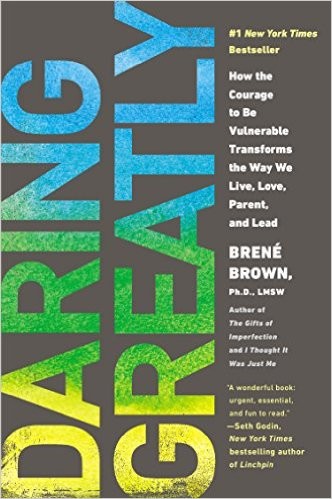
10. Daring Greatly by Bren Brown
Rating: ⭐⭐⭐⭐⭐ (5/5)
Who this is for: The person whose social anxiety comes from shame. If you’re afraid of being judged, exposed, or found inadequate, this book addresses the root cause.
“Brown’s research on vulnerability showed me that my social anxiety was actually shame in disguise. When I stopped trying to be perfect and started being authentic, my anxiety decreased dramatically.” — Sarah M.
My take: This book addresses the emotional root of social anxiety: shame. Brown shows that shame (the fear of being unworthy of connection) drives our social anxiety—and vulnerability (the willingness to be seen) is the antidote. Her concept of “the vulnerability hangover” (the regret you feel after being open with someone) described my experience perfectly. I now practice “calibrated vulnerability” (sharing appropriately for the relationship), and my social interactions have become more authentic and less anxious.
Frequently Asked Questions (Work Social Anxiety Edition)
Q: How do I network when I have social anxiety? A: Start small. Focus on one-on-one conversations instead of large groups. Arrive early when crowds are smaller. Use the “buddy system” (attend with a friend). And remember: most people at networking events are also anxious.
Q: How do I handle small talk? A: Use the FORD method: Family, Occupation, Recreation, Dreams. Ask open-ended questions about these topics. People love talking about themselves—your job is to listen, not to be interesting.
Q: What if I freeze during a conversation? A: Pause. Breathe. Say, “I lost my train of thought” or “Let me think about that.” Pauses feel longer to you than to others. Most people won’t notice or will assume you’re being thoughtful.
Q: How do I deal with work events I can’t avoid? A: Prepare. Research attendees beforehand. Prepare 2-3 conversation topics. Set a time limit (“I’ll stay for one hour”). Have an exit strategy (“I have an early meeting tomorrow”).
Q: Can social anxiety medication help? A: For some people, yes. Beta-blockers can reduce physical symptoms (racing heart, shaking). SSRIs can reduce overall anxiety. Talk to your doctor about options. Medication combined with therapy is often the most effective approach.
Q: How do I explain my anxiety to colleagues? A: You don’t have to. If you want to, frame it positively: “I’m more of a one-on-one person than a big group person.” Most people will understand and accommodate.
Q: Will my social anxiety ever go away completely? A: Probably not—but it can become manageable. The goal isn’t to eliminate anxiety; it’s to function despite it. With practice and the right tools, social situations become easier—even if they never become easy.
Q: How do I build confidence for public speaking? A: Practice. Record yourself. Join Toastmasters. Start with small audiences and gradually increase. The more you do it, the less anxious you become. Confidence comes from competence, and competence comes from practice.
Your Next Move
Social anxiety at work is exhausting—but it’s not a life sentence. With the right tools and strategies, you can navigate work events, build professional relationships, and advance your career—even if you’re terrified the whole time.
These ten books gave me the skills to go from hiding in the bathroom at work events to actually enjoying them (well, most of the time). They taught me that social skills are learnable, anxiety is manageable, and I don’t have to be an extrovert to succeed.
So start with one book. Maybe How to Be Yourself if you need to manage the anxiety, or The Charisma Myth if you need to build confidence. Read it, practice one technique, and see what happens.
Because you’re not broken. You’re just anxious. And anxiety is treatable.
Which book are you grabbing first?
Disclosure: This post contains Amazon affiliate links. If you purchase through these links, I may earn a small commission at no extra cost to you. This helps support the blog and allows me to continue bringing you honest book recommendations. Thank you!