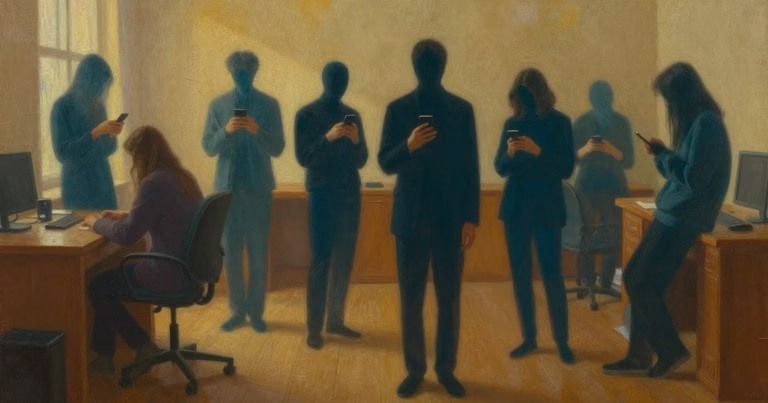
I deleted Instagram on a Wednesday after crying in a dressing room. Not because of the fluorescent lighting or the jeans that didn’t fit — although those didn’t help. I cried because I’d just spent 20 minutes scrolling through photos of women my age who looked like they’d never eaten a carb, standing in kitchens that cost more than my car, captioning it all with “just a lazy Saturday morning.”
I knew it was curated. I knew about filters and angles and the fact that nobody posts the part where they screamed at their kids or ate cereal for dinner. Knowing didn’t matter. The comparison was automatic, like blinking. My brain didn’t care about the truth. It cared about the gap between their highlight reel and my Monday.
That dressing room moment was my breaking point, but the damage had been building for years. The low-grade anxiety every time I opened my phone. The nagging feeling that I was falling behind — behind in my career, my body, my home, my relationships. The way I’d buy things I didn’t need because someone on TikTok made them look essential.
If you recognize yourself in any of that, you’re not weak. You’re human. And these ten books will help you understand why social media comparison is so hard to resist — and how to reclaim your peace of mind.
Quick Pick: The Book I Recommend First
Also see our guide to 10 BEST BOOKS FOR BUILDING CONFIDENCE AS AN INTROVERT AND LEARNING TO THRIVE IN SOCIAL SITUATIONS. Also see our guide to 10 Best Books for Dealing with Social Comparison and Keeping Up with Others. Also see our guide to 10 Best Books for Managing Social Anxiety at Work Events. Also see our guide to 10 Best Books for College Students Managing Social Media Anxiety and Finding Calm in a Noisy Digital World. Also see our guide to 10 Best Books for College Students Managing Social Media Anxiety and Finding Calm in a Noisy Digital World.Stolen Focus by Johann Hari. This book changed how I think about attention, comparison, and the deliberate design of social media platforms. Hari makes the case that our inability to stop comparing ourselves online isn’t a personal failing — it’s the result of a system designed to exploit our psychology. Understanding that changed everything for me.
10 Best Books for Managing Social Media Comparison
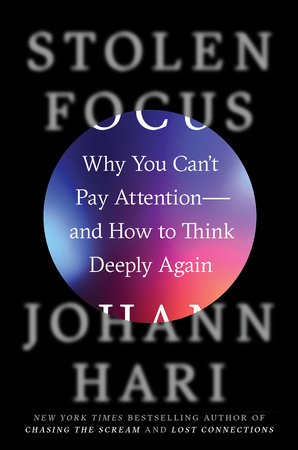
1. Stolen Focus: Why You Can’t Pay Attention — and How to Think Deeply Again
Author: Johann Hari Rating: ⭐⭐⭐⭐⭐ (4.6/5) Who it’s for: Anyone who feels their attention and self-worth have been hijacked by their phone
“Hari made me realize I wasn’t broken. My focus was stolen. And there’s a difference.” — Goodreads reviewer
My take: Johann Hari spent three years traveling the world and interviewing the leading researchers on attention and distraction. What he found is both alarming and liberating: the crisis of attention isn’t caused by individual weakness. It’s caused by structural changes in our environment — changes that were deliberately engineered by tech companies to keep us scrolling.
Hari identifies twelve factors that have stolen our attention, including the rise of social media, the decline of reading, and the way technology has been designed to be addictive. But he doesn’t just diagnose the problem. He also presents evidence-based solutions, from individual strategies to systemic reforms.
For anyone struggling with social media comparison, the most relevant chapters are those on how platforms use intermittent variable rewards (the same mechanism that makes slot machines addictive) to keep us engaged. Once you understand the machinery behind the scroll, you stop blaming yourself for not having enough willpower. You start blaming the right thing: a system designed to make you feel inadequate.
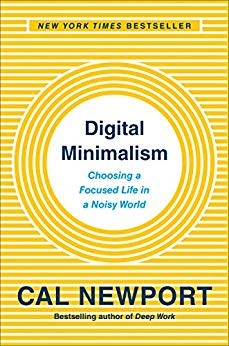
2. Digital Minimalism: Choosing a Focused Life in a Noisy World
Author: Cal Newport Rating: ⭐⭐⭐⭐⭐ (4.5/5) Who it’s for: Anyone who wants a practical, no-nonsense framework for reclaiming their digital life
“I did Newport’s 30-day digital declutter and never went back to mindless scrolling. My anxiety dropped by half.” — Amazon reviewer
My take: Cal Newport is a computer science professor who has never had a social media account, and this book is his argument for why you don’t need one either — or at least, why you need a radically different relationship with technology.
Newport’s approach is based on “digital minimalism”: a philosophy of technology use in which you focus your online time on a small number of carefully selected activities that support things you value. Everything else gets ruthlessly eliminated.
The book’s centerpiece is a 30-day “digital declutter” in which you step away from all optional technologies, slowly reintroduce only the ones that genuinely add value, and build new habits around them. Newport provides detailed guidance for each step, including how to handle the social pressure to stay connected and how to replace screen time with activities that actually fulfill you.
I did the 30-day declutter three years ago. I now use social media for about 20 minutes a day — checking in on close friends and sharing updates — and I never scroll. The comparison almost completely disappeared once I stopped feeding it.

3. The Comparison Cure: How to Be Less ‘Them’ and More You
Author: Lucy Sheridan Rating: ⭐⭐⭐⭐⭐ (4.4/5) Who it’s for: Anyone who wants a book specifically focused on comparison as a psychological pattern
“Lucy Sheridan gave me language for something I’d been suffering from silently for years. I wasn’t vain. I was comparing.” — Goodreads reviewer
My take: Lucy Sheridan is a life coach who specializes in comparison, and this is the only book on this list that’s entirely dedicated to the subject. She calls comparison the “thief of joy” and provides a structured, practical approach to breaking the habit.
Sheridan identifies three types of comparison: upward (comparing yourself to people you perceive as better), downward (comparing to people you perceive as worse), and lateral (comparing to people at your level). Social media, she argues, feeds all three — but upward comparison is the most damaging because it consistently triggers feelings of inadequacy.
The book includes exercises, journal prompts, and a “comparison detox” program that helps you identify your specific triggers and build new responses. Sheridan’s tone is warm and conversational, and her advice is grounded in cognitive behavioral therapy principles without feeling clinical.

4. Dopamine Nation: Finding Balance in the Age of Indulgence
Author: Anna Lembke Rating: ⭐⭐⭐⭐⭐ (4.6/5) Who it’s for: Anyone who wants to understand the neuroscience behind why social media feels impossible to quit
“This book explained why I couldn’t stop scrolling even when it made me feel terrible. It’s not willpower — it’s chemistry.” — Amazon reviewer
My take: Anna Lembke is a psychiatrist at Stanford who treats patients with addiction, and her central finding applies directly to social media: the brain processes social media comparison through the same reward pathways as drugs, gambling, and other addictive behaviors.
Lembke explains the neuroscience of dopamine — how the brain’s pleasure-pain balance works, why too much of a good thing leads to misery, and how our modern environment of unlimited access to stimulation has created a crisis of overconsumption. Social media, with its constant stream of novelty, social validation, and comparison triggers, is one of the most potent dopamine triggers in human history.
But this isn’t a doom-and-gloom book. Lembke provides practical strategies for resetting your dopamine baseline, including periods of abstinence from pleasure-seeking activities, the importance of discomfort in rebuilding sensitivity, and how to find sustainable sources of satisfaction that don’t leave you feeling hollow.

5. Irresistible: The Rise of Addictive Technology and the Business of Keeping Us Hooked
Author: Adam Alter Rating: ⭐⭐⭐⭐⭐ (4.4/5) Who it’s for: Anyone who wants to understand the deliberate design behind social media addiction
“After reading this book, I can’t look at my phone the same way. I understand the trap now.” — Goodreads reviewer
My take: Adam Alter is a psychologist and marketing professor at NYU, and this book pulls back the curtain on how tech companies design their products to be addictive. From infinite scroll to notification systems to the way likes and comments are structured to maximize engagement, Alter documents the specific techniques used to keep you hooked.
For social media comparison specifically, Alter’s analysis is devastating. He shows how platforms exploit our need for social belonging and status by creating quantifiable metrics of popularity (followers, likes, comments) that trigger constant comparison. The book also explores how social media addiction affects our relationships, our work, and our mental health.
What makes this book different from others about social media is Alter’s emphasis on behavioral design. He doesn’t just tell you to put down your phone. He shows you the invisible architecture that makes putting it down so hard — and then gives you tools for resisting it.

6. The Gifts of Imperfection: Let Go of Who You Think You’re Supposed to Be and Embrace Who You Are
Author: Brené Brown Rating: ⭐⭐⭐⭐⭐ (4.6/5) Who it’s for: Perfectionists who feel crushed by the gap between their real life and the lives they see online
“Brené Brown taught me that comparison is just shame wearing a social media filter.” — Amazon reviewer
My take: Brené Brown spent years studying vulnerability, shame, and courage, and this book distills her research into ten guideposts for “wholehearted living.” While it’s not specifically about social media, its insights about comparison and perfectionism are directly relevant.
Brown identifies comparison as one of the key triggers of shame — the feeling that “I am not enough.” Social media amplifies this trigger by presenting us with a constant stream of people who appear to be more successful, more attractive, more together, and more worthy than us. Brown’s antidote is radical self-acceptance: the practice of embracing who you are right now, imperfections and all.
The book’s guideposts — including authenticity, self-compassion, creativity, and rest — provide a framework for building a sense of self that doesn’t depend on external validation. If social media has made you feel like you’re never enough, this book is the medicine.

7. How to Do Nothing: Resisting the Attention Economy
Author: Jenny Odell Rating: ⭐⭐⭐⭐ (4.3/5) Who it’s for: Anyone who wants a philosophical and ecological perspective on why attention matters
“This book didn’t tell me to delete my apps. It told me to pay attention to something that actually matters. That was more radical.” — Goodreads reviewer
My take: Jenny Odell is an artist and writer, and this book is unlike anything else on this list. It’s not a self-help guide or a productivity manual. It’s a meditation on attention, resistance, and what it means to live in a world that wants to monetize your every thought.
Odell argues that the attention economy — the system in which tech companies profit from capturing and selling your focus — has made us forget how to pay attention to the things that actually matter: nature, community, art, and our own inner lives. She doesn’t advocate for digital detox as a solution. Instead, she advocates for a deeper reorientation of attention — learning to notice the world around you with the same intensity you currently direct at your phone.
For social media comparison, Odell’s insight is profound: comparison thrives in the attention economy because it keeps you focused outward (on other people’s lives) rather than inward (on your own). The antidote isn’t just less screen time. It’s more real life.
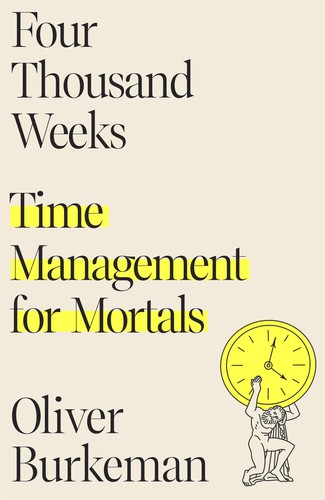
8. Four Thousand Weeks: Time Management for Mortals
Author: Oliver Burkeman Rating: ⭐⭐⭐⭐⭐ (4.5/5) Who it’s for: Anyone whose social media comparison is fueled by the feeling that they’re running out of time
“This book freed me from the tyranny of ‘optimizing’ my life. I stopped comparing my productivity to strangers on the internet.” — Amazon reviewer
My take: Oliver Burkeman is a journalist who spent years writing about productivity before realizing that the entire productivity industry is built on a lie: that you can do everything if you just manage your time well enough. The truth is that the average human lifespan is about 4,000 weeks, and no amount of optimization will let you do it all.
This book is relevant to social media comparison because one of the primary fuels for comparison is the feeling that you’re behind — that everyone else is achieving more, experiencing more, living more. Burkeman dismantles this feeling by arguing that it’s based on a false premise: that there’s a “right” way to spend your finite time.
His solution is not to become more productive. It’s to accept your limits and choose, deliberately, what matters most to you. When you stop trying to keep up with everyone else’s timeline, the comparison loses its power.

9. Untamed
Author: Glennon Doyle Rating: ⭐⭐⭐⭐⭐ (4.5/5) Who it’s for: Women who feel trapped by the expectations they see reinforced on social media
“Glennon Doyle gave me permission to stop performing for an audience and start living for myself.” — Goodreads reviewer
My take: Glennon Doyle’s memoir became a phenomenon because it articulated something millions of women were feeling but couldn’t name: the exhaustion of performing for others. Doyle writes about breaking free from the roles she was expected to play — dutiful wife, perfect mother, agreeable woman — and learning to trust her own instincts.
Social media comparison is essentially performance anxiety on a global scale. You’re not just comparing yourself to your neighbor anymore. You’re comparing yourself to millions of curated lives. Doyle’s book is a battle cry for stopping the performance entirely — for deciding that your life doesn’t need to look good to anyone but you.
The book is raw, funny, and deeply personal. Doyle doesn’t pretend she has it all figured out. She shares her failures, her messy divorce, her complicated relationships, and her ongoing struggle to live authentically. That honesty is what makes the book so powerful.

10. Amusing Ourselves to Death: Public Discourse in the Age of Show Business
Author: Neil Postman Rating: ⭐⭐⭐⭐⭐ (4.5/5) Who it’s for: Anyone who wants to understand the deeper cultural forces that make social media comparison so pervasive
“Postman wrote this in 1985 and predicted exactly where we’d end up. It’s the most important book about media I’ve ever read.” — Amazon reviewer
My take: Neil Postman published this book in 1985, and it’s more relevant now than it was then. His central argument is that the shift from a print-based culture to a television-based culture fundamentally changed how we think, communicate, and evaluate truth. He predicted that entertainment would become the primary mode of public discourse — a prediction that social media has fulfilled beyond his wildest nightmares.
For social media comparison, Postman’s insight is that the medium itself shapes the message. Social media isn’t just a tool for sharing photos. It’s a medium that inherently prioritizes appearance over substance, sensation over thought, and image over reality. Comparison isn’t a side effect of social media. It’s the core product.
This is the most intellectually demanding book on the list, and it’s also the most rewarding. Postman doesn’t offer quick fixes or productivity hacks. He offers a framework for understanding how media shapes our psychology — which is the first step toward freeing yourself from its grip.
Frequently Asked Questions
Why is social media comparison so hard to stop?
Because it’s designed to be. Adam Alter’s Irresistible and Johann Hari’s Stolen Focus both document how tech companies use variable reward schedules, social validation loops, and comparison triggers to keep you engaged. Your brain processes social media comparison through the same dopamine pathways as gambling. It’s not a willpower problem. It’s a design problem.
Should I delete social media entirely?
Not necessarily. Cal Newport’s Digital Minimalism advocates for a middle path: keeping the technologies that genuinely add value and eliminating everything else. Some people thrive with no social media. Others benefit from limited, intentional use. Newport’s 30-day digital declutter helps you figure out which category you’re in.
How do I stop comparing myself to influencers?
Lucy Sheridan’s The Comparison Cure specifically addresses this. Her approach involves identifying your comparison triggers, understanding the cognitive distortions that make comparison feel real, and building alternative thought patterns. She also emphasizes that influencers are in the business of making their lives look aspirational — it’s their job, not their reality.
Is social media comparison a form of addiction?
According to Anna Lembke’s Dopamine Nation, the neuroscience of social media use shares significant overlap with addiction. The intermittent rewards (sometimes your post gets likes, sometimes it doesn’t), the tolerance effect (you need more and more to get the same buzz), and the withdrawal symptoms (anxiety when you can’t check your phone) all mirror addictive patterns. Whether you call it addiction or compulsive use, the mechanisms are similar.
Can therapy help with social media comparison?
Yes. Many of the approaches in these books — particularly Lucy Sheridan’s cognitive behavioral techniques and Brené Brown’s work on shame — are based on therapeutic frameworks. A therapist who specializes in anxiety, self-esteem, or digital wellness can provide personalized support that goes beyond what any book can offer.
How do I help my teenager with social media comparison?
Stolen Focus by Johann Hari has a chapter specifically on children and adolescents, who are particularly vulnerable to social media comparison. Dopamine Nation also discusses the impact of social media on developing brains. The key for parents is to model healthy technology use themselves, create phone-free family time, and have open, non-judgmental conversations about what your teen is seeing and feeling online.
What’s the difference between social media comparison and regular comparison?
The difference is scale and intensity. Before social media, you compared yourself to the people in your immediate circle — maybe 50 to 150 people. Now, you’re comparing yourself to millions of curated, filtered, and strategically presented lives. Jenny Odell’s How to Do Nothing argues that this expanded comparison field is qualitatively different from anything humans have experienced before, and our brains haven’t evolved to handle it.
How long does it take to break the comparison habit?
Cal Newport suggests that his 30-day digital declutter produces noticeable changes within the first two weeks. Lucy Sheridan’s comparison detox program takes about six weeks. But the deeper work — rebuilding your sense of self independent of external validation — is ongoing. Most people report significant improvement in anxiety and self-esteem within two to three months of intentional change.
Final Thoughts
I reinstalled Instagram six months after deleting it. But I use it differently now. I follow twelve people — close friends, a pottery teacher, and a woman who rescues senior dogs. I post once a month, maybe. I don’t scroll the explore page. I don’t look at follower counts. And I don’t compare.
The comparison still flickers sometimes. I see someone’s beautiful kitchen and feel a pang. But it passes quickly now, like a cloud moving across the sun. It doesn’t ruin my day anymore.
You don’t have to delete social media to stop comparing. You just have to understand the game being played — and decide you’d rather play a different one.
The real life you’re living right now, with all its mess and imperfection, is worth more than any highlight reel. Trust that.
Which book are you grabbing first?
Disclosure: This article contains Amazon affiliate links. If you purchase through these links, we may earn a small commission at no extra cost to you. We only recommend books we’ve genuinely read and believe in.