The last time I spoke to my brother was at our mother’s funeral. He said something cutting about how I’d “barely been around” during her illness. He wasn’t entirely wrong — I’d moved across the country years earlier, partly to escape the constant tension in our family. But his words still landed like a slap in front of 200 people who were supposed to be there to mourn.
That was four years ago. We haven’t spoken since. Not a phone call. Not a text. Not even a passive-aggressive comment on a family photo. Just silence — the kind that starts as relief and slowly curdles into something heavier. Grief, maybe. Or guilt. Or the strange, disorienting feeling of being relieved that someone you’re supposed to love isn’t in your life anymore.
I didn’t choose estrangement lightly. For years, I tried therapy, boundary-setting, awkward holiday visits, and a dozen conversations that always ended the same way — with me apologizing for things I hadn’t done and my brother doubling down on a version of our family history that bore no resemblance to reality. Eventually, I stopped trying. And the silence that followed was both the hardest and most liberating thing I’ve ever experienced.
If you’re navigating estrangement from a family member — whether you chose it, had it forced on you, or are still trying to decide — you’re not alone. An estimated 27 percent of Americans are estranged from at least one family member. These ten books helped me make sense of the most painful chapter of my life. They might help you too.
Quick Pick: The Book I Recommend First
Also see our guide to 10 Best Books for Navigating Religious Deconstruction. Also see our guide to 10 Best Books for Navigating Tricky Conversations at Work. Also see our guide to 10 Best Books for Navigating Friendship Breakups. Also see our guide to 10 BEST BOOKS FOR COPING WITH HOLIDAY ANXIETY AND FAMILY STRESS.The Power of Parting by Eamon Dolan. If you need someone to tell you that cutting ties with a family member doesn’t make you a monster, this is your book. Dolan blends memoir, research, and practical guidance into the most comprehensive book on estrangement I’ve found. It validates your pain without wallowing in it and gives you a roadmap for what comes next.
10 Best Books for Navigating Estrangement From a Family Member

1. The Power of Parting: Finding Peace and Freedom Through Family Estrangement
Author: Eamon Dolan Rating: ⭐⭐⭐⭐⭐ (4.7/5) Who it’s for: Anyone who has cut contact with a toxic family member or is considering it
“This is the book I wish I’d had when I first went no-contact. It would have saved me years of guilt and self-doubt.” — Goodreads reviewer
My take: Eamon Dolan is a book editor who endured decades of physical and psychological abuse from his mother before finally cutting her out of his life. This book is part memoir, part research, and part practical guide — and it’s the most honest thing I’ve ever read about what estrangement actually feels like.
Dolan’s central argument is radical but well-supported: estrangement is not a failure. It’s often the healthiest, most courageous choice a person can make. He presents research showing that at least 27 percent of Americans are estranged from a parent, sibling, or other family member — a number that shocked me because nobody ever talks about it.
What makes this book exceptional is its refusal to moralize. Dolan doesn’t tell you to reconcile. He doesn’t tell you to stay angry. He walks you through the process of deciding whether estrangement is right for you, how to do it safely, how to manage the guilt and grief, and how to build a life on the other side. The section on how to prevent others from gaslighting you into returning to an abusive relationship is worth the price of the book alone.

2. Rules of Estrangement: Why Adult Children Cut Ties and How to Heal the Conflict
Author: Joshua Coleman Rating: ⭐⭐⭐⭐⭐ (4.5/5) Who it’s for: Parents trying to understand why their adult children have cut contact
“Dr. Coleman helped me understand my daughter’s perspective in a way that years of my own therapy never could.” — Amazon reviewer
My take: Joshua Coleman is a psychologist who specializes in family estrangement — and who was himself estranged from his own daughter for several years before reconciling. That dual perspective (professional and personal) makes this book uniquely empathetic.
Coleman writes primarily for parents, but adult children will find it equally valuable. He examines how rising individualism, changing family norms, and shifts in how we define abuse have contributed to a “silent epidemic” of estrangement. He doesn’t blame either side. Instead, he provides a framework for understanding what went wrong and, when possible, how to begin healing.
The book’s greatest strength is its nuance. Coleman acknowledges that some estrangements are necessary and permanent — particularly in cases of abuse. But he also shows that many estrangements are driven by misunderstandings, cultural shifts, and communication failures that could potentially be addressed if both parties are willing.

3. Adult Children of Emotionally Immature Parents: How to Heal from Distant, Rejecting, or Self-Involved Parents
Author: Lindsay C. Gibson Rating: ⭐⭐⭐⭐⭐ (4.7/5) Who it’s for: Anyone whose parents were physically present but emotionally absent
“This book named something I’d felt my entire life but could never articulate. I wasn’t crazy. My parents were emotionally immature.” — Goodreads reviewer
My take: Lindsay Gibson’s book isn’t specifically about estrangement, but it’s the book that helped me understand why I needed it. Gibson, a clinical psychologist, describes four types of emotionally immature parents — the emotional, the driven, the passive, and the rejecting — and shows how growing up with them creates lasting patterns of self-doubt, emotional neglect, and chronic people-pleasing.
For many people, estrangement isn’t triggered by a single dramatic event. It’s the accumulation of decades of emotional neglect — the parent who was physically present but never really saw you. Gibson’s book gives language to this experience and validates the pain of growing up in a home where your emotional needs were consistently unmet.
The book also includes practical exercises for healing, including how to recognize and change the “internalizer” patterns that keep you trapped in relationships that harm you. I read this book in two days and immediately ordered copies for two friends who were going through similar family struggles.

4. Educated
Author: Tara Westover Rating: ⭐⭐⭐⭐⭐ (4.7/5) Who it’s for: Anyone who needs a powerful memoir about choosing yourself over family loyalty
“Educated didn’t just validate my estrangement. It showed me that the courage to leave is its own form of education.” — Amazon reviewer
My take: Tara Westover grew up in a survivalist family in rural Idaho. She didn’t set foot in a classroom until she was 17. Her father was paranoid and possibly bipolar. Her brother was physically abusive. And yet, through sheer determination, Westover taught herself enough to gain admission to Brigham Young University, eventually earning a PhD from Cambridge.
This memoir is not a self-help book. But it’s one of the most powerful estrangement narratives ever written. Westover describes the impossible bind of loving people who are also harming you — the guilt of leaving, the grief of staying, and the slow, painful process of accepting that your family may never be who you need them to be.
What makes Westover’s story so universal is that she doesn’t demonize her family. She loves them. She misses them. She writes about them with tenderness and fury in equal measure. That complexity is what makes the book so validating for anyone navigating estrangement. The choice to leave isn’t simple, and it doesn’t mean you stop loving. It means you’ve decided that your survival matters more than their comfort.
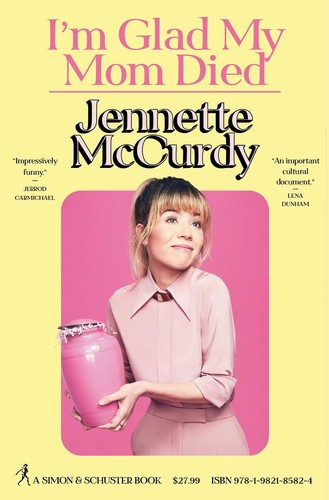
5. I’m Glad My Mom Died
Author: Jeannette McCurdy Rating: ⭐⭐⭐⭐⭐ (4.7/5) Who it’s for: Anyone processing the complicated grief of a toxic mother-daughter relationship
“The title is provocative. The book is devastating. And somehow, healing. I’ve never felt more seen.” — Goodreads reviewer
My take: Jeannette McCurdy was a child actress on Nickelodeon’s iCarly when her controlling, abusive mother was the center of her universe. This memoir — raw, darkly funny, and completely unflinching — chronicles McCurdy’s journey from enmeshment to freedom.
The book’s title is intentionally shocking, and McCurdy leans into the discomfort. She writes about her mother’s eating disorder, emotional manipulation, and the way she weaponized love to keep Jeannette compliant. After her mother’s death from cancer, McCurdy had to untangle the impossible feelings of grief, relief, and guilt that come with mourning someone who hurt you.
This book resonated with me because it captures something few books about estrangement address: the grief you feel even when the person is still alive. You mourn the parent you deserved. You mourn the childhood you didn’t have. And sometimes, when the relationship ends, you mourn the possibility that things could have been different.
6. Will I Ever Be Good Enough? Healing the Daughters of Narcissistic Mothers
Author: Karyl McBride Rating: ⭐⭐⭐⭐⭐ (4.5/5) Who it’s for: Daughters struggling with mothers who couldn’t love them unconditionally
“This book put words to the wound I’d been carrying for 40 years. I finally understood that my mother’s inability to love me wasn’t my fault.” — Amazon reviewer
My take: Karyl McBride is a therapist who specializes in narcissistic abuse, and this book is specifically written for daughters of narcissistic mothers. McBride identifies the “motherless daughter” — a woman whose mother was physically present but emotionally unavailable, critical, enmeshed, or neglectful.
The book walks through the five-step recovery process: acknowledging the reality of your upbringing, understanding how it shaped you, building a sense of self, setting boundaries, and ultimately finding peace — whether that means limited contact, no contact, or a carefully managed relationship.
For many women, estrangement from a narcissistic mother feels impossible because our culture treats mother-daughter bonds as sacred. McBride challenges this myth directly, arguing that not all mothers are capable of healthy love, and that daughters have every right to protect themselves.

7. Toxic Parents: Overcoming Their Hurtful Legacy and Reclaiming Your Life
Author: Susan Forward Rating: ⭐⭐⭐⭐⭐ (4.5/5) Who it’s for: Anyone who needs to confront the damage caused by abusive or dysfunctional parents
“Susan Forward wrote this book like she was sitting across from me, holding my hand, and refusing to let me look away from the truth.” — Goodreads reviewer
My take: Susan Forward’s classic has been helping people confront toxic family dynamics for decades, and it still holds up. The book covers a wide range of toxic parenting styles — from the alcoholic parent to the verbally abusive parent to the sexually abusive parent — and provides a step-by-step process for breaking free from their influence.
What I appreciate about Forward’s approach is that she doesn’t just tell you to “forgive and move on.” She gives you permission to be angry. She validates the reality that some parents cause real, lasting harm. And she provides concrete exercises for confronting the patterns that keep you trapped.
The section on “confrontation letters” — unsent letters where you tell your parent everything you’ve never been able to say — was particularly powerful for me. Writing mine took three weeks and twelve drafts. I never sent it. But the act of writing it was one of the most liberating things I’ve ever done.

8. Fault Lines: Fractured Families and How to Mend Them
Author: Karl Pillemer Rating: ⭐⭐⭐⭐⭐ (4.4/5) Who it’s for: Anyone who wants a research-based understanding of family estrangement
“Pillemer’s research showed me that estrangement is far more common than I ever imagined. That alone was healing.” — Amazon reviewer
My take: Karl Pillemer is a sociologist at Cornell University who conducted the most comprehensive study of family estrangement ever undertaken. He surveyed thousands of Americans and interviewed hundreds of people who had experienced estrangement — from both sides.
The book provides a data-driven overview of how common estrangement is (25 to 27 percent of Americans), what causes it, and what factors predict whether reconciliation is possible. Pillemer identifies five “domains of discord” that drive estrangement: the legacy of childhood, clashing personalities and values, the role of in-laws and partners, money and inheritance, and sibling issues.
What makes this book valuable is its balance. Pillemer doesn’t advocate for either reconciliation or continued estrangement. He presents the research and lets readers decide what’s right for their situation. For those who do want to reconcile, he provides evidence-based strategies. For those who don’t, he provides validation and practical advice for living well with the distance.

9. Set Boundaries, Find Peace: A Guide to Reclaiming Yourself
Author: Nedra Glennon Tawwab Rating: ⭐⭐⭐⭐⭐ (4.6/5) Who it’s for: Anyone who needs practical tools for setting boundaries with family members
“I always thought boundaries were about building walls. Nedra Tawwab taught me they’re about building bridges — to yourself.” — Goodreads reviewer
My take: Nedra Tawwab is a licensed therapist whose Instagram account on boundaries has millions of followers. This book distills her clinical wisdom into a clear, accessible guide for setting and maintaining boundaries — particularly with family.
Tawwab’s framework distinguishes between rigid boundaries (cutting everyone off), porous boundaries (letting everyone in), and healthy boundaries (clear, consistent, and compassionate). She provides specific scripts for common family situations — from the parent who drops by unannounced to the sibling who borrows money and never pays it back to the relative who comments on your weight.
What makes this book essential for estrangement is its emphasis on boundaries as a spectrum. Not every difficult family relationship requires complete cut-off. Sometimes, “low contact” or “structured contact” is enough. Tawwab helps you figure out where on that spectrum you need to be, and gives you the language to communicate your boundaries clearly.

10. The Emotionally Absent Mother: A Guide to Self-Healing and Getting the Love You Missed
Author: Jasmin Lee Cori Rating: ⭐⭐⭐⭐⭐ (4.5/5) Who it’s for: Anyone who grew up with a mother who was there but not really present
“This book was like having a therapist finally explain what I’d been feeling my whole life. I underlined the entire thing.” — Amazon reviewer
My take: Jasmin Lee Cori is a psychotherapist, and this book addresses a specific but surprisingly common wound: growing up with a mother who was emotionally absent. Not abusive, necessarily. Not neglectful in any visible way. Just… not there. The mother who was too depressed, too self-involved, too overwhelmed, or too wounded by her own childhood to give you what you needed.
Cori’s book helps you recognize the signs of maternal emotional absence and understand how it affects your adult relationships, self-esteem, and ability to trust. She then guides you through the process of “re-mothering” yourself — learning to give yourself the nurturing, validation, and unconditional acceptance your mother couldn’t provide.
For people navigating estrangement, this book is particularly useful because it addresses the hardest part: the mother who wasn’t “bad enough” to justify cutting contact. If your mother wasn’t abusive in the dramatic sense but left you feeling chronically unseen, this book will help you understand that your pain is real and your need for distance is valid.
Frequently Asked Questions
Is estrangement ever the right choice?
Yes. Research by Karl Pillemer and others shows that for people dealing with ongoing abuse, manipulation, or emotional harm, estrangement is often the healthiest option. Eamon Dolan’s The Power of Parting makes a compelling case that estrangement should be destigmatized and recognized as a legitimate form of self-protection. That said, estrangement is deeply personal — only you can decide if it’s right for your situation.
How common is family estrangement?
Far more common than most people realize. Karl Pillemer’s research in Fault Lines estimates that 25 to 27 percent of Americans are estranged from at least one family member. Eamon Dolan cites a similar figure in The Power of Parting. You’re not an outlier. You’re part of a large, silent community.
What’s the difference between setting boundaries and going no-contact?
Nedra Tawwab’s Set Boundaries, Find Peace explains this clearly. Boundaries are about communicating your limits while maintaining a relationship. No-contact is the most extreme boundary — a complete cessation of communication. Between the two, there’s a spectrum: structured contact (seeing someone only in specific settings), low contact (minimal communication), and no contact. Not every difficult relationship requires no-contact, but some do.
Can you grieve someone who’s still alive?
Absolutely, and it’s one of the most painful aspects of estrangement. Jeannette McCurdy’s I’m Glad My Mom Died and Tara Westover’s Educated both capture this experience beautifully. You grieve the relationship you deserved. You grieve the parent who couldn’t love you the way you needed. And you grieve the fantasy that things might someday change.
How do I deal with family members who don’t understand my estrangement?
This is one of the hardest parts. Extended family, friends, and even therapists sometimes push reconciliation without understanding the full picture. The Power of Parting has an excellent section on how to respond to people who question your choice. The key is to stop justifying and start trusting yourself. You don’t owe anyone an explanation for protecting your mental health.
What if I’m the parent who’s been estranged from?
Rules of Estrangement by Joshua Coleman is written specifically for you. Coleman is a psychologist who was estranged from his own daughter, and his approach is compassionate without being permissive. He helps parents understand the adult child’s perspective, take responsibility for their part in the rupture, and — when appropriate — take concrete steps toward reconciliation.
Is therapy necessary for navigating estrangement?
It’s not required, but it helps enormously. Several books on this list, particularly Adult Children of Emotionally Immature Parents and Toxic Parents, include exercises that function like self-guided therapy. But a good therapist who understands family estrangement can provide something books can’t: a safe, ongoing relationship where you can practice the vulnerability and trust that your family couldn’t model for you.
Will the pain of estrangement ever get easier?
For most people, yes — but it doesn’t disappear. Eamon Dolan describes the early period of estrangement as a mix of relief and anguish that gradually settles into something more stable. The Power of Parting and Fault Lines both emphasize that healing from estrangement is a process, not an event. The grief may never fully go away, but the freedom, peace, and self-respect that come with protecting yourself tend to grow over time.
Final Thoughts
I still think about my brother. Not every day anymore, but often enough. I wonder if he’s okay. I wonder if he thinks about me. I wonder if the silence is as heavy on his side as it is on mine.
But I also know this: the person I was before the estrangement — the person who spent every holiday braced for conflict, who apologized for existing, who swallowed his feelings until he couldn’t breathe — that person needed the silence. He needed the distance. He needed to learn that his peace wasn’t negotiable.
Estrangement isn’t something I’d wish on anyone. But for some of us, it’s the price of survival. And these ten books helped me understand that choosing yourself — even when it means losing someone you love — is not selfish. It’s sacred.
You’re not a bad person for walking away. You’re a brave person who finally decided to stay.
Which book are you grabbing first?
Disclosure: This article contains Amazon affiliate links. If you purchase through these links, we may earn a small commission at no extra cost to you. We only recommend books we’ve genuinely read and believe in.